Back to Bizweek
SEARCH AND PRESS ENTER
Latest News

“Medicine is not simply treatment; it is caring for a person and comforting a family”

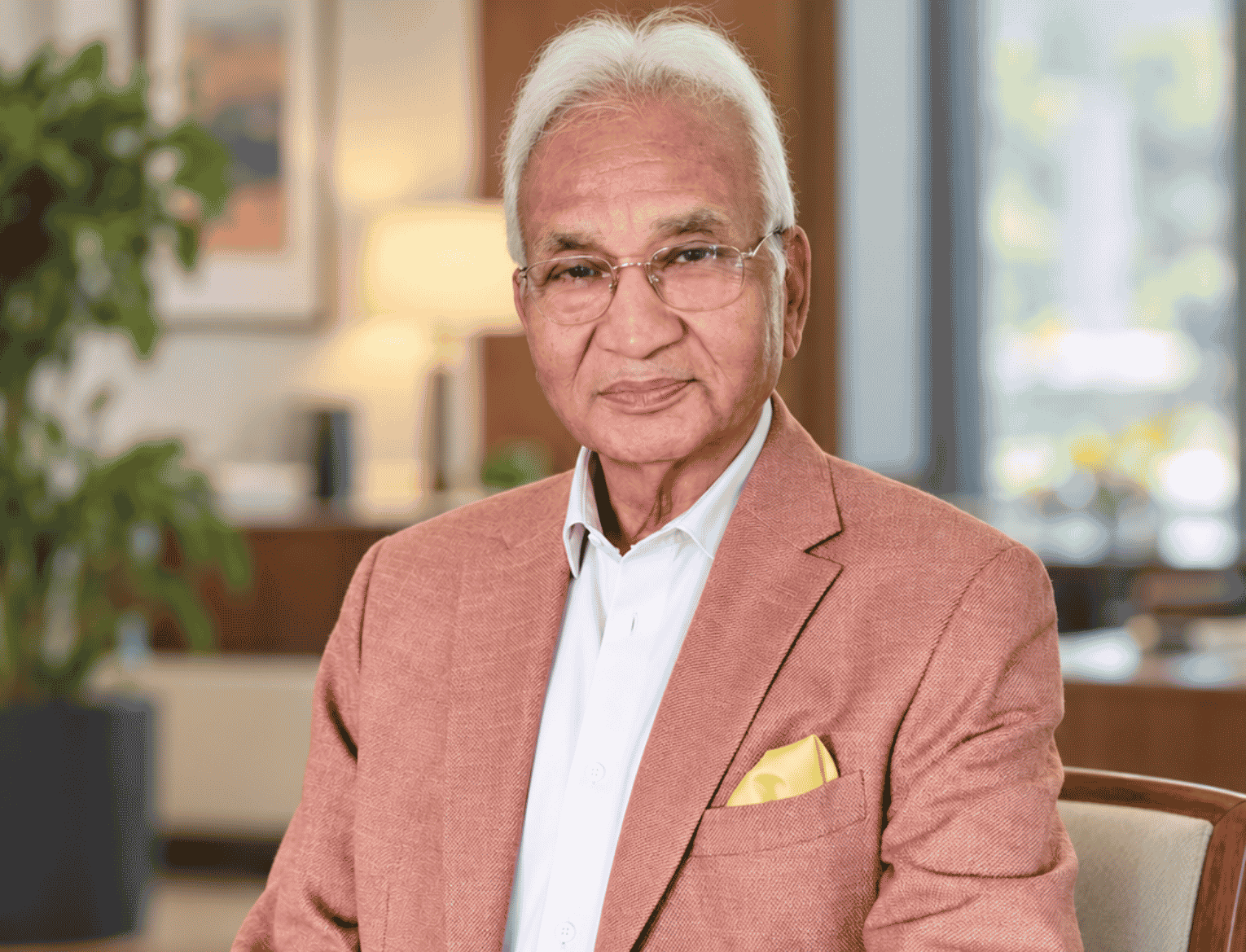
Prof Mahendra Bhandari

Prof Mahendra Bhandari

Prof Mahendra Bhandari came to Mauritius for the Mauritius International Urology Conclave, held on 24 September. The Indian urologist and transplant surgeon, now associated with the Vattikuti Urology Institute at Henry Ford Hospital in Detroit and chief executive of the Vattikuti Foundation, spoke to BIZWEEK about the first kidney transplant at a fledgling institution in Lucknow, taking robotic surgery to India, the promise and limits of AI, and the choices facing Mauritius. His account returns repeatedly to a simple proposition: technology matters, but patients also need a doctor who sees the person and family behind the illness.

Rudy Veeramundar

Your mother wanted you to become a doctor. Where did that wish come from?

My mother had two sons. My elder brother was very bright and became an engineer. I was the younger one, and from the time I was four or five I would hear her say, “I want my other son to be a doctor.” I did not know what a doctor was. Her mother had been chronically ill. In those days, before India’s independence, doctors were difficult to find and my grandfather could wait hours for a consultation. My mother carried that experience. She wanted a doctor in the family. That was the beginning, rather than some childhood decision of mine.

Did her ambition remain your own as you went through school?

Not in the way people might imagine. I had many friends; relationships interested me more than my studies. I studied when an examination required it. I was a debater, and when it came time to choose between humanities and science, my English teacher advised me to take literature. I agreed. My brother heard about it when I got home. He knew our mother’s wish and said, “How could you do that without asking us?” He went to the principal and had my subjects changed to science.

The first two years of medical college were unremarkable. There were 177 students in my class. I passed, but anatomy, dissection and theoretical work did not capture me. The moment I began seeing patients in hospital, everything changed. I spent more and more time on the wards. That is when medicine became my life.

What did the patients give you that the classroom had not?

They taught me that medicine is not simply treatment. You are looking after a person and trying to comfort a family. That connection can last for decades. After I arrived in the United States in 2006, my secretary said a man was trying to reach me. He had been a child of about two and a half when I operated on him repeatedly. More than 30 years later he was an engineer working for Chevron. His kidney function had deteriorated and he had been told he might need another operation. He wanted my opinion.

I remembered his case. I told him I could not judge it without seeing him, but I questioned whether a passage that had remained open all those years had suddenly closed. He flew to see us, and the assessment did not support the operation he feared. Other former patients call about conditions unrelated to the operation I performed 20 or 30 years ago. They remember the relationship and trust me enough to ask. Even though I have left active practice, my messages are full of people seeking advice.

You work with advanced technology. Does it change that relationship?

I have been involved with artificial intelligence since 2017, so I am not opposed to technology. But this is precisely when the human side of medicine has to become stronger. A patient is not bones and skin. There is a mind, an emotional life and often an anxious family. We doctors can do very little to cure some diseases, but we can do 100 per cent to comfort patients. We cannot prevent every death; we can help make a person’s remaining time more comfortable.

When I speak to postgraduate doctors, I ask how they value the smile of a mother when her child is discharged after an operation. I have never been able to equate it with any amount of wealth. I am 81. I have lived this approach, not merely proposed it as an ideal.

You apply the same thinking to business. What happened when you studied negotiation for your MBA?

We had a semester on negotiation with a professor from Australia. The class would be divided into teams and given half an hour to negotiate a case. I often finished in five minutes. The professor would ask why I had not tried to obtain more for the side I represented. I would tell the other person what I thought they should receive, what I expected and where an agreement was possible. Then we could agree.

I found a more adversarial style difficult to accept. I believe in an outcome that works for both people. It is the same reason I have always valued friendship. Dr Balbir Verma and I worked together about 30 years ago. We would meet from time to time at conferences, and that warmth has survived. It matters far more to me than an accolade.

Has that affected how you regard money and recognition?

When I was younger, I thought in terms of securing my position first: if I had ten dollars, perhaps I could give away two. I became less preoccupied with that calculation. I have given people money or computers when I could help, sometimes without meeting them again. It made me happy. I have modest needs.

Awards and wealth, as I see them, are a kind of public property. One person receives the honour, but the work was done with colleagues and for other people. You should be grateful to have been chosen to receive it on their behalf. I have held many roles, but I do not want to live inside the titles.

What made you leave an established career in India for Detroit?

I had spent about 40 years building my career in India. I was vice-chancellor of a medical university in Lucknow, one of the country’s oldest medical schools in its new university form. I was known there and had worked with the Apollo group. I could have remained in a secure position.

Mani Menon and I had known one another professionally for perhaps 10 or 12 years. He was at Henry Ford Hospital in Detroit, developing robotic surgery. On a visit to India he watched me deal with files, leave applications, meetings and politicians. He said nothing then. Later, after inviting me to a conference in Detroit, he drove me back to my hotel and said he thought I still had too much to offer to spend so much time on administration. Why not come and do quality work with him? I said yes, but there were two practical matters: a workable visa and enough income for my wife and me to live modestly without discomfort. I left the figure to him. If it was more than we needed, the surplus could go to charity; if it was too little, I would tell him.

Was the move straightforward after that conversation?

Mani found an immigration lawyer. I sent my CV and was told there was a strong case. My office in India helped assemble two large volumes of supporting material over about a month, and the application was expedited. Then my wife and I found ourselves at Delhi airport with about $1,500 in travellers’ cheques and no real idea how this new life would develop.

I had come from a university where thousands of people worked. In Detroit, there was no comparable office or apparatus around me. Even Mani did not have a fully defined role for me at the start. I have written about that journey in a book, but I have hesitated to publish it because I do not like writing so much about “I”.

What did you learn in those first years in the US?

I understood that every person in the department had to contribute. Mani was generous to me, but I could not rely on his kindness indefinitely. I was not bringing in revenue, so I had to decide how I would make myself useful. I chose to strengthen the scientific side of my work and then applied for an MBA. I wanted to attend a strong university and chose the University of Michigan, which was nearby.

The cost was extraordinary to me. Our family had never paid that much for education. I received an offer and explained that I could not afford it; the university gave me financial support. Once again, a relationship opened a door. I was already past 60, but that is no reason to stop learning.

As a scientist, how do you understand your belief in God?

Two women have been central to my life. My mother was religious, but more than that she was genuinely kind. She corrected us constantly and taught us how to behave. My wife is the spiritual centre of our family; she is not impressed by my awards. I have friends in churches and mosques and have travelled to Pakistan. Those divisions do not define what I believe.

For me, a spiritual life should create integrity in medicine, business or public life. It should also restrain the ego that comes with knowledge and recognition. I have felt pride in my knowledge; I know how easily one begins to think, “I did this.” In surgery, you prepare carefully and something can still go wrong. At other times a patient recovers when you feared the worst. I believe there is a force beyond my control. That belief does not relieve me of the duty to do the work properly.

Was your visit to Mauritius connected to that long friendship with Dr Balbir Verma?

Yes. When Dr Balbir Verma worked with me, he brought Deepali, to whom he was engaged, to meet me. I remember that time and their family. I told him I wanted to come mainly to spend time with them. Then I saw the arrangements for the conclave, with the Prime Minister attending, and joked that he was putting my ego to a test. We are all transient. I have changed institutions several times, often leaving a comfortable situation for a place others thought unpromising. I did it because I trusted that we could build something there, not because I had calculated a better title.

Where did your interest in kidney transplantation begin?

I trained for two years at Christian Medical College in Vellore in the 1970s, when only a small number of centres in the region were undertaking transplants. As a resident I participated in roughly ten to twelve donor kidney removals and saw a number of recipients; the team carried out perhaps 20 or 30 transplants in that period. It stayed with me.

At my next institution I could not establish a transplant service. There was no dialysis facility, no nephrology team and no supporting infrastructure. I continued to develop the surgical skills wherever I could and waited for an opportunity. There may be many things in your profession, but one or two seize your attention. You remember everything about them.

What did you find when you arrived at the Sanjay Gandhi Postgraduate Institute in Lucknow?

I joined in 1988 after a busy practice in Pondicherry, where I operated five days a week. The new institute had a building and equipment, but it was some distance from the city and people doubted patients would travel there. Some basic operating theatre requirements had not been thought through. You could not assume that equipment, water supply, access and the supporting services would work simply because the building existed.

There were five very capable professors and an energetic director. I told him that we needed a date for our first operation, practical support and the freedom to obtain what was missing. An assistant professor and I made lists for anaesthesia, the theatre and the other services. We set the date publicly, prepared and carried out the institute’s first urological operation as planned. Patients had begun to come because they knew our previous work. Building a service meant making the entire institution function, not just placing a surgeon in an operating room.

How did you plan the transplant programme?

The need was enormous. Uttar Pradesh alone had a population of around 120 million then, and much of northern and eastern India had little access to transplantation. The team met every week and rehearsed what it would do. We aimed to begin in October 1989. We wanted imaging equipment to monitor the transplanted kidney and time to make the system ready. My direct transplant experience was about 15 years old, but I was confident that the team could do it.

The first transplant happened in July 1989 instead. What changed?

I had been in Hyderabad for a lecture on 4 July and returned the next day. On 6 July I was in the operating theatre when we heard a commotion. A 19-yearold man who had been waiting in the neurosurgery outpatient department had collapsed after an injury. He was brought to the theatre. The anaesthetists and others worked to revive him, but he was subsequently declared brain dead.

One of my assistants asked whether we could use a kidney for a transplant. It was a good thought, but I saw several difficulties. This would be our first transplant, and a mistake might destroy the programme before it began. India did not yet have a specific law covering deceased donation as we understood it. My first thought was that if there was no law permitting it, there was also no law forbidding it. I contacted a lawyer friend and asked what could lawfully be done. He said he would help if there was a problem, but did not want me to get into one. His advice was to remove my personal enthusiasm from the decision and put it through an institutional process. We went to the medical superintendent, and a committee was formed. There were disagreements, including over how brain death should be established. The young man suffered repeated cardiac arrests. His condition was unstable and time was short.

How was the family’s consent obtained?

His father came from Kanpur. A colleague spoke to him. He said, in effect, “He is my son, and this is very difficult. But if he cannot be revived, why should what can help another person be lost?” He gave consent. I have never forgotten that generosity at such a moment.

The nephrology and surgical teams discussed it. Some colleagues opposed proceeding: it was too risky, they said, with no clear law and a new programme at stake. We also sought advice from the state’s forensic medicine authority. He recommended taking one kidney rather than both and provided written permission so that the removal would be recorded and could be explained at postmortem. It was not an impulsive operation; we worked through consent, institutional responsibility and the documentation we could obtain in those circumstances

And who received the kidney?

Finding a recipient was difficult. Patients on dialysis were understandably reluctant to be the first person in our programme to receive a kidney from a deceased donor. Eventually a woman of about 60, who was doing badly on dialysis, agreed. We operated at around two in the morning. She did well and lived for another nine years.

That was the beginning of the transplant service. Over time it became a strong programme. On some days we performed two transplants. But it happened because the father consented, the authorities helped, the staff took responsibility and a recipient accepted the opportunity. How can one individual claim the credit?

How did you ensure the programme could outlast its founders?

We trained the postgraduates to operate under our supervision. At times they performed most of the surgical work while we remained beside them and made sure the patient was safe. Some doctors say, “Only I can do this.” That is a myth. If I operate brilliantly and then go home, who will care for the patient when something changes at night? The entire team must know what to do.

I wanted a doctor trained at our institute to be as capable as someone trained anywhere in the world. Many of those younger surgeons went on to distinguished careers. The reputation of the institute was built by the first group’s dedication and by the people they trained.

Why do Indian doctors adapt so well to practice abroad?

I have spent roughly four decades working in India and about two in the US. Indian doctors often see a very high volume of patients and work with a strong sense of purpose. Give them good facilities, demanding colleagues and an opportunity to learn, and they progress quickly. My view is that we have sometimes been better at adopting and improving an innovation than at taking the initial lead. That can change. The important thing is to create the environment in which talent can do its best work

What can a country with limited health resources do if it wants to adopt robotic surgery?

I meet political leaders who say, “We do not have resources.” I say that what I need first is a genuine will to improve healthcare and education. I have built services in places where people thought nothing could happen. The necessary support can be found when there is a serious commitment. That conviction led me to ask how advanced surgical technology could reach capable institutions in India much sooner.

What was the starting point for the Vattikuti Foundation’s work in robotic surgery?

Raj Vattikuti had built successful businesses in the US after arriving in Detroit as a student and working at Chrysler. As he explained it to me, he and his wife planned to set aside a third of their wealth for society, a third for their children and a third for themselves. He wanted to support cancer care and give something back to the city where they had made their money. A gift of about $20mn helped establish the Vattikuti Urology Institute at Henry Ford Hospital. Mani Menon was working there and saw an application for a surgical robot in prostate operations, although the technology had initially been associated with cardiac surgery. The manufacturer was not initially convinced by that use. When the procedure succeeded, the direction of robotic surgery changed.

I joined Mani in 2006, but had followed his work for years and served on an international board connected with the institute. The question for me became how to take this capability beyond a few wealthy centres. Skilled surgeons in India should not have to wait ten or 20 years to use an important technology.

Did your MBA project lead directly to the foundation?

For the final MBA project I wanted to develop a model for bringing advanced technology to strong institutions in India. Nine of us went there, studied the market and the hospitals and produced a report. We were pleased with it, but a report needs a backer. Colleagues suggested that I speak to Mr Vattikuti. I wrote to him, and he called me some time later. I explained the idea. He listened but did not give me an answer. The foundation had substantial funds but, at that stage, was not running the kind of active medical programme I had in mind.

A few months later we met again at a robotic surgery conference in Las Vegas. Mani stepped away, and Mr Vattikuti moved closer and asked, “Would you like to run my foundation?” I said yes, no, maybe: I had promised Mani that if I worked in the US, I would work with him, not simply take another position. Mr Vattikuti spoke to him; Mani returned excited by the prospect. That was how it began.

What did you ask for when you took the role?

People expected a discussion about salary and a long employment contract. I told him to decide the salary. I had limited needs and wanted to build a relationship rather than bargain over a raise every year. I asked for an office and a secretary so that I could work. He showed me an office. To this day, as I tell the story, I do not have even an email formally appointing me. That trust suited me.

What happened when you tried to bring robotic surgery to India?

All three of us — Mani Menon, Raj Vattikuti and I — had come from India. My MBA project had focused on India, and I told Mr Vattikuti that I wanted to take robotic surgery there. The manufacturer initially thought it was a poor market: how would hospitals afford a machine costing about $2mn? We combined philanthropy with high use of the equipment and the large number of potential patients. The model was high volume with lower margins per procedure.

We pursued it actively until 2018. By then, in my account, the distribution venture had placed 75 robots and the network had performed about 8,000 operations across specialties. The manufacturer subsequently bought the venture for about $33mn. There are now around 200 robots in India, I believe. The precise number of machines is only part of the story. We spent about $3mn to bring some 200 surgeons from around the world to train Indian surgeons in their own working environments. An introduction to a machine lasting half a day would never have built the clinical capacity we needed.

Did that model lead the foundation into other technologies?

Yes. Once institutions knew what we had done, other companies approached us about bringing technologies to India. One role I took on was deciding which technologies merited support. We helped establish two centres for robotic joint replacement. We have also turned to magnetic resonance guided focused ultrasound for brain disorders. The principle is the same: identify an innovation, build a centre that can use it properly, train people and see whether it improves care. There is no value in delivering a piece of equipment without the service around it.

Where is artificial intelligence already useful in surgery?

Its first contribution is to make some outcomes more predictable. A surgeon can complete an operation, but cannot know with certainty how a particular patient will respond. We traditionally rely on experience from previous cases. A well developed model can analyse more information and help estimate the risks. AI also improves what we can see and plan before an operation. With a kidney tumour, for example, imaging can be reconstructed and examined from different angles, and we can identify blood vessels and plan our approach.

That is quite different from allowing a machine to make decisions and operate independently on a human being. The potential is considerable, but such systems need extensive validation and sufficient data. At present there is much investment and much publicity, but far less clinical automation than the publicity suggests. We have to separate the promise from what is ready for patients.

How might those predictive tools develop?

Consider an operation that can be done in several ways, perhaps with or without clamping a vessel. In the past the surgeon might choose largely on the basis of personal experience. A model may eventually help compare the options and estimate how much kidney function a patient would retain under each one. The numbers I might give — 60 per cent with one approach, 70 per cent with another — illustrate the kind of decision support I mean, not a guaranteed result for an individual patient.

Predicting complications and improving hospital workflows are other possibilities. We have studied the use of data to estimate outcomes for intensive care patients over a seven day period. That sort of information may also help a hospital plan beds and staffing. Each application has to be judged on the quality of its data and validation, especially when it affects a person’s treatment. Progress will be gradual; I do not expect an autonomous surgical equivalent of a self driving car.

What opportunities do you see for robotic surgery and training in Mauritius?

I would not begin by calling this “advanced” care as if it were permanently out of reach. The question is what standard of treatment people should be able to receive. I do not know all the details of Mauritius’s finances, but saying “we do not have resources” can become an excuse for never beginning. The priorities and the way a programme is organised matter.

Take a complex kidney tumour that extends into a vein. Such operations used to carry substantial risks. In my earlier experience, patients could require a great deal of blood, prolonged ventilation and a long stay. Techniques and experience have changed what is possible in selected cases. One must not promise the same outcome to every patient, but shorter stays and less disruption to work have real economic value. A wealthy patient may be able to remain in hospital for weeks. A shopkeeper whose family depends on the business cannot. The poorer patient can have the greater need for an effective, less disruptive treatment.

How would you finance and organise a programme?

Begin with a properly planned example that others can examine and copy. A public hospital already pays its clinicians and maintains much of the infrastructure; the additional costs include the equipment, consumables, training and operation of the service. A machine costing $2mn is a serious decision, but buying it without a viable programme would be worse. You need enough patients to use it well, skilled surgeons and support teams, and a financial model that can be sustained.

We tend to establish one or two centres, demonstrate that they work and let patients and other institutions see the results. Demand then grows. A patient asking about robotic joint replacement may prompt a hospital to train a surgeon and develop a service. Simply selling a robot to a hospital will not create a programme. The impact has to be visible at the patient’s end.

Yet your principal message to the healthcare sector is about prevention. Why?

My own work has been in highly specialised care, so perhaps it is striking to hear this from me: I would put much more emphasis on helping people remain healthy. Curative care, even with excellent technology, cannot be as cost effective as changes in lifestyle and the prevention of disease. Encourage exercise and give people the means to look after their health. A health system will always need a mixture of prevention and treatment, but the balance should shift towards positive health and preventing illness.

That does not mean people who are already ill should receive a lower standard of treatment because their country is not the United States or Sweden. Start on a scale that can work, prove the model and build from there.

You also spoke about fairness in the physical conditions of care. What did you mean?

People accept different standards in hotels or airline travel. But why should a wealthy woman give birth in an air conditioned room while a poor woman does not? In Uttar Pradesh, we argued for a fully air conditioned institution in the 1980s. Officials said the bills would be too high. We made the case to the state leadership, created a model and found a way to maintain it. What once seemed extravagant became normal.

The lesson for Mauritius is to take calculated, well planned decisions. Provide the entire set of services and people needed to make equipment useful. Show patients that it works. Mauritius could build a model others would want to follow. Curative care, even with excellent technology, cannot be as cost effective as changes in lifestyle.

Skip to content