Back to Bizweek
SEARCH AND PRESS ENTER
Latest News

Diaspora mobilisation: Kenya is building an economy beyond its borders 

The conventional response to brain drain is to try to stop it. Kenya is beginning to ask a more strategic question: what if the movement of skilled workers abroad is not simply a loss, but an economic asset that can be deliberately managed, connected to global demand and converted into investment, skills and opportunity at home? 

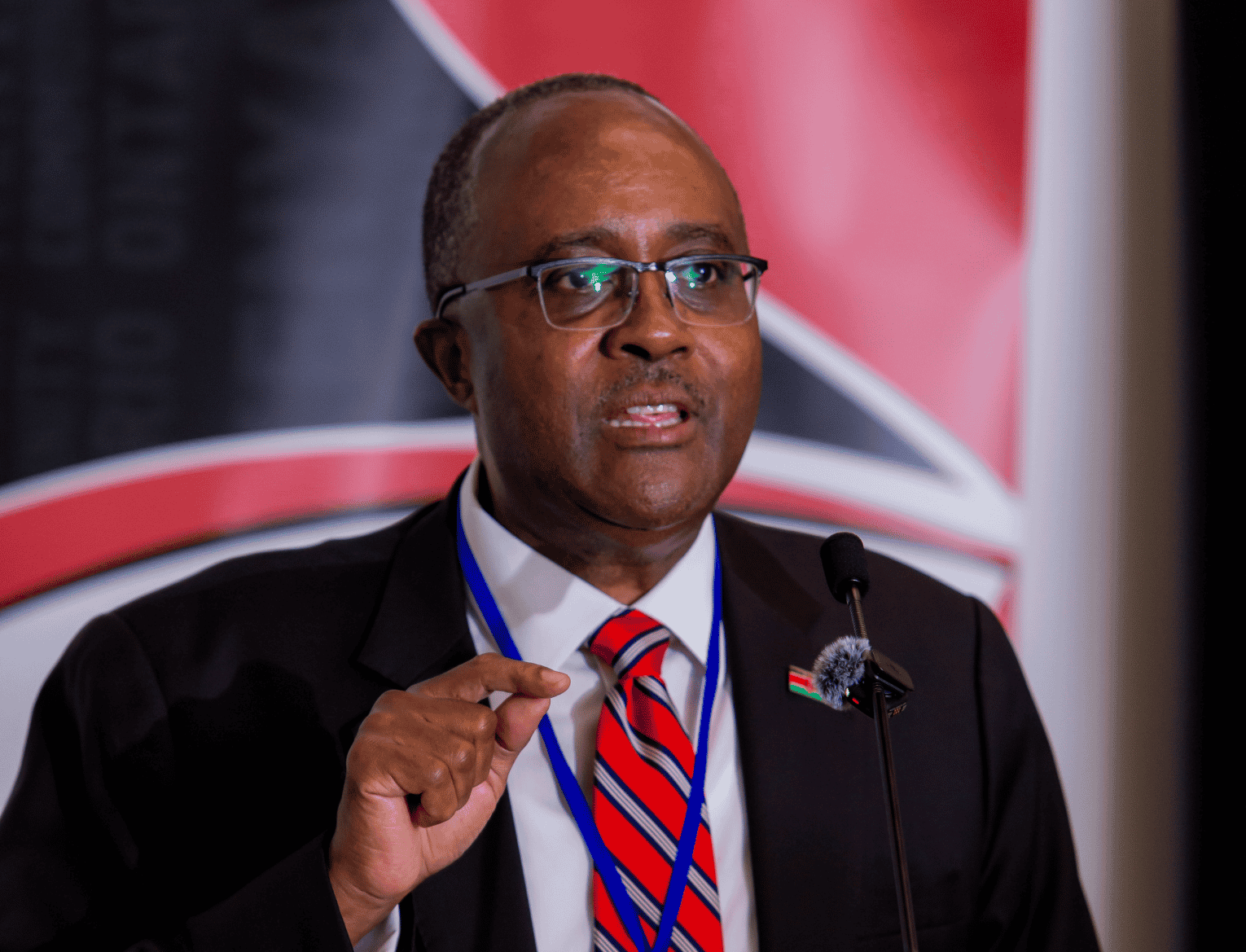
Its leadership is actively building an economic model and the institutions to act on it: an investment support office, a placement agency, and a skills-matching system linking global labour demand to domestic training institutions. Kenya spends over a quarter of its budget on education and graduates far more teachers, nurses and technicians than it can absorb. Ambassador Isaiah Kabira, Secretary for Diaspora Investment, Skills, Entrepreneurship and Labour Mobility, one of the most senior members of the Kenyan delegation on the Kenya-Canada Trade Mission held in Canada from 5 to 11 September, spoke to BizWeek Africa at the close of the mission about what Kenya is building, and what it wants from partners such as Canada.

Ambassador, thank you for joining us. We are speaking at the end of a week in which diaspora engagement, investment, skills transfer and labour mobility were front and centre. Before we get to the substance, what is your own reading of this moment?

Amb. Isaiah Kabira: First, I really want to appreciate the role of the Canadian Black Chamber of Commerce. They were really instrumental in organising this mission. We want to appreciate that there is so much you have achieved during this.

First and foremost is to appreciate the emerging centrality of Africa in Canada’s relations with the rest of the world. We want to appreciate the Canadian government for its Africa strategy, which outlines the best ways to engage with Africa. This is a very important moment in global geopolitics and economics, because we are seeing that a lot of countries are trying to diversify their trade and investment partners.

As I did say in my earlier remarks, by 2050 the population of Africa will be 2.5 billion, and out of these, a billion will be in the middle class. Therefore, if you are not thinking about Africa, you are not thinking about the future. This portends a huge market that any forward-looking partner should be on the lookout for.

But what are we talking about? Not just numbers. We are seeing that the diaspora is going to be key to developing the relations between our countries and our continents, to be the facilitators, to be the conduits of generating more trade and investment. Our diaspora understand and have good knowledge of Canada. They also have very good knowledge of Africa, and in this case Kenya.

So we have learnt in the last few days that we need to make more use of our diaspora, we need to engage them more. And we also need to appreciate that the African diaspora is beyond that of Africa: the Caribbean and many other parts of the world. That presents good pointers to what we need to do. We know that Canada is ready to engage, our Kenyan diaspora is ready to engage, and the Kenyan government is ready to engage the government of Canada to see how best we can propel this relationship.

For readers meeting you for the first time, who is Ambassador Isaiah Kabira?

I am a trained journalist who was part of the foundation of Kenya’s first African private television station called the Kenya Television Network, where I was a news producer, a business reporter and a news editor. I worked there for nearly ten years.

After that, I joined the government of our third President, President Mwai Kibaki, who I worked for as press secretary. I was in charge of his public communication strategy, and I was part of the link between the media and the State House, which is the seat of the Presidency.

From there I became High Commissioner of Kenya to Australia, where I served for about five years. When I was in Australia I really saw the importance of the diaspora, and I made sure that the Kenyan diaspora was well catered for. I defined my relations as High Commissioner through what I used to call TEAMS: tourism, health, agriculture, education, mining and security. Because at times you can’t achieve everything, I boiled our partnership with Australia down to that.

From there I came back home to Nairobi, where I served in various capacities in the Ministry of Foreign and Diaspora Affairs. I served in charge of the International Conference Group. I served as Chief of Staff to the Minister for Foreign Affairs. And of course my current position, where I sit as Secretary in charge of Diaspora Investment, Skills, Entrepreneurship and Labour Mobility.

This is a bit of a mouthful, but really my responsibility is to try and encourage more Kenyans to invest back home. We do not see the Kenyan diaspora just for their remittances. We see them as part of the development process of our country, and we are seeing growing interest from the Kenyan diaspora who want to invest back home.

We have created what we are calling the Diaspora Investment Support Office, so that we unfold the Kenya diaspora multi-platform. Part of my responsibility is to create diaspora-centric products that increase the level of diaspora direct investment. For the longest time we kept on talking about FDI, foreign direct investment. Now we are talking about diaspora direct investment.

But above all, as a State Department for Diaspora, our biggest responsibility is to ensure that the welfare of Kenyan people who work, study and live abroad is taken care of. We work very closely with our missions to ensure that our diaspora is taken good care of.

When you say welfare, what does that mean in practice? Financial security? Integration?

Welfare is ensuring, one, the provision of consular services, whether it is issuance of passports or of identification cards, but also to ensure that their wellness is properly taken care of, and that we work very closely with our missions.

We work closely with them to ensure, for example, financial literacy. We help them in terms of managing expectations and helping them to integrate in the countries that adopt them. We normally like to offer what we call pre-departure orientation, where we talk to them about expectations in the country they are going to settle in. And then when they come to their country of adoption, we help them integrate with the Kenyan diaspora associations, so that they are engaged in best practices, that they obey the laws of that country.

But also where a Kenyan is being taken advantage of, whether it is in the contract that he signed, whether it is his welfare in his workplace, we are there. We are not policemen. We are just there for the Kenyan diaspora to know that they have a place, they have a recourse, they have somebody they can talk to in the event that they find themselves in circumstances that they are not familiar with.

How large is the Kenyan community in Canada?

Our approximation is plus or minus 30,000. And we are now seeing the next generation of Kenyans whose parents came here about twenty or thirty years ago.

And where are they concentrated?

They are in various provinces, of course. Ontario, I think, has a big chunk of them. Vancouver is another city where we find a lot of Kenyans, and Ottawa, places around. They are scattered in many parts of Canada.

We are very, very proud about the contribution that they are making in our country and also the contribution they are making in Canada. We appreciate that a lot of them have brought needed skills here, whether it is in the health sector, hospitality, or the banking and finance world. But we also know that a lot of Kenyans like the Canadian education system. So a lot of students come here. Some find work here, others go back home to make the development back home wonderful.

This year you were also publicly identified as acting CEO of Kenya’s diaspora placement agency. Is that correct?

Yes, it is a new agency. It is still under formation. The whole idea is to see how best we can place Kenyans abroad, to connect them to opportunities, and also to bring some order in the labour mobility space.

We are happy that this agency is playing its part in skill matching Kenyans, finding out what the world needs in terms of their skills. And we report this back to our training institutions, informing them about the projections of labour needs across the world, so that we know we are training students who are market ready.

What do you consider your most significant accomplishment in diaspora engagement so far?

We have in many ways narrowed the trust deficit. There was a time when there was a lot of suspicion between the government and Kenyans in the diaspora. I think we really achieved that. Many Kenyans are finding jobs abroad. We are also entering markets that Kenyans have not been to.

But above all is also to change the narrative. That is why we no longer talk about labour migration. We talk about labour mobility. I like to believe that labour and human mobility is as old as humanity. History tells us, and there is evidence about it, that in the 1960s we had teachers and nurses working in our hospitals, we had preachers coming from Scotland, from England, from the US, bringing the word of evangelism to Kenya. Now we are seeing reverse labour mobility. Kenyans are to be found in many parts of the world working in hospitals, from Australia to Europe to Canada and America and the Caribbean.

Regular and orderly labour and human mobility is good for humanity. Where there is a demand and where there is supply, we meet somewhere in between, because that is how humanity was meant to be. We were never meant to be people who stand still and never move. We were meant to be people on the move. So we must celebrate labour and human mobility that is orderly, that is legal, that lives up to the laws of the different parts of the world.

So let us appreciate one another. Let us know that some parts of the world have a young median age. In Kenya, our median age is about 19. We are graduating hundreds of thousands of fresh graduates from our institutions of higher learning and our TVETs and our biggest resource as a country is our human resource. We may not have the gold or the oil. That is why, as a country, we are spending 30 per cent of our budget on education, because we value and we see the importance of empowering our people through a good education that enables them and empowers them to be global citizens.

How do you balance that against the potential risk of brain drain?

Nowadays we no longer talk about brain drain. We talk about brain circulation, we talk about brain gain.

As I said, we are a very young population. In the medical sector alone they are graduating over 20,000 people in various facets of medicine, whether they are nurses, laboratory technicians, or people in different facets. And all this cannot be absorbed within our country. So we have no fear at all. That is why I said we are investing 30 per cent of our budget on education.

We have a surplus pool of talent. We have no reason to worry about brain drain, because, for example, in Kenya we have nearly 300,000 people who are trained teachers who are not in employment. We have graduated about 700,000 teachers over the years. We have absorbed up to 400,000. But there are another 250,000 out there who can serve in various parts of the world.

Why did you personally decide it was important to be on this mission, and why Canada?

As I said, this is a time for strategic alliances. There are a lot of moving parts around the world. We know that Kenya is now a priority country, on top of the list of the countries that the government of Canada wants to engage in. This is not by accident.

Kenya is the heart of Africa. If you look at the map of Africa, we are literally the heart of Africa. We are well placed. We are the financial centre, the financial hub, the transport hub of eastern and central Africa. Once you are in Kenya, you are able to access a market of up to 400 million people who are in the eastern and central Africa region.

And we have had extremely good relations. Canada opened its mission in Kenya in 1965. Kenya opened its mission in Canada in 1978. Therefore we have long-standing, very cordial and respectful relations. So the only way to go in this relationship is up.

And you don’t make connections just by talking to people on the telephone. Sometimes it is good to sit down with people, to see whom you are dealing with. People-to-people relations are very important in growing relations. Sometimes we underestimate that. But I can assure you that when you want to do trade and investment, when you want to do business, you want to see whom you are dealing with. This is not a trade on the stock exchange where you never see whom you are dealing with. People-to-people is what this relationship you are trying to create is anchored on. And this mission provided us that opportunity.

Now that the mission has concluded, how do you assess it against the objectives you arrived with?

What we have been encouraging members of our delegation and the people we meet is that it is very important to do follow-ups. It is nice to meet, get excited and agree that this is the way we should deal with this. We are telling our people: please make follow-ups on what you have done. Go back home, contact the people that you met. You have now zeroed in on one or two sectors that you find of interest.

So we feel that we have gained much in this mission. Our members, our delegation, have made very good and relevant contacts. And as I said, we have come here at the right time, during emerging situations and partnerships between countries.

We are happy with the mission, and especially to see the diaspora connection. Because when we go back to Kenya, we are leaving members of the diaspora who are well informed about our intentions, and we are going to be counting on them to make that connection when we go back home.

In a nutshell, what has actually changed? Is it the personal rapport, or is there something more concrete?

Well, this is just the end of the mission. I know that one or two deals have been signed in various sectors, but again, it is all about follow-ups. What we have put on paper, we must make sure of its implementation. So we are happy, and I am sure that you are going to be seeing a lot of movement.

We are hoping to have a reciprocal visit. This has been a Kenyan mission coming to Canada. We hope that early next year we are going to have a Canadian mission coming to Kenya, making new connections and building on what we have had this time.

What kinds of private-sector players were in the Kenyan delegation?

There are people from varied industries, from agriculture to mining to the oil sector, and government representatives. We have people who want to trade in commodities, whether it is coffee or tea. We have people who want to bring a lot of products into this part of the world. We have others who want to take Canadian products, even if it is as simple as beauty products.

We want to see more of our Kenyan coffee, Kenyan-branded coffee, Kenyan-branded tea. Because we know our coffee is here, our tea is here, but it is not branded as Kenyan, because it goes through other markets.

We are also hoping, and we are having discussions about the possibility of direct flights between Canada and Kenya. But we shall let our civil aviation authorities and the relevant airlines pick up that discussion.

You were exposed to Canadian capability across mining, critical minerals, agriculture, education, healthcare, technology and professional services, including at the Ontario Investment and Trade Centre in Toronto. Was there anything you saw that made you think Kenya needs more of it?

Definitely. Canada is a leader in mining. Canada is a leader in the area of oil extraction. Kenya is about to enter into that sector, with several important and critical minerals within our country. So definitely we can count on Canadian expertise to walk us through this journey.

We have also seen the possibilities of a group coming here in the mining sector, just to learn and see how best we can transfer these skills and technology from Canada. So definitely there was a spark, just to see that you have been in this mining sector for over a hundred years. We are just beginning to enter this sector. So there is a lot we can learn from here.

Skills transfer cannot be a one-way street. What can Kenya share with Canada?

As you know, Kenya is an agricultural country. Kenya is one of the biggest coffee and tea producers in the world. As you saw during the presentation, we have over a thousand trained people in the mining sector. So we are going to be exchanging. We have very qualified people in the health sector who are already working in Canada, and we are happy to provide many more. So definitely we have lots of talent. That is why more and more Kenyans are coming to this part of the world, because they are coming here to bring their skills.

I mentioned the issue of laboratory technicians. I know there are regions in Canada in need of pharmacists, for example. The health sector, I think I have mentioned. We are very strong in hospitality. Tourism is one of our biggest sectors. We have also engaged in the training of mining engineers. We are very good in the construction sector. We have very many good drivers in Kenya, because we know that Canada is a great trucking country, and we are happy to offer that. Whether it is issues of plumbing, whether it is issues of ICT.

Not every Kenyan wants to work abroad. There are some who want to work digital jobs. We have very strong business process outsourcing, BPO, companies that are stationed in Kenya. So ICT is one of our biggest and strongest sectors, and we are happy to render our skills in that.

What would a genuinely balanced Canada-Kenya skills partnership look like? Are there enough structured exchanges today?

What we are working on definitely is the issue of mutual recognition of skills. Our counterpart organisations need to sit down and say, these are the skill sets that we are looking for, these are the standards we are looking for. If there is anything we need to do to tweak our syllabus, we are happy to do that.

We know that we have a very good education system. But of course there are some areas that need a bit of tweaking. For example, you people drive on the right hand, as we do the left hand. So there are a lot of areas that we can definitely collaborate on. But the mutual recognition of skills is important.

French is now the most widely taught foreign language in Kenya, with tens of thousands of learners. Is that fair to say?

Yes, definitely. We are a country that encourages people to learn a second language. Our main languages are Kiswahili and English, which are spoken widely in our country. But definitely French is one of those other languages that have really created a lot of interest, because we appreciate the influence that countries that speak French have over the global economy and geopolitics.

So definitely we have good institutes like the Alliance Française, which is sponsored by the government of France, and then of course many other emerging private sector players. But the beauty about all this is that nowadays even learning languages online is a possibility. Of course, people need to be attested.

Kenya is a destination, but you also position it as a gateway to the broader African market. Can you expand on that.

I think I did speak about it earlier, that through Kenya, as the financial and transportation hub of eastern and central Africa, you have access to 400 million people. We have lots of flights flying into Nairobi. For example, just from Nairobi alone, you can fly up to 47 destinations in Africa. I don’t think there is any other country that has as many destinations to fly into Africa. So wherever you are coming from, you come to Kenya and you are able to connect to any part of the world.

We know air connectivity is important. But we also know that nowadays internet connectivity is a very critical part of doing business, so we have invested heavily in fibre optic cables around the country. We are really well positioned, from the centrality of Kenya.

We have also introduced something we are calling the nomad visa, where people can come and work in the comfort of Nairobi. If you are feeling that the temperatures around where you are are not very good, you are able to come and apply for a nomad visa and work from Kenya, coming from any part of the world. So we are fully aware about emerging opportunities in the digital area.

But there is no doubt that Kenya is a very multiracial nation. If you walk on the streets of Nairobi from one end of a strip to another, you will hear so many languages being spoken. As you know, we are the only country in the Southern Hemisphere that is home to a UN headquarters duty station. We are the environmental capital of the world, as the headquarters of UNEP, the United Nations Environment Programme, and UN-Habitat. So we have thousands of people from all over the world working from Nairobi. We are not just a centre. We are an attraction to many people from every part of the world.

At the Diaspora Forum in Toronto on 5 September, what did you hear from Kenyans in Canada that stayed with you?

I think the importance of sharing information and opportunities available back home. The diaspora wants to be engaged more in terms of bringing to light the opportunities that are available back home. But more, they want to make a strong connection of traders and investors in Canada, so that they can hand-hold them and take them to Kenya. And also just the interest that the rest of the African diaspora has, to try and see how we can learn best from one another. It was a lovely day.

We also heard examples of Kenyans pooling capital collectively and investing it back home. But how do you persuade a Kenyan professional in Toronto with, say, 100,000 Canadian dollars that Kenya is the better destination for it today than property or securities here?

Well, definitely I salute the team, because pooling resources is very, very important. You mentioned the issue of 100 dollars. Our messaging to them is that 100 dollars to you per month may not mean much, but 100 dollars pooled together by 1,000 people translates to 100,000 dollars per month, which translates to 1.2 million dollars in a year and 6 million dollars in five years. There is a lot you can do with that kind of money.

But we also know that pooled investment comes through the trust that they create among themselves. We cannot force them to come together. But we are also telling them that you have had very successful social communities that come together during cultural days, during national events. Now we are telling them: you have created a friendship. A friendship means trust. Now work together, walk the journey of investments together.

We are happy, for example, for the High Commission to know who these people are dealing with. And we also know that a country like Canada has very stringent legislative rules before you get registered. There is traceability. So we know that through trust there is much they can do. Our work is just to open the right doors for them when they come and invest in Kenya, so that we know that they are dealing with the right professionals, they are dealing with the right people, so that they make the right investment decisions.

Why should a Kenyan abroad trust the investment environment in Kenya more today than ten years ago? What specifically has changed?

Because they are Kenyans. That is their home country. I know a lot of them. One day, they know that they will come back home.

And we have very good returns. You would be very surprised that some of our returns, whether in trust funds or in the bond market, are very good investments. Years ago inflation was an issue, but the government has been able to control that. We have been able to stabilize our foreign exchange. Our economy is very stable now. We are growing at a good rate. We are proud about that.

And we are also encouraging them to make philanthropic investments. Just giving a good hand to the school where you went, just having an opportunity to show gratitude to the dispensary where you were born. That is also an investment. It is emotionally fulfilling and it is just good for your well-being.

At the forum, some people raised concerns: fraudulent intermediaries, land disputes, opaque arrangements, administrative problems after capital has been committed. That is not unique to Kenya, but what protections exist when things go wrong?

That is why we established the Diaspora Investment Support Office, to provide information to and to handle diaspora investors. Because some of this fraud happens when information is not fully backed. That is why I said earlier, we are trying to encourage them to work with professionals.

But like any other country, as you said, there will always be, once in a while, a bad egg that spoils the rest of the eggs. But we know that we also have very many good reports of people who have enjoyed good investments. Kenya has become a magnet for investments from various parts of the world.

And we have a proper judicial system that works to ensure that there is recourse. We are also very strong in the area of alternative dispute resolution, so that you don’t spend too much time in court. So we are going to work with them through the Diaspora Investment Support Office.

Suppose I am not Kenyan – say, a Mauritian living in Toronto with 100,000 dollars that I want to put into Kenya. What is the legitimate government pathway?

There are many procedures. It would take a bit of time to give you the full procedures, but we have KenInvest, for example, where there are very clear procedures to follow, from registering a company to all the steps that you need to take. We have made registering companies much easier. You need to register with our Kenya Revenue Authority. You need to have one or two other licences. But we are trying to make that easier, so that those who want to make investments have an easier route.

You opened by acknowledging the Canadian Black Chamber of Commerce. Now that the trade mission has concluded, what role should organisations like that play?

It is really to continue engaging, to continue planning events together. But above all, sometimes the chambers need to have sessions, even if they are virtual, to ask what the outcomes were, what we need to do, what we need to do to ensure that there is implementation of the ideas that we had. So it is about engagement, it is about people-to-people, and it is just about people seeing positive outcomes from such events. And I think we have had those.

Given the current trade tensions between Canada and the United States, have you noticed any difference in how the two governments approach missions like this one?

I am a diplomat. I don’t talk about other countries when I am talking about the missions. I am sure at some point Canada and the US will find a way of amicably settling any issues that there are.

We are here to really create a new and renewed partnership with Canada. I think every nation has its own way of operating. We have different agreements with different countries. For example, we have AGOA with the US, and we are looking forward to signing more agreements with more countries, so that we are able to have clear benchmarks of trade and investments.

Final question. If there was one thing you wanted every Kenyan living in Canada to understand about the government’s relationship with them today, what would it be?

My message is that we value you, Kenyans who live in the diaspora. You are part of our development process. We see you as more than the remittances that you make to our country. We want to walk this journey with you. We see you as the catapult that will move Kenya-Canada relations to another, different level.

Please continue staying engaged. Please keep together all the time, and be your brother’s and sister’s keeper all the time.

Skip to content