Back to Bizweek
SEARCH AND PRESS ENTER
Latest News
Madagascar and Mauritius set sights on becoming Indian Ocean dental hubs

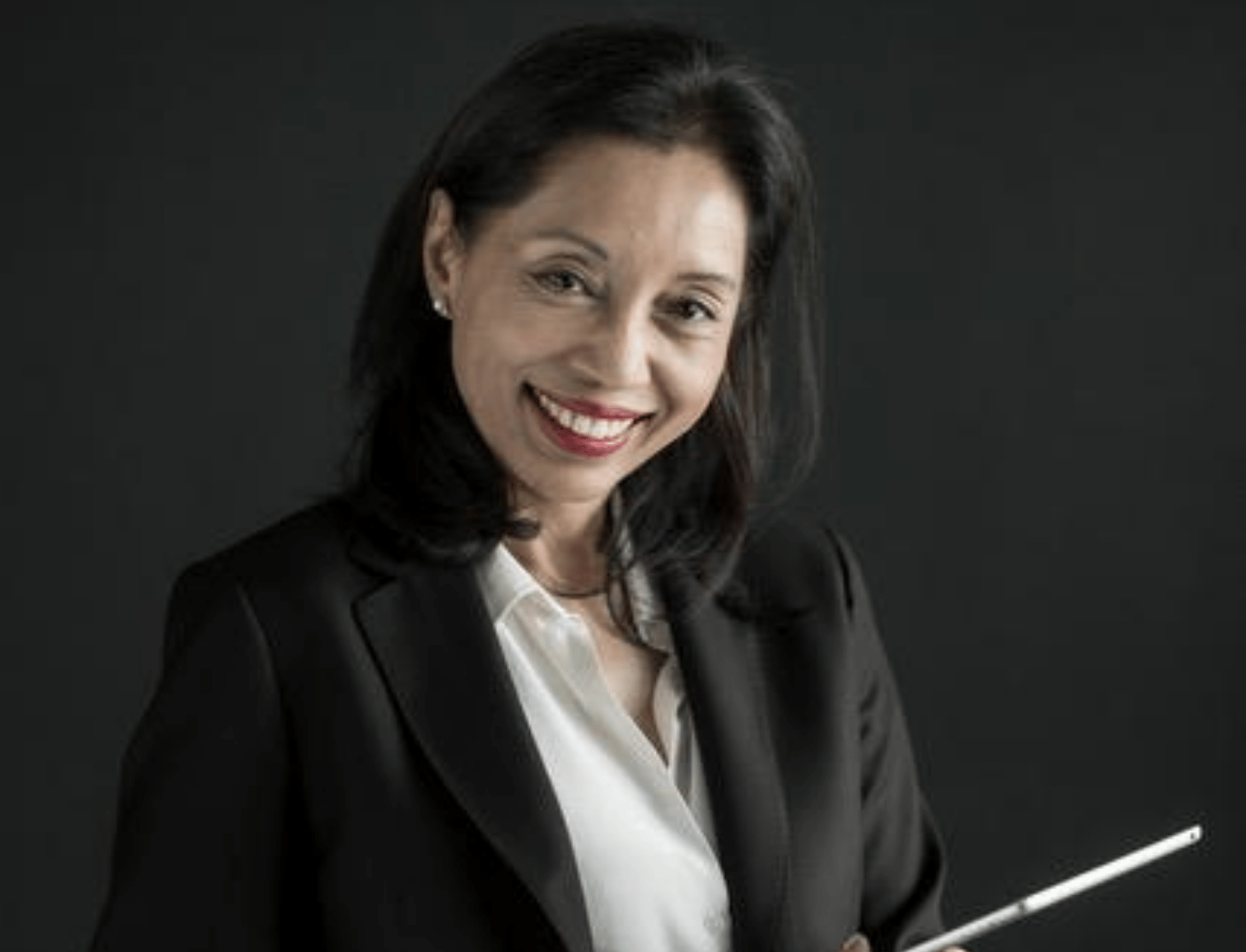
Dr Nadia Rabedasy
  • The Indian Ocean Dental Congress (IODC) will take place in Antananarivo on October 30 and 31.

With artificial intelligence, technology and changing business models reshaping dentistry, professionals from across the region are gathering in Antananarivo to explore how greater regional cooperation could strengthen the sector.

Between Madagascar and Mauritius, the Indian Ocean has traditionally been more bridge than barrier. Now, dental professionals on both islands are looking to turn that proximity into a platform for deeper cooperation and potentially establish the two countries as regional centres for dentistry, training and innovation. That ambition will come under the spotlight at the Indian Ocean Dental Congress (IODC), scheduled to take place in Antananarivo on October 30 and 31, 2026.

Dr Nadia Rabedasy, president of the Malagasy Dental Association and one of the driving forces behind the congress, believes the region has an opportunity to build a stronger and more connected dental ecosystem. “For Madagascar and Mauritius, the ocean has never been a border, but a link,” she says. “Today, this bond can take on a new form, centred on a shared smile.”

The inaugural congress, organised by the Malagasy Dental Association in collaboration with the National Order of Odonto-Stomatologists, will be held under the theme “Smile Tomorrow”. According to Dr Rabedasy, the objective extends beyond bringing dentists together for a conventional professional conference. The organisers want to create a regional platform capable of encouraging cooperation, exposing practitioners to new technologies and strengthening the position of Madagascar and the wider Indian Ocean region in medicine, research and professional training.

“This regional platform needs you,” Dr Rabedasy says, addressing her Mauritian counterparts.

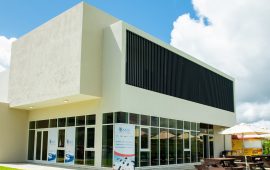
The scale of the event reflects that regional ambition. Organisers expect more than 300 international participants, 40 exhibition stands and more than 20 international speakers at the CCI Ivato in Antananarivo.

At its core, the IODC is a continuing professional education congress, with more than 40 conferences, lectures and workshops planned over the two-day programme.

But the event is also designed to bring together the commercial and professional sides of the dental industry.

Exhibitors from several countries are expected to showcase products, equipment, services, technologies and innovations across the dental value chain. Networking spaces will operate throughout the congress, alongside a dedicated networking evening intended to encourage relationships between practitioners, businesses, researchers and other industry stakeholders.

For Dr Rabedasy, that combination is central to the event’s purpose. “It is a unique opportunity to access knowledge, expertise, innovation and professional networking all in one place,” she says.

The congress will allow professionals to update their clinical knowledge, examine emerging techniques and technologies, exchange experiences with colleagues from other markets and establish links with international companies operating in the sector.

That regional dimension could prove particularly significant for smaller and emerging dental markets, where access to specialist training, technology and international networks can be more limited.

The question of which country could emerge as the region’s principal dental hub may be less important than whether both can develop complementary roles. Dr Rabedasy argues that the answer should be both.

Rather than viewing Madagascar and Mauritius as competitors, she believes the two countries have the potential to develop into complementary centres for dental services, professional education, research, innovation and business.

The proposition comes at a time when healthcare systems across Africa and the Indian Ocean are confronting rapid technological change while attempting to improve access to quality care.

For Mauritius, its position as an established international business and services centre could provide opportunities to connect the dental sector with regional investment, professional services and international markets. Madagascar, meanwhile, offers a large domestic market and a potentially important geographical and professional bridge between the Indian Ocean, mainland Africa and other international markets.

The challenge, however, will be converting geographical proximity into meaningful institutional cooperation. Few developments illustrate the speed of change in dentistry more clearly than artificial intelligence. For Dr Rabedasy, AI is no longer a distant prospect. It is already influencing everyday professional practice.

“We are already using it in our daily professional practice,” she says, pointing to applications ranging from diagnosis and treatment planning to imaging, administrative processes and patient management. The IODC will devote several sessions to artificial intelligence, with specialists examining how the technology is changing the profession and how it can be integrated responsibly into dental practice.

The discussion reflects a broader transformation taking place across healthcare. AI has the potential to improve efficiency, assist clinical decision-making and analyse increasingly sophisticated medical and dental data. At the same time, its growing use raises questions about professional responsibility, patient trust, data protection, accuracy and the continuing role of human judgement.

For dentists, therefore, technological adoption cannot simply be a question of purchasing new systems. It requires continuous professional education and a willingness to understand how those systems affect clinical practice. Technology is only one part of the challenge.

Modern dental practices increasingly operate as businesses as well as healthcare providers. Dentists may be clinicians, employers, investors and managers at the same time. Dr Rabedasy sees this convergence as one of the profession’s defining challenges in 2026.

“One of the main challenges for dentists today is finding the right balance between professional competence, continuous learning, technological evolution and business leadership,” she says.

A dentist must maintain clinical competence while keeping pace with new technologies. But where practitioners own or manage their practices, they must also understand leadership, financial management, organisation, human resources and business strategy.

“The challenge in 2026 is therefore not only to remain an excellent clinician,” she says, “but also to stay continuously informed, adapt to technological change and successfully lead a modern dental practice.”

That shift in expectations is likely to become increasingly important as dentistry becomes more technology-driven and internationally connected.

The IODC’s organisers are positioning the congress as more than a two-day professional gathering. The broader objective is to create connections that continue after the conference ends.

The programme will be supported by partners including telecommunications company YAS, the Malagasy Dental Association and Nexacom, which is responsible for overall coordination.

For Mauritian dental professionals, the event is also an opportunity to look beyond the traditional boundaries of their domestic market.

For Malagasy professionals, it offers an avenue to strengthen links with Mauritius and other international markets.

And for both countries, the larger question is whether the Indian Ocean can develop its own interconnected dental ecosystem rather than relying primarily on established centres elsewhere. Dr Rabedasy believes the potential exists.

“Madagascar and Mauritius both have the potential to become dental hubs,” she says. “The objective should not be to ask which country will become the hub, but how both countries can work together to build one.”

That may ultimately be the most important message behind the “Smile Tomorrow” theme: in a profession being reshaped by technology and changing business models, the future of dentistry may depend as much on collaboration as it does on innovation.

And in the Indian Ocean, the first step towards that future may simply be to start working more closely together, she stresses.


About Dr Nadia Rabedasy

Dr Nadia Rabedasy, a dental surgeon and graduate of the Faculty of Dental Surgery at Paris VII, is currently vice-president of the Order of Dentists and president of the Malagasy Dental Association (ADM). She ran a private practice for 10 years in Lyon, France, and for 20 years in Antananarivo, Madagascar. She is a driving force behind the Indian Ocean Dental Congress (IODC) — the first dental congress of this scale ever organised in the region. Hosted in Madagascar, the congress is co-organised by the Malagasy Dental Association and the National Order of Odonto-Stomatologists.

Skip to content