Back to Bizweek
SEARCH AND PRESS ENTER
Latest News

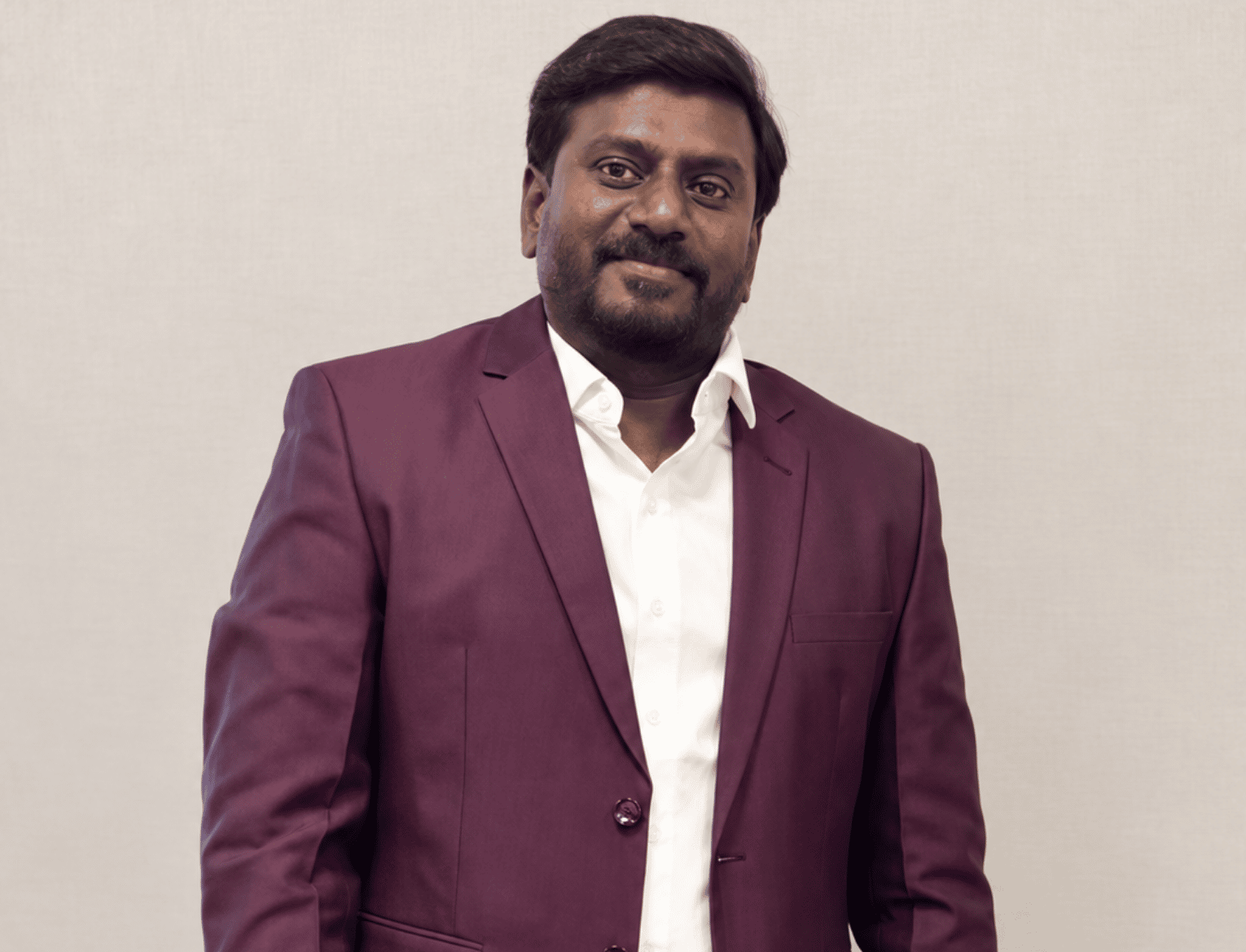
“Chief Minister Vijay represents the fight against corruption”

Rajmohan Arumugam, Tamil Nadu’s Minister for Education, Information and Publicity

Rajmohan Arumugam, Tamil Nadu’s Minister for Education, Information and Publicity discusses the island’s ties with Tamil Nadu, support for Tamil-language learning, the growing importance of data and artificial intelligence, and his transition from YouTube commentator to minister in Chief Minister Vijay’s government. This was during his visit to Mauritius for the 13th World Tamil Economic Conference, held from 11 to 13 September 2026 at the Atal Bihari Vajpayee Institute of Public Service and Innovation. 

Rudy Veeramundar

Rajmohan Arumugam, Tamil Nadu’s Minister for Education, Information and Publicity discusses the island’s ties with Tamil Nadu, support for Tamil-language learning, the growing importance of data and artificial intelligence, and his transition from YouTube commentator to minister in Chief Minister Vijay’s government. This was during his visit to Mauritius for the 13th World Tamil Economic Conference, held from 11 to 13 September 2026 at the Atal Bihari Vajpayee Institute of Public Service and Innovation. 

Rudy Veeramundar 

Could you take us through the key features of your speech at the conference? 

Mauritius is not merely a neighbouring country to us. It is connected to our ancestors. For hundreds of years and over many generations, they shed their sweat, worked hard and settled here. Mauritius is not simply a trading partner; we regard it as part of our own ecosystem — a trusted, hopeful and reliable friend. We have worked closely together for four or five generations. 


I also mentioned the Tamil names I have encountered across Mauritius. I have rarely seen names that are so traditional and deeply rooted, even in Tamil Nadu: Murugan, Varsha, Parvathi, Sivan and Chokkalingam, among many others. Our cultural ties are equally close. Mauritius is therefore a reliable friend and a key part of our ecosystem. That was my central point yesterday. 


I was also struck by the country’s atmosphere. I referred to Mark Twain’s famous observation about whether Mauritius was made first and heaven afterwards — as though Mauritius had been copied into heaven. It is a place of cultural harmony, the people are very friendly, and nature is well preserved. 


People also respect traffic rules. In Chennai, traffic and noise pollution are major daily problems; motorists honk constantly. During my first 48 hours here, travelling felt almost like meditation because nobody honked. Yesterday, there was a misunderstanding and I was running late, so I urged my driver to go faster. He said he would show me his fast driving, but, by my standards, he was still driving very slowly. In India, I travel in an official convoy, where vehicles move quickly and the horn can feel like an inseparable part of driving. 

What are you bringing from Tamil Nadu to Mauritius? 

This is the 13th World Tamil Economic Conference. As a token of appreciation, we announced INR 2.5 M on the first day, with more support to come. I brought my finance secretary, Mr Siddique, and we are ready to do more. 

Tamil Nadu has produced outstanding technology professionals, including Sundar Pichai, and Chennai has a strong reputation in healthcare, with many Mauritians travelling there for treatment. How could the two sides strengthen their relationship in technology and healthcare?

I often say that change is inevitable. People, trends and technology are changing every second. I come from YouTube; I am an accidental politician. If someone had said two years ago that I would become a minister responsible for three departments, nobody would have believed it — although I believed in myself and in change. 


I am a professional speaker and used to conduct motivational sessions for school and university students before examinations. Every year, I observed changes in the audience. 10 or 15 years ago, certain points would play well to the gallery and receive strong applause. Two or three years later, those same points would no longer resonate, so I would find new ones and make course corrections according to the audience. Change is inevitable, and politics is no different. 


One of America’s founding fathers is said to have observed that politics must be ready to face change. People from other professions may enter politics: a teacher or an advocate can become a politician. But a politician cannot simply become a teacher without the necessary grounding. As politicians, we must be alert to what is coming. This is a wake-up call about future readiness. Everyone is now talking about artificial intelligence; I have been discussing it for the past four or five years. 


Do you use ChatGPT? Ask it to select a random number between one and 30. It may choose 17. During our test here, one response was 30; when we asked again, other responses included 24 and 23. On many occasions, the first answer is 17, and the second common answer is 23. 


My point is that data is everything. AI operates based on data. If a large share of previous examples associates 17 with a random number between one and 30, a model may reproduce that pattern. AI is built from vast quantities of data. To confront change, anticipate what lies ahead and prepare for the future, our first step must be to collect data and bring it together on a dashboard.

When you speak of collecting data, what types of data do you mean?  

Everything can be data. The temperature in this room is data. Your most productive time of day is data. Some people wear a smartwatch or a Whoop device, so their sleeping patterns become data — not only for the individual but also for a broader ecosystem. 


Data collection is a basic element of science. Charles Darwin gathered thousands of living samples and specimens, and those observations contributed to the theory of evolution. I know a researcher who collects data on how bacteria react to an antibiotic. If we can collect and process data about bacteria, why not do so for schoolchildren or economic activity? 


Suppose you are an entrepreneur starting a haulage and logistics business. You will concentrate on logistics, vehicle movements and drivers. But if you are sufficiently alert, you will also anticipate a possible fuel surcharge. Could conflict in the Gulf push fuel prices higher? You need data to answer that. Many things could go wrong, and data helps you anticipate and respond. 


My point is simple: we must be ready for change and for the future, and that requires continuous learning and knowledge transfer. The conversation around AI itself is already evolving. We now need to teach children prompt engineering and how to use artificial intelligence effectively. 

You have described yourself as a former YouTuber and you are now Minister for Education, Information and Publicity. What has the journey from YouTube to ministerial office been like? Are you having as much fun as you did as a YouTuber? 

I come from a very ordinary, middle-class background and explored every opportunity that came my way. I tried radio and television and appeared in several prime-time programmes. Somehow, YouTube gave me a space. There was no gatekeeper, and I could choose any subject, take a deep dive and publish a video every fortnight. I could do what I wanted, and I slowly became known across the community. 


People know me as a YouTuber, but I tried every medium available. The transition from YouTube to politics was smooth because I was already among the four or five leading Tamil YouTubers commenting regularly on public issues. I tried to serve as a voice for people who were not being heard. In that sense, my whole life had prepared me for the change. 


I am neither a second nor third-generation politician, and I do not come from a political family. For me, moving from YouTube into politics was not an impossibly large step; I regard this position as a beginning and have greater ambitions. The bigger decision was that the leadership chose a candidate from an ordinary family and from an emerging democratic medium such as YouTube. I respect my leader for that. He has made cabinet ministers of people from backgrounds such as driving and has given opportunities to recent university graduates. The credit goes to the Honourable Chief Minister of Tamil Nadu, Vijay. 

One striking example is that the Chief Minister gave the son of his driver an opportunity to enter politics. How is the younger generation in Tamil Nadu managing the realities of politics? Are you being absorbed by the old political system, or are things genuinely changing? 

Our candidate-selection process is transparent. I do not want to point fingers, but vote-buying has long been an open secret in Tamil Nadu and southern Indian politics. It is not confined to Tamil Nadu, although it may be particularly entrenched there. A large part of the population lives in villages, and many households have limited means and few alternatives. Receiving INR 2,000 or INR 3,000 for a vote can appear significant when a family can manage for a month with INR 3,000 in hand. 


Our leader established one absolute rule: we would not spend a single rupee to buy a vote. You fight the election; winning or losing is part and parcel of the contest, but the process matters. If you are not going to spend money on votes, you do not need political ‘sharks’, monopolists or extremely wealthy candidates. What you need are loyal people who believe in change and have larger ambitions and dreams. That is how a driver’s son became a candidate and is now the government whip.

How important was technology during the election campaign? What message or set of factors persuaded people to shift their support, given how difficult that appeared? 

Timing was very important, as were emerging media such as Instagram, Facebook and TikTok. At one point, we no longer had to produce all the content ourselves; people began creating content on our behalf and making their own reels. It was organic. We were only the catalyst that started the process, and the rest became history. It was rather like entering a prompt once and seeing it spread people themselves became our echo chamber. 

As a member of the cabinet, what distinguishes Chief Minister Vijay’s government from previous administrations? 

This building was constructed and inaugurated by Narendra Modi, the Prime Minister of India. For comparison and ease of understanding, consider the first 100 days of Mr Modi’s government, the first 100 days of Uttar Pradesh Chief Minister Yogi Adityanath’s government, and the first 100 days of Vijay’s government. I would describe Mr Modi’s first 100 days in two words: growth and progress. I would characterise Mr Adityanath’s as strong leadership. Vijay’s first 100 days can be described as anti-corruption. 


We are fighting corruption on a large scale. For the first time in Tamil Nadu’s history, an ordinary person believes corruption can be driven out of the system. It is a top-down approach: no party contribution is demanded, no chief minister’s fund is sought, and no bribe is accepted at the top level. Cabinet ministers do not ask for money or seek financial benefit from deals. As a result, what I estimate to be a 40 per cent leakage has been sealed, and that discipline passes through the system. We have made a good start in fighting corruption, although there is a long way to go. 

What challenges did you encounter when you took office? 

Every day is a challenge. I am quite literally firefighting each day, but that is all right. We are learning quickly, moving fast and enjoying the process. 

Can Chief Minister Vijay visit Mauritius at some point? Does he know that you are here, and what message would he have for the people of Mauritius? 

Why not? Perhaps one day if it is God’s will. He has a special place in his heart for the Tamil diaspora around the world. When occasions such as this arise, he handpicks me. He asks me to visit, examine what I have heard about the country, study it carefully, return and report to him, and then bring the lessons home through knowledge transfer. 

He is like a curious student. He wants to learn new things and understand cultural differences. From that learning, he wants to build a better state and a better nation. 

What are you taking back from Mauritius to Tamil Nadu? 

Wonderful memories and new networks. I have met people from many parts of the world, including the Gulf, South Africa and the United States. 


This is only the tip of the iceberg. I have encountered many talented and multi-talented people in one place. It has been a valuable opportunity, and I have used it well. I will return with much more to share across this ecosystem. 

On your return to Tamil Nadu, what would you tell Chief Minister Vijay is special about Mauritius? 

My Chief Minister is different from many others. He is like a brother. When he sees me after a long absence, he hugs me, asks me to settle down and offers tea, coffee or water. He starts with simple questions: Did you enjoy the trip? How was the flight? Did the team help you? Then he gradually asks me to identify one thing that impressed me in Mauritius. 


I would tell him that Mauritians follow rules. If the rule says not to dump rubbish, people comply. There is little noise pollution and people respect the system. It reminds me of Singapore. A rule applies to an ordinary person and to a politician alike. We need the resolve and the authority to create that degree of respect for rules. That is what I would tell him. 

Skip to content