Back to Bizweek
SEARCH AND PRESS ENTER
Latest News

It should be cool to care about your financial future rather than gamble online

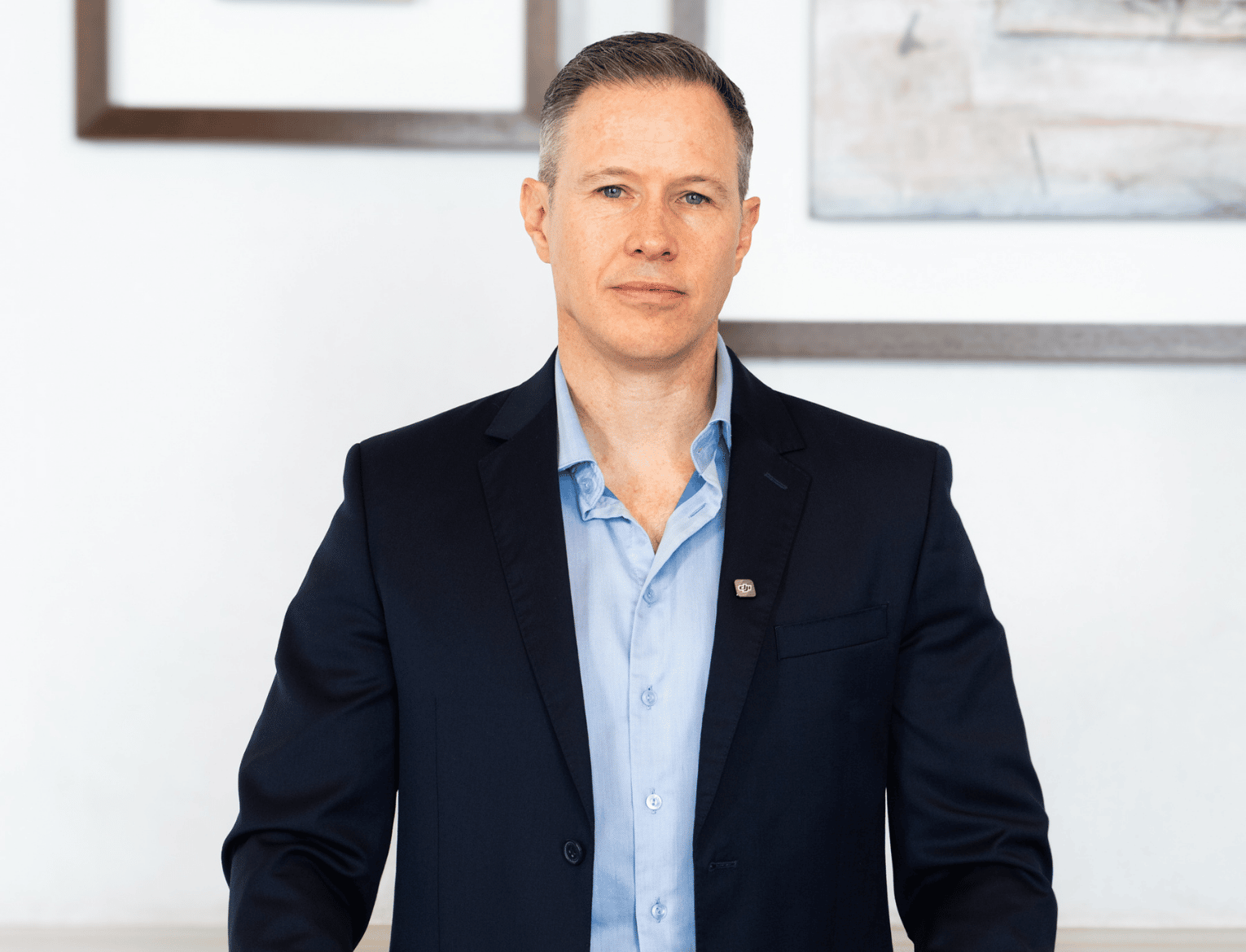
Alex Cook, Founder – Cinnabar IM, South Africa

  • “Finance is relatively simple, but the financial industry makes it appear complex”


  • Children should be encouraged to ask why. That alone could begin changing behaviour. Imagine if children began asking their parents: “Why are we buying a new car? What is wrong with our current car?” 


  • “Anyone who is employed can potentially become financially free within 20 years”


When Alex Cook began helping people manage their finances more than two decades ago, he repeatedly encountered the same painful question from clients approaching retirement: why had no one shown them earlier how much wealth they would need? That experience shaped a mission extending far beyond investment products. Following his participation in the FinWise Annual Investment Summit 2026 in Port Louis, the founder and executive director of Cinnabar Investment Management discusses financial education, disciplined long-term investing and his ambition to use Mauritius as a gateway for helping more Africans build, protect and pass on their wealth.

Rudy Veeramundar and Klyven Veeramundar 

What can you tell us about the FinWise Annual Investment Summit 2026, and why was  it important for you to attend?

It is probably important to go back a few years. We met Rajiv Lutchmiah (founder of FinWise) approximately 13 years ago. At the time, he was running his own business, and that was how we came to know each other. We developed a strong relationship, and Rajiv began to understand what we were doing on the asset-management side of finance. On the back of what we had built, he invited us to attend the summit.

However, it is worth taking another step back and explaining the history of how we reached this point. We founded the group — what we now call the Financial Freedom Group — in June 2000. I had completed an honours degree in science and began helping people with their finances, although I initially knew very little about finance.


“A financially stressed individual is unlikely to be fully productive at work.”


We developed an asset-liability model for every client. It was based entirely on mathematics. The asset was the wealth that the person had accumulated, while the liability was the future income that the asset would need to provide. In other words, it calculated what the person would need to live on from their capital without having to work.

That was revolutionary because people had never been shown how much wealth they needed to accumulate. They did not know what their number was. Telling someone that they had $1mn meant very little without showing them how much income they required and how long the money needed to last.

Once we showed people what they would need to live on, the number began to mean something. Time and again, people came into our offices at the age of 60, and we saw grown men and women in tears because they did not have enough money.

They would ask: “Why did no one tell me this when I was at school? I have had someone advising me about my money throughout my life. Why do I have no money?” The answer was often that the adviser had been selling them a product rather than helping them grow their wealth. We therefore decided to orient the entire group towards helping people achieve financial freedom. A major part of that mission involves helping people remain invested.

When we examined clients’ portfolios, some of the underlying funds were very good. They might have had a four-star Morningstar rating or a bronze badge. When markets declined and the funds lost value, clients could generally accept that their portfolios had fallen alongside the market.

The problem arose when a fund began underperforming its benchmark or its peers. That was when clients became dissatisfied. They withdrew their investments and often moved into cash. When the recovery eventually came, they missed it.

Cinnabar Investment Management was therefore designed to help people remain invested by managing their assets through a fund-of-funds structure. We identify some of the best fund managers in the world, include them in a portfolio and blend their approaches so that their holdings do not overlap excessively. That reduces concentration risk.

When Rajiv invited us to Mauritius, I was extremely enthusiastic because we are deeply committed to Africa. The challenge of operating from South Africa is that it is a large market — the largest financial market on the continent. A business can perform perfectly well by focusing exclusively on South Africa. It does not necessarily have to look beyond its borders.

Our ambition is different. We want to help millions of people across the continent. We are beginning in South Africa, but we have always believed that the technology we developed could spearhead our expansion into the rest of Africa.

When Rajiv approached us, we thought that we could begin by introducing robust portfolio construction to the continent.

At present, we often see what I would describe as briefcase salesmen arriving from overseas. They fly in from Europe, sell products at very high fees and then leave. A new person is later appointed, arrives and tells the client that everything previously done was wrong and that the entire portfolio must be changed. That generates another round of fees.

We would rather have an African-based organisation managing money globally. The objective is not to sell clients different products continually. It is to help them remain invested and grow their wealth.

That is why we were so pleased to participate in the conference. We see Mauritius as a hub from which we can expand into the rest of Africa, and potentially into India as well.

Is there a particular type of person who should invest, or who is eligible to invest, in these funds?

We are often asked that question in South Africa. Our answer is that there is a wealth manager for every situation; you simply must find the right one. In Mauritius, it was important for us to do everything properly from the outset. We ensured that the funds were available for distribution through the appropriate channels.

We went through SBM, and we are now available for distribution through institutions including SBM, AfrAsia Bank and Bank One. The funds can settle through the Euroclear platform. That was important. Everything had to be done by the book and made as straightforward as possible.

By investing through those channels, clients benefit from institutional custody arrangements and can work with an adviser with whom they already have an established relationship. The adviser can then operate at a level that, we hope, may not ordinarily have been available to them.

Over time, we also hope to make our technology available to those who wish to use it. The technology shows individuals what their entire financial lives may look like from the present until the time they die.

It is not sufficient to look only at the next year or the next five years. People must understand their future cash-flow requirements and how those requirements will be funded.

Where can people find more information about the technology and your company?

The technology business is called Wealthbit, and the website is Wealthbit.co. In South Africa, we have launched the Financial Freedom Programme.

Is this a government initiative?

That is a good question, and the answer is not entirely straightforward. We initially developed the software from a spreadsheet that showed individuals what their full financial lives might look like.


“We need to begin celebrating the right behaviour. We too often celebrate the wrong behaviour.”


We then began supporting several advisers and wealth managers. However, we realised that a spreadsheet was vulnerable because people could alter formulas in Excel. We therefore converted it into a financial-technology programme.

We gave the programme to wealth managers in the hope that they would use it to show clients what their financial futures looked like. Our experience is that when people can see their future and understand the consequences of their decisions, they make better choices. 

Suppose someone wants to buy an expensive car. That is not necessarily a problem. They can enter the purchase into the model and see how it changes their long-term financial position. They may look at the result and decide that it does not appear sustainable, prompting them to make a different choice.

Some advisory groups used the software with their clients, while others did not. Adoption was relatively slow. Even so, we now have approximately 10,000 people on the software. We therefore decided to pursue a different route to market and concluded that employers could provide an effective channel.

A financially stressed individual is unlikely to be fully productive at work. Someone who is worried about whether they can feed their children is not thinking about how to perform at their best.

If they are receiving calls from creditors, that is what occupies their attention. They are not focused on doing their best work. We approached employers and asked whether their employees were financially stressed. Not one employer answered no. Every organisation acknowledged that financial stress existed among its staff.

Our next question was whether they wanted to address the problem. We explained that we could implement the Financial Freedom Programme. First, employees are given access to the technology. They then receive monthly online coaching and workshops, followed by individual coaching with a highly qualified professional.

Each participant receives two 45-minute individual sessions per year. We previously held those sessions six months apart but now conduct them two weeks apart.

The participant has the first session, spends two weeks implementing the initial recommendations and then attends a second session. That helps create momentum and, ideally, puts the person on the right path.

We also provide the employer with a dashboard showing the level of financial stress within the organisation and whether the situation is improving or deteriorating. The dashboard is based on aggregated data from the company’s employees, so it provides real information. That is very exciting.

To return to your question about whether it is a government initiative, we are currently working with government bodies in South Africa to have it approved as a programme. Under the proposed arrangement, employers would pay for the programme, but could potentially recover the expenditure from the state because it contributes to the country’s broader wellbeing.

We are also working with Rajiv to help launch the Financial Freedom Programme in Mauritius, with a view to eventually expanding it across Africa.

I recently read about US President Donald Trump launching an investment initiative for children. The government would invest $1,000 for selected children, with the idea that the money could eventually help pay for university. Are you considering similar types of programmes?

Absolutely. We must consider what it would take to make Africa financially wealthier. Europe is wealthy partly because generations have been able to pass assets from one to the next over hundreds of years.

A parent leaves a house to a child. That child later leaves the house, and perhaps another property, to their own children. Even small amounts of money that remain unspent during a person’s lifetime can be passed on. Gradually, wealth accumulates.

That process has not yet taken place to the same extent in Africa.

At the same time, there are organisations attempting to extract what little wealth the continent has through mechanisms such as online sports betting and excessive debt. That is damaging the continent. The volume of sports betting taking place in South Africa is estimated at approximately R1.1tn a year. That figure includes amounts won and reinvested, but the house ultimately always wins.

The net amount lost may be approximately R100bn a year. The problem is that the money does not necessarily remain in South Africa or elsewhere on the continent. It may be transferred to a trust company in another jurisdiction. The money is then lost to the country and to Africa.

We must begin educating people. Our approach considers the problem from both the top down and the bottom up. From the top down, we must reach individuals who are earning money. The mathematics is relatively simple: anyone who is employed can potentially become financially free within 20 years.

By the age of 39, you could be financially free if that is what you want. It is possible. You could potentially do it within 10 years. It is ultimately a question of mathematics, discipline and consistency.

When everyone else is buying the latest iPhone and spending R40,000 — or perhaps between Rs60,000 and Rs80,000 in Mauritius — you can decide that you do not need the latest model. Most people use their phones for WhatsApp messages and a few YouTube videos. They do not necessarily need to pay for the newest device.

People must learn to resist the social pressure placed upon them. That can make their financial lives much easier. We are trying to create change from the top down, but also from the bottom up.

Imagine if children began asking their parents: “Why are we buying a new car? What is wrong with our current car?” The parent might answer that the car is five years old and needs to be replaced. The child could ask: “Are we paying cash?” The answer may be no — the car is being bought on credit.

Children should be encouraged to ask why. That alone could begin changing behaviour.

I conducted an experiment with my son, who is younger than yours. He is 14 and will turn 15 this year. When he was 10, I told him: “Josh, you are 10 years old now. It is time for you to understand your financial future.” We sat down for approximately 20 minutes. During that time, he understood present value and future value because I showed him the programme.

He understood asset allocation. I explained that putting money in a bank produces one type of return, while investing in shares over a long period may produce another. He understood diversification: you should not put all your money in one place because, if that investment fails, it could create a serious problem. He also understood the power of cash-flow events — all within 20 minutes.

I believed he understood the concepts, but I was not certain. I therefore asked whether he would be willing to present them to his school. He was a 10-year-old child and not even among the senior pupils, so he initially said no. A little later, however, he returned and said that he would present the material to his class.

The teacher gave us 20 minutes immediately before the break. I assumed the pupils would be impatient because we were standing between them and their break. My son delivered the presentation while I stood beside him. Except for three pupils, the entire class remained during the break to ask questions.

They asked excellent questions, such as: “How much will a loaf of bread cost when I am 40?” Their questions showed that they understood the concepts. Anyone can understand finance.

Finance is relatively simple, but the financial industry often makes it appear complex. That frightens people and discourages them from engaging with it. We need to make finance accessible and allow people to begin investing with relatively small amounts. That is one reason we joined the different platforms.

An adviser may need to help a client invest Rs500, Rs500 or Rs1,000. That person deserves assistance, just as someone investing Rs10mn does. We must expose people across the continent not only to African portfolios, but also to global portfolios.

There are risks within Africa, including political change, legislative change and other forms of instability. We understand those risks. The way I explain diversification is to ask someone to imagine that they are a Martian sitting on Mars with their Martian spouse and two Martian children. In one hand, they hold all their Martian money. They look at the blue and green planet before them and must decide where to invest their wealth. They would never choose to put everything at the southern tip of a single landmass. They would place some money here, some there and some elsewhere around the world.

We have to make it easier for Africans to invest globally. The process must also be cost-effective. Investors should be able to enter and exit without excessive charges, while the ongoing management fees must remain reasonable.

Once someone joins the platform, can they invest anywhere in the world?

That is the idea. They would invest through SBM, Bank One or another participating institution with which they already have a relationship.

Do the investments have to begin with these institutions?

They act as the custodians. That makes the know-your-customer process easier because the institution already holds the client’s KYC information.

We manage a number of portfolios in South Africa. However, the portfolio that I consider most appropriate for many African investors is the one into which we recommend placing the majority of our clients’ wealth: a globally diversified portfolio.

The portfolios are based in Guernsey, which is a highly regulated jurisdiction. BNP Paribas is the custodian and JTC is the administrator. The necessary institutional safeguards are therefore in place.

Once the money enters the portfolio, we allocate it among 46 different fund managers. If one fund manager makes a mistake, that should not be allowed to destroy a client’s financial future. Diversifying across different managers reduces that risk.

When speaking to members of the financial-services industry in Mauritius, one often hears that the sector is becoming increasingly regulated — some would say over-regulated. There are also assessments conducted by bodies such as the Eastern and Southern Africa Anti-Money Laundering Group and the Financial Action Task Force. How should the jurisdiction navigate these requirements?

I believe that being regarded as a highly regulated jurisdiction will ultimately benefit Mauritius considerably. That could become one of the country’s key competitive advantages.

A number of funds and international jurisdictions are reluctant to deal directly with certain parts of Africa. If Mauritius maintains its reputation as a highly regulated jurisdiction, it will be well positioned to serve as an intermediary. Institutions can conduct the necessary KYC procedures in Mauritius, and funds can subsequently flow through the jurisdiction.

Overseas trust companies and management companies will be more comfortable if they know that Mauritius has properly verified the individuals involved and continues to apply rigorous due-diligence standards. Custodians and investment institutions will be more willing to accept the funds when they know that proper due diligence has been conducted on the underlying investor.

I therefore view strong regulation as a significant advantage.

The danger arises when legislation is applied without the authorities fully understanding the activities they are regulating. Provided that the regulator understands the sector and applies the rules appropriately, regulation can be extremely constructive.

Consistency and predictability are the most important objectives. Once a rule has been introduced, it should not change unexpectedly. Sudden changes cause international investors to lose confidence. Fees should not be increased dramatically, and legislation should not be altered overnight. Regulation must evolve, but it should do so pragmatically.

That is extremely important.

You said something earlier that was music to my ears: you told your son, “Let us talk about your financial future.” Traditionally, that is not the kind of conversation that families have at home. What are the challenges involved in taking this discussion to a national or continental level and encouraging people to talk about their financial futures?

We need to begin celebrating the right behaviour. At present, we too often celebrate the wrong behaviour. There are sporting legends in South Africa whom the entire country admires, yet some of them promote activities such as online gambling.

We have been watching the World Cup on DStv, and the amount of betting advertising is incredible.

It is frightening.

The advertising is everywhere. Alcohol is one issue, but betting appears to be even more pervasive.

We were discussing this over dinner and spoke about Cristiano Ronaldo. When Coca-Cola bottles were placed in front of him during a press conference, he moved them aside and held up a bottle of water. We need to create a similar movement in which positive behaviour becomes fashionable.

It should be considered cool to drink water. It should be cool to care about your financial future rather than gamble online. It should be cool not to become drunk every day or engage in irresponsible drinking.

Doing the right thing should be seen as fashionable. Imagine the positive effect on society if responsible behaviour became something people aspired to. That is when the movement would truly begin to gather momentum.

We are considering establishing an organisation focused on financial freedom. One possible name is Business for Financial Freedom, or BFF — like “best friends forever.” We have not yet decided on the final name.

If businesses begin supporting responsible financial behaviour, people across the continent will gradually become wealthier. When people become wealthier, extraordinary things can happen. They begin spending more on better homes and education, and that money is reinvested in the economy.

Africa’s resources are phenomenal, and the continent also has a growing population. Other regions are losing population, while Africa continues to grow.

Even Mauritius is losing some of its young people because they are moving overseas.

Exactly.

What would you like our readers to know about Alex Cook and Cinnabar Investment Management?

The central message is that we are ready to form partnerships. We want to help organisations grow their businesses. We have done that successfully in South Africa by helping businesses serve their end clients.

We work with financial advisers, banks, trust companies and pension funds. Those organisations have their own investors and clients. We prepare presentations for those end investors and, when necessary, deliver the presentations on behalf of our partners. The objective is not only to help our partners grow their assets under management, but also to retain those assets.

I was telling Rajiv about someone we know well who invested in a mutual fund approximately 23 years ago. It was not the best mutual fund in the market, but it was a good fund. He largely forgot about the investment for 23 years.

What happens when a good investment is left alone for 23 years? In his case, its value increased approximately tenfold. An investment of $100,000 became roughly $1mn simply because he left it invested. 

That is what we are trying to encourage. When people invest, they need a compelling reason to remain invested. All the necessary changes can take place within the portfolio. If one fund manager is underperforming, the allocation can be switched to another. If a particular region is underperforming, the portfolio can modestly increase its allocation to that market when appropriate.

When those adjustments are conducted within the portfolio, investors have less reason to withdraw their money. Their wealth is then able to compound. As the investors’ wealth compounds, the wealth and assets of our partners also grow.

You have mentioned a number of principles that suggest values, morality and ethics matter deeply to you — not only in business, but also as a way of life. Do those values guide the way you conduct your business?

Absolutely. I believe this emphatically: if you do good, if your cause is noble and honourable, and if you genuinely believe that it will contribute to making the world better, the world will ultimately be on your side.

The right things will happen at the right time. That is simply the way life works.

Skip to content