

Back to Bizweek
SEARCH AND PRESS ENTER
Latest News

- 18/09/2023
La MCCI Business School lance l’Innovation Imperative
Leverage agile frameworks to provide a robust synopsis for high level overviews. Iterative approaches to corporate strategy foster collaborative thinking to further the overall value proposition. Organically grow the holistic world view of disruptive innovation

- 29/10/2023
Mauritius may be small in size but it is a leading economic force
UK Prime Minister’s Trade Envoy to Mauritius was back in the island in the first week of October, and answered our questions on important topics such as the Strategic Trade Partnership (STP) with Mauritius, the

- 01/11/2023
Le Groupe CIEL affiche une augmentation de ses bénéfices pour le premier trimestre
Le Groupe CIEL affiche une augmentation de ses bénéfices pour le premier trimestre Le Groupe CIEL a annoncé des bénéfices en hausse pour le premier trimestre clos le 30 septembre 2023. Le chiffre d’affaires s’est
- 01/11/2023
Ensuring efficient market conduct supervision has been at the forefront of the Bank of Mauritius’ agenda”
Ensuring efficient market conduct supervision has been at the forefront of the Bank of Mauritius agenda On 22-23 November 2023, FinCoNet (the International Financial Consumer Protection Organisation) held its Annual General Meeting (AGM), hosted by

- 13/11/2023
Embracing sustainability is not an option, but a business need!
Embracing sustainability is not an option, but a business need! A conference focused on sustainability and climate change is scheduled to take place in Mauritius from October 26 to 27. The CEO of Spaanda, the

- 16/11/2023
Le Groupe Newrest inaugure une unité de production à Maurice
Leverage agile frameworks to provide a robust synopsis for high level overviews. Iterative approaches to corporate strategy foster collaborative thinking to further the overall value proposition. Organically grow the holistic world view of disruptive innovation

- 17/11/2023
La MCB sacrée Best Private Bank in Mauritius 2023
Leverage agile frameworks to provide a robust synopsis for high level overviews. Iterative approaches to corporate strategy foster collaborative thinking to further the overall value proposition. Organically grow the holistic world view of disruptive innovation

- 18/11/2023
AI is changing the game
AI is changing the game As AI continues to revolutionize various sectors, it’s crucial to stay updated with its advancements. The pervasiveness of AI is undeniable and it carries immense potential. However, it also presents
- 03/08/2026
- bizweekafrica Cover Story
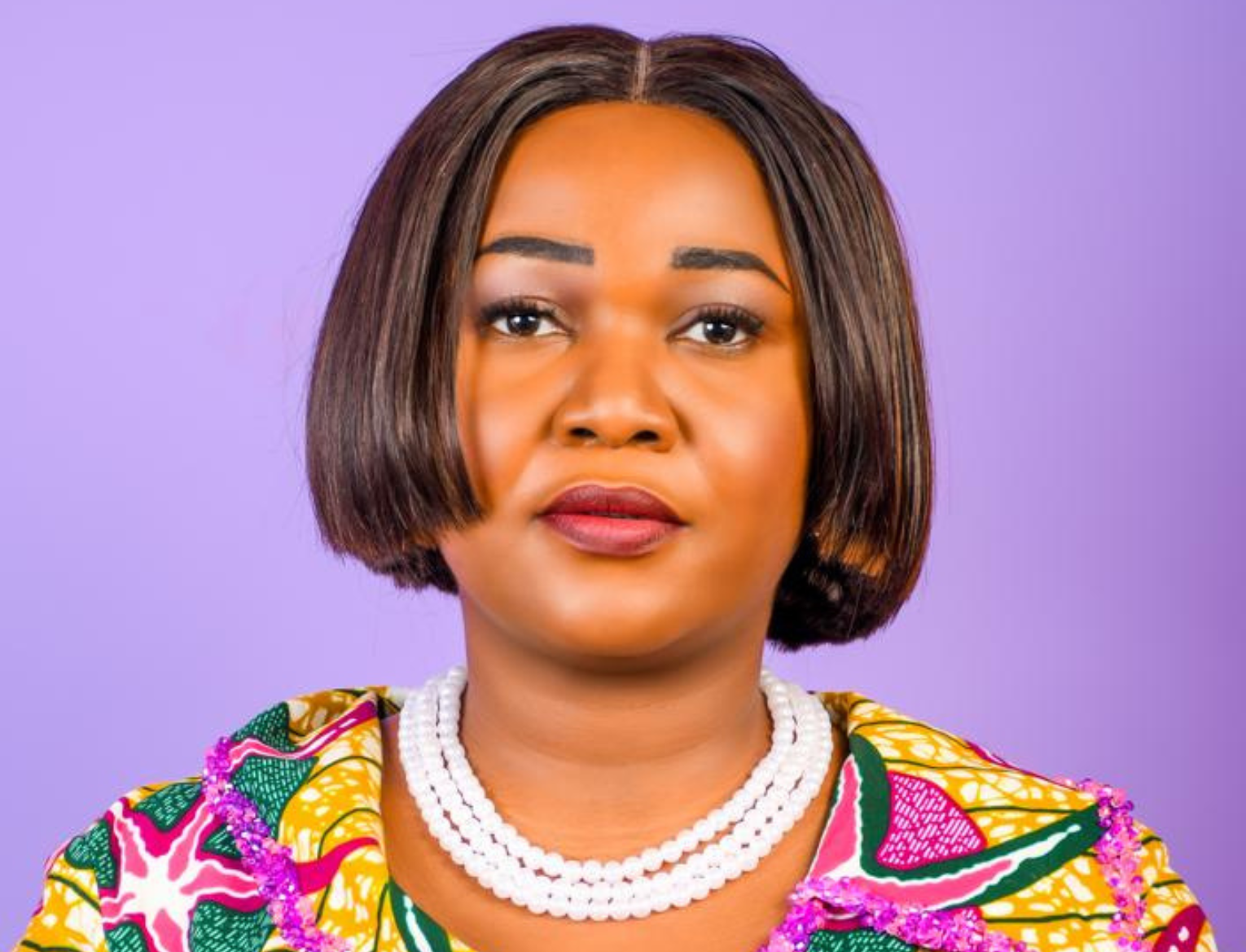
Patience A. Aggrey, Lead Conference Convenor, African Development Conference (ADC)
- “Every time Africa exports raw materials and imports finished products, it exports jobs, industries and economic opportunity.”
- “Mauritius must evolve from being a gateway to Africa into becoming a gateway for Africa.”
As Mauritius prepares to host the African Development Conference, its lead convenor, Patience A. Aggrey, argues that Africa’s central challenge is not simply a shortage of capital, but its capacity to turn economic momentum into industrialisation, employment and investable opportunities. In this interview with Bizweek, she discusses the implementation of the AfCFTA, the continent’s financing and infrastructure gaps, the need for greater value addition, and the reforms required to strengthen investor confidence. She also calls on Mauritius to evolve from a gateway to Africa into a gateway for African businesses, capital and innovation seeking access to global markets.
The African Development Conference seeks to position Mauritius as a gateway to Africa. Beyond networking and dialogue, what tangible outcomes do you expect from this year’s conference, and how will success be measured?
Beyond the panels and networking, we’re building this edition around outcomes we can actually point to afterward. Specifically:
- Signed commitments. We’re targeting a set of MOUs and letters of intent between Mauritian institutions, regional investors, and mainland African businesses — signed on the conference floor, not promised for “later.”
- Structured B2B matchmaking with a paper trail. Every delegate will be matched into pre-scheduled B2B sessions based on sector and interest, and we’ll track how many of those meetings convert into follow-up engagements within 90 days through our IB Market Platform.
- A published set of investment leads. We want to leave Mauritius with a concrete pipeline, a documented list of investment opportunities showcased and the specific investors who expressed formal interest in each.
- Recognition that reinforces the outcomes, not just the ceremony. Our awards remain a centrepiece — honouring public officials and private-sector leaders whose conduct and partnership have produced real impact on trade, investment, or governance. But we’re deliberately anchoring this year’s honourees to demonstrated implementation outcomes (a minister who cleared a trade corridor bottleneck, a business that scaled intra-African supply chains…) rather than general leadership excellence, so the recognition itself becomes a signal of what applaudable looks like under AfCFTA , not just a prestige moment.
- A position paper for the AfCFTA Secretariat. Rather than let the trade-barrier conversations evaporate after the closing session, we’re compiling delegate input into a short report of practical friction points, handed directly to the Secretariat as a working input rather than a courtesy gesture.
At Bold Solutions Group, we not only lean on attendance numbers or applause. The measures we use are:
- Number and value of MOUs/partnership agreements signed at the event and Conversion rate of B2B matchmaking meetings into active deals within 90–180 days, tracked through the group’s IB Market platform with participants.
- Investment commitments made, formally or informally, toward Mauritian and regional opportunities.
- SMEs/participants who complete AfCFTA-readiness support (certification, documentation, compliance guidance) during the conference.
- The credibility and follow-through of our honorees — whether the recognised individuals and organisations continue to be referenced as benchmarks in the months after, a sign the awards carried real weight rather than ceremonial goodwill.
- Uptake of the friction-point report to the AfCFTA Secretariat — whether it’s acknowledged, referenced, or acted on.
- Delegate composition — the balance of public officials, private-sector leaders, and businessmen actually in the room, since the quality of who attends matters more to us than the raw headcount. The result for us isn’t whether people said the event was “impactful” or enjoyed the gala. It’s whether, six months out, we can point to specific trade or investment activity — and a set of honorees still being cited as examples worth following.
Africa is often described as the continent of the future, yet many economies continue to struggle with low productivity, weak industrialisation and high unemployment. What, in your view, remains the continent’s greatest structural challenge?
Africa needs to create roughly 12–15 million jobs annually to absorb new labour-market entrants, and current growth patterns are falling short of that target, even as the continent posts some of the world’s fastest growth rates. So, the structural challenge I’d name after moving around the continent is this: converting momentum into value — turning raw growth, resource wealth, and demographic scale into industrialisation and jobs, rather than just headline GDP numbers. That’s the gap between growing and transforming. But here’s why I’m optimistic rather than discouraged — several of our member countries are already showing what closing that gap looks like. Let’s take Rwanda. The country has built its growth not on commodities but on services, finance, tourism, and technology. It’s projected to grow around 7.2% in 2026, led by reforms, infrastructure, and diversification; proof that a “small”, “resource-poor” country can out-execute much larger neighbours through institutional discipline.
“Capital is always looking for opportunity, but opportunity must first be backed by credibility.”
Ethiopia is doing the opposite and doing it just as well; leading Africa’s “reform-and-scale” economies, combining domestic demand, infrastructure, policy reform, and sector diversification with growth driven by sustained public investment, expansion in services, and industrial parks that are pulling manufacturing into the mix rather than leaving the economy dependent on agriculture alone.
My own country, Ghana, is the comeback story of the moment. Two years removed from a debt default and 40%+ inflation, Afreximbank now projects the economy will expand 5.9% in 2026, with inflation easing sharply to 7.3%, and the cedi has clawed back most of its lost value. The real test — and Ghana knows it — is whether the gold windfall translates into jobs and local processing rather than just exported ore. That’s exactly the industrialisation question I’m talking about, playing out in real time.
Even Burkina Faso, despite the security challenges it continues to navigate, is pursuing something genuinely instructive on resource sovereignty: more than $6 billion in gold value has moved through official channels in just the first half of 2026, as the government works to formalise artisanal mining and bring more of that value into the domestic economy, including a domestic gold refinery under construction and designed to process at 99.99% purity locally rather than exporting raw ore. Whatever one’s view of the politics, the underlying economic instinct to keep more value onshore personally is the right instinct.
Put together, these aren’t isolated success stories. They’re four different playbooks — services-led, industrial-park-led, macro-stabilization-led, and resource-sovereignty-led — for the same underlying problem: turning growth into productive capacity that creates jobs at home. That, to me, is exactly what a platform like ADC exists to do — not just admire the growth numbers, but put these playbooks in conversation with each other, so a Rwandan policymaker, a Ghanaian industrialist and an Ethiopian investor are comparing notes in the same room. The structural challenge is real, but the continent is no longer only theorizing about how to solve it — it’s actively running the experiments. Our job is to help cross-pollinate what’s working.
Africa’s development financing gap is estimated in the hundreds of billions of dollars annually. Is the real problem a lack of capital, or a lack of bankable projects, strong institutions and policy certainty?
I think it’s easy to say Africa’s biggest challenge is a lack of capital, but I don’t believe that’s the whole story. In fact, I would argue that confidence is often a bigger issue than capital itself. The African Development Bank alone approved more than US$10 billion in financing in 2024 across infrastructure, agriculture, energy and private-sector development. The Africa Finance Corporation has invested over US$15 billion in infrastructure projects across more than 35 African countries since its establishment. Beyond Africa, global institutional investors manage well over US$100 trillion in assets. The capital exists. The challenge is converting investment opportunities into bankable projects. The appetite is there. The question investors ask is not simply, “Where can I invest?” but rather, “Can I invest with confidence?” That confidence is built on strong institutions, transparent governance, policy consistency and well-prepared projects. A good example is Kenya’s Lake Turkana Wind Power Project, the largest wind farm in Africa. It attracted an investment of approximately US$700 million because it wasn’t just a good idea; it was a well-structured project. It had detailed feasibility studies, committed investors, government support and a clear regulatory framework. When those elements come together, capital follows.
“The win is not simply attracting investment, but attracting investment that processes, refines and employs within Africa.”
On the other hand, there are many promising projects across Africa that never receive funding, not because they lack potential, but because they are not investment-ready. Sometimes the feasibility studies are incomplete, land acquisition issues remain unresolved, regulatory approvals are unclear, or governance structures are not robust enough to give financiers the confidence they need.
I often say that Africa doesn’t just need more projects; it needs more bankable projects. This is where governments, development institutions and the private sector must work together. Governments must create predictable policy environments, development partners should continue supporting project preparation, and the private sector must embrace international standards of governance and accountability. When those three pieces come together, financing becomes much easier to unlock. I also think we need to broaden our understanding of development finance. Too often, we focus exclusively on attracting foreign investment, yet Africa itself holds enormous pools of capital. Pension funds, insurance companies, sovereign wealth funds and successful African businesses have a growing role to play in financing the continent’s development. If we can mobilise more domestic capital alongside international investment, we will build economies that are not only better financed, but also more resilient.
Ultimately, I don’t believe Africa’s future will be determined by how much money the world is willing to lend us. It will be determined by how effectively we prepare opportunities that inspire investors to become long-term partners in our development. Because capital is always looking for opportunity, but opportunity must first be backed by credibility.
In an increasingly multipolar world, Africa is attracting growing interest from China, the United States, Europe, India and the Gulf States. How can African countries maximise these partnerships without becoming overly dependent on any single power?
As Lead Event Convenor, this is precisely the conversation I want in the room in Mauritius — because the answer isn’t “pick a side,” it’s “build the leverage to not have to.” Where things actually stand in 2026, the field has gotten a lot more crowded than the old China-versus-US framing suggests — the US and China remain important, but they now operate alongside Russia, India, Türkiye, the Gulf states, and the EU, each bringing a different model. India has leaned toward a diversified, partnership-oriented approach blending credit lines, capacity-building, and private-sector engagement, while Türkiye has positioned itself as a “third way,” combining soft power with military cooperation. Meanwhile, the Africa-GCC relationship, formalised in 2025, reflects a genuine structural shift rather than a passing trend — Gulf capital and logistics expertise meeting African scale and growth potential.
Practically, I have a model I call the BLINT:
Build the domestic institutional capacity to negotiate well in the first place. The risk flagged by several 2026 analyses is real: multipolarity, if not grounded in redistributive, people-centred development, risks becoming just another externally defined version of progress — good terms on paper, but still decided elsewhere. The antidote is African technical and legal capacity strong enough to structure these deals rather than simply accept them.
Link infrastructure and security cooperation to outcomes, not dependency. The DRC has begun conditioning mineral trade access on foreign partners’ willingness to help address the security threats that constrain that trade — a useful template: partnership terms that require the partner to solve a shared problem, rather than terms that simply deepen reliance on them.
Insist on value addition and local content, not just capital inflows. The Ghana gold story and the Burkina Faso refinery push we discussed earlier both point in the same direction — the win isn’t attracting investment; it’s attracting investment that processes, refines, and employs inside the continent rather than shipping raw materials out. That principle should apply to every partnership, whichever flag it flies.
Negotiate as a bloc where possible, not as 54 separate small markets.
This is where AfCFTA and platforms like ADC earn their keep. The continent’s leaders have recognised that their combined markets — over 1.4 billion people and vast natural resource wealth — offer real bargaining power if used strategically. A single Ghanaian mining deal is a rounding error to a Gulf sovereign fund; a coordinated continental minerals or logistics strategy is not. The more Africa negotiates collectively, the less any single partner can dictate terms.
Turn competition into leverage — deliberately, not accidentally. Some of our own countries are already doing this well. Kenya has balanced Beijing’s Belt and Road financing against Washington’s security cooperation, while Angola has deliberately diversified its oil partnerships away from Chinese creditors toward Gulf and Western investors. Zambia, Ghana, and Nigeria have all, in different ways, used global competition to renegotiate debt terms and attract more diversified investment portfolios. The lesson: never let one partner become the only option at the table. Multiple offers on the table is what produces better terms — that’s just good negotiating, and it works at the country level exactly as it does in business. The honest summary I’d give from the podium: the danger was never having many suitors — it’s negotiating with each of them as if you had none. The countries doing this well right now are proving that a multipolar world is actually Africa’s best negotiating position in a generation, provided the continent shows up organized rather than fragmented. That’s the case the ADC platforms keep making.
Investors often cite governance and regulatory uncertainty as key obstacles to investing in Africa. What reforms should governments prioritise to build long-term investor confidence?
One of the biggest mistakes we make is assuming that attracting investment is simply about offering tax incentives. Incentives matter, but they are rarely the deciding factor. Investors are looking for countries where it is easy to do business, easy to solve problems and easy to grow. I think governments should start by asking a simple question: “If I were an investor, how easy would it be to invest in my own country?” Too often, an investor has to navigate multiple ministries, lengthy approval processes and unnecessary bureaucracy before a project can even begin. Every additional delay increases costs and, in some cases, causes opportunities to be lost altogether. Reducing red tape should therefore be viewed as an economic reform, not merely an administrative exercise. Another priority is investing in infrastructure. No investor wants to spend more on transporting goods than on producing them. Reliable electricity, efficient ports, quality roads and modern digital infrastructure are just as important as investment laws. Ethiopia’s investment in industrial parks and Morocco’s development of the Tanger Med Port demonstrate how infrastructure can become a magnet for manufacturing, exports and foreign direct investment. These investments created ecosystems where businesses could operate competitively rather than in isolation. Human capital is equally important. Increasingly, investors ask not only, “Where can we invest?” but also, “Can we find the skilled workforce we need?” Countries that invest in education, vocational training and digital skills will naturally become more attractive destinations for high-value industries. I also believe governments must embrace digital transformation.
“AfCFTA has built the legal and institutional skeleton. The next task is to put muscle on it.”
Ghana has demonstrated how digital public services can reduce bureaucracy, improve transparency and make it easier to start and operate a business. When investors can register a company, obtain permits or access government services efficiently, it reduces both costs and uncertainty. Finally, another area that deserves greater attention is public-private dialogue. Policies are often stronger when governments actively engage the business community before introducing major reforms. Businesses are not asking to dictate policy; they simply want the opportunity to contribute practical insights that can improve implementation and avoid unintended consequences.
Governments should think of investors not as people to be persuaded, but as long-term partners in national development. When public institutions are efficient, infrastructure is reliable and people have the right skills, investment becomes a natural outcome rather than something governments have to constantly chase. Because at the end of the day, countries don’t compete for investment through slogans. They compete through execution. And those that execute well are the ones that attract lasting investment and sustainable growth.
The African Continental Free Trade Area has been described as a game changer. What concrete progress have you seen so far, and what still needs to happen for AfCFTA to deliver on its promise?
As Lead Event Convenor, this is the question closest to my own agenda for Mauritius, because “game changer” only holds up if we’re honest about where the promise has actually landed and where it hasn’t.
What’s concrete so far:
- Ratification is nearly universal. As of July 2026, 49 of the 54 signatories have deposited their instruments of ratification, with Somalia having approved ratification and expected to become the 50th. That’s not a small technicality — it means the legal foundation is essentially complete continent-wide.
- The political architecture has been upgraded, not just the legal text. The African Union Heads of State and Government Committee on Implementation of the AfCFTA was inaugurated in February 2026, chaired by President William Ruto of Kenya, specifically to accelerate the transition from negotiation to delivery. That’s heads-of-state-level attention, which is exactly what a project this ambitious needs to survive its hardest phase.
- Tariff and rules-of-origin work is largely done, not stalled. More than 90% of rules-of-origin coverage has been agreed, and the overarching timetable foresees the phase-down of tariffs on 90% of non-sensitive goods, with the remaining gaps concentrated in specific sectors.
- The Secretariat itself has declared a phase shift. Secretary-General Wamkele Mene said in May that AfCFTA has moved beyond negotiations, with legal instruments and institutional mechanisms now in place, and that the focus has shifted to ensuring African businesses — particularly the private sector — can actually use what’s been created. By
July, the Council of Ministers concluded its 18th meeting in Abuja with Nigeria assuming the chairpersonship, at what ministers themselves called a defining moment for the continental economic trajectory, flagging the early establishment of an AfCFTA Intellectual Property Office as a strategic priority for Africa’s innovation economy.
What I believe still needs to happen:
- Close the remaining rules-of-origin gaps. Textiles, processed foods, and some industrial products still lack finalized rules, and until they’re settled, entire sectors sit outside preferential treatment; exactly the sectors most capable of creating manufacturing jobs.
- Turn tariff relief into actual trade flows. This is the honest gap. Five years after trading officially commenced, actual trade flows under AfCFTA remain modest, and the space between signed protocols and transformed supply chains is where continental trade agreements typically founder. Infrastructure deficits constrain what tariff liberalisation alone can achieve — a Kenyan exporter can hold a preferential certificate and still lose the advantage to a bad road or a slow border post.
- Fix what happens at the border, not just what’s written in the agreement. A recent private-sector case study on mango purée trade found that effective implementation depends on integrated customs processes, mutual recognition of standards, clearer treatment of domestic taxes and fees, and stronger resolution of non-tariff barriers — the unglamorous plumbing that determines whether a preferential tariff is usable in practice.
- Widen the Guided Trade Initiative from a pilot into a real trading framework with measurable volume growth, not just a proof of concept.
- Keep resolving remaining questions on dispute mechanisms and market liberalisation, with the AU’s own stated benchmark of full market liberalisation by 2030 as the horizon to build toward.
My honest read from a convenor’s chair: AfCFTA has done the hard, unglamorous work of building the legal and institutional skeleton — that’s genuinely done. What’s left is putting muscle on it: private-sector usability, border-level execution, and infrastructure that lets the paperwork translate into a truck actually crossing a border faster and cheaper than it did before. That’s not a reason for disappointment — it’s exactly the phase a platform like ADC exists to help push through, by putting the businesses hitting these frictions in the same room as the people who can fix them.
Mauritius has long positioned itself as a financial and investment hub for Africa. In an increasingly competitive environment, what must the country do to remain relevant over the next decade?
Mauritius has earned its reputation as one of Africa’s leading financial and investment centres through decades of sound governance, economic diversification and an unwavering commitment to creating a stable business environment. That reputation is not accidental. It is the result of deliberate policy choices made over many years. However, the global economy is changing rapidly, and past success is never a guarantee of future relevance. I believe Mauritius has an opportunity to evolve from being simply a gateway to Africa into becoming a gateway for Africa. There is an important difference. The future is not just about facilitating investment into the continent; it is about helping African businesses expand globally, supporting innovation, mobilising sustainable finance and becoming a centre where African capital meets international opportunity.
“By 2035, Africa must no longer be defined by its potential, but by its achievements.”
One area with enormous potential is sustainable finance. As Africa accelerates its transition to renewable energy, climate-resilient infrastructure and the blue economy, Mauritius is well positioned to become a preferred destination for green finance and impact investment. The country can also strengthen its role in fintech, wealth management and cross-border investment services, sectors that will become increasingly important as African economies continue to grow. I also believe Mauritius can play a bigger role in supporting African entrepreneurship. Imagine a future where promising start-ups from Lagos, Kigali, Accra or Nairobi come to Mauritius not only to raise capital, but also to access mentorship, regional partnerships and international investors. That would further strengthen Mauritius’ position as a true financial bridge between Africa and the rest of the world.
What has always impressed me about Mauritius is its ability to think long term. Despite its small size and limited natural resources, it has consistently adapted to changes in the global economy. That same spirit of innovation will be essential in the years ahead. As we gather for the African Development Conference, I hope delegates leave with an even greater appreciation of what Mauritius represents. It is proof that geography does not determine destiny. Vision does. If Mauritius continues to innovate, embrace emerging industries and strengthen its role as a trusted partner for African growth, I have no doubt it will remain one of the continent’s most influential economic success stories for decades to come.
Africa exports vast quantities of raw materials but captures only a fraction of their value. What policies are needed to accelerate industrialisation and value addition across the continent?
As I have previously mentioned, for decades we have exported raw materials and imported finished products at many times their value. Every time that happens, we are not just exporting commodities; we are exporting jobs, industries, innovation and economic opportunity. Take cocoa, for example. Côte d’Ivoire and Ghana together produce well over half of the world’s cocoa, yet the global chocolate industry, worth well over US$100 billion annually, generates most of its profits outside the continent. Imagine the difference if a greater share of that cocoa were processed, branded and marketed in Africa. The same principle applies to lithium in Zimbabwe, copper in Zambia, cobalt in the Democratic Republic of Congo and bauxite in Guinea. Our ambition should not simply be to extract resources but to build industries around them.
That requires deliberate policy choices. Governments must invest in reliable energy, modern transport infrastructure and industrial parks that make local manufacturing competitive. They should also create incentives for companies that process raw materials locally, while ensuring those policies are practical and sustainable. At the same time, we need to invest in technical education and research so that African talent is equipped to drive advanced manufacturing rather than relying solely on imported expertise.
We can already see what is possible. Morocco has developed one of Africa’s largest automotive manufacturing industries and now exports hundreds of thousands of vehicles each year to Europe and other markets. Rather than depending solely on raw material exports, it has positioned itself as part of the global manufacturing value chain. That is the kind of transformation more African countries should aspire to.
I also believe regional integration through AfCFTA can accelerate this process. Not every country needs to produce every finished product, but together we can build regional value chains where different countries contribute to different stages of production before goods reach global markets. That is how stronger and more resilient African industries will emerge. For me, adding value is about much more than economics. It is about dignity, self-reliance and creating opportunities for future generations. Africa has supplied the world with raw materials for centuries. The next chapter of our story should be about supplying the world with high-quality products, globally competitive brands and innovative solutions proudly made in Africa. Because true wealth is not found in what we extract from the ground. It is found in what we create from it.
Artificial intelligence, digital finance and advanced technologies are transforming global economies. Can Africa leapfrog traditional stages of development, or does it risk widening the technology gap?
Absolutely, and I would go a step further by saying that Africa is already proving it can. For decades, development was often viewed as a linear journey: build extensive infrastructure first, then industrialise, then digitise. Africa has shown that this isn’t always the case. In many areas, we’ve been able to bypass traditional stages and adopt technologies that solve today’s challenges directly. Kenya’s M-Pesa is perhaps the best-known example. Instead of waiting for traditional banking networks to reach every community, mobile money transformed financial inclusion, allowing millions of people to send, receive and save money using their mobile phones. Today, it is studied around the world as a model for digital finance. We’re seeing similar progress in healthcare. Rwanda’s use of drone technology to deliver blood and essential medical supplies to remote communities has demonstrated how innovation can overcome infrastructure challenges and save lives. Across the continent, AI is beginning to support everything from precision agriculture and disease detection to financial services and public administration.
What excites me most about artificial intelligence is that it has the potential to level the playing field. A young software developer in Accra, Kigali or Nairobi can now build solutions that serve customers across the globe. Geography is becoming less of a barrier than it has ever been before.
Of course, technology must be deployed responsibly, with the right regulatory frameworks and investments in digital capacity. But I believe Africa is uniquely positioned to embrace this new era because we are not constrained by legacy systems to the same extent as many developed economies. If the last decade belonged to mobile technology, I believe the next could belong to artificial intelligence. Africa has an opportunity not just to adopt these technologies, but to develop solutions that address our own challenges and, in doing so, contribute to shaping the future of the global digital economy.
If you were advising African Heads of State, what would be the most urgent reforms needed to unlock sustainable and inclusive economic growth?
If I were in that room advising Heads of State directly, I’d resist the temptation to list ten things and instead force the conversation down to three:
- Fix the debt-and-domestic-resource-mobilization problem before it becomes a lost decade.
This is the one that constrains everything else. Average continental debt levels now sit around 64% of GDP, alongside rising fuel costs and inflationary strain that are squeezing fiscal space just as infrastructure and energy needs intensify. More than half of the region’s low-income countries face high risk of debt distress, at precisely the moment foreign aid — historically Africa’s primary source of concessional finance — is contracting sharply. The African finance ministers themselves have been explicit about the fix: deepen and broaden domestic capital markets to mobilise long-term, low-cost, local-currency financing for infrastructure, industrialisation, and productive investment, rather than continuing to borrow externally at penal rates. Ghana’s own turnaround — projected 5.9% growth in 2026 with inflation easing sharply and reserves rising — is proof this is achievable when fiscal discipline and reform are taken seriously, not just announced.
- Turn AfCFTA from a legal achievement into a jobs machine — deliberately, not by default.
We’ve already covered the implementation gap in depth, but from an advisory chair, I’d sharpen it into a demographic warning: Africa is heading toward the world’s fastest labour force expansion — roughly 740 million more working-age people by 2050, with 12 million young Africans entering the labour market every year against only 3 million new formal wage jobs. That arithmetic doesn’t close itself. It closes through AfCFTA delivering on its own projection of a 52% boost to intra-African trade and 30 million jobs by 2035 — but only if the rules-of-origin gaps, non-tariff barriers, and border-level frictions we discussed earlier actually get resolved this decade, not the next.
- Close the infrastructure and energy financing gap, with Africans holding more of the
equity.
Growth and trade both run into the same wall without power and logistics. Africa currently receives only about 2% of global clean energy investment despite having some of the world’s best solar and wind potential, and the AfDB’s 2026 outlook is blunt that debt-servicing costs, climate shocks, and declining concessional financing continue to constrain the fiscal space needed to close that gap. The reform isn’t just “attract more investment” — it’s the domestic-capital-markets point above applied specifically to energy and transport corridors, so that African institutions co-own the assets rather than rent access to them indefinitely.
Why these three and not others? Governance reform, human capital and climate adaptation are all real, but debt sustainability, AfCFTA execution, and infrastructure financing are the load-bearing walls. Get those three right and the rest becomes materially easier to fund and sustain; get them wrong and no amount of summit communiqués fixes it.
Looking ahead to 2035, what would success for Africa look like? Which economic, governance and social indicators would convince you that the continent has entered a new phase of development?
When I think about Africa in 2035, I don’t immediately think about economic statistics or growth rates. I think about people. I think about a young entrepreneur in Lagos who no longer has to look outside Africa to find investors because the capital, networks and opportunities exist right here on the continent. I think about a farmer in Zambia who earns more because agricultural products are processed locally instead of being exported in their raw form. I think about a graduate in Ghana or Rwanda finding meaningful employment in industries that didn’t exist a decade earlier because Africa chose to invest in innovation, manufacturing and technology.
To me, that is what success looks like: an Africa where opportunity is no longer the exception but the expectation. I also hope we will have moved beyond the old narrative of Africa as a continent of untapped potential. We’ve been described that way for far too long. By 2035, I want the conversation to be about results. I want people to speak about Africa the way they speak about other fast-growing regions of the world — as a continent of globally competitive businesses, thriving industries, world-class innovators and confident economies.
I’m particularly hopeful because of Africa’s greatest asset: its people. By 2050, one in every four people in the world will be African. That is not just a demographic statistic — it is a competitive advantage. If we invest wisely in our people, encourage entrepreneurship and create an environment where businesses can grow, I believe Africa will become one of the defining economic forces of the 21st century.
I have always believed that Africa’s story is still being written. Every generation has a responsibility to add a meaningful chapter. This generation has the opportunity to write one defined not by dependency, but by innovation; not by division, but by collaboration; and not by potential alone, but by achievement.
That is the Africa I believe in, and that is the Africa I know is within our reach.