Back to Bizweek
SEARCH AND PRESS ENTER
Latest News

Zhu Rongji: The Reforming Chinese Premier and the Art of Making Bureaucracy Efficient

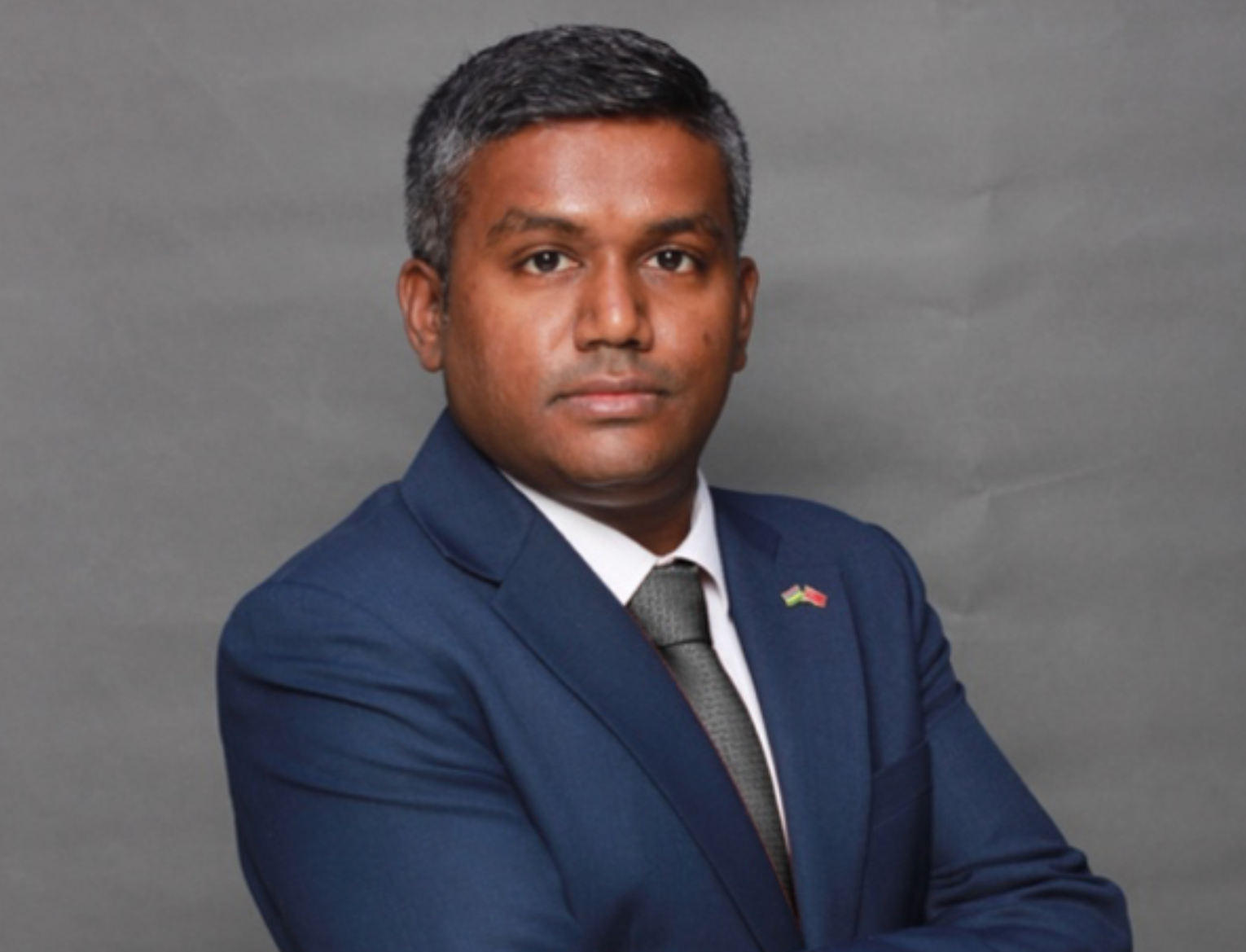
Dr Hans Seesaghur, International Affairs Specialist

By Dr Hans Seesaghur, International Affairs Specialist

The passing away of Zhu Rongji, former Premier of the People’s Republic of China, at the age of 98, marks the passing of one of the most consequential economic reformers of modern China. Zhu passed away in Beijing on 12 August 2026, at 11:06 am, according to Chinese state media. He served as vice-premier from 1991 to 1998, and premier from 1998 until 2003, leaving behind a legacy that continues to shape debates about governance, reform, and administrative competence.


For those who followed China’s extraordinary transformation during the 1990s and early 2000s, Zhu Rongji was more than a senior politician. He represented a particular model of public administration: technically competent, impatient with bureaucracy, prepared to confront vested interests and willing to take political risks to implement difficult reforms. In an era when many leaders preferred caution and consensus, Zhu stood out for his willingness to make unpopular decisions and see them through.

Early Life and Hardship

Born in Changsha, Hunan province, in October 1928, Zhu studied electrical engineering at Tsinghua University, graduating in 1951. His early career was spent working on economic affairs in government institutions, where he demonstrated the analytical rigour that would later define his leadership style. His path was far from smooth, and the political turbulence of Mao Zedong’s era would interrupt his ascent repeatedly. His rehabilitation eventually brought him back into economic administration, where his technical and managerial abilities became increasingly evident. These years of hardship forged a resilience that would prove essential when he later confronted entrenched opposition to reform.

Shanghai: Proving Ground for Reform

His national reputation was forged in Shanghai. Appointed mayor in 1987, Zhu inherited a city that was only beginning to recover its position as one of China’s great commercial centres. He pushed industrial restructuring, encouraged international competitiveness and promoted an export-oriented development strategy that would lay the groundwork for the city’s resurgence. Shanghai’s subsequent emergence as a global financial and commercial hub cannot be attributed to one individual, but Zhu was one of the officials who helped establish the foundations of that transformation.

National Economic Stewardship

In 1991, Zhu was brought to Beijing as vice-premier and increasingly took responsibility for the national economy. In 1993, he also became governor of the People’s Bank of China, placing him at the centre of monetary and financial policymaking during a volatile period. He confronted an economy suffering from overheating, inflation, financial weaknesses and the accumulated inefficiencies of the planned economic system. His response was not to create layers of new institutions, committees and procedures, but to reform the machinery that already existed and make it function properly.

The Premiership: Confronting Structural Crisis

As premier from 1998, Zhu confronted perhaps the most difficult economic reform agenda China had faced since the beginning of reform and opening up. He pushed through major reforms of state-owned enterprises, the taxation system and financial regulation, fundamentally restructuring the relationship between the state and the economy. Many inefficient state enterprises were closed, restructured or privatised, resulting in millions of job losses that rippled through industrial cities and communities across the country. The human cost was considerable, and Zhu’s policies were controversial even among those who recognised their necessity.

Social Costs and Protective Measures

Yet, he also insisted on unemployment protection, minimum living guarantees, re-employment measures and assistance for workers affected by restructuring. This combination of radical economic change with attention to social protection revealed a leader who understood that reform without compassion could undermine its own legitimacy. He was not indifferent to the suffering caused by structural adjustment, even if he refused to allow that suffering to become an excuse for inaction.

The “Iron-Face” Style: Directness and Accountability

His approach was famously direct. Zhu acquired reputations such as “Iron-face Zhu,” “fire-brigade captain,” “crisis manager” and “troubleshooter,” each nickname reflecting a different aspect of his confrontational style. He did not appear particularly interested in making everyone comfortable or building broad coalitions through compromise. He was interested in solving problems, and he expected those around him to share that single-minded focus.

The Anti-Corruption Crusade

That attitude was particularly visible in his campaign against corruption and official misconduct. He warned repeatedly that corruption could destroy public trust and divert state resources from productive uses to private enrichment. At a famous 1998 press conference, he spoke of “having prepared 100 coffins: 99 for corrupt officials and one for himself, should he fail in his mission.” The statement became one of the most memorable expressions of his uncompromising approach to corruption and his willingness to stake his own position on the outcome.

WTO Accession and Global Integration

But Zhu’s legacy cannot be reduced to toughness alone. His importance was that his toughness was accompanied by economic competence and a clear understanding of where China needed to go. He worked to modernise taxation, strengthen financial regulation, restructure state enterprises, reform housing and attract foreign investment on a scale that transformed the country’s economic architecture. He also played a decisive role in the negotiations that culminated in China’s accession to the World Trade Organization in 2001, a turning point that significantly expedited China’s integration into the global economic order.


His WTO achievement was particularly important because it demonstrated that reform was not simply about changing domestic institutions. It was about changing China’s relationship with the world and using external commitments to drive internal modernisation. Zhu understood that international competition could itself become an instrument for domestic reform, forcing inefficient industries to adapt or perish in ways that political rhetoric alone could never achieve.

Speaking to the People

There was also something distinctive about Zhu’s relationship with ordinary citizens. He was willing to speak plainly and publicly about problems that other leaders preferred to address behind closed doors. His speeches, later published in four volumes, became unusually popular because they addressed problems that people could see around them: corruption, local government debt, reckless lending, inflation and officials behaving as though public office entitled them to privileges rather than obligations.


The official Chinese obituary issued after his death emphasised a similar philosophy: government officials should remember that they are public servants, have the courage to speak the truth, avoid seeking special privileges and accept responsibility for difficult tasks while delivering tangible results for the people. This framing of public service as a duty rather than a birthright captured the essence of Zhu’s administrative philosophy.

Lessons for Mauritius: Reform Over Institutions

This is perhaps where Zhu Rongji’s legacy becomes particularly relevant to Mauritius. Mauritius does not need to copy China’s political system, nor should it, but it can learn from Zhu’s philosophy of administrative reform and his insistence that government must deliver. 

The question for any small nation is not whether to reform, but how to reform with limited resources and without the scale that larger economies can deploy. Our country has approximately 220 public-sector entities, including 24 ministries, around 50 government departments, nearly 140 parastatal and statutory bodies, and about 40 state-owned enterprises. According to the Pay Research Bureau’s 2026 report, around 119,420 people fall within the public-sector remit. For a country of about 1.3 million people, this represents a remarkably dense public administration that consumes significant resources.


The question, therefore, is not whether Mauritius needs another institution to fight corruption and apparatchiks. 

Conclusion: The Need for Determined Leadership

Zhu Rongji offers a different lesson: reform the machinery, simplify responsibilities, establish clear accountability and put capable people in charge of delivering measurable results. These principles apply regardless of the political system, because they address universal problems of bureaucracy and institutional inertia. 


A leader who understands how organisations actually work can achieve more with existing structures than a leader who simply adds new layers in the hope that quantity will produce quality. Thus, Mauritius does not need another institution. It needs a Mauritian Zhu Rongji; a person with technical competence, political courage, personal integrity and the willingness to confront vested interests without fear or favour. 


Such a leader would not begin by creating another committee or commissioning another report. He or she would begin by mapping the existing institutions, eliminating overlapping mandates, strengthening those that work, closing those that do not, setting clear deadlines and making senior officials personally accountable for results.


Zhu Rongji’s life reminds us that a country does not need another institution, but it needs one determined person at the top who is willing to enter the minefield, take responsibility, confront corruption and reform the system from within. 


For Mauritius, that may be the most important lesson of Zhu Rongji’s passing.


About the author

Dr Hans Seesaghur formerly served as China Chief Representative of the Mauritius EDB Representative Office in Shanghai. He previously also held the position of Economic and Commercial Counsellor at the Embassy of Mauritius in Beijing. 

Skip to content