Back to Bizweek
SEARCH AND PRESS ENTER
Latest News

A two-year AGOA renewal is much too short to attract investment

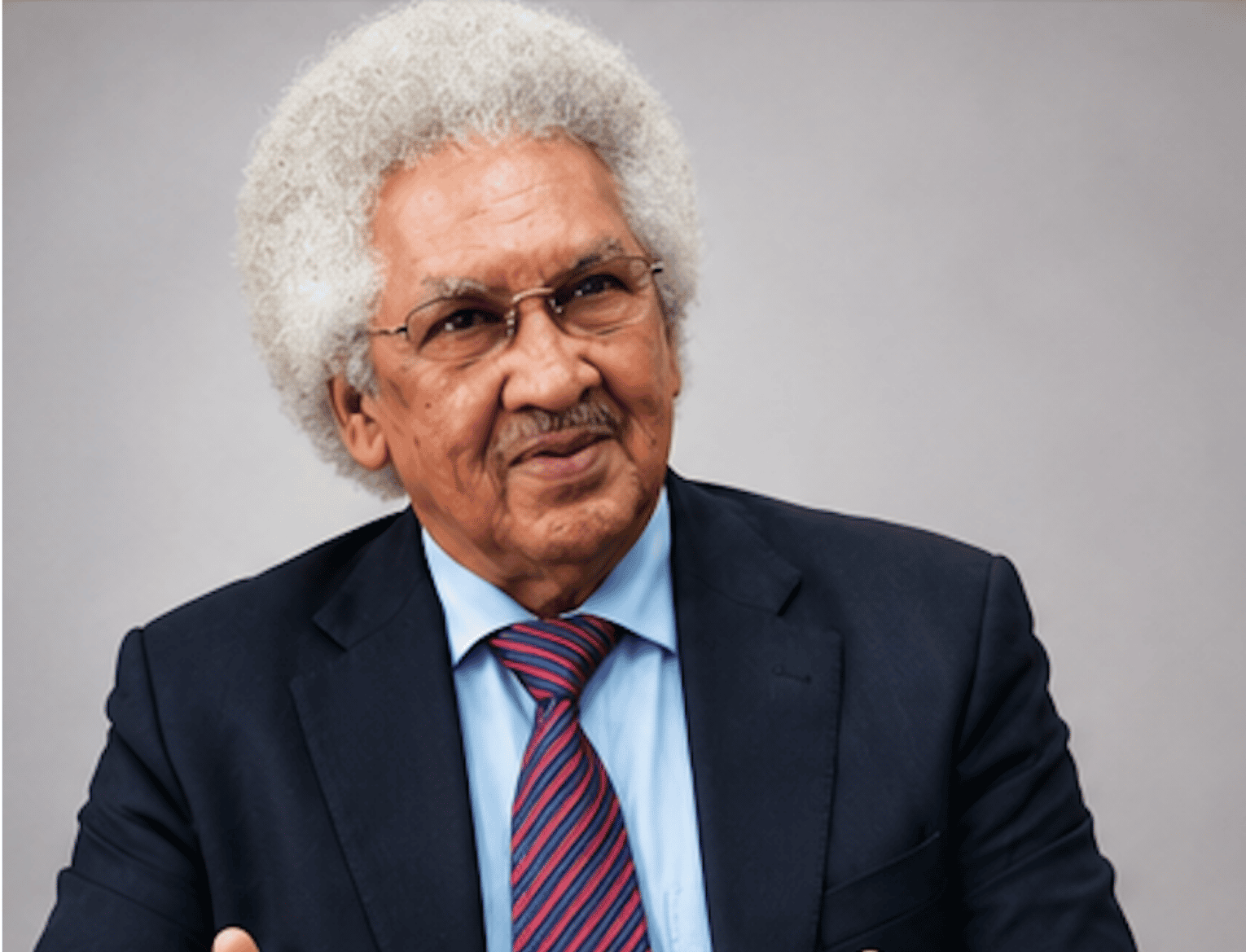
Amedée Darga, National Investigator and Managing Director at StraConsult

Mauritius is facing a double strategic squeeze: uncertain access to traditional export markets and the growing risk of losing its own talent. For Amedée Darga, National Investigator and Managing Director at StraConsult, AGOA’s precarious future shows that preferential market access alone can no longer secure the textile industry’s future. Even as Mauritius looks to preserve the Third Country Fabric provision, a potential two-year renewal of AGOA offers too little certainty to unlock major investment. At the same time, Mauritius is underexploiting two major assets: Africa’s vast economic market and its own young workforce, which is increasingly thinking of going abroad in search of better education, jobs and meritocracy.

How do Mauritians view Africa’s increasing economic integration, and what opportunities does this present for Mauritius as a business and financial hub?

The Afrobarometer Flagship Report shows that only 15% of Mauritians see Africa as a preferred trading partner. A majority of 70% consider, and rightly so, that Mauritian trade should be international. 

African countries offer strong opportunities for the Mauritian global business and financial hub. We have reaped some of the fruits, but there still is a lot to gather. However, there are certain services that Africans require that we are not adequately offering, such as wealth management and investment raising.


“The number of Mauritians considering emigration has trebled between 2016 and 2024.”


Closer to us, the Eastern and Southern African region offers vast opportunities to be captured, such as in agro-industrial production, a spectrum of industrial goods, and health services, to mention a few. 

Is Mauritius sufficiently integrated with the African continent economically, or is the country still underexploiting the opportunities offered by African markets? 

Mauritius is well integrated with Africa in terms of trade and investment agreements. We are already in the AfCFTA, but even more integrated since very long in COMESA and SADC. They offer a market of 800 million consumers, and vast opportunities for investment, not only for large Mauritian groups, but also for medium and smaller companies. 

However, we are far from taking full advantage of the markets. Regretfully, there are four reasons for that: (a) most Mauritian business lack ambition; (b) the Mauritius Africa Fund, which was set up with a fund of Rs 500 million, and which should have supported companies to drive into the regional space, completely failed to do that; (c) Mauritians are too individualistic when thinking of going into foreign markets, instead of hunting in packs; and finally, Mauritius has a massive supply-side deficit. 

How do African citizens perceive partnerships with traditional powers such as Europe and the United States, compared with emerging partners such as China and India?

In Africa, China ranks first. It is considered by 62% of Africans as having a positive economic and political influence on the continent. That is ten percentage points above the USA. Europe garners 50% of positive views, with ex colonial powers at only 41%, with 31% negative consideration. India ranks low overall, at 39%, except in Mauritius (76%) and Seychelles (55%).

Migration is becoming an increasingly important issue across Africa. What does the latest Afrobarometer report reveal about attitudes towards migration, and what lessons should Mauritius draw from these findings?

Africans have always been on the move, more in certain regions of Africa than others for climatic and economic reasons, and because of conflicts. Even if that cannot be strictly defined as migration, crossing borders back and forth to trade or to work remains a normal practice. 

During the apartheid period, there was massive migration by men from Southern African countries to work in the mines of South Africa. The recent wave of xenophobia in South Africa is a clash of migrants moving to that country for economic reasons with poorer and jobless South Africans. 


“Government should have recourse to independent surveys to test the acceptability of policies and measures.”


Furthermore, Africans have also migrated a lot to Europe and to the USA looking for better opportunities. Actually, the Afrobarometer Flagship report indicates that 45% of Africans in the 38 countries surveyed view immigrants favourably, while 50% of Mauritians view the economic impact of immigrants as fairly or very bad. 

The alarming picture for Mauritius is that now, 37% of citizens are somewhat or a lot considering emigrating, the majority being the youth, but also those between 26 and 35 years old. The number of Mauritians considering emigration has trebled between 2016 and 2024. It is dramatic! 

How concerned are Africans and Mauritians in particular about climate change, and do citizens believe their governments are doing enough to protect them from its economic and social consequences? 

Mauritians are definitely concerned about climate change. 32% consider that the government has the prime responsibility to act, while 37% believe it is the responsibility of richer countries, 16% that the private sector has an important role to play, and 16% that citizens themselves should bear that responsibility.

Given its strategic location and economic links with Africa, Asia and Europe, where should Mauritius position itself in the emerging reconfiguration of global economic and geopolitical power? 

Mauritius has since independence very rightly practiced a foreign policy where we have balanced relations with a set of friends. Sir Seewoosagur Ramgoolam had a colourful way to say it, which for decency reasons cannot be spelt out here. It is good to be courted by many while maintaining a balanced distance with all.

If you had to identify the major trend emerging from the Afrobarometer 2026 findings that policymakers and the Mauritian business community cannot afford to ignore, what would it be?

The most important concern that policy makers and the business community should have as a sense of urgency is the desire of emigration by the youth and those in their thirties. 

There are a few reasons for that, which calls for immediate remedies: (a) the lack of meritocracy, (b) an education system that does not provide skills in demand, (c) poor public services, (d) an overall sense of despondency about the future of the country, and (e) societal constraints.

If the African Growth and Opportunity Act (AGOA) is extended by the U.S. House of Representatives with the Third Country Fabric (TCF) provision unchanged, what concrete opportunities do you see for Mauritius to increase its exports and attract new investment into the sector?

U.S. policy and decision determination has become extremely unpredictable. So, until it is done, who knows? A two-year renewal is much too short to attract any investment. Investment is always founded on predictability. In any case, the textile and apparel industry of Mauritius cannot continue to bank its existence on preferential market access only. 

StraConsult has been conducting research and surveys for more than two decades. Looking back, what impact have these surveys had on policymaking, corporate decision-making and the way Mauritius understands its own social, economic and political trends?

StraConsult has been doing surveys and conducting socio economic research for the last twenty-eight years. Policymakers in Mauritius often tend to ignore the lessons of surveys. In fact, surveys, when done scientifically and rigorously, reveal more deeply what is on the mind of citizens than subjective observations and reports by national intelligence agencies or courtesans. 

Some of our research reports are commissioned by the government or a public institution, like the recent report we produced on “Access to Water.” Last year, we also did a study on pharmaceutical market concerns in Mauritius. Such reports are not rendered public, as they are proprietary to the client.

StraConsult has built a substantial body of data on public opinion in Mauritius. What are some of the most significant changes you have observed in the concerns, expectations and priorities of Mauritians over the years? 

There is a lot to be said about the significant changes in the public mindset over the last decades. To cite a few: the loss of trust in fundamental institutions of the country; the loss of confidence in the future of Mauritius; and more positively, a growing percentage of citizens are now refusing to make ethnicity their prime signature of identity. 

How important is reliable and independent survey data in helping governments and policymakers make decisions, particularly at a time when public opinion can be heavily influenced by social media and misinformation?

Social media cannot and should not be ignored, but it should always be remembered that if 90% of citizens read social media, only 10%, probably, express themselves therein. Hence, independent surveys done nation-wide on proper demographic sampling will always give sharper and deeper insights into how citizens think or accept certain things.

In fact, the government should have recourse to independent surveys to test the acceptability of policies and measures, and make corrections if need be and to the extent possible. For example, on the subject of the current debates on cannabis, a survey StraConsult did about three years ago showed that about 50% of citizens favoured decriminalisation of cannabis.

With artificial intelligence, big data and digital platforms transforming the research industry, how is StraConsult adapting its methodology while ensuring that surveys remain credible and representative?

For sure, StraConsult is already engaged in building and reviewing its processes using AI, but AI will not replace face to face surveys, which provide the human response.

Skip to content