Back to Bizweek
SEARCH AND PRESS ENTER
Latest News

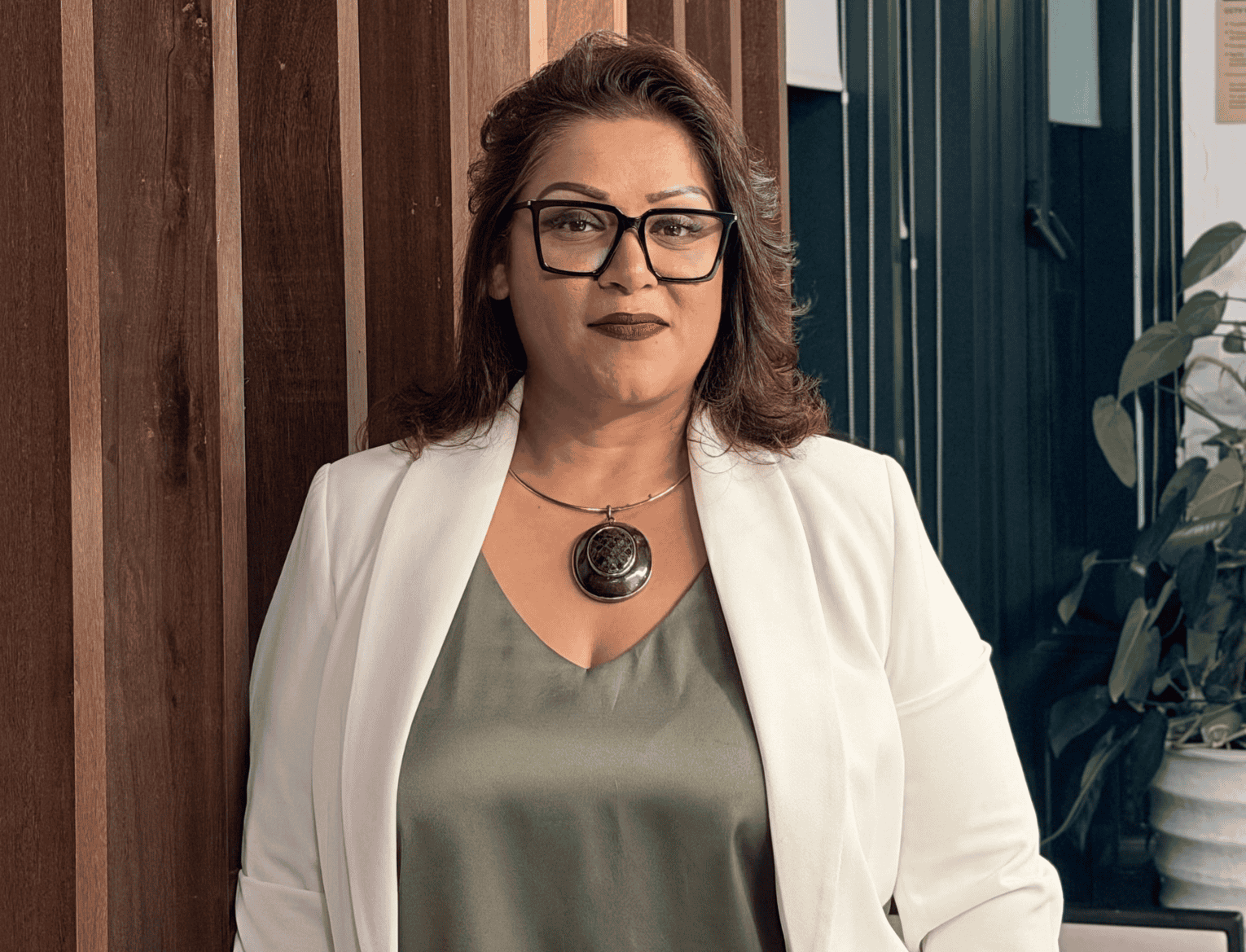
Anouchka Saddul, Head of Corporate Affairs, Brand & Marketing at MauBank

Women are well represented in tertiary education and the public service, yet not at the highest decision-making levels

On the occasion of International Women’s Day, marked this year under the theme “Give to Gain,” Anouchka Saddul, Head of Corporate Affairs, Brand & Marketing at MauBank, shares her reflections on gender equity in the workplace. While women are strongly represented in education and the workforce, she notes that their presence is still not fully reflected in the highest decision-making positions, highlighting the need for both institutional commitment and cultural change.

This year’s Women’s Day theme is “Give to Gain” – a powerful call to action that emphasizes the transformative power of generous support and reciprocity in advancing gender equality. What does this theme represent for you personally?

“Give to Gain” reflects a principle of mutual investment. When women contribute their talent, leadership and ideas, and when institutions invest in opportunity and inclusion, both individuals and organisations grow stronger.

From the perspective of a woman employee, the concept begins with the role she plays in shaping her own growth and impact. Women “give” through the development of their skills and expertise, which drive performance. They also contribute through leadership and collaboration that strengthen teams, through mentorship and support that uplift colleagues, through ideas and innovation that improve the organisation, and through the commitment and resilience required to navigate professional challenges.

Through these contributions, women “gain” tangible outcomes. These include career growth and leadership opportunities, professional recognition, expanded networks and influence, personal development and confidence, as well as the ability to shape workplace culture. In that sense, “Give to Gain” is also about investing in one’s own growth and influence.

From an institutional perspective, the principle rests on investment in people, particularly women, which in turn builds stronger and more sustainable organisations. Institutions “give” through structures that create opportunity and support development. These include equal opportunities for advancement, training and professional development, mentorship and leadership pathways, inclusive and supportive workplace cultures, and policies that promote work life balance and wellbeing.

When organisations create these conditions, they also gain significant benefits. These include higher employee engagement and loyalty, stronger leadership pipelines, greater innovation and diversity of thought, better decision making, and improved organisational performance and reputation.

The real strength of “Give to Gain” lies in the partnership between individuals and institutions. When women contribute their talent and leadership, organisations grow stronger. When organisations provide opportunities and support, women thrive and contribute even more. This dynamic creates a virtuous cycle of empowerment, trust and shared success.

This dynamic creates a cycle built on trust, empowerment and shared success.

It is often said that for Mauritius to achieve its ambition of becoming a high-income country, women’s contribution is essential, together with equality in salaries and benefits. Do you believe there is true equality between the sexes today?


Men and women are not identical. They differ in how they think, perceive situations, and operate within professional and social environments. However, difference should never be interpreted as inequality. While men and women may function differently, their value remains equal.

From this perspective, the concept of equity, rather than strict equality, often resonates more strongly. Equity recognises that women may face different barriers and therefore may require different forms of support to succeed. It focuses on ensuring fairness by removing structural obstacles so that outcomes can ultimately be fair.

At the same time, difference should not be interpreted as inferiority. The objective should not be to mould women into a version of male leadership or behaviour. A more constructive approach lies in recognising and valuing the distinct strengths, perspectives and leadership styles that women bring. In that sense, complementarity provides a more meaningful framework than a notion of uniform equality.

Where equality becomes fundamental, however, is in rights and opportunities. Men and women should have equal access to education, employment and leadership positions. Achieving this requires removing the barriers that still exist at various levels, including attitudinal, legal and institutional constraints that may limit women’s access to the same opportunities as men.

Legal frameworks, policies and reforms can certainly help advance equality of rights and opportunities. Yet legal equality does not automatically translate into equality in everyday practice. Gender inequality is also embedded in deeper societal structures and is closely linked to patriarchal systems that have historically privileged men.

Societies have long been organised around forms of male dominance, reinforced through cultural norms, traditions and entrenched power relations. Addressing these patterns therefore requires more than legislative change. It calls for structural and cultural transformation within institutions and within society itself.

Mauritius has made progress in several areas. However, it would be premature to suggest that full equality has already been achieved. In many respects, the country remains in a phase of transition, where formal frameworks exist, while deeper societal shifts are still unfolding.

Women remain underrepresented in leadership positions such as boards and politics, as well as within government. What is your view on this?

Important strides have been made in recent years to address the question of women’s representation in leadership. These advances have been driven by a combination of public policy, institutional initiatives and sustained advocacy.

Government measures, including the introduction of a quota framework encouraging the presence of women on boards, have contributed to raising awareness of the issue. At the same time, organisations such as the Mauritius Institute of Directors have played a significant role in shifting mindsets through diversity and inclusion programmes and corporate governance training. Initiatives such as the Women Leadership Academy and the Women Directors Forum aim to prepare women for leadership and board responsibilities, while platforms such as the Board of Good have helped create databases of qualified women from which companies can recruit potential board members.

Recent appointments to prominent national positions also send strong signals. The presence of a woman as Governor of the Central Bank, a woman as Chief Justice and a woman as Speaker of the National Assembly illustrates that leadership roles are increasingly accessible.

Yet despite progress in education, professional life and public service, the underrepresentation of women in leadership in Mauritius remains real and significant. The gap is particularly visible in politics and within Cabinet, but it also appears in corporate boards. What makes this situation striking is that Mauritius is not starting from a low-capability base. Women are strongly represented in tertiary education and are present in the public service, yet this presence is not being translated into proportional representation at the highest levels of decision-making.

In politics, Mauritius remains well below both the global and Sub-Saharan African averages. As of 1 January 2025, women held 12 of the 67 seats in the National Assembly, representing 17.9%. This places Mauritius 135th in the Inter-Parliamentary Union ranking. By comparison, the global average stands at 27.2% and the Sub-Saharan African average at 27.1%. Mauritius therefore finds itself behind both global benchmarks and several African peers.

Within government more broadly, the picture is more nuanced. Women remain underrepresented at the political apex, yet their presence is stronger in the senior civil service. According to Statistics Mauritius, women held 39.7% of the most senior government service positions in 2020, 38.9% in 2023 and 34.9% in 2024. While these figures remain below parity, they nevertheless present a different picture of representation within administrative leadership. This contrast suggests that the issue is not primarily a lack of qualified women. It points more toward questions of political selection, promotion pathways and sponsorship for the most senior roles.

Corporate boards reflect a similar pattern. A 2024 MIoD and Korn Ferry survey indicates that women’s representation on Mauritian boards rose from 13% in 2021 to 15% in 2024, while the proportion of boards chaired by women increased from 6% to 9% over the same period. A separate Mauritius market tracker based on companies listed on the Stock Exchange of Mauritius shows that, as of February 2025, women still held less than 25% of all directorships. Although a majority of tracked companies had reached the government’s recommended 25% threshold, this represented an improvement from 42.5% a year earlier.

When placed against global benchmarks, the gap becomes clearer. Deloitte’s 2024 global analysis estimates that women hold 23.3% of board seats worldwide. Mauritius has therefore made some progress, yet it still appears to lag stronger performers and, on certain measures, may even remain below the global average.

The question in Mauritius therefore seems less about capability than about the pipeline into power. Women are present in education and in senior administrative positions, yet this presence is not translating into seats at the main decision-making tables quickly enough. Progress has also proved fragile, with some indicators showing limited movement over time.

This raises an important question: has Mauritius moved from having a representation problem to having an implementation problem? The country already has evidence, qualified women and international examples demonstrating what works. What appears to be required now is consistent institutional commitment, stronger succession planning and a clearer expectation that leadership should reflect the full depth of the country’s talent base.

Do women in this industry still encounter the “glass ceiling” phenomenon?

Many actors within the industry now recognise the need for Diversity, Equity and Inclusion strategies about gender, and this represents an important step towards more deliberate action. Yet the reality is that the glass ceiling phenomenon remains very present, often coexisting with laws and policies that are intended to address it.

According to the latest gender statistics published by the Bank of Mauritius, women represent 56% of the banking workforce, which means they form most employees in the sector. Out of a total workforce of 9,703 employees surveyed, 56% are women and 44% are men. This clearly indicates that the Mauritian banking sector is not lacking female participation or talent.

However, the picture changes significantly when leadership is examined. Female representation drops sharply at senior and executive levels; the majority often sit at the base of the pyramid. According to the same report, more than half of the institutions surveyed have no women in executive positions. While women are strongly present in operational, administrative and professional roles, they remain far less visible in the highest decision-making positions such as executive management, boards or senior leadership roles.

The report also highlights a pattern in gender pay distribution. As salary levels increase, female representation decreases. This trend suggests the existence of structural barriers that may affect career advancement or contribute to disparities in compensation.

These findings mirror patterns observed in many parts of the world, where women tend to be highly represented at mid-level positions but remain underrepresented in senior and higher paying leadership roles.

There are encouraging signs, however. More young women are entering the sector, and with this growing pipeline, the leadership gap could narrow if institutions actively support career progression and retention.

Could you share with us the main challenges you have faced as a professional woman throughout your career?

Having worked across both the public and private sectors and having had the opportunity to learn from remarkable female leaders, each with her own leadership style, I would not say that the challenges I encountered were a matter of gender. Yet with time, certain patterns emerge that reveal how differently women are treated when it comes to positions of responsibility.

Being invited to the table does not always mean being included in the discussion or in the decision-making process. When it comes to nominating someone to a leadership position, the default choice leans towards a man. Ensuring that women are represented on committees, boards or strategic forums is also not yet an automatic reflex.

There are also more subtle dynamics. A strong female voice around the table can sometimes be unsettling, and female authority is not always easily accepted. Before being entrusted with responsibility or leadership roles, a woman’s competence, and sometimes even her temperament, may be scrutinised more closely than a man’s. Facing a glass cliff can become an advantage but women need to learn how to recognize it. 

Economist Isabelle Guérin once said in a ‘France Culture’ podcast: “Being a woman is being in debt. I am a woman, and I owe something permanently — to my children, whether future or present, to my partner, to the community, to the gods, to the banks, to the nation. And this debt takes many forms: moral, financial…” What is your opinion on this statement?

Women are blessed to carry multiple roles simultaneously, and many embrace these responsibilities wholeheartedly. Historically and culturally, they have been expected to occupy several positions at once: caregiver, partner, professional, moral anchor within the family, and contributor to the wider community.

It is therefore understandable that many women experience a persistent sense of obligation toward others, as though they are constantly “owing” something to someone, whether in the form of time, attention, emotional support or financial contribution. In that sense, the metaphor of “debt” reflects the weight of expectations that society has traditionally placed upon women.

Yet it is also important to look at the other side of that equation. Women create value. They shape families and institutions, lead communities and generate economic and social impact.

The idea that women live in permanent debt reflects the many expectations placed on them by society. The question therefore should not be whether women live in permanent debt, but rather whether the full extent of their contribution is properly recognised. The challenge today is to ensure that the value created by women is acknowledged and that responsibilities within society are shared more equitably.


Anouchka Saddul: From public health campaigns to corporate affairs 

Anouchka Saddul is Head of Corporate Affairs, Brand & Marketing at MauBank. Her career, spanning more than 25 years, has taken her across public health, communication, brand development, marketing, CSR and complaints management, always with a strong focus on initiatives that create both institutional and social impact.

She began her professional journey in the public sector, where she was closely involved in national public health efforts, including leading campaigns and supporting the implementation of country HIV programmes. Working within the National AIDS Secretariat, she contributed to securing funding, strengthening the capacity of NGOs through the World Bank’s Institutional Development Fund, and building partnerships with multilateral and donor agencies.

In 2017, she made the move to the banking sector and joined MauBank at a time when the institution was undergoing significant transformation. As Head of Corporate Affairs, Brand & Marketing, she has since played an active role in shaping the bank’s brand presence, leading initiatives across communications, events, brand management and digital marketing.

Beyond her professional responsibilities, Anouchka Saddul remains actively engaged in several organisations. She is a Board member of PILS and a member of the Women Leadership Academy (Mauritius), the Board of Good and Soroptimist International, Port Louis Club. In 2024 she was awarded Africa’s Women Leaders.

A member of the Digital Marketing Institute, she continues to invest in continuous learning. Throughout her career, she has remained deeply committed to people-centred leadership, collaboration, and the role that public and private partnerships can play in advancing sustainability, diversity and inclusion while creating meaningful value for both organisations and society.

Skip to content