Back to Bizweek
SEARCH AND PRESS ENTER
Latest News

Moody’s Warning: Stabilisation Is Not Transformation

  • Mauritius remains investment grade, but defending Baa3 cannot be the limit of our ambition.

By Ali Mansoor 

Moody’s latest credit opinion maintains the country at Baa3 – the lowest investment-grade rating – with a negative outlook. The report is a warning that all is not well and corrective action is urgent. Its message is that our accumulated strengths continue to protect us, while erosion of institutions, increased corruption, high debt, inadequate growth and doubts about implementation are steadily consuming that protection.

The assessment is balanced. Moody’s credits Mauritius with political stability, comparatively strong institutions, a diversified economy, substantial foreign-exchange reserves and a deep domestic financial system. Government borrows mainly in rupees, reducing exposure to exchange-rate shocks. These advantages explain why Mauritius remains investment grade despite a debt burden well above that of its peers.

The warning arises from weaknesses which are not being sufficiently tackled. Moody’s expects growth of only 2.8 per cent in 2026 and around 3.5 per cent thereafter. It forecasts a fiscal deficit of 5 per cent of GDP for 2026/27, rather than the Government’s 3.7 per cent, principally because it prudently excludes anticipated Chagos revenue until that revenue is sufficiently certain. It also questions whether necessary but politically difficult reforms will be implemented, particularly after the partial retreat from pension reform.

In summary, the warning is that debt is too high and our capacity to absorb the next shock may continue to diminish.

A 4 per cent economy stabilises; a 6 per cent economy transforms

The most important number in the report is the growth forecast. An economy growing at 3-3.5 per cent can perhaps stabilise the public finances with considerable effort. It cannot create enough opportunity for young people, finance the needs of an aging society, rebuild public services and make the investments required for climate resilience.

The best way to protect Mauritius’s social model is to transform its growth model. A 4 per cent economy stabilises; a 6 per cent economy transforms. Six per cent is an ambitious but achievable strategic benchmark, lying between our current middle-income trajectory and the rates attained during Mauritius’s earlier periods of transformation as well as the rates achieved by countries that graduated to Advanced Economy status. 

Reaching this higher growth target requires a programme that is export-led because our economy is too small for domestic demand to sustain high growth. Mauritius should position itself as a trusted platform linking Africa with Europe, India, the Gulf and other middle powers, while taking advantage of the reorganisation of global supply chains. We need new activities in higher-value manufacturing, financial and professional services, technology, health, education, the blue economy and climate-related industries. Public support should be conditional on measurable results in exports, productivity, innovation and skilled employment.

A Mauritius Enterprise Transformation Fund could combine the risk-taking strengths of venture capital with the discipline of successful East Asian development models. The state would share early risks with Mauritian entrepreneurs, but continued support would depend on performance. Public participation should be transparent, professionally governed and designed so that successful investments help finance the next generation of enterprises. Government would share a significant percentage of success so that the Transformation Fund is self-financing. Beneficiaries of the Fund would be encouraged to list on the Stock Exchange of Mauritius to strengthen our financial sector. A scheme should also ensure that lower income Mauritians can own shares in the successful enterprises that the Fund supported.

Fiscal credibility without austerity

Faster growth does not remove the need for fiscal discipline. Nor, however, is fiscal consolidation a development strategy. Indiscriminate cuts can reduce next year’s deficit while weakening the productive capacity needed to reduce debt over time. The objective should be to restrain recurrent expenditure, improve value for money and protect investments that expand exports and productivity.

With public expenditure of roughly Rs 230 billion, an efficiency improvement of only 5 per cent could release around Rs 11 billion a year. This will not be achieved through across-the-board cuts. It requires programme-by-programme review, digitalisation, better procurement, fewer overlapping institutions and a serious examination of transfers to state-owned enterprises. Unjustified tax exemptions should also be reviewed, while preserving a simple, competitive and predictable tax system.

Pension reform remains unavoidable because people are living longer while fertility and the working-age population are declining. But reform must be gradual, fair and politically durable. A technically elegant reform that is announced and rapidly withdrawn can damage credibility more than a modest reform that is properly explained, phased and sustained. Those unable to work longer must be protected, while changes should be introduced predictably across age cohorts. Moreover, reform needs to be fair to the middle class and professionals. Any new pension system must be built on contributions, but it must also guarantee an inflation indexed pension of 50 per cent of the last earnings to anyone who contributed for the normal working life. The Basic Retirement Pension (BRP) should only fill the gap between the earned pension and the 50 per cent of last earnings. Over time, as the contributory system takes hold, the spending on BRP would naturally fall.

From administration to delivery

Moody’s concern about implementation points to a wider weakness. Mauritius does not lack reports, announcements or institutions. It lacks a rigorous system for converting decisions into results. We must move from administration to delivery.

Each ministry should have no more than five strategic priorities. For each priority, the public should know what will be delivered, by whom, by when and how success will be measured. Milestones and responsible officers should be identified, with quarterly public reporting. Ministries that produce savings should be allowed to retain part of them for approved productivity improvements, creating an incentive to do more with less.

A renewed National Service could complement this approach – not as compulsory military service, but as a structured pathway through which young Mauritians contribute to community, environmental and social projects while acquiring skills, experience and a stronger sense of common purpose. Properly designed, it would invest in employability and national cohesion rather than simply add another spending programme.

Rebuilding the national policy conversation

Finally, Mauritius needs a stronger independent policy ecosystem. Government, opposition parties, business, trade unions and civil society all have legitimate perspectives, but difficult reforms cannot be built from assertion and counter-assertion. We need a non-partisan space capable of producing fact-based policy papers, testing costs and assumptions, comparing international experience and convening serious discussion across generations and political affiliations.

Such a forum should not seek to govern from outside government or weaken democratic authority. Its role would be to improve the quality of choices placed before citizens and decision-makers, build common ground where possible, and make disagreements more informed where consensus is not possible. Particular effort should be made to involve younger Mauritians, whose future is most affected, but whose voice is too often absent from policy design.

Moody’s has described the probable destination if current trends continue: investment grade, but precariously so, gradual fiscal repair, and growth settling near 3-3.5 per cent. Our task is not merely to defend Baa3. It is to use the warning as a catalyst to restore fiscal credibility, rebuild governance and launch a new cycle of export-led transformation. Mauritius still possesses the assets needed to do so. What is now required is the collective ambition, policy discipline and delivery capacity to turn those assets into results.


About the Author 


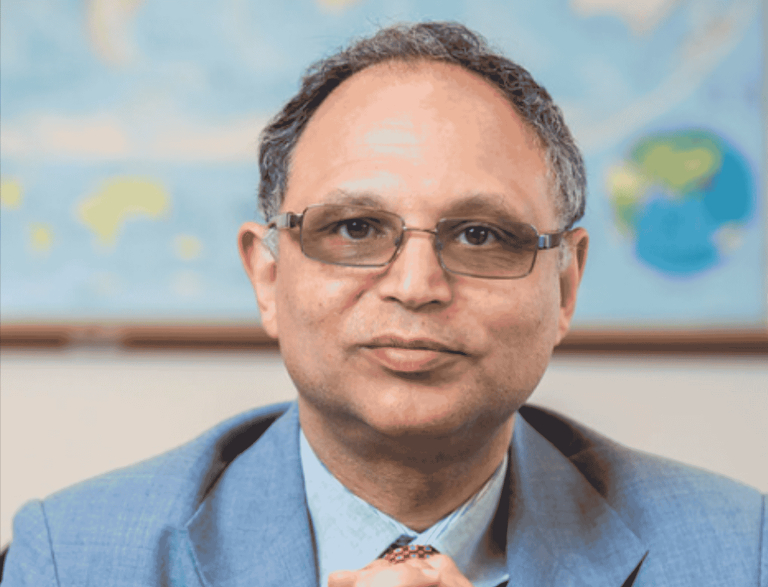
Ali Mansoor is the former Financial Secretary of the Government of Mauritius. He has also served as Lead Economist at the World Bank and Assistant Director at the International Monetary Fund (IMF)

Skip to content