Back to Bizweek
SEARCH AND PRESS ENTER
Latest News
“We are building a network of professionals who are going to be instrumental in addressing illicit finance”

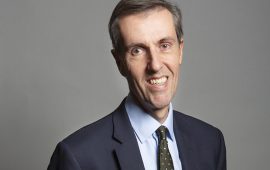
Paul Brummell CMG, British High Commissioner to Mauritius

Mauritius recently hosted two major initiatives aimed at strengthening the fight against illicit finance and corruption. The International Centre for Asset Recovery (ICAR) conducted a training on financial investigations and asset recovery, while the Commonwealth Secretariat, in collaboration with the Financial Crimes Commission (FCC), organised a leadership and management programme for Heads of Anti-Corruption Agencies (ACAs) from across Commonwealth Africa.

At the opening of the ICAR training this week, Paul Brummell CMG, the British High Commissioner to Mauritius and Seychelles, underlined that illicit finance has become “a defining challenge of our age.” He described it as “the getaway car” of corruption, enabling ill-gotten gains to move across borders and weaken institutions.

The British High Commissioner acknowledged the responsibility of the UK, as a major international financial centre, to ensure global finance operates transparently. He emphasised that combating financial crime is an evolving challenge, requiring law enforcement agencies to continuously reform as criminal methodologies advance. Training programmes such as ICAR, delivered by the Basel Institute on Governance, were described as “vital” in helping professionals unravel complexities and strengthen collaboration.

Mauritius’s Strategic Importance

Paul Brummell praised Mauritius for measures taken in recent years to reinforce its financial system and prepare for the next Financial Action Task Force (FATF) Mutual Evaluation Review in 2027. With approximately 10% of Africa’s foreign direct investment flowing through the island, he noted that Mauritius plays a key role as a regional financial hub.

He pointed to tangible achievements in UK-Mauritius cooperation, including reforms on proliferation finance, beneficial ownership transparency, counter-terrorism financing, the creation of the National Sanctions Secretariat, technical assistance to the Financial Crimes Commission, and Mauritius’s progress at the OECD Working Group on Bribery. He also welcomed Mauritius’s membership in the Africa Beneficial Ownership Transparency Network, co-chaired by the UK’s Foreign, Commonwealth and Development Office (FCDO) and the African Development Bank.

Expanded Collaboration Through the SPF

Paul Brummell linked these efforts to the Strategic Partnership Framework (SPF) signed earlier this year following the Chagos Archipelago sovereignty agreement. The SPF established a Countering Illicit Finance Steering Group to coordinate bilateral engagement and support Mauritius’s FATF review, alongside expanding law enforcement cooperation.

The SPF is the continuation of our strong partnership to enhance Mauritius’s status as a regional financial hub and as an investment destination. It reflects our commitment to support Mauritius’ vision in addressing criminality,” he said.


“Illicit finance has become a defining challenge of our age.”


Commonwealth Africa Leadership Training

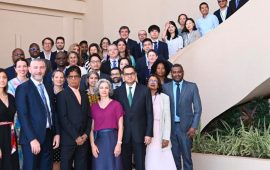
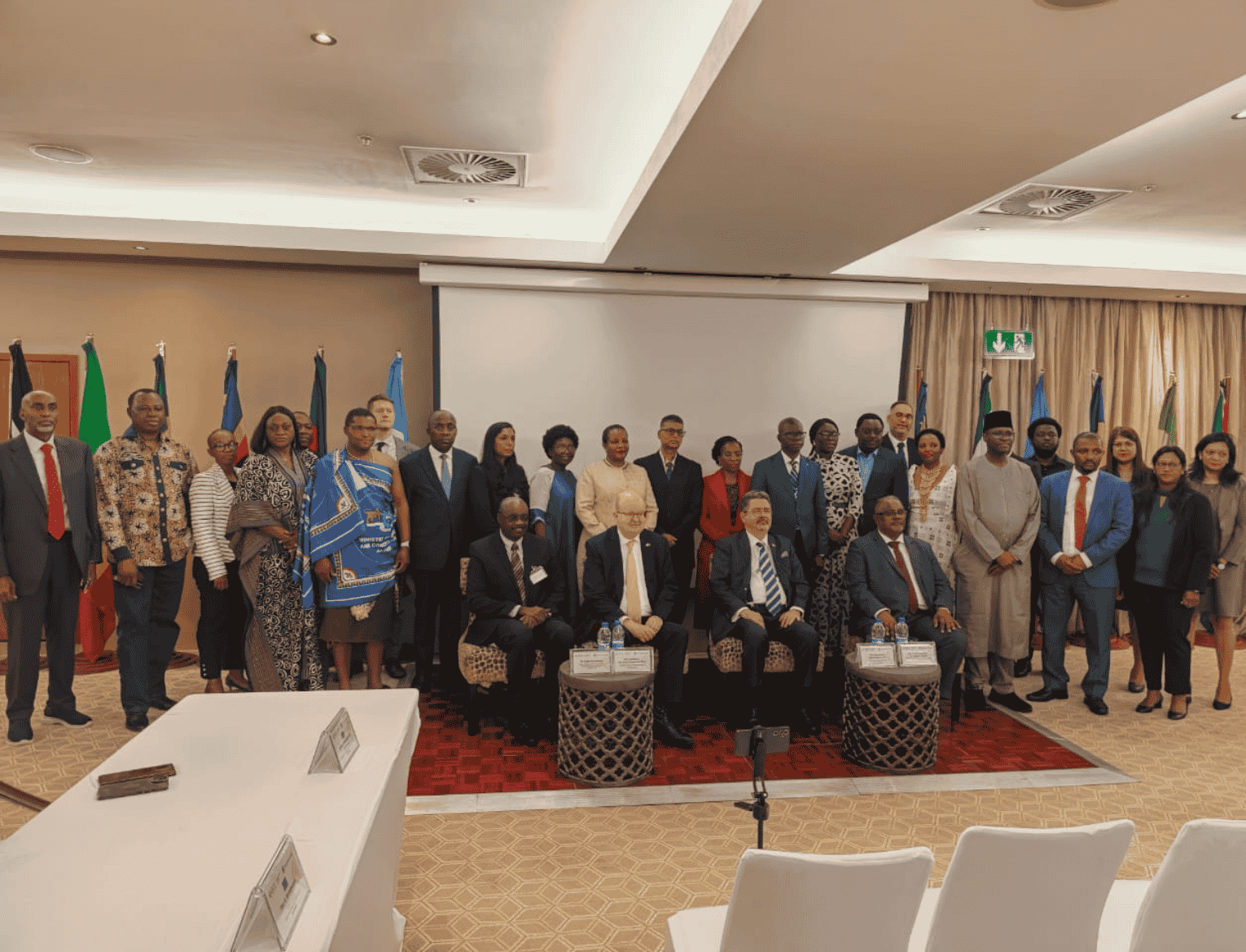
The Commonwealth Secretariat, with FCC support, held a five-day Senior Leadership and Management training programme for Heads of Anti-Corruption Agencies from 15 to 19 September 2025 at Holiday Inn Mauritius Mon Trésor.

The opening ceremony, held on 15 September, featured Gavin Glover, SC, Attorney General of Mauritius, as Chief Guest, with Paul Brummell also in attendance. The programme was led by Dr Roger Koranteng, Head of Public Sector Governance at the Commonwealth Secretariat.

Twenty Heads of ACAs from Botswana, Cameroon, Eswatini, Gabon, Ghana, Kenya, Mauritius, Mozambique, Namibia, Nigeria, Rwanda, Seychelles, Sierra Leone, South Africa, Tanzania, Togo, Uganda, and Zambia participated. Discussions also took place on involving additional representatives from Mauritian law enforcement agencies

The leadership programme sought to:

  • enhance strategic leadership and institutional management capabilities of ACAs;
  • build professional networks and strengthen regional cooperation; and
  • reinforce institutional independence and ethical leadership.

Reinforcing Mauritius’s Convening Role

By bringing together technical training on asset recovery through ICAR and strategic leadership development through the Commonwealth programme, Mauritius confirmed its role as a regional centre for capacity building in governance and financial integrity.

The dual initiatives highlighted the island’s growing importance as a hub for international cooperation against financial crime. As Paul Brummel stated, “through training programmes like this one, we are building a network of professionals who are going to be instrumental in addressing this challenge facing communities across the world,

Skip to content