Back to Bizweek
SEARCH AND PRESS ENTER
Latest News

“Let governance, ethics, and people development be foundational, and not add-ons”

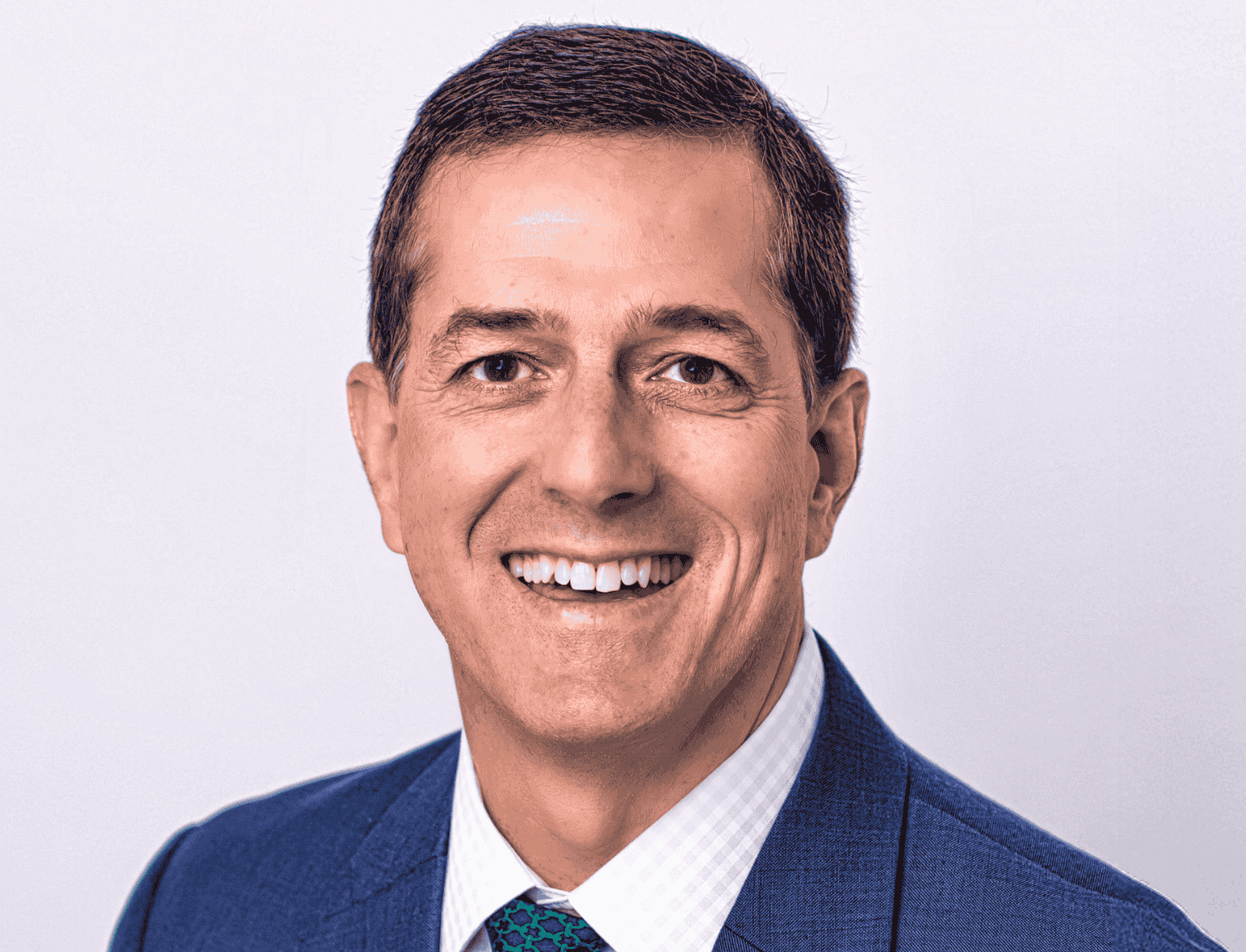
Former Vice President of Microsoft, Ernie Fernandez, speaks exclusively to Bizweek

  • U.S. Embassy Partners with the MIoD for U.S. Speaker Program.
  • “Pick a few high-impact areas rather than trying to do everything.”
  • “The most transformative experiences weren’t always the biggest contracts.”
  • “Not pushing technology for technology’s sake but making sure it works for people who need it most.”
  • “In the age of AI, ethical leadership starts with ensuring every board member is fluent in both the risks and opportunities of new technologies.”

Ernie Fernandez, former Vice President of Microsoft, will be in Mauritius from 29 September to 3 October 2025 under the U.S. Speaker Program, funded by the U.S. State Department, in collaboration with the Mauritius Institute of Directors (MIoD). His visit will include a series of high-level engagements with public and private sector leaders, with a focus on governance, leadership, and innovation. In this exclusive interview with Bizweek, he states that “when emerging leaders see governance and ethics practiced, not just preached, they internalize it.” An organization’s culture, he goes on to argue, must  encourage “curiosity, human achievement, and growth” if change is to be accepted. Mr Fernandez, who will participate as a featured speaker at the MIoD’s Annual Corporate Governance Conference, themed “The Mauritian Advantage – AI, Talent, and Ethical Leadership,” adds that “with the right vision and leadership, Mauritius can be at the forefront of this new AI wave.”

You have led major organizations across technology, government and academia. Looking back, what key leadership principles have guided you throughout your career?

Four constants have shaped my leadership journey: service, humility, continuous growth, and faith. Service means putting others—the team, the customer, the institution—before self. Humility means listening as much as speaking, admitting mistakes, and lifting others up. Growth means seeing each challenge, each failure, each pivot as a teacher. And faith is my quiet north star, keeping me anchored, and fueling the other three.

At IBM, you rose to lead a $6 billion U.S. Public Sector business and also served as VP of IBM’s Global Quote-to-Cash Operations with 10,000 staff. What lessons did you learn about scaling operations and aligning large teams with strategy?

The key to scaling is aligning execution with strategy. You need a shared vision and strategy that everyone—from senior leaders to front-line staff—can articulate in their own words. To enable scalable execution of the strategy, you need regular meeting rhythms to review metrics, built-in feedback loops, what’s working well, what needs improvement… Also, governance matters: when you delegate, you still need oversight. Consistency in values, ethics, and accountability undergird sustainable scale.

At Microsoft, you led the U.S. State and Local Government business, helping governments deploy digital solutions in health, justice, and education. Are there projects, among them, that you consider transformative?

The most transformative weren’t always the biggest contracts—they were the projects that produced the most meaningful outcomes for staff and constituents. Upgrading court systems so cases move faster, helping health agencies deliver services reliably to remote or underserved areas, enabling digital learning platforms that close gaps in education… Not pushing technology for technology’s sake, but making sure it works for people who need it most. And then seeing those organizations share their successes with others. Those were the most transformative.

As CIO of the University of Miami during the COVID-19 pandemic, you successfully steered the institution through unprecedented challenges. What leadership lessons from that period remain the most relevant for organizations today?

Just before the pandemic hit, we trained our entire IT staff on having a customer-centric mindset. I had come from IBM, where it was in our DNA, but not so much with the IT staff of a university. I got the idea from my friend who was the CIO at Vanderbilt University. I was delighted when the leader I was most concerned about embracing it became its biggest champion. When COVID hit, that shared customer mindset enabled all of us to put ourselves in the shoes of those we were serving and to move quickly. Among the things that mattered most were agility, transparency, and compassion for those whose lives and work were disrupted. It also cemented the importance of collaboration—aligning IT priorities to the priorities of the President, the Provost, the College Deans, and the Chief Medical Officer, and course-correcting daily as we learned more about COVID.

You will be speaking at the MIoD’s HCNext session on human capital. From your perspective, what makes organizations resilient in times of disruption?

Resilience comes from people and systems reinforcing each other. First, a culture must be built on the mission of the organization. In difficult times, people need to believe that what they are doing matters. Second, there must be agility in talent: hiring and promoting not just for role competence, but also hiring people with a growth-mindset; people who can view disruption as opportunity for growth. Third, investing in your best people in the good times so they will stick with you in the tough times. Finally, if you are a line-of-business leader, building relationships across your organization —with Finance, Legal, HR and others —so that when things go sideways, you know who to lean on.

How can business leaders better align strategy, technology, and talent development to strengthen resilience?

Start with the outcome you need: what your customers, citizens, or constituents expect. Then map backward: what systems, what tech, what skills will deliver that. Don’t treat talent development as HR alone; embed it in strategic planning. Build feedback loops between tech investment and learning outcomes. Ensure that strategy isn’t just owned by the top, but translated into what each team, each role, contributes each day. Investing in change management that incorporates the human element is one of the best ways to align strategy, technology, and talent.


“Resilience comes from people and systems reinforcing each other.”


What role does culture play in preparing organizations for rapid technological and social change?

Culture is a force multiplier—the thing that makes or breaks change. If the culture encourages curiosity, human achievement, and growth, then change doesn’t feel threatening; it feels inevitable and energizing. If the culture is risk-averse, siloed, defensive, even the best strategy or technology will be resisted. Culture frames how people see purpose, how much they lean in, how they treat one another under stress. Lou Gerstner, the CEO who turned IBM around, famously said that “culture isn’t just one aspect of the game; it is the game.

The U.S. business environment has robust systems for fraud prevention and risk management. What lessons could Mauritian businesses learn from U.S. companies to help strengthen their resilience and transparency?

Several lessons seem especially relevant. One: formal, well-understood internal control systems — not just checklists, but living processes that adapt. Two: speak-up mechanisms with protection. When people can safely report concerns, issues are caught early. Three: board and leadership oversight that looks beyond financials, and has risk, ethics and compliance as standing agenda items. Four: investment in audit, technology, and process automation to reduce manual error and bias. And finally, mandatory compliance training for every employee, with real-world examples they can relate to.

You have served on several boards, including ZenCity, which was named one of Fast Company’s Most Innovative Companies in 2025. How do you balance the pursuit of innovation with the responsibilities of governance?

Balancing innovation and governance can be difficult. Many see them as opposing values, where maximizing one minimizes the other. I see them through a different lens, where innovation and governance are partners. Innovation pushes forward; governance ensures trust. Board roles are critical here. Ask questions leveraging the expertise of the board member, require clarity on risk vs reward, and ensure stakeholders’ interests are protected.

The MIoD’s 4th edition of the Annual Corporate Governance Conference will highlight ethical leadership in the age of AI. How should boards and executives address the ethical dilemmas that new technologies create?

In the age of AI, ethical leadership starts with ensuring every board member is fluent in both the risks and opportunities of new technologies—only when boards are trained, equipped, and engaged can governance truly keep pace with innovation. To uplevel themselves, boards should begin by running a baseline assessment of AI literacy: map out which directors need what level of understanding around AI (risk, technical, regulatory, ethical). They should also build a regular learning calendar—workshops, case studies, expert briefings—so that knowledge isn’t static, but evolves with the fast pace of AI technology.

In your experience, what qualities distinguish boards that succeed in steering organizations through transformative periods?

Successful boards show at least three traits: vision, diversity of thought, background and expertise, and clarity on risks and opportunities. The vision to see where the world is headed; diversity so that blind spots are minimized; and clarity so that there are no ambiguities about responsibilities and trade-offs. There’s also deep mutual trust between the board members and the senior leadership of the organization.

How do you see the relationship between governance, trust, and sustainable growth evolving in the coming decade?

Trust is the economic foundation of sustainable growth. Organizations that maintain robust governance will gain customer loyalty, lower risk, and better partnerships. Early in my career, I was influenced by Stephen Covey’s book “The Speed of Trust: The One Thing That Changes Everything.” He argues that trust is not just a nice sentiment — it has tangible effects. Companies that ignore trust as the bedrock of governance will find their growth stunted, especially as stakeholders demand more accountability. Those that embrace it will move faster and keep pace with an ever-changing world.

Based on your experience working with leading U.S. companies, how has American corporate governance shaped global best practices, and how can Mauritius benefit from adopting these models?

American companies helped popularize independent boards, robust internal metrics and controls, whistleblower protections, and the idea that governance isn’t just compliance—it’s competitive advantage. Mauritius is already a leader in Africa, and has taken important steps in strengthening board training, encouraging diversity of expertise, formalizing risk oversight, and building confidence among investors and citizens that rules are followed and transparent. The key is to continuously build on the foundation already in place.

In recent years, you’ve advised public sector organizations on developing responsible AI roadmaps. What are the essential pillars of such a roadmap for governments?

The essential pillars are:

  1. Clarity of outcomes—use cases that matter to staff and constituents.
  2. Data governance—privacy, security, consent.
  3. Ethics and fairness— human oversight, bias detection, access for all.
  4. Accountability—clear owners, auditability, and oversight.
  5. Resilience—security, reliability, ability to recover from failure.
  6. Workforce readiness—skills, change management, ethical AI literacy.

How can small island states like Mauritius design AI strategies that are both responsible and effective, given their limited resources, but high aspirations of competitiveness?

Be strategic and selective. Pick a few high-impact areas rather than trying to do everything. Leverage shared infrastructure or regional partnerships. Use cloud solutions to avoid heavy capital investment. Focus on ethical governance up front. And invest in people—skilled people amplify every tool, every dollar. Unlike preceding technologies, time to value for AI projects isn’t dependent on large teams. Small teams are doing amazing things with AI. With the right vision and leadership, Mauritius can be at the forefront of this new AI wave.


“When you delegate, you still need oversight.”


What opportunities do you see for Mauritius in adopting AI to improve public services, education, and business operations?

Big ones. Think citizen-facing digital services that make government simpler and more accountable. Think personalized learning paths in education, fraud detection and process automation in business operations, and intelligent systems for visitor management, environment protection, and heritage promotion in tourism and hospitality. Each of these, done responsibly, could both raise quality of experience and strengthen competitiveness.

With AI and digital innovation transforming business, how is the U.S. leading in integrating these technologies into corporate governance, and how might Mauritius leverage U.S. expertise in this area?

The U.S. is building frameworks: oversight committees, skilled boards, ethical AI standards, transparency mechanisms, regulatory guardrails… Mauritius can learn from that, adapt frameworks, invite collaboration, tap into U.S. research and capacity building, and create local standards that reflect global best practices, but are grounded in local values, culture, and needs.

Many businesses worry about balancing AI-driven efficiency with potential risks around jobs, privacy, and trust. How should leaders approach this balance?

Identify and acknowledge the trade-offs early. Be transparent about what you automate with AI. Invest in reskilling and role redesign. Build in privacy and human oversight from day one. Finally, stay humble: monitor, listen, and correct course when unintended consequences show up. I worked with a major US city that implemented one of the first citizen chatbots. In the pilot phase, it gave some answers that were controversial. The mayor held a press conference, explained that it was a pilot, explained the fixes that were being deployed, and took questions. The chatbot has now moved to the beta phase and is getting better by the day.

Do you believe AI could reshape global competitiveness for small and medium economies—and if so, in what ways?

Yes—with caveats. AI can let smaller economies amplify human capital, reach wider markets, and provide services more efficiently. But competitiveness will depend heavily on trust—data privacy, governance, and ethical use. Countries that balance aspiration with integrity will win.

Beyond your executive roles, you’ve been active in philanthropy and cultural heritage, including chairing the Friends of the University of Miami’s Cuban Heritage Collection. How do these commitments influence your approach to leadership?

They ground me. Heritage work reminds me that institutions carry stories—of struggle, of identity, of hope. That shapes my patience, my humility, my long-view thinking. It also reminds me that leadership isn’t just about what’s new, but what endures—values, memory, dignity.

If you were to leave one piece of advice for Mauritian leaders and entrepreneurs navigating the intersection of technology, governance, and human capital, what would it be?

Build for trust as you build for scale. Let governance, ethics, and people development be foundational—not add-ons. Do the hard work early; the cost of skipping it shows up later.

How can the collaboration between the U.S. Embassy and Mauritian institutions like the MIoD empower the next generation of business leaders to drive sustainable growth and ethical business practices?

By creating bridges. Knowledge sharing, yes, but more importantly, shared practice: mentoring, joint problem-solving, collaborative learning labs… When emerging leaders see governance and ethics practiced, not just preached, they internalize it. And when institutions—academic, business, government—work together, the multiplier effect is powerful.

How does the U.S. Embassy’s partnership with organizations like the MIoD support the advancement of ethical leadership and good governance in Mauritius?

Partnership turns values into action. When the U.S. Embassy brings resources, exposure, and frameworks, and the MIoD brings local reach, insight, and legitimacy, you get something that lasts: practices, norms, expectations that are embedded. My hope is that these collaborations leave behind not just events, but stronger governance institutions and cultures that sustain themselves.


About Ernie Fernandez

Ernie Fernandez is a seasoned executive with over 30 years of experience in strategy, technology, and leadership. He most recently served as Vice President of Microsoft’s U.S. State and Local Government business, where he led nationwide digital transformation initiatives across public health, justice, infrastructure, and education. At IBM, he held several senior executive roles, including Vice President of Global Quote-to-Cash Operations, where he led a global organisation of 10,000 employees, and head of IBM’s U.S. Public Sector business, where he drove major transformation efforts. He also served as Vice President and CIO of the University of Miami, where he modernised the institution’s IT operations during the COVID-19 pandemic. Today, he advises organisations worldwide on AI, innovation, and strategy, having served on several boards, including ZenCity, named one of Fast Company’s Most Innovative Companies of 2025.

Skip to content