Back to Bizweek
SEARCH AND PRESS ENTER
Latest News

“AI will help reduce fraud, but it will also be used against us”

John Cusack, Global Expert in AML & Financial Crime Compliance

  • Public awareness and education are just as critical as regulation.

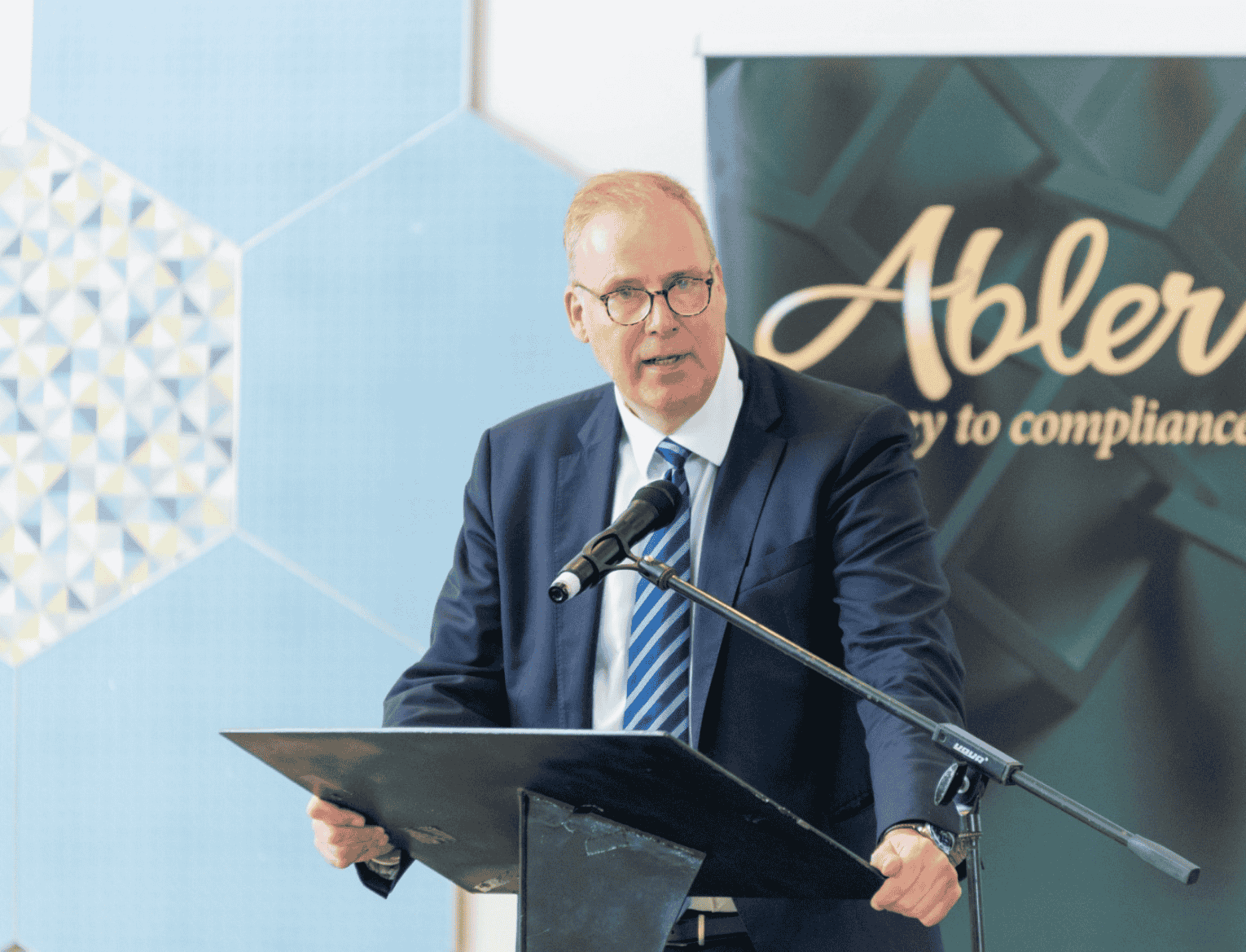
Invited by Abler Group to be the keynote speaker at a Masterclass on Anti-Money Laundering and Countering Financing of Terrorism (AML/CFT), John Cusack – former Chair of the Global Coalition to Fight Financial Crime and Global Senior Advisor at Oliver Wyman – delivered a compelling lecture on the evolving risks of financial crime. In this interview with Bizweek, while he commends Mauritius for its regulatory progress, Cusack warns that the country “will have to prove it can keep pace with evolving risks” at its Financial Action Task Force (FATF) evaluation in 2027. A “whole of society approach” can help in that regard. As for AI, the expert believes it can be “a powerful tool for both criminals and law enforcement.

There seems to be an increase in money laundering offences committed by individuals or financial institutions. Is that a fair assessment?

What we do know is that reported offences are increasing. But those cases are only the tip of the iceberg. Most criminal money is hidden and never detected. The vast majority of offences that get reported is probably a small amount of the total value involved. There is certainly a lot more money hidden underneath the surface. It is quite hard to prevent and quite hard to detect. Once illicit money enters the system, it becomes very difficult to distinguish between “dirty” and “clean” funds. That’s what makes prevention and detection so challenging.

The purpose of financial crime is profit. Just like drug traffickers are not motivated by addiction, but by money, all financial crimes aim at generating illegal proceeds. So, the purpose of financial crimes is to generate significant illegal proceeds and to benefit from that. Once you generate the money, a large part of it goes into the financial system. Some money is kept and spent in cash, but somehow, a lot of it ends up going into the financial systems.

What role do institutions like the Bank of Mauritius play in AML/CFT enforcement?

The financial system is made up of banks and other institutions. That is why the Bank of Mauritius, who is the regulator for the banks, is obviously really concerned to make sure that banks do everything they can to try to prevent and detect money laundering, because that is where some of the illicit financial flows will end up.

The financial system is enormous and the amount of money there is within it is huge due to the transactions done every day. The banks do identify suspicious activity through their system, which is a joined-up system. However, the Bank of Mauritius, being tasked with the responsibility of being the supervisor for all the banks, has to make sure that the institutions which it supervises are doing a good job.

How has Mauritius aligned its AML/CFT framework with the recommendations of the Financial Action Task Force (FATF)?

There is a global standard developed by FATF which is complicated and extensive. It has evolved during the last 35 years, with the most recent standard having just been updated a couple of years ago. So, every country is trying to improve where they are because the threat is evolving. Twenty or thirty years ago, you did not buy drugs online, whereas now, you can. Likewise, financial fraud scams which are happening through online platforms did not happen before. So, the threat has evolved quite substantially.

As far as Mauritius is concerned, the country has done a good job in responding in relation to its last test. From 2020 to 2022, Mauritius has done a lot of work to make sure it got up to the requisite standard that was accepted by FATF. But the world is moving on and Mauritius is going to be tested again in 2027, when the country will have to prove it can keep pace with evolving risks.

I think Mauritius is in a much better position than it was before, but there is still more to do.


“If a criminal wanted to launder his money, he would not choose to do it through the Mauritian global business companies. There are much easier places to do it, where less is seen and less would be known.”


How does Mauritius ensure cooperation with international AML/CFT bodies?

I think Mauritius has a very good and trusted relationship with FATF and other international bodies. However, having a good relationship does not mean that you passed the test. Passing the test is a substantive question and evidence needs to be provided. So, friendships and trusted relationships are good, but the proof will be in the pudding, which will be in 2027.

According to you, are there red flags for money laundering in the Mauritian global business sector?

It is an interesting question. Some people think that the global business sector, which is a regulated sector, should not be a particularly attractive environment to criminals. This sector has a lot of supervision and oversight in relation to money laundering activities. If a criminal wanted to launder his money, he would not choose to do it through the Mauritian global business companies. There are much easier places to do it, where less is seen and less would be known.

What obligation does a reporting person have when money laundering activities are suspected?

It is a legal obligation, and if you fail to report, you are committing a crime! Unlike an ordinary citizen who may or may not report street crime, reporting entities must notify authorities. Prevention and escalation are mandatory. Authorities have a responsibility to do something about that.

What is the role of a whistleblower?

If there is genuine criminality happening or suspicion of criminality, somebody must report it. Every organization has internal escalation protocols, and those should be used first and foremost. But if management ignores or, worse, facilitates criminality, then individuals have a duty to escalate further. No one should remain in an institution complicit in crime. But I would personally always encourage people to use internal processes first.


“If management ignores or, worse, facilitates criminality, then individuals have a duty to escalate further. No one should remain in an institution complicit in crime.”


How does Mauritius deal with Politically Exposed Persons (PEP) in terms of Customer Due Diligence (CDD)?

Mauritius should apply the global standard which is set up by FATF. One of its 40 recommendations is recommendation 12, which is specifically provided for PEPs. PEPs are defined as someone who is a senior, important or prominent individual who is involved in politics, and also their family members and close business associates. It also applies to former politicians.

PEPs are identified as such and they have to be treated as “high-risk” within any reporting entity. That definition applies globally. Any reporting entity has to have a PEP policy, and appropriate controls have to be applied to them in order to mitigate the risk. Mauritius has an obligation in that regard, and it has laws which regulate same.

99 percent of politicians are not corrupt, but some are! While most politicians are not corrupt, history shows that some abuse their position for personal enrichment, making these safeguards essential. This is why we have specific regulations to deal with PEPs.

What is your key message to the business community in Mauritius in relation to our response to AML/CFT?

It starts with the understanding of the threat. The question that should be asked is: what financial crime or money laundering threats does Mauritius face? We have seen the answer in the National Risk Assessment that was published in June 2025. That is a really good start for Mauritius.

Mauritius is telling everybody who wants to listen that it wants to mitigate the proceeds of criminal crime. More than the fact that it must apply the right kind of control in the right place, which makes the right difference, the government, together with law enforcement institutions, regulators and the private sector, need to work closely together. It has to be a joined-up system, and not a separate system! Everyone has to do it collectively. If you are doing it collectively, it will make a bigger difference than individually.

Moreover, it would be more beneficial if the public sector had more formal arrangements for information and dialogue exchange with the private sector. We call it a ‘whole of society approach’. It is really important that the citizens understand the nature of the threats that they face, and how they can be educated to protect themselves.

The number one threat used to be drug-trafficking, but now, it is fraud. It is not a surprise that fraud has taken a pandemic proportion all around the world, and is driven by the digital world which we benefit greatly from, but which also has its consequences. Public awareness and education are just as critical as regulation.

Are you of the opinion that Artificial intelligence (AI) could help reduce fraud and scams in the future, or would it worsen the risks?

AI will help, but it will also be used against us! AI is motive agnostic and is a powerful tool for both criminals and law enforcement. Criminals will use AI for deepfakes, voice cloning and digital identity manipulation, whereas defenders will use AI to detect these same forgeries and strengthen fraud prevention.

AI will evidently help criminals to pretend that they are a certain person in a very successful way, but it will also help the good guys to identify those deepfakes as well.


About John Cusack

John Cusack is an English lawyer with over 30 years of experience in financial crime compliance. He has led global teams at UBS and Standard Chartered Bank, with responsibility across anti-corruption, fraud, sanctions, proliferation, and counter-terrorism financing.

A two-time Chair and long-standing member of the Wolfsberg Group, Mr. Cusack has played a central role in shaping global AML/CFT standards. Until July 2025, he also served as Chair of the Global Coalition to Fight Financial Crime, uniting leading voices from the public and private sectors.

He is currently Senior Adviser on Financial Crime at Oliver Wyman and Co-Founder and Chair of the Advisory Board at Global Screening Services, a RegTech innovator. Alongside these roles, he advises banks, regulators, and corporates worldwide, leads the faculty on illicit finance at Singapore’s Wealth Management Institute, and contributes regularly to international forums hosted by FATF, Egmont, and Interpol.

Skip to content