Back to Bizweek
SEARCH AND PRESS ENTER
Latest News

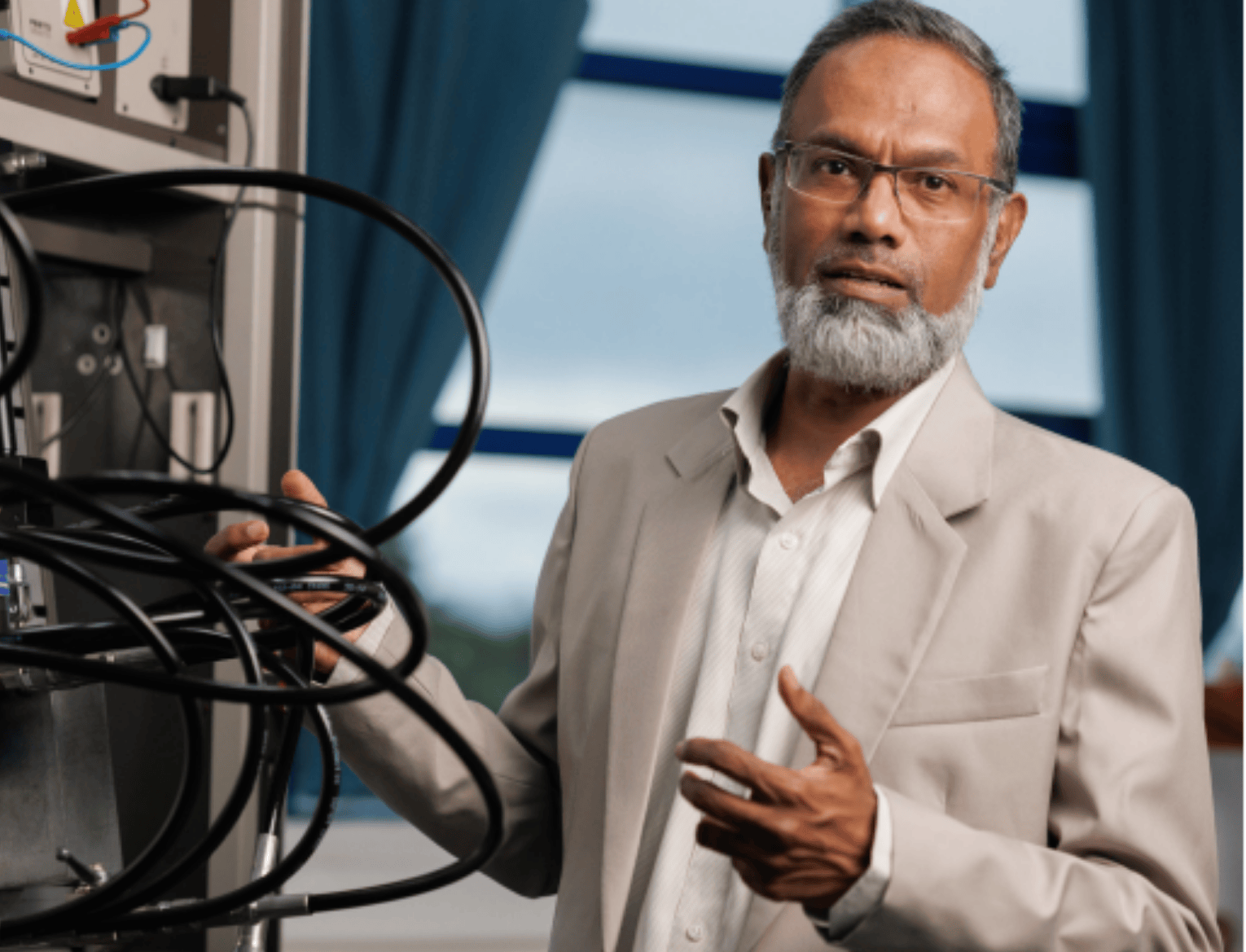
“This crisis vindicates those who say we should never have abandoned the Maurice Ile Durable project”

Professor Khalil Elahee, Director of MARENA

The energy crisis brought about by the conflict in Iran has laid bare the fragility of Mauritius’ dependence on imported fossil fuels and the systemic inertia slowing down the transition to renewable energy sources. Professor Khalil Elahee’s words strike like a warning: resilience cannot be improvised; it must be built on vision. For him, the Maurice Ile Durable project, as a holistic approach to sustainability, integrating renewable energy, efficiency, and transport reform, embodied that vision. Yet it was abandoned, leaving the country exposed. Today, as wars disrupt global energy markets and climate change intensifies, the call is clear: revive that ambition, strengthen institutions like the Mauritius Renewable Energy Agency (MARENA) and commit to transparency, fairness, and good governance. Only then can Mauritius move decisively toward a resilient and inclusive energy future.

Shareenah Kalla

Could you begin by outlining MARENA’s mandate and its role within Mauritius’ energy ecosystem? 

Since its creation in 2015, MARENA has not succeeded in advancing the share of Renewable Energy (RE). In fact, RE has even declined in absolute terms. The institution has been unable to fulfil its role as a promoter, facilitator, and enabler of renewable energy because it was never provided with the necessary means to achieve its mission.

I sincerely hope this will change under the current government. However, despite clear political will, there remains significant systemic inertia and resistance, both within institutions and beyond, that continue to slow down the transition. For example, achieving 60% RE in the electricity sector by 2035, instead of the original target year of 2030, will not be possible unless all stakeholders are engaged in an integrated and coordinated manner.


“MARENA has been unable to fulfil its role as a promoter, facilitator, and enabler of renewable energy because it was never provided with the necessary means to achieve its mission.”


The transport sector presents an even greater challenge. It remains entirely dependent on imported fossil fuels, and to date, there is neither a holistic strategy nor a shared vision for its sustainable energy future. This lack of direction poses a serious risk, as decarbonizing transport is essential for any credible energy transition.

Therefore, MARENA’s role as an institutional coordinator is more critical than ever. Strengthening its capacity – through adequate financial, technical, and human resources, as well as granting it genuine authority to coordinate across institutions – is imperative. Only then can the country overcome current barriers and move decisively toward a sustainable, inclusive, and resilient energy future.

How does MARENA contribute to shaping and implementing the country’s long-term energy strategy?

There remains a clear gap between our intentions and our actions. Up to now, we have taken stock of the situation, consulted all partners, and developed a sound strategic plan. However, its implementation is still awaiting Cabinet approval. Once this approval is secured, we must move quickly to establish a road map that identifies specific projects in terms of technology, capacity, and energy sources.

The parent ministry has already outlined immediate and short-term projects, but the longer-term pathway to 2035 has yet to be confirmed. MARENA’s role is also to ensure alignment with demand-side projections and with the much-anticipated Integrated Electricity Plan of the Central Electricity Board (CEB). The last plan ended in 2022, leaving a gap that must urgently be addressed.

Without a synergistic partnership involving both public and private sector allies – locally and internationally – MARENA will not succeed in its mission. One of the most pressing constraints is the availability of qualified human resources in the renewable energy sector, as well as the need to strengthen the capacity of existing staff. To date, we have not managed to recruit a Chief Executive Officer. The package offered has not sufficiently been attractive to secure the right candidates, even after an open recruitment process.

This situation highlights the urgent need to reinforce institutional capacity, secure leadership, and mobilize expertise. Only with these foundations in place can MARENA effectively drive the transition toward a sustainable, resilient, and inclusive energy future.

How would you characterize the current state of Mauritius’ energy system?

The recent Israeli-US attack on Iran is a reminder, if one were needed, of the importance of building greater resilience in our energy sector. This resilience is not only vital for economic stability and energy security, but also for addressing local and global environmental concerns that have been neglected for far too long. We must not forget that the energy sector can serve as a pillar of national economic development, generating jobs and fostering a circular economy.

A second critical point is that, over the past decade, we have overlooked the demand side of energy. Demand cannot be left unattended. Efficiency, sustainability, and sobriety in energy use lead to optimal consumption without compromising productivity or comfort. In this regard, the role of the Energy Efficiency Management Office (EEMO) is as significant as that of MARENA. The new government rightly recognizes this and is ensuring that EEMO actively shapes energy demand in the country.

Working alongside the CEB and under the aegis of the parent ministry, EEMO has successfully acted to prevent load-shedding. This achievement must now be consolidated and expanded to prepare for potentially more severe challenges in the coming summer.

In light of the ongoing war in the Middle East and its impact on global energy markets, what immediate and long-term strategies should Mauritius adopt to strengthen its energy security and resilience?

The war in the Middle East, which some already refer to as the Third Gulf War, reminds us that Mauritius cannot base its energy security on imported fossil fuels. A two-pronged strategy is essential.

First, immediate measures must be taken to address uncertainty in fuel oil supply for power generation and other activities. This goes beyond sourcing from alternative suppliers; it requires robust demand-side management. A yellow alert should remain active for the national energy-saving campaign as long as the war continues to pose a threat, even if peak demand appears lower. Our 30-day fuel stock must be stretched as far as possible. Waste must be avoided at all costs – from using only the most efficient generators to switching off unnecessary lighting. EEMO is redesigning its campaign to emphasize energy savings beyond peak hours, including weekends, which is crucial to maximize efficiency.


“Reunion island offers a valuable example: it is not affected by the Middle East crisis because it has shifted to clean biofuels.”


Second, the transition to renewable energy must be accelerated. While new RE projects cannot solve the immediate crisis, as they require time to develop, existing initiatives must not be delayed. Agrisolar projects and those already in the pipeline with integrated battery storage should be prioritized. A national scheme for household rooftop PV systems, coupled with battery storage, should be launched, supported by financial incentives. The upcoming Budget provides a timely opportunity to introduce such measures, even as we continue to manage short-term disruptions in fuel oil supply.

If we act decisively rather than lose time, the current crisis can become a stepping stone toward a more sustainable future. Réunion island offers a valuable example: it is not affected by the crisis because it has shifted to clean biofuels. Mauritius should explore whether similar biofuels could be blended with fuel oil as an interim measure, particularly as stocks deplete.

Looking ahead, true energy security will require a holistic programme, similar to the vision once proposed under Maurice Île Durable. Only through such an integrated approach, combining immediate resilience measures with long-term sustainability, can Mauritius safeguard its economy, protect its environment, and ensure a secure energy future.

There have been discussions in recent years about the risk of power shortages. In your view, are these concerns cyclical, or do they reflect deeper structural constraints?

These challenges are not truly cyclical, although they tend to resurface strongly each summer during weekday evening peak hours between 6 and 9 pm, particularly when conditions are hot and humid. Over the past decade, renewable energy projects with battery storage have failed to take off, while demand has grown unchecked, with more than 100,000 air-conditioning units imported annually. Compounding the issue, buildings are not constructed according to sustainable energy management standards.

In September 2025, the government introduced Minimum Performance Standards for air-conditioning units to address this situation to some extent. The Building Energy Efficiency Code, however, falls under the responsibility of the Ministry of National Infrastructure, and progress there has been slow. Meanwhile, delays continue with renewable energy projects involving battery storage, which is a serious concern.

The government has announced several promising initiatives, such as agrisolar farms and floating PV facilities, but these must not be delayed. Equally important is the establishment of a nationwide rooftop solar PV programme for households and SMEs, ideally coupled with battery storage. Yet this is precisely where systemic institutional and regulatory reforms are required to ensure effective implementation. We must highlight that solar PV paired with battery storage represents the essential solution to today’s energy crisis. 

Without such reforms and decisive action, the country risks falling further behind in its energy transition. With them, however, Mauritius can build a more resilient, sustainable, and inclusive energy future.

With rising electricity demand and increasingly frequent periods of extreme heat, how resilient is the system today?

Today, we must recognize that we have successfully managed to avoid load-shedding. Had we failed, the consequences would have been a severe blow to the economy, damage to the country’s image, and significant social impacts. The alert system in place has functioned effectively, with three or four cases of yellow alerts reported, and a single case of red alert. This system has enabled transparent monitoring of both demand and supply during peak hours.

The very existence of such close scrutiny has fostered a strong sense of accountability. For instance, public sensitization increases whenever the alert is not green, and follow-up measures are stringent whenever engines break down. The real test, however, will come from September 2026, with the onset of next summer’s high temperatures.

Already, the government has announced the introduction of Minimum Performance Standards for refrigerators, but this measure must not be delayed. Equally crucial is the Energy Audit and Management framework spearheaded by EEMO. At the same time, private sector renewable energy projects with battery storage, along with various CEB programmes, including those integrating battery systems, must not lag behind.

In short, vigilance, efficiency, and timely implementation of both supply- and demand-side measures will be essential to ensure resilience and sustainability in the energy sector.

Are we dealing primarily with a short-term capacity issue, or is this a broader transition challenge?

The risk of supply disruption for fuel oil poses a serious threat to electricity generation. In this context, it is common sense for large consumers to accelerate the shift toward rooftop photovoltaic (PV) systems combined with battery storage. Even if fuel oil remains available, its price is likely to be high enough to make investment in PV and storage far more attractive than before the crisis.

Commercial consumers, already facing higher tariffs, have been preparing for a transition to a lower-carbon economy. For the industrial and service sectors, PV with battery storage offers a pathway to sustainable resilience. Large residential consumers, too, can afford this shift, particularly given the likelihood of rising electricity tariffs in the future. Autonomous and reliable supply is no longer a dream or a luxury; it is a practical reality. Off-grid installations face no barriers, and forward-looking actors should seize the current threat of supply and cost volatility as an opportunity.

For grid-connected installations, the Minister has announced not just an extension of the Home Solar project, but a new National Rooftop PV Programme. This initiative expands beyond low-income households – the original focus of the Home Solar Scheme – to reach a broader base of consumers.

Our sustainable energy future rests on the 4 Ds:

  • Decentralisation – empowering consumers to generate their own electricity.
  • Decarbonisation – reducing reliance on fossil fuels.
  • Digitalisation – integrating smart energy management systems.
  • Democratisation – ensuring access to clean, affordable energy for all.

Together, renewable energy, storage, and efficiency form a holistic strategy for resilience and sustainability.

Should energy policy now be treated as a strategic national priority, given its link to economic competitiveness and national resilience?

It must be clearly understood that energy policy is not simply about fuels or electricity. It has interdisciplinary links with all sectors – from trade to environment, through transport, education, and industrial development, not to mention its direct impact on quality of life. A systemic approach is therefore essential.

Both demand and supply are variable in real time, a fact that is often overlooked. For example, we could have every rooftop in the country producing electricity during the day, but if peak demand occurs at night, how do we respond? This highlights the importance of integrating supply-side expansion with demand-side management.


“By charting our own course, grounded in our realities, yet informed by global best practices, Mauritius can demonstrate leadership in sustainable energy and resilience.”


The Minister has announced a new loi-cadre (framework law) that will ensure renewable energy penetrates wherever possible by fostering a conducive ecosystem for its holistic development. Such overarching legislation will not only address supply but also encompass demand, as well as key sectors such as transport, land use and planning, the blue economy, and the building sector.

Without such a sustainable energy law, Mauritius will struggle to reach the critical threshold beyond which renewable energy becomes much more feasible and self-sustaining. With it, however, the country can align short-term resilience with long-term transition, ensuring coherence across all sectors of national development.

What should Mauritius’ optimal energy mix look like over the next 15 to 25 years?

Everyone has their own perspective. I have come across those who advocate for 100% reliance on PV with batteries, claiming their companies can deliver this solution. Others promote rooftop PV, boasting that their companies outperform competitors in the same field. Still others see offshore wind, biomass, or even small modular nuclear reactors as capable of meeting all demand. Liquefied Natural Gas (LNG) is also an option. It is less polluting than traditional fuels, but requires massive investment, technology transfer, and a minimum critical mass of demand.

Each of these options could, in theory, provide close to 100% of our energy needs, but the economic, social, and environmental implications vary significantly. Since we are considering the next 15 to 25 years, and much of our current generation capacity is reaching the end of its lifespan, we must think beyond a single generation. Some of these plants will take no less than five years from the moment a decision is taken to full operation.

When we speak of an optimal energy mix, we must remember that supply must match demand in real time, which means storage solutions are indispensable. Energy efficiency and conservation must also be part of the equation.

The short answer is that the optimal energy mix must serve the common interest of the people, respect environmental considerations, and remain financially feasible. Systemic thinking, and inspiration from nature, teach us that diversity brings a combination of strength, resilience, and efficiency. In other words, sustainability.

Are the main bottlenecks slowing the transition regulatory, financial, technical or infrastructural in nature?

All these bottlenecks exist, and they have been embedded in the conventional establishment governing the energy sector for a very long time. Piece-meal solutions adopted so far have not allowed us to address them in an integrated manner. The Strategic Plan of MARENA provides the holistic ecosystem needed to enable a sustained transition, but it has yet to be implemented. We look forward to the next Budget to provide the means to move forward.

Contrary to what some believe, I do not see financing as the main hurdle. Rather, there is an urgent need for a change in mindset to one that embraces a shared purpose for the common good. Leadership has been lacking in the past, but today the obstacle seems to be trust; trust in our leaders, and perhaps even trust in ourselves. Unfortunately, there is too much negativism in the air, which undermines collective progress.

What is required now is confidence, collaboration, and a renewed sense of purpose. Only then can we overcome entrenched barriers and move decisively toward a sustainable energy future.

Is the private sector sufficiently integrated into policy discussions and project implementation?

Business Mauritius and the Mauritius Institute of Directors, among other bodies, are usually proactive and participate actively in discussions, although final policy decisions rest with the government. The private sector remains an implementer par excellence. Since my involvement at MARENA and EEMO, I have engaged constructively with them, but there are also new players seeking to seize opportunities in the energy sector, including renewable energy and energy efficiency.

If, on one side, there is greater clarity on policy matters, and on the other side, more inclusiveness and equity in private-sector proposals, progress will be much faster. Of course, much depends on the establishment ensuring that public-private collaboration does not remain only good intentions.

I also believe there is both space and need for stronger involvement of civil society. In fact, two members of MARENA’s Board are meant to come from civil society, which underlines the importance of their participation in shaping the energy transition.

How can Mauritius improve the attractiveness of its energy sector for both domestic and foreign investors?

Alongside clarity of policies, for example through a sustainable energy law, and the implementation of MARENA’s Strategic Plan to enable a comprehensive and coherent renewable energy ecosystem, I believe that access to climate finance will be a true gamechanger. International, regional, and even local carbon markets must become a reality sooner rather than later. The Ministry of Finance and the Ministry of Environment are already engaged in this direction. The Economic Development Board (EDB) is a key player in attracting foreign investment, and is usually the first point of contact for anyone interested in renewable energy investment.

For domestic projects, the CEB will increasingly be called upon to respond to a growing number of requests from both large and small producers in the renewable energy sector. Both EDB and CEB have clear mandates, but these were defined in a time when fossil fuels dominated. A new generation of Independent Power Producers (IPPs), including smaller ones, is emerging rapidly. The amendments made to the CEB Act and the Electricity Act have yet to be fully implemented, and new contracts will soon need to be signed, as existing ones cannot be extended indefinitely.

How does energy reliability impact business confidence and economic growth?

Traditionally, the CEB has been responsible for providing all the electricity required by private enterprises. However, this model is no longer sustainable in modern times. It is in the interest of the private sector itself to ensure at least part of its own energy needs. Doing so enhances autonomy, resilience, and long-term sustainability.

Of course, businesses cannot move away from their core activities, but with increasingly available facilities that enable decentralization, decarbonization, and digitalization of energy systems, along with demand-side energy management becoming a smart, best-practice approach, forward-looking enterprises have everything to gain by becoming prosumers (both producers and consumers), rather than remaining only consumers.

This shift also supports climate governance initiatives, with added benefits such as productivity gains, improved local environments, and optimal use of expert services when needed, for example through Energy Performance Contracting companies. In fact, EEMO is preparing a set of incentives for such companies under a UNEP project.

To what extent is climate change placing additional strain on the country’s energy infrastructure?

If the rising temperatures we are experiencing are linked to global warming, then a two-fold approach is necessary.

First, adaptation: our infrastructure and buildings must be designed to be not only climate-resilient but also bioclimatic. For example, while offices often feel uncomfortably hot and humid in summer, the outdoor environment can be cooler at the same time. This shows the importance of promoting better building design, sustainable cooling solutions, and natural ventilation to prevent humidity accumulation.

Second, mitigation: any air-conditioning that is required should be powered by renewable energy and equipped with smart control systems. Tools such as Time-of-Use tariffs can also help reduce the urgency of investing in new fossil fuel-based generation capacity by shifting demand patterns.

A combination of these measures – adaptation, mitigation, efficiency, and conservation – implemented in a holistic manner and driven by coherent policies and strategies, will allow us to relieve the additional strain imposed by climate change. 

Which countries offer relevant models that Mauritius could draw lessons from?

For years, wind and solar energy have been presented as the obvious future. Yet, in our country, action has not always followed suit. Elsewhere – not only in the USA or China, but also in Australia, Réunion island, India, Seychelles, South Africa, and even in gas- and oil-producing countries – progress has been impressive and continues to this day.

Here, there was even a time, not so long ago, when neither the CEB, nor some in the private sector, wanted to hear about solar or wind power. Each country must discover its own pathway, and simply mimicking others is not advisable. Réunion island is not Mauritius, but we can learn from its experience and adapt it to fit our own context. Other islands such as Cape Verde, the Canary Islands, and Hawaii can also inspire us.

But ultimately, should we not strive to be an example for others? By charting our own course, grounded in our realities, yet informed by global best practices, Mauritius can demonstrate leadership in sustainable energy and resilience.

Given global geopolitical volatility and fuel price fluctuations, how exposed is Mauritius to external energy shocks?

First, we must hope that this Third Gulf War does not drag on – for many reasons, not only its direct impact on electricity prices. If it ends quickly, I propose that the national campaign on energy savings and efficiency be extended beyond the summer, but with a broader focus: reducing overall demand, not just during peak hours between 6 and 9 p.m. Transportation must be included.

Second, EEMO is preparing a framework for energy audits and demand management in the commercial and industrial sectors. The public sector must also commit more seriously to reducing waste, as we have long been urging.

Third, we must accelerate our energy transition. The implementation of the MARENA Strategic Plan is eagerly awaited, as it will create a genuine ecosystem for promoting renewable energy. A framework law is planned, and a national program will be necessary to enable households and small businesses to install photovoltaic panels on their roofs. Batteries must be integrated to avoid daytime surpluses next summer.

I remain concerned about the transport sector, where decarbonization is still far from reality. We will need to prioritize alternative modes of transport. Revising customs duties to encourage hybrid and solar-powered vehicles should be considered. Perhaps local bioethanol will also find its place.

Ultimately, this crisis vindicates those who have long argued that we should never have abandoned the Maurice Ile Durable project.

If you were to identify one structural reform that would transform Mauritius’ energy landscape over the next decade, what would it be?

Integrating social and environmental costs, including the contribution of carbon credits, gives renewable energy a clear advantage. Admittedly, this transition is challenging at first, especially when the share of renewables is below 40%. Yet, beyond this tipping point, progress becomes exponential. Unlike in the past, today’s social and environmental impacts can no longer be ignored. Transparency, fairness, and good governance have become essential requirements.

Pressure from civil society, from young people, and increasingly from the political class for energy and climate justice is also a growing force. In this context, the sustainable energy law, a true loi-cadre for the sector, will be a gamechanger. It ensures a holistic approach that embraces both renewable energy and energy efficiency. Importantly, it will also include transport energy, which has too often been overlooked in transition efforts.

What message would you like to convey to policymakers, investors and the business community regarding the country’s energy future?

In the coming decades, with artificial intelligence driving higher energy demand and with green hydrogen, green ammonia, ocean energy, and biofuels becoming commercially viable, renewable energy systems will hold immense potential for the vast ocean-state we are destined to become. Yet this must always be pursued within an energy mix that is as diverse as possible, because diversity is resilience in the face of uncertainties such as climate change, which will inevitably strike us hard.

Moreover, the argument that we can continue burning fossil fuels because our contribution to global warming is minimal is increasingly untenable. Renewable energy, like energy efficiency, represents a “no-regret solution.” Even without climate change, the economic, social, and political justifications for adopting these pathways are more than sufficient.

Skip to content