Back to Bizweek
SEARCH AND PRESS ENTER
Latest News

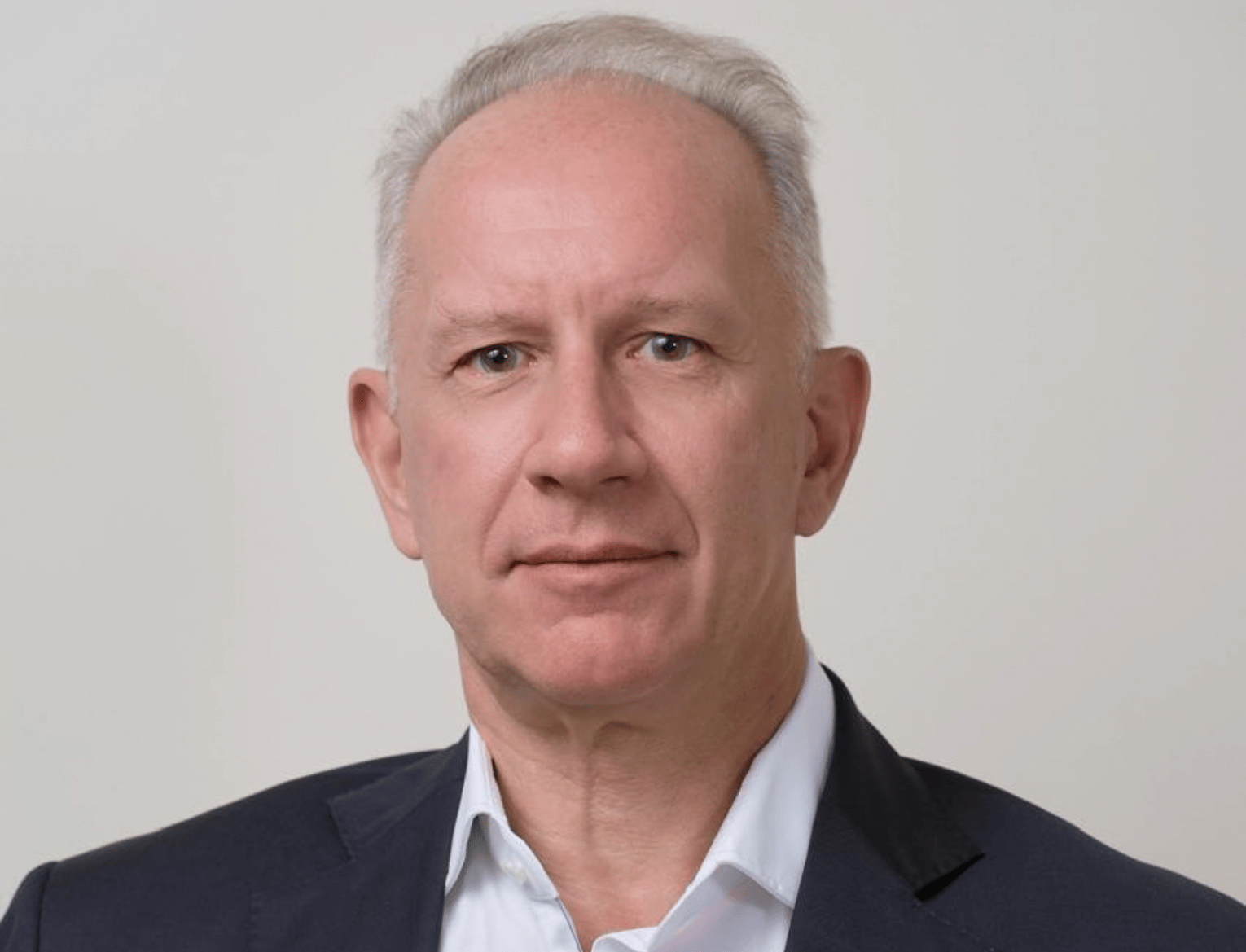
“There is no back office anymore”

James Benoit, CFA, Co-Founder and Chairman, Inventure Ltd

For decades, corporate services in Mauritius were judged by the thickness of the files. James Benoit, CFA, Co-Founder and Chairman of Inventure, believes that yardstick is finished. The founder of AfrAsia Bank and former head of FCMB Bank UK argues that technology, AI and a new generation of African fund managers are turning the management company into a strategic middle-office partner. The timing could hardly be better: Moody’s reports that Africa’s private credit market has tripled to USD 5.6 billion since 2020. “Governance is not what you do after you have grown. It is what allows you to grow,” he says.

The corporate services industry has traditionally been perceived as process-driven and document-heavy. How is technology fundamentally changing the way a modern management company operates?

Honestly? It is changing what the product actually is.

For most of its history, a management company sold three things: paper, people and patience. You sent documents, someone keyed them into a system, and you waited. The client experience was mostly chasing. We hear it from managers who come to us all the time: “It took three weeks to receive board minutes.” “We kept chasing for compliance updates and nobody could give us a clear answer.” That is the traditional model in two sentences.

Technology shifts the unit of work from the document to the data. When a passport, a register entry or a loan agreement arrives, it should be captured once, verified once, and then flow everywhere it is needed – the KYC file, the statutory registers, the regulatory filings, the NAV, the investor report – without anyone retyping it. That is why we can turn around meeting summaries in two hours and draft minutes in one to two business days. Not because our people type faster, but because the process was designed around the data.

The regulator has moved too. The FSC now runs licence renewals and payments through its FSC One Platform. When your supervisor is digital, a management company still working from shared drives and email attachments is simply out of step.

And the biggest shift is the job description itself. A modern management company is no longer a back office. It is a middle office: monitoring risk, surveilling compliance and producing the analytics that help a manager make better decisions and raise capital. So please, don’t call us back office anymore!

Inventure has positioned itself as a next-generation corporate services provider. Which technologies are having the biggest impact today, and how do you see AI, automation and digital workflows transforming the sector over the next five years?

Three technologies are doing the heavy lifting today.

The first is unglamorous but foundational: a single, cloud-based source of truth. If your client data lives in five systems and a dozen spreadsheets, nothing else you do with technology will work properly. Our clients see their structures through the Inventure Portal, and that is the same data our compliance, accounting and administration teams work from. One version of the truth.

The second is workflow automation. Onboarding, customer due diligence, sanctions and PEP screening, risk rating, filing calendars, periodic reviews – these are rules-based processes, and rules-based processes should run on rails. Our compliance tooling includes risk rating calculators and screening tools built around what the regulator expects, so every file is scored and flagged the same way, every time, regardless of who happens to be at their desk.

The third, and the fastest moving, is AI. Today the most valuable use cases are reading and structuring: pulling data out of KYC documents, limited partnership agreements, financial statements and, increasingly, loan agreements. A private credit fund can hold dozens of facilities, each with covenants, interest terms and reporting obligations buried in documents that run well past a hundred pages. AI can turn those terms into structured data in minutes, and a professional then checks it. That is a genuine step change.

Over the next five years, I think the ratio flips. Today most hours in our industry are spent producing information. By 2031, most will be spent interpreting it. AI will take the first pass on onboarding, reconciliations, filings and board packs, and our people will spend their time on judgement, exceptions and advice. That doesn’t mean fewer good people. It means good people doing better work.

The sector will also split. Firms that invest will scale. Firms that don’t will be priced as commodities – or acquired.

Many firms talk about digital transformation, but often only digitise existing processes. How do you ensure that technology genuinely enhances efficiency, transparency and the client experience rather than simply replicating legacy models?

This is the trap, and plenty of firms walk straight into it. Scanning a paper form and emailing the PDF is not digital transformation. It’s a faster fax machine.

Our rule is simple: redesign first, automate second, add AI third. We start with the outcome the client actually needs – a licence, a clean audit, an LP report that lands on time – and work backwards. Very often a process has seven steps because it had seven steps in 2005. Take out four, then automate the three that remain. Because we have our own in-house development capability, we’re not waiting on a vendor’s product roadmap to make that happen.

We also design every workflow around proof. Our Co-Founder and CTO, Givy Dhaliwal, puts it well: “Every process we build has to pass one test. If a regulator, an auditor or an investor says ‘show me’, can we answer in minutes, from one source, with a full audit trail? If not, it isn’t finished.”

Then we measure. Turnaround times, error rates and, my favourite, how many times a file is touched by a human. If the number of touches doesn’t fall, we haven’t transformed anything. We’ve just moved the spreadsheet into the cloud.

We also switch old things off. One of the biggest hidden costs in our industry is running the legacy process and the new system side by side forever, “just in case”.

And finally, technology doesn’t replace human oversight – it sharpens it. Automation gives our people back the hours they used to spend chasing and keying, so they can pick up the phone, understand the client’s business and spot the issue no algorithm would flag. The client experience gets better not because there is less human contact, but because the human contact is about something that matters.

As regulatory expectations continue to evolve, how can technology help management companies improve governance, compliance and risk management while reducing operational complexity for clients?

Wearing my MIoD hat for a moment: good governance and good technology are really the same conversation. Both are about knowing what is happening in your organisation in time to do something about it.

Regulatory expectations will only move in one direction. Mauritius learned that the hard way when it was placed on the FATF grey list in 2020, and the country did remarkable work to exit in October 2021. The FSC continues to raise the bar, most recently with its new authorised bank signatory regime. None of that is going into reverse.

Technology helps in three ways. First, it moves compliance from post-mortem to real time. Instead of discovering at the annual review that a beneficial owner has become a politically exposed person, ongoing screening flags it the day it happens. Instead of finding out at audit that a fund breached its investment restrictions in March, automated surveillance monitors activity against guidelines and policies and raises an alert before a potential violation becomes a reportable breach.

Second, it creates an audit trail by default. Every approval, every document version, every decision is time-stamped and attributable. When the inspector or the auditor arrives, the file tells the complete story. You are not reconstructing it from email threads at midnight.

Third, it takes complexity off the client. A fund manager should never receive five overlapping requests from five departments for the same passport. Collect once, verify once, use everywhere.

The same applies in the boardroom. Board packs that arrive on time, minutes that capture real challenge, action logs that are actually tracked – it sounds basic, but it is what allows independent directors to do their job properly. Compliance should be a by-product of a well-designed process, not a separate project that starts the week before the inspection.

Corporate services are becoming more and more data-driven. How important is data and real-time reporting in helping clients make better decisions, particularly in the fund and investment management space?

It’s everything. And it matters more in private markets than anywhere else, because there is no Bloomberg screen for a private fund. If the administrator doesn’t produce the data, nobody does.

Investors are raising the bar. The Institutional Limited Partners Association (ILPA) released its updated Reporting Template in January 2025 – the first revision since 2016 – with far more granular disclosure of fees, expenses and internal chargebacks. It applies from Q1 2026 to funds still in their investment period and to new funds, with a brand-new Performance Template following behind. An African manager who wants a US endowment or a European pension fund on the register is now measured against that standard.

But the real prize is better decisions, not prettier reports. The best administrators combine live data with historical analysis, so a manager understands not just what happened, but why, and what is happening right now. Data should flow continuously. It shouldn’t have to be pulled and extracted at quarter-end.

Private credit makes the point beautifully. A credit manager lives or dies on early warning: covenant headroom shrinking, a borrower paying a little later each month, a currency moving against an unhedged exposure, concentration creeping up in one sector. Spotted in real time, that is a conversation with the borrower. Spotted in the quarterly pack, it can be a write-down.

Moody’s makes a telling point in its new sector report: for African private credit to scale beyond the development finance institutions, managers will need to show consistent returns that compensate investors for foreign exchange, liquidity and frontier-market risk. You cannot prove that with a spreadsheet emailed sixty days after quarter-end. You prove it with clean, timely, auditable data.

One of the challenges facing emerging African fund managers is the high cost of building institutional-grade infrastructure. How can a Middle Office as a Service model help bridge that gap and allow managers to focus on investing rather than administration?

Let’s start with the arithmetic, because that’s where the problem lives.

Take a first-time manager raising a USD 75 million fund with a 2% management fee. That is USD 1.5 million a year to run the entire firm: the investment team, travel across several countries, legal, audit – and an institutional-grade operation. Building that operation in-house means a CFO, fund accountants, a compliance officer and MLRO, investor relations support, plus fund accounting software, screening tools and cybersecurity. Very quickly the back office is eating the budget that should be finding and managing deals.

So managers make an understandable choice. They economise on operations. And that is precisely the decision that comes back to bite them in year three.

Middle Office as a Service breaks that trade-off. The manager rents institutional infrastructure instead of building it. With Inventure, that means fund accounting and NAV, capital calls, distributions and waterfall calculations, investor reporting, portfolio monitoring, risk and compliance surveillance, and board and governance support – all on a platform that is already built, already tested and already familiar to auditors and regulators. The cost scales with the fund, not ahead of it.

It is particularly powerful in private credit, which is operationally much heavier than people expect. A private equity fund might hold ten companies. A credit fund can hold dozens of facilities, each with its own drawdown schedule, interest accruals, repayment profile, currency and covenant package. That is a lot of moving parts for a four-person team.

Forward-thinking managers now see the right tech-led administrator as an extension of their own operations team, offering capabilities that would be far too costly to build alone. The manager keeps the job only they can do: picking investments and managing relationships. We run the machine underneath. Institutional grade from day one, at a first-fund cost base.

For first-time and smaller fund managers seeking to attract institutional investors, what are the key operational and reporting requirements they often underestimate, and how does Inventure help them overcome these challenges?

Here’s the uncomfortable truth: I don’t believe Africa-focused funds always fail because they picked the wrong country or sector. They can fail because they under-invested in their operational backbone in year one and spent years three to seven trying to fix it.

The pattern is almost always the same. For the first eighteen months, nothing breaks. Then year three arrives. An LP wants a capital call schedule in a specific format. The auditor flags an inconsistency. A co-investor wants a side letter. The DFI on the advisory committee asks for ESG reporting aligned with the IFC Performance Standards. Suddenly every shortcut compounds at once. Reports are late, NAVs are restated, trust erodes – and when the manager goes out to raise Fund Two, the LPs have noticed.

What gets underestimated most? Four things. Reporting granularity, meaning fees, expenses and performance to ILPA standards rather than a bespoke spreadsheet. A valuation policy you can defend in a downturn, not just in a rising market. Operational due diligence, where institutional LPs send long questionnaires on controls, cybersecurity, business continuity and conflicts, and expect evidence rather than assurances. And governance: independent directors who genuinely challenge, clean UBO files, documented KYC and an auditor whose name the LP recognises. If your governance doesn’t pass, your track record doesn’t get read.

The DFI point matters enormously in Africa. Moody’s notes that African private credit remains heavily dependent on development finance institutions, and DFIs are among the most demanding readers of reports anywhere in the world.

At Inventure, we build all of this in at launch: LP-grade reporting templates, a governance calendar, an ODD-ready data room and an ESG reporting framework, so the manager is audit-ready and diligence-ready from first close. My advice never changes: build for Fund Two from the day you launch Fund One. The marginal cost of doing it properly in year one is small. The cost of fixing it in year four can be the size of your firm.

Inventure is operating at the forefront of corporate services, technology and fund infrastructure. What is the long-term vision for the business, and what role do you see Inventure playing in the evolution of the African investment ecosystem over the next decade?

The vision is for Inventure to be part of the core infrastructure of African private capital – the operational rails the capital runs on.

I have spent more than thirty years building financial institutions, including founding AfrAsia Bank in 2007, and what has surprised me most is this: African capital is not scarce. It is mis-channelled. Nigerian and Ghanaian pension funds hold close to USD 40 billion, and more than 90% of it sits in government securities. The capital has always been here. What was missing was the infrastructure to channel it: the vehicles, the governance, the trusted intermediaries and the legal certainty.

That is changing fast, and private credit is the clearest example. Moody’s latest sector report shows Africa’s private credit assets under management more than tripled, from USD 1.8 billion in 2020 to USD 5.6 billion at the end of 2025, while AVCA data show the number of private debt deals on the continent jumped 57% in 2025 to a record. Yet Africa is still only 0.3% of a global private credit market Moody’s puts at more than USD 1.8 trillion. With African stock market capitalisation at around 33% of GDP, against 61% for emerging markets and 113% globally, private credit will fill gaps that banks and capital markets simply can’t. As a former banker, I’d add that it will work alongside the banks, not against them.

Mauritius sits right at the centre of this. In Lagos this year, our CEO and Co-Founder, Rajnish Aubeeluck, walked an audience through the Nigeria–Mauritius corridor, where private equity inflows into Mauritius reached USD 1.25 billion in the first nine months of 2025, more than three times the previous year. His line from that evening has become something of a mantra for us: “Don’t build for Africa. Build in Africa – for the world.”

For the next decade, three things have to happen: domestic institutional capital unlocked at scale, fund operations professionalised, and African risk repriced. We have to stop pricing African risk as if it’s still 2010. If those shifts land, a continent raising around USD 4 billion a year in private capital could be raising USD 15 to 20 billion by the end of the decade. That isn’t Afro-optimism. That’s arithmetic.

Our role is to be the bridge. We are headquartered in Mauritius with offices in London, Cape Town and Zurich – where the LP capital sits and where the African deals get done. In ten years, I want a manager in Lagos, Nairobi or Johannesburg to be able to launch a fund that a pension fund in London, a sovereign in Riyadh or an insurer in Tokyo underwrites with the same confidence as one in Luxembourg. And I want Inventure to be the reason operations were never the question.

If you were speaking to an emerging African fund manager launching a first fund today, why would Inventure be the partner of choice, and what differentiates your proposition from a traditional management company?

Three reasons, and none of them is price.

First, we are practitioners. Our team brings more than 50 years of combined experience across banking, fund management, compliance and accounting. I’ve founded a bank, run a bank in London and sat on boards from both sides of the table. We know what an LP actually reads, what an auditor looks for and what the regulator will ask next. A traditional management company tells you what the rules say. We tell you what it takes to raise Fund Two.

Second, we are tech-led by design, not by marketing. With a CTO among our co-founders and our own development capability, our workflows, portal and compliance tooling are built around how funds actually operate. That is how you get meeting summaries in two hours rather than minutes in three weeks.

Third, one partner, no handoffs. Structuring, FSC licensing, GBC administration, fund accounting, compliance, corporate finance support and investor reporting all sit under one roof. And we do it from Mauritius, with 45 double taxation treaties, 29 investment promotion and protection agreements, no exchange controls, and an FSC that can license a fund in as little as sixteen weeks. Nothing falls between providers, so nothing slows you down.

The real difference is this: a traditional management company sells hours and files. We deliver outcomes and data.

So my advice to anyone launching a first fund is to choose your operational partners with the same care you choose your investors. You will spend more hours with your administrator over the next ten years than with most of your LPs. Pick the team that picks up the phone. Pick the team that has done it before. And pick the team that is in your time zone when the audit deadline is Friday at five. That’s the team we’ve built.

Skip to content