Back to Bizweek
SEARCH AND PRESS ENTER
Latest News
“SIDS need a stronger voice and better access to finance”

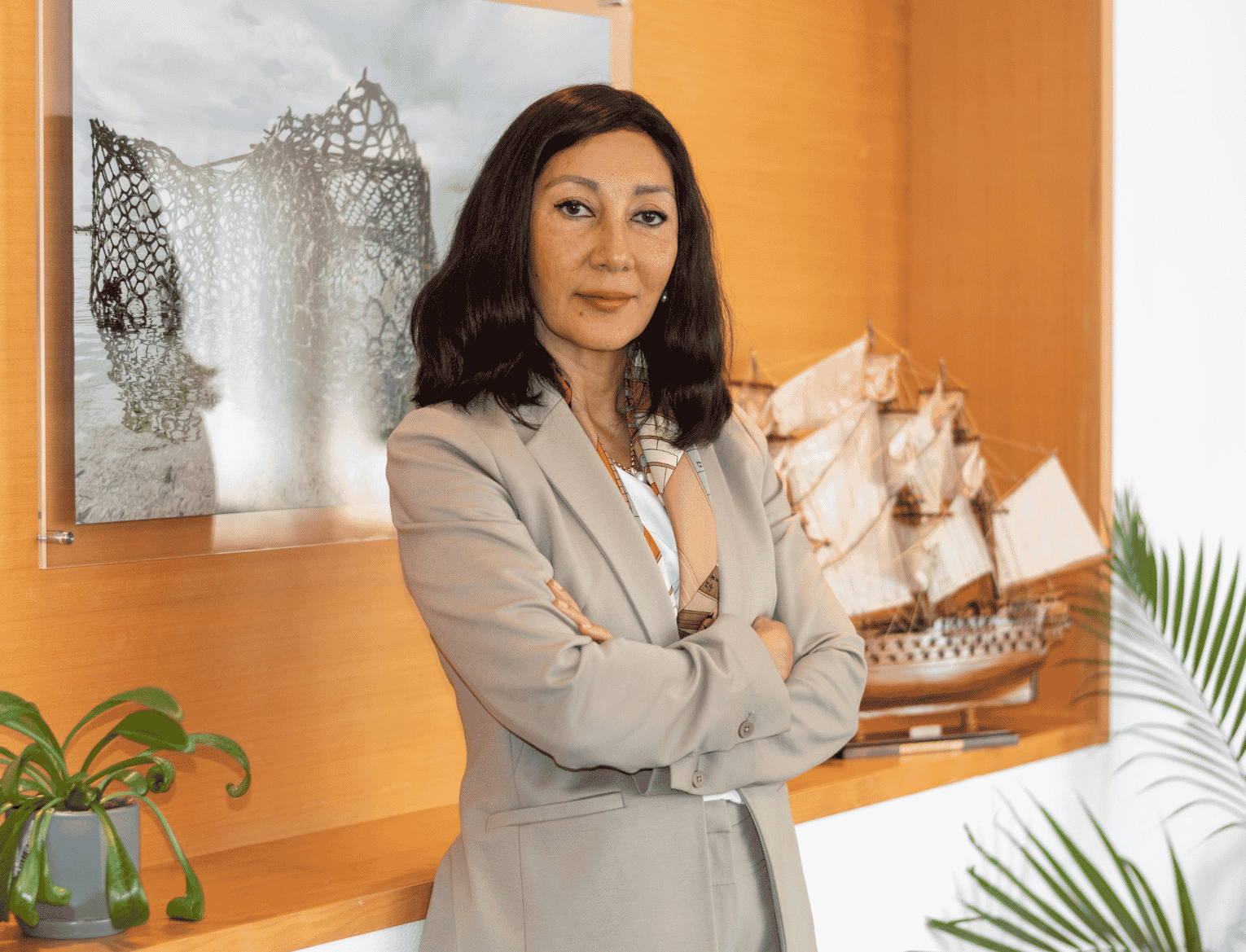
Lisa Simrique Singh, United Nations Resident Coordinator to Mauritius and Seychelles

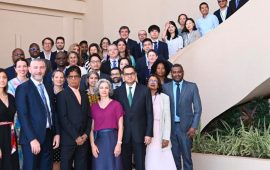
As Mauritius and other Small Island Developing States (SIDS) confront rising climate risks, limited access to concessional finance and mounting pressure on vulnerable coastal communities, the United Nations is pushing for stronger regional cooperation, innovative financing and a whole-of-society approach to adaptation. Her Excellency Lisa Simrique Singh, United Nations Resident Coordinator to Mauritius and Seychelles, spoke exclusively to BIZWEEK on the sidelines of the Indian Ocean Islands Regional Climate Dialogue held at Caudan Arts Centre on 28-29 September. She highlights the urgency of moving from policy commitments to implementation, while identifying the blue economy and digitalisation as key opportunities for Mauritius. She also calls for greater climate finance, simplified access to funding and a stronger collective SIDS voice ahead of COP31.

What are the most pressing climate and environmental challenges facing Mauritius and the wider Indian Ocean region, and how is the United Nations supporting countries in addressing them?

For Small Island Developing States such as Mauritius, and for the wider West Indian Ocean region, the most pressing challenge is strengthening both climate and economic resilience. We see the impacts of climate change every day : receding coastlines, pressures on food chains and livelihoods, and growing risks to coastal communities, tourism and fisheries, on which the economy depends.

Across the wider West Indian Ocean, we are also facing major challenges linked to maritime governance, insecurity and pollution. The West Indian Ocean is the second most polluted sea in the world, with direct implications for the future prosperity and resilience of the region.

Mauritius also faces a particular challenge as an upper-middle-income country, because it does not have the same access to traditional official development assistance and concessional financing.

So, when you put all these things together, really, we can say that there is a need to have a stronger partnership and collaborative actions that go beyond Mauritius. Oftentimes SIDS do not have a strong enough voice, or their voice is not coordinated and amplified enough in global decision-making. We need collaborative action that goes beyond individual countries and strengthens the common positioning of West Indian Ocean states.

Twenty-five UN agencies are working here in Mauritius and the sub-region and we are supporting work around blue economy, environmental sustainability, innovative financing, maritime governance and security, climate and coastal adaptation, early-warning systems and digital technology. All this is being done through our Resident Coordinator-led UN Country Teams structure.

Since SIDS contribute relatively little to global greenhouse gas emissions, but face significant climate risk, what needs to change in the international climate financing system to ensure that these countries receive adequate support?

I think that the global financing architecture needs to recognise that addressing vulnerability is a good investment for tomorrow. Investing today in prevention, adaptation and the integration of climate action is much more effective than addressing the symptoms later, which is costlier.

Adaptation needs to be viewed as a development agenda, not simply a climate agenda. It requires a whole-of-society approach involving communities, the private sector and civil society and not just the environment or blue-economy ministries.

And that is why for us, financing really matters. The UN has supported African island countries and the Alliance of Small Island States in developing the Multidimensional Vulnerability Index, which goes beyond GDP per capita and better captures climate vulnerability. We need international financial institutions, including the World Bank and other IFIs (International Financial Institutions), to integrate this approach into financing decisions.

I think the other area that is really important is to scale up adaptation financing. The funding available remains far below what is required. It is estimated that USD 356 billion is needed annually, so we have to look at innovative financial models that bring in the private sector. When adaptation financing was first launched, the idea was to have a funding stream that is much more regular and reliable, but we have not been able to scale it up to the extent required. Funding has remained inadequate, and this is where we really need a commitment.

There is no longer an appetite for relying only on public or donor funding. We need commitments from developed and developing countries, stronger public-private partnerships, simpler procedures and more grant-based financing so that addressing vulnerability does not create additional debt.

The Loss and Damage Fund is another important area. It was expected to receive a USD 2 billion commitment, but so far there has been replenishment of only around USD 800 million. That is far below the target.

Ultimately, this is also about climate justice. Slow-onset events such as sea-level rise are everyday realities for SIDS and need to be reflected in financing decisions.

How can the United Nations strengthen regional cooperation among Indian Ocean countries to address shared challenges such as coastal erosion, biodiversity loss, marine pollution and climate adaptation?

We are already doing this extensively. We collaborate closely with the Indian Ocean Commission on programmes covering the blue economy, maritime security, circular economy, food systems, disaster resilience, adaptation and early-warning systems.

We also have a very strong partnership with the Indian Ocean Commission around regional health ecosystems, particularly through the surveillance systems.

In fact, I have just come from the launch of a regional dialogue involving African island states, with participants also joining from Pacific and Caribbean countries, to identify common priorities and speak with one voice in international negotiations, including ahead of COP31. The timing is right because next week, the pre-consultation of the SIDS is taking place in Fiji and Tuvalu.

We have also been very mindful that this is not only about having governments present to negotiate ; it requires everybody in the system. So, we have invested a lot since last year working with the Australian High Commission and IOC to organise, for the first time, a regional youth dialogue on climate diplomacy.

And today, we will be holding a discussion with the Indian Ocean Islands on NDCs 3.0 (Nationally Determined Contributions) implementation plans to see what are the commonalities in terms of priority actions and, how we can really add value as a region through regional actions on ensuring its success.

One area we can explore, for example, is joint procurement. Likewise, the UN helped Mauritius to establish a secretariat here to facilitate pharmaceutical supplies. That is one great example where SIDS can collaborate because it addresses the small market size limitations. Other opportunities are around sharing data through early warning systems or collectively mobilising funding.

Beyond international commitments and policy declarations, what concrete actions should Mauritius prioritise to accelerate its transition towards a sustainable and climate-resilient economy?

Well, I talked earlier about the NDC 3.0. This is an important document because it is about raising the ambition to integrate climate action, while also viewing it as a development agenda and a platform where everybody can come together to collaborate.

NDC 3.0 is about a whole-of-system, whole-of-society approach, bringing in actors from our coastal fisher folks to CEOs to the government. And, you know, it requires a lot of brokering around science, data, policy interface, including contributions of academics.

We need concrete implementation plans. Too often, implementation remains sectoral. Mauritius has no dearth of good policies and good plans. The challenge lies in implementation and where the blockages come in.

So, we need to shift out of this mindset and move into more integrated actions that allow for joint results and joint planning. The National Adaptation Plan is also another area that is of high priority.

The third area that I believe offers a great opportunity for Mauritius is the blue economy. The blue economy brings together so many actors and it can help future-proof Mauritius and bring together different sectors. Whether it is fisheries, financial services, tourism or emerging areas such as FinTech, pharmaceuticals and marine biotechnology, we need to consider what economic opportunities will drive Mauritius in the future.

The Mauritius Agenda 2050 provides an important visioning framework for this.

The last point I want to highlight is the entry into force of the High Seas Treaty. It is also particularly relevant for Mauritius. Governance of the maritime space beyond the Exclusive Economic Zone creates both responsibilities and opportunities, and we are working with countries to strengthen governance and practical implementation.

Looking ahead to COP 31, what outcomes would you like to see for Small Island Developing States (SIDS), particularly in terms of climate finance, adaptation and the protection of vulnerable communities?

Well, there are several priorities. We have a number of critical areas that we have already discussed previously.

On mitigation, there is a high expectation for greater access to technology transfer and know-how, as well as capacity-building for energy transitions.

On adaptation, we need to overcome the deadlock around means of implementation and recognise that adaptation is fundamentally a development issue. We also need to integrate slow-onset phenomena into the climate-justice discussion.

On climate finance, the Multidimensional Vulnerability Index needs to be properly integrated into financing decisions. Procedures for accessing finance, reporting and cooperation between countries also need to be simplified.

Countries like Mauritius have limited avenues through which they can access financing independently. We therefore need to facilitate more regional programmes.

The Loss and Damage Fund remains a high priority, with regular replenishment and allocations focused on SIDS.

And finally, SIDS need a stronger voice. We need to ensure that the outcomes of COP31 give strong attention to the priorities and concerns expressed by Small Island Developing States.

You mentioned technology earlier. What role can AI and digitalisation play in addressing climate change and supporting Mauritius?

Digitalisation is here to stay. For small island countries such as Mauritius, AI and digitalisation can help break down geographical barriers.

But they also come with risks, which is why strong guardrails for fair and inclusive AI use are essential. With UN support, we worked with the Ministry of ICT and Innovation on the digital roadmap, the AI strategy and the FAIR guidelines.

AI is moving faster than us. Just when you think you have established a guardrail, new applications and new risks emerge. That means regulation and monitoring must remain dynamic. At the same time, there are significant opportunities, including in financial services and AI-based medicine. These developments are happening whether we want them or not.

We therefore need to ensure that education systems prepare young people for the jobs of the future. There is a risk that AI and digitalisation could create extraordinary opportunities while the education system has not adequately prepared Mauritius to take advantage of them.

Skip to content