Back to Bizweek
SEARCH AND PRESS ENTER
Latest News
“The goal is to connect capital with viable sustainability projects to shape Africa’s future”

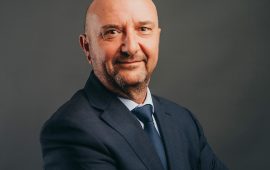
Rony Lam, Chief Executive Officer of MCB Capital Markets

  • “The objective of MCB Capital Markets is to help clients in implementing sustainability projects by structuring appropriate instruments and co-investing alongside them.”

For Rony Lam, CEO of MCB Capital Markets, CIEL’s Sustainability-Linked Bond signals a new stage of market maturity: “We built the local bond market from scratch and are now moving to the next level, where sustainability and performance overlap.” In this interview with Bizweek, he outlines how MCB Capital Markets aims to connect capital with viable sustainability projects to shape Africa’s future.

Investors looking for credible sustainable performance in Africa found a benchmark this month: CIEL Limited’s MUR 1.45 billion (USD 31 million) Sustainability-Linked Bond (SLB), arranged by MCB Capital Markets. The SLB ties financial returns directly to social and environmental progress – an approach more often seen in Europe than on a small island in the Indian Ocean.

The transaction, the first SLB issued by a diversified investment holding company in Africa, links CIEL’s borrowing cost to measurable sustainability outcomes across its six business clusters, including women’s empowerment, carbon reduction, and water efficiency. The bond was 1.5 times oversubscribed, reflecting robust investor confidence. It also marked the first-ever participation of foreign investors in a Mauritian local currency issue via the African Local Currency Bond Fund (ALCB Fund), a London based development fund.

For Rony Lam, Chief Executive Officer of MCB Capital Markets, the transaction represents not just an innovative financing structure, but the culmination of a decade long journey that has transformed the capital markets landscape in Mauritius, accompanied by a significant economic impact. “We built the local currency bond market from scratch and are now moving on to the next level of sophistication, one where sustainability and financial performance overlap,” he says.

A market that learned to walk before it ran

Ten years ago, Mauritius had no corporate bond market. Today, there are approximately MUR 125 billion (USD 2.5 billion) in outstanding corporate bonds, equivalent to roughly a quarter of corporate financing in the country. Rony Lam views this transformation as foundational: “A functioning capital market gives companies an alternative source of financing, deepens liquidity and channels savings into productive investments.

The SLB now takes that evolution a step further. Unlike green bonds, which finance specific projects, a SLB links the borrower’s interest rate to measurable sustainability targets.

If the issuer does not meet those targets, the interest rate is adjusted upwards,” the CEO of MCB Capital Markets explains. “There is a real economic impact that brings substance to sustainability.

Global standards, local credibility

CIEL’s SLB complies with the international guidelines, including those of the  International Capital Market Association (ICMA) and Loan Market Association (LMA). The group’s sustainability objectives – reducing emissions, promoting gender equality, and improving water efficiency – were verified by Morningstar Sustainalytics, which provided an independent second party opinion.

Credibility is everything,” Rony Lam notes. “Without external validation, professional investors are unlikely to participate. The process has to be transparent, measurable, and internationally recognised.

CIEL’s structure is particularly complex because the group operates across six clusters – textile, finance, healthcare, hospitality, property, and agriculture – each with distinct operational realities. Aligning sustainability metrics across such a business portfolio required an extensive internal exercise in co-ordination, measurement and governance. “Getting six management teams to commit to shared KPIs is far more challenging than for a monoline business,” Rony Lam says. “It forces alignment not only in strategy but also in culture.

The first of its kind

FSD Africa, a UK-funded development agency, confirmed that CIEL’s bond is the first sustainability-linked issuance by a diversified investment holding in Africa. The transaction benefited from the agency’s technical support, while the participation of the London-based ALCB Fund introduced international investors to Mauritian rupee debt for the first time.

For Rony Lam, this is a validation of both the market’s maturity and the country’s credibility. “It shows that we can attract global institutional investors with local currency instruments, provided they are structured to international standards,” he says.

CIEL’s issuance also accounted for around 13% of all outstanding SLBs in Africa, according to data from ICMA and LGX. That proportion, though modest in absolute terms, is significant in a region where most economies still lack the financial market infrastructure to handle complex instruments.

Many African countries don’t yet have functioning corporate bond markets,” Rony Lam observes. “Mauritius does and that’s what makes transactions like this possible.

A lesson in discipline

The CEO of MCB Capital Markets stresses that sustainability-linked instruments bring discipline not only to issuers but also to investors. “This is not symbolic. It’s a contractual obligation,” he says. “The borrower must report periodically and if the targets are missed, the coupon rises. Investors get transparency; issuers get motivation.

He contrasts this approach with the more ambiguous wave of “green finance” that has faced accusations of greenwashing. “The difference here is quantifiable performance,” he adds. “Investors aren’t relying on vague promises. They see the data.

Building capability beyond a single deal

The CIEL transaction also reflects MCB Capital Markets’ strategy to build in-house sustainable finance expertise across both advisory and investment functions. “We are more than advisors,” the CEO explains. “Our objective is to help clients in implementing sustainability projects by structuring appropriate instruments and co-investing alongside them.

Rony Lam adds that there is no shortage of projects in Africa, but a shortage of bankable ones. “Investors are ready,” he says. “The problem is that too many projects are under-prepared. Weak governance, unclear metrics or no verified framework. That’s where our advisory role becomes critical.

The broader economics of market development

Rony Lam’s philosophy extends beyond sustainability. For him, the development of capital markets is a prerequisite for sustained economic growth: “At some point, certain banks reach their regulatory limits given the pace of economic growth in Africa. That’s when you need markets to take over.

In his view, Mauritius’s progress mirrors Europe’s balance between bank and market financing. “In the United States, around 75% of financing comes from markets. In Europe, it’s 25%. Mauritius has reached this ratio in less than ten years and that’s remarkable for a small island economy,” he explains.

The ripple effect is significant. Non-bank investors, including pension funds, insurers and asset managers now have the opportunity to participate in private sector-led growth instead of parking liquidity in government securities and property. “Without capital markets, those funds would typically be invested  into short-term instruments or public debt; now they go towards financing the real economy such as industry, infrastructure, and creating jobs,” Rony Lam says.

A model for the continent

The CEO of MCB Capital Market sees the CIEL transaction as a template for replication rather than an isolated success. “Sustainable finance is barely starting in Africa,” he says. “But each successful transaction paves the way for the next one.

He believes Mauritius can play a catalytic role, offering technical expertise in developing local currency debt markets in certain countries in Africa. “We’re small, but we can serve as a case study demonstrating that sustainable finance can be locally designed, internationally verified, and regionally replicated,” he adds.

The island’s ability to integrate regulation, market discipline, and investor protection makes it an ideal testbed for new financial instruments. “We don’t copy; we adopt international best practices and adapt them to the local environment,” Rony Lam explains. “The goal is to create a framework others can trust. Not just because it’s international, but because it works.

The mindset behind the market

At its core, MCB Capital Markets’ work reflects an entrepreneurial approach to finance. One that prioritises innovation and measurable impact over scale for its own sake. “We’re entrepreneurs first,” Rony Lam says. “We are pioneers because we want to make a difference. not only for our clients but for the economy. Each transaction we take on has a real economic, social and/or environmental impact.

For him, the CIEL SLB is not just about financing but about redefining what credible sustainability means in an African context. “We’re proving that it can be done. Rigorously, transparently, and profitably.

From innovation to influence

As the continent’s financial systems mature, Rony Lam expects more companies to follow CIEL’s example in integrating sustainability into performance metrics rather than treating it as a separate reporting exercise. “The more these instruments are issued, the easier it becomes for others to follow suit,” he says.

He also foresees an acceleration of cross-border collaboration, with Mauritius serving as a structuring hub for African issuers seeking access to international investors. “We’re not just facilitating one deal,” Rony Lam stresses. “We’re building a platform. The goal is to connect capital with viable sustainability projects, and in doing so, to help shape Africa’s future.

Skip to content