Back to Bizweek
SEARCH AND PRESS ENTER
Latest News
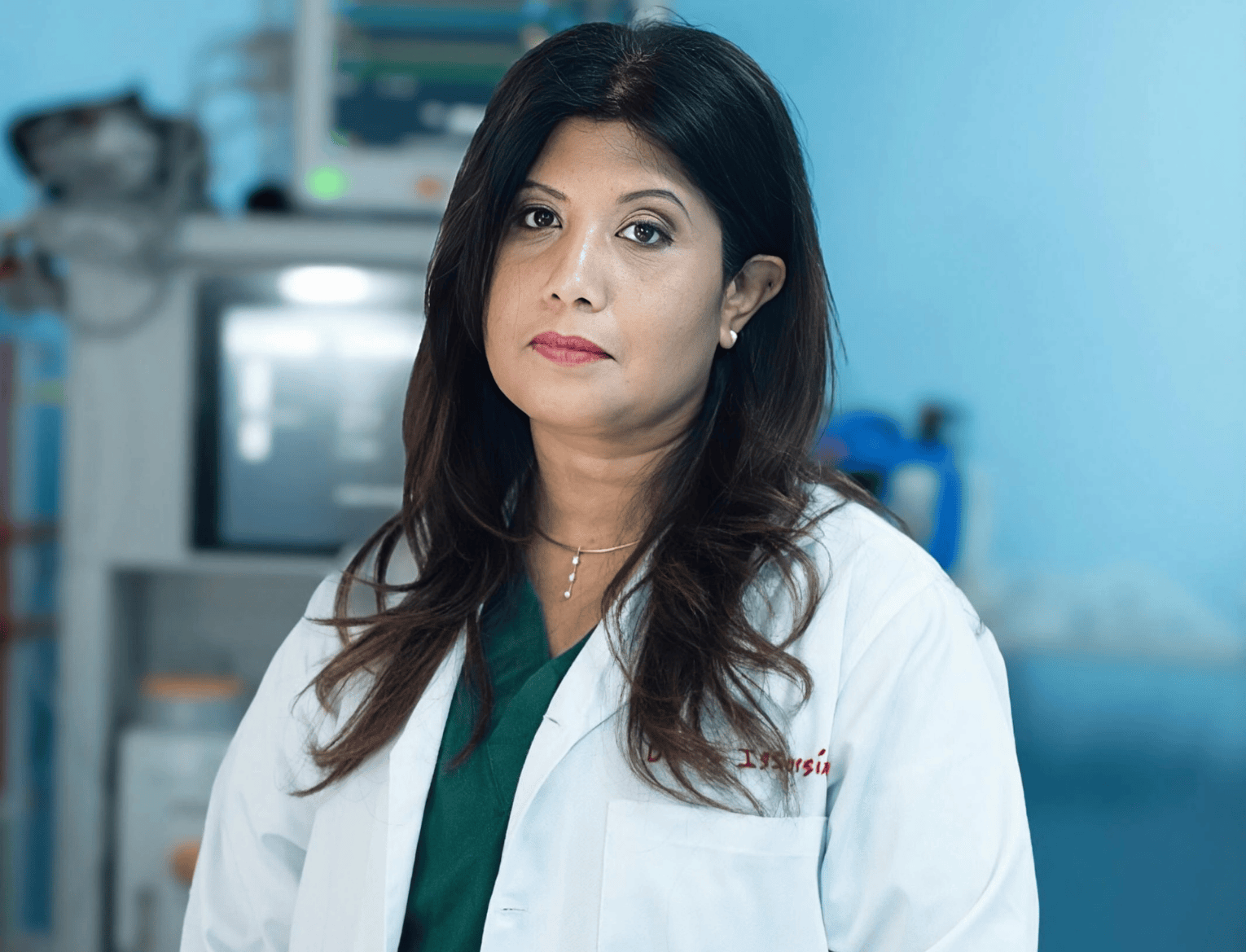
Private institutions have a responsibility to complement and strengthen national healthcare capacity”

Dr Teenushka Issarsing, CEO, AEGLE Clinic 

  • “Behind every statistic, every investment, and every breakthrough, there is a face, a family, and a life holding onto hope.”


  • “The goal is never competition; it is always collaboration in the best interest of patients, while positioning Mauritius as a trusted regional reference for healthcare across the Indian Ocean and Africa.”


For many patients, the cancer journey begins not with treatment, but with uncertainty and the need to make life-altering decisions quickly. In an interview with Bizweek, marking World Cancer Day 2026 and its “United by Unique” theme, Dr Teenushka Issarsing, chief executive of AEGLE Clinic and AEGLE Cancer Hospital, sets out how cancer care in Mauritius must extend beyond diagnosis and clinical protocols. She argues that long-term outcomes depend as much on survivorship, supportive care and collaboration between public and private actors as on medical technology, and that recognising the individual experience of illness is central to strengthening national healthcare capacity and positioning Mauritius as a trusted regional reference for specialised oncology across the Indian Ocean and Africa.

The “Life After” roundtable is organised in the context of World Cancer Day 2026, under the global theme “Unis par l’Unique.” How does this theme align with your strategic vision for cancer care in Mauritius? 

The theme of World Cancer Day resonates deeply with me because it reflects the reality that I see every day: we aren’t just fighting a disease, we are supporting thousands of unique lives, each with its own story and its own struggle. It is heartbreaking to see the rising number of cancers in Mauritius, especially those cases that could have been prevented. That is why I am so determined to speak about life after diagnosis. This round table is proof that when we catch this early, we don’t just treat a patient; we save lives.

The “United by Unique” vision is my dedicated promise to ensure that no one is ever treated as just another file or a clinical case. While the statistics tell us that cancer is the third leading cause of death in our country, with 3,000 new families affected every year, I choose to look beyond the numbers. I see the courage in the faces of the patients we treat every week. They are the reason we mobilise every resource we have, technologically and humanly, to provide care that respects their clinical needs and their emotional journey alike.

 How do you reconcile medical excellence with long-term institutional sustainability in a highly specialised healthcare segment?

Medicine in a developing country is indeed a challenge. However, by striving for the best available and remaining at par with international guidelines, we have ensured the availability of state-of-the-art infrastructure and advanced medical technologies. I reconcile medical excellence with long-term sustainability through progressive growth and continuous innovation. Our multidisciplinary team brings together medical, surgical, and radiation oncologists, along with onco-pathologists who are always available with their expertise to develop tailor-made protocols for each patient.

By dealing with a patient as one’s own through a holistic approach, we reach the peak of excellence in our commitment to quality care. Ultimately, the synergy created across every hierarchy of the system between advanced technology and human expertise ensures superior clinical outcomes, representing the strongest foundation for our institutional sustainability.

The “Life After” roundtable title shifts the focus from treatment to long-term outcomes. From a healthcare management perspective, how should success in cancer care be measured today? 

Outcomes can only be reflected by decreasing the death toll due to cancer. Bridging gaps of awareness, early diagnosis and early treatment can help us move to positive outcomes in cancer care. In my journey at Aegle Cancer Hospital, seeing a young girl in her twenties breathing life again and adapting to a routine life was a rewarding milestone of the bone marrow transplant offered to her here, in Mauritius.

 Words cannot express the success of a timely and accurate management of a cancer case at any age group. In cancer care, we often speak of the five-year survival ceiling. However, our patients who receive early diagnosis frequently cross this limit, aging with grace and a high quality of life. Even after passing that five-year mark, regular follow-ups remain a dictum to truly enjoy life after cancer. Beyond technical expertise, our true victory lies in engaging our patients as active partners in their own recovery.

How does investing in quality of life, survivorship, and supportive care translate into better clinical outcomes and system efficiency? 

Our patients reflect the services they have received from our institution. This upholds the value with which they have been treated. As a dictum, we learn and improve from each patient, as each one unfolds a different experience, helping us improve at every step. Strategic investment in quality of life and survivorship care goes far beyond comfort; it is a powerful driver of clinical efficiency. Ultimately, investing upstream in supportive care not only helps patients regain autonomy and reintegrate into their personal and professional lives, but also generates value that extends beyond the individual, benefiting the healthcare system and society as a whole.

Supportive care services – nutrition, psychological support, and adapted physical activity – are often perceived as secondary. Why should they be viewed, instead, as core healthcare investments?

Cancer in itself is such a morale shutdown for any age group, pulling down the eagerness for treatment, that it encourages us to consider supportive care as an essential pillar for the patient’s well-being. Hence, it is an investment for the benefit of all.

We believe that caring for cancer patients requires a capacity-building approach that empowers them toward better recovery and an enhanced quality of life. While supportive care services such as nutrition, psychological support, and adapted physical activity are often marginalized as secondary, they must be regarded as core healthcare investments because they directly prevent malnutrition and emotional distress, two major contributors to relapse.

I emphasize that these services are not optional but foundational pillars of our therapeutic protocol. As reaffirmed during our “Life After” roundtable, technical excellence must be paired with a medicine of compassion to restore a meaningful life experience. Such services hold an enduring value in supporting the patient, and maintaining the willingness to feel better and to be better.

 What level of financial and organisational commitment is required to integrate transdisciplinary supportive care into a cancer hospital’s operating model? 

Choosing a private healthcare facility is a personal decision for each patient. Our goal is to provide state-of-the-art oncology services that meet international standards and ensure Mauritius can maintain this level of excellence. This requires long-term investment in multidisciplinary teams, continuous professional training, robust digital health infrastructure, interoperable care coordination systems, and sustainable funding for supportive services throughout the patient journey. These resources are essential to deliver high-quality, patient-centred care.


“Care must remain personal, accessible, and sustainable”


Organizationally, success depends on strong leadership and clear commitment from the top. Structures must be redesigned, governance integrated, and a culture of collaboration fostered across medical disciplines. Care pathways and clinical workflows need to ensure that supportive care is embedded from diagnosis through follow-up, rather than delivered in isolation.

Supportive care is not optional. It must be fully integrated into the hospital’s core operations. This is a long-term strategic transformation crucial for achieving sustainable clinical outcomes, preserving patient dignity, and ensuring institutional excellence.

The roundtable includes patient partners sharing their experiences. Beyond the human dimension, how can patient feedback and engagement contribute to improving service design and healthcare value? 

Our patients are at the heart of everything we do. They reflect the services they have themselves contributed to shaping. This relationship nurtures the value we give to each person, because every interaction is an opportunity to learn and improve. Each patient brings a unique perspective, and each experience guides us to do better at every step. This is how our survivors become actors in the improvement of our care: they help validate the real-world effectiveness of essential services such as clinical nutrition and adapted physical activity. Thanks to them, our medical protocols remain connected to patients’ life priorities, while preserving their dignity. Their feedback allows us to anticipate the needs of our patients, to better understand them, and to better meet them, especially when they face such a great challenge. This approach creates a strong and sincere connection with our survivors, of whom we are so proud, as well as with their loved ones, with whom we are also in contact.

 Can patient-centred models also enhance trust, institutional reputation, and long-term viability for private healthcare providers? 

Absolutely. These models represent a major strategic lever for the sustainability of private institutions. By placing human dignity and our “United by Unique” philosophy at the core of our vision, we do not merely treat disease: we accompany and support lives. This approach strengthens trust in the institution and consolidates our reputation through excellence guided by empathy. By adopting compassionate medicine, patients become active partners: their recovery journeys and their return to a full and active life contribute directly to improving our services and inspiring our community. This is how we build sustainable, human care that is deeply respectful of everyone.

 “United by Unique” implies personalised care pathways. In operational terms, how challenging is it to deliver personalised cancer care while maintaining cost control and scalability? 

Personalised cancer care can work at scale only when uniqueness is systematised, variability is structured, and personalisation is deliberately engineered, not improvised. Delivering on the “United by Unique” promise is a major operational challenge. It means moving from a one-size-fits-all model to a highly synchronised ecosystem of specialists. Medical, surgical, and radiation oncologists, together with nuclear medicine physicians, must collaborate seamlessly across units like Radiotherapy, Medical Oncology, and Surgical Oncology. This collaboration is essential for precision. At the same time, it creates scalability hurdles because it demands constant, high-level coordination.

Multidisciplinary boards play a critical role. They ensure a holistic approach for every patient. But these boards are resource intensive. They require a careful balance between expert time and cost control. Family support is equally essential. Patients need emotional and logistical backing to follow their tailored treatments successfully.

The ultimate challenge is to industrialise these complex, human-centred workflows. Only then can personalised care become a sustainable standard, rather than an expensive exception.

In a small island economy like Mauritius, what role should private cancer hospitals play in strengthening national healthcare capacity?

 Private institutions have the responsibility to complement and strengthen national healthcare capacity. When specialised services exist locally, patients do not have to travel abroad for treatment. This matters. It reduces disruption, limits emotional and financial strain, and allows medical expertise to grow within the country. Over time, this builds long-term capability and resilience.

 Integrating breakthrough technologies and advanced therapies plays a key role. These tools raise standards of care and help align the healthcare ecosystem with international benchmarks. At the same time, progress depends on people. Sharing knowledge and training local professionals creates a skilled, confident and self-reliant workforce, and ensures that specialised expertise remains available for the future.

 Fundamentally, the objective is not competition. It is collaboration, always in the best interest of patients, while strengthening Mauritius’ position as a regional healthcare reference for the Indian Ocean and Africa.

 How can collaboration between private providers, public institutions, and policymakers help reduce treatment gaps and improve access to advanced cancer care?

 This trilateral collaboration represents a critical strategic lever. It reduces treatment gaps and makes advanced oncology care more accessible across the region.

 Developing specialised services locally keeps patients close to their home. It reduces travel, limits emotional strain, and allows families to stay together. It also builds expertise within the country. Over time, this strengthens our healthcare system and ensures it can respond to future challenges.


“Mauritius is well-positioned to establish itself as a regional leader in supportive care and specialised oncology”


 Integrating breakthrough technologies and advanced therapies is not a choice, it is essential. These innovations elevate standards and bring the healthcare ecosystem closer to international benchmarks. But technology alone is not enough. Sharing knowledge, mentoring, and training local professionals create a resilient, self-reliant workforce. This ensures specialised skills remain available for the future, for every patient who needs them.

 My vision is clear: a healthcare system that is compassionate, capable, and collaborative. Care must remain personal, accessible, and sustainable. The goal is never competition; it is always collaboration in the best interest of patients, while positioning Mauritius as a trusted regional reference for healthcare across the Indian Ocean and Africa.

Do you see opportunities for Mauritius to position itself as a regional reference for specialised and supportive cancer care in the Indian Ocean region? 

I believe Mauritius is well-positioned to establish itself as a regional leader in supportive care and specialised oncology. With expertise, infrastructure, and compassionate care working together, the country can set a standard for the Indian Ocean region.

 Through initiatives recognised by organisations such as the IAEA, Mauritius is emerging as a centre for clinical training. We demonstrate integrated care approaches and support their implementation across the continent. Each patient treated, each professional trained, strengthens this growing role.

 We close therapeutic gaps and export clinical excellence by fusing cutting-edge technology with a comprehensive supportive care framework, further solidifying Mauritius’ position as a tertiary healthcare hub for East Africa and the Indian Ocean.

 What investments are needed in human capital to support the future growth of oncology and supportive care services? 

Investment in human capital must focus on rigorous continuous training and the development of transdisciplinary competencies across both medical and non-medical teams. At AEGLE, this investment is essential to sustain technical excellence, particularly in operating advanced technologies such as AI-assisted 4D radiotherapy. Beyond technical mastery, we invest in a medicine of compassion, ensuring that our professionals, surgeons, oncologists, psychologists and nutritionists are not merely technicians, but caregivers who place human dignity at the centre of the care journey. 

From your perspective, are current healthcare policies and regulatory frameworks conducive to innovation and investment in specialised cancer care? 

A driving force for progress and innovation comes from aligning organisational goals. Institutions such as the Economic Development Board (EDB), together with the ongoing support of the Government of Mauritius, play a decisive role. They help position the country as a regional hub of medical excellence.

Advanced Public-Private Partnership models like DBFO make this evident. East Africa can benefit from Mauritian expertise thanks to these models. They also guarantee the sustainability of capital-intensive investments in technologies.

Healthcare policies and regulatory frameworks provide a strong foundation. They give structure, clarity, and support to institutions delivering high-quality care. Yet, in specialised cancer care, innovation often moves faster than regulations can anticipate. Policies must be strong but also flexible. Flexibility allows advanced therapies and evolving care models to be integrated without delay. This ensures that patients receive the best treatment possible. 

Every day, the effects are evident in patients, their families, and the medical teams that provide care. It is not just an economic or regulatory issue to update frameworks to keep up with the rate of innovation. It is incredibly human. It lessens suffering, gives patients hope, and enables them to receive individualised, top-notch care.

Open dialogue between policymakers, healthcare providers, and innovators is essential. It creates a system that is safe, responsible, and truly patient-centred.

What policy adjustments would help encourage responsible private investment while ensuring patient protection and quality standards? 

Several policy levers are essential. We have embraced different modus operandi for ensuring accessibility to quality health care in various parts of Africa, such as DBFO-based Public-Private Partnerships to secure long-term investments while ensuring rigorous governance of healthcare infrastructure. Strengthening regulatory frameworks to facilitate the integration of disruptive technologies, including artificial intelligence and robotics, is critical to delivering precision treatments while optimising operational costs. Support from strategic institutions such as the Economic Development Board and international bodies like the IAEA is fundamental to validating safety and care quality. Finally, incentive policies promoting continuous training and specialisation of human capital are necessary to sustain medical excellence and protect patient dignity through holistic care.

 What are your strategic priorities for AEGLE Cancer Hospital over the next five years in terms of infrastructure, services, and partnerships?

Further enabling development in cancer care and accessibility to quality treatment in Mauritius, the Indian Ocean Islands and Pan Africa is what we foresee. Our goal is to ensure that every patient who walks through our doors feels the full weight of modern science backed by a very simple, human promise: we are in this with you, every step of the way. We are committed to expanding our supportive care programmes to address the full spectrum of post-cancer rehabilitation, while positioning the innovative “Patient Partner” model as a national standard of care. In parallel, our regional expansion strategy aims to democratise access to medical excellence across the Indian Ocean.

 Finally, on the occasion of World Cancer Day 2026, what message would you like to send to decision-makers, investors, and healthcare leaders about the importance of investing in holistic cancer care? 

On this World Cancer Day 2026, my message is clear: behind every statistic, every investment, and every breakthrough, there is a face, a family, and a life holding onto hope. Every day, I am reminded that healing the body is only half the battle if the spirit remains broken. I am constantly moved by the immense courage of our patients and deeply grateful for the unwavering support of their loved ones. It is a reminder that this is a fight we can only win together. To our decision-makers and investors: investing in holistic care is not a luxury or an optional add-on; it is a fundamental act of humanity. We must stop viewing cancer treatment as a purely technical challenge and see it for what it truly is: a challenge of life itself. Real medical excellence is not just defined by a successful clinical protocol, but by our ability to help a patient look toward the future with dignity and peace of mind.

Skip to content