Back to Bizweek
SEARCH AND PRESS ENTER
Latest News
Agriculture is an under-stated driver of growth for the coming decades

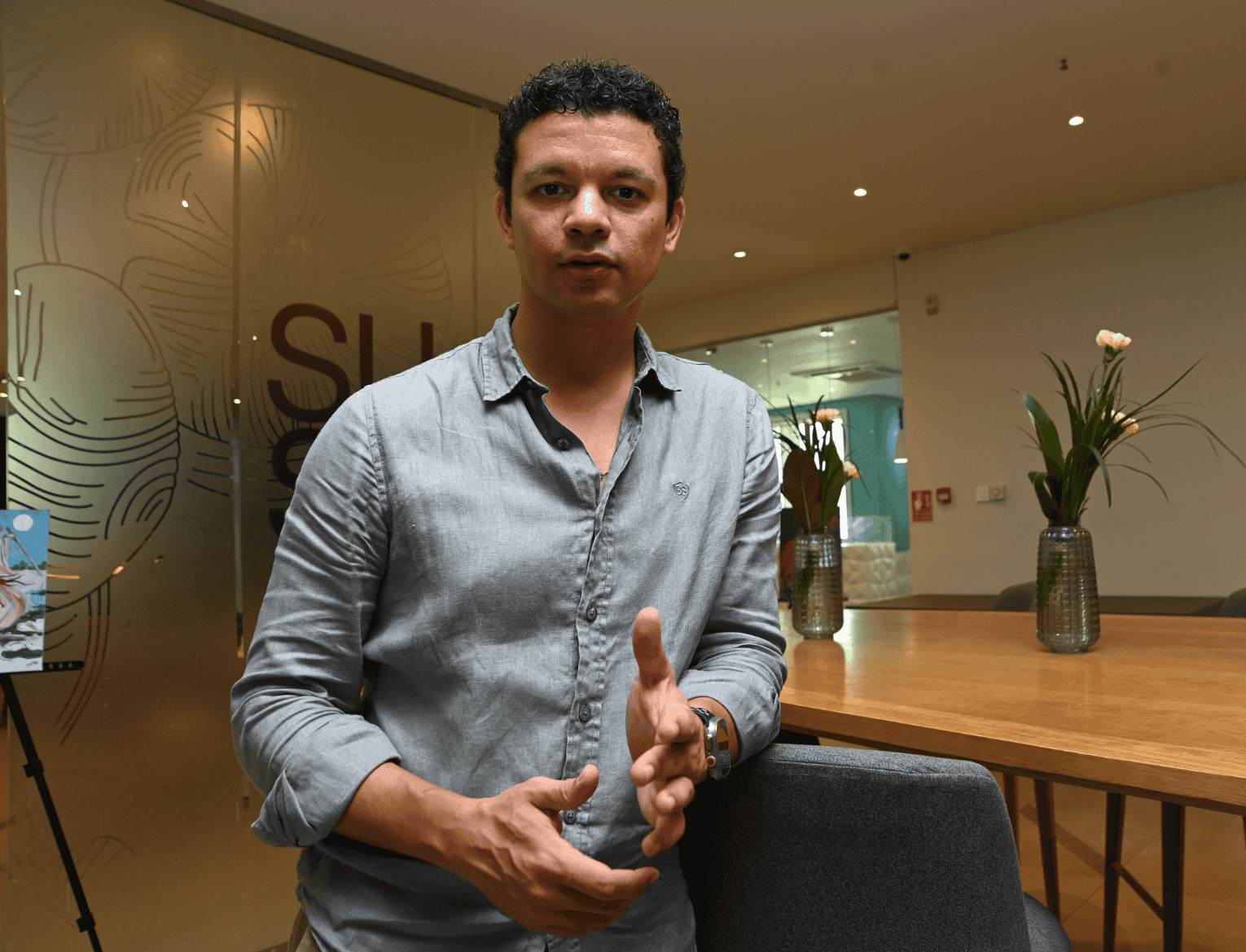
Bruno Dubarry, President of Terres d’Agroécologie

Bruno Dubarry, President of Terres d’Agroécologie, has dedicated himself to reshaping Mauritius’ food systems in the wake of the pandemic. From food security vulnerabilities to the promise of agroecology, he argues that agriculture must be seen not as a relic of the past but as a strategic engine for resilience, innovation, and sustainable growth. In this interview, he highlights the challenges facing farmers, the opportunities of circular economy, and the urgent need for stronger public-private partnerships to secure Mauritius’ nutritional future.

Shareenah Kalla

Since 2022, you have been active in the agricultural sector. What motivated this shift towards agriculture?

In my previous functions within the Association of Mauritian Manufacturers, I was drawn to analyzing the practical reasons of Mauritius’ vulnerabilities in terms of food security. The pandemic of 2020-2021 made it even more acute and I dedicated myself to find the solutions for an improved agrifood system through extensive advocacy and a project-driven approach. In doing so, I got closer to the agricultural sector with the aim of developing local and regional conditions for sustainable agrifood value chains based on strategic partnerships between farmers, industrial operators, consumers, investors, regional institutions, and public-private dialogue. 

In 2022, the opportunity of managing an NGO active in the field of agroecology and implementing a national programme co-funded by the EU Delegation in Mauritius convinced me to shift towards agriculture, at least partly, as I am also providing consultancy services to companies and organizations.

The agricultural sector was once a pillar of the Mauritian economy. How would you describe its current state?

The non-sugar subsector is at a crossroads. We can carry on competing with imported products and focusing mainly on the production of non-tropical crops, with increasing challenges due to climate change. On the other side, we can accelerate the ecological transition of agri-systems through training, experimenting, and innovating with the right balance between low-tech and high-tech.

Although production levels of local vegetables and fruits are increasing overall, the costs of production and marketing are also increasing, purchasing power is not improving, the workforce is shrinking, and soil health and available natural resources are decreasing. 

It is the end of a cycle. It is a tough time for farmers, and it is likely to get tougher. It is urgent to move faster and bolder towards local and regional sustainable agri-food value chains. This is the only way to make our food and nutritional security less dependent on international sourcing and more resilient to international shocks.

With an economy increasingly focused on finance, tourism, technology, and innovation, do you feel agriculture has been neglected?

Not really. Its share in the GDP has gone downwards but both public and private projects have not stopped emerging. The challenge is in the sustainability of such projects. I am talking here specifically of agricultural projects as an integrated part of multi-sectoral developments (agri hubs, smart/sustainable cities, farm living residential complexes, etc). Value creation requires an ecosystem. With creative and sustainable partnerships, agriculture will thrive from finance, tourism, technology, and innovation. To find the right models for Mauritius, our private and public stakeholders are experimenting in several directions. 


“The non-sugar subsector is at a crossroads”


The main challenge is that these initiatives are disconnected from one another, leading to limited impact, funding, and expertise. International investment funds supporting the transformation of food systems are not interested by small territories unless a community of private and public players are able to work together, beyond competition. This could mean that Mauritius would be testing rather small-scale projects for another decade without scaling or preparing to receive major investments from international funds. 

Do you believe that both the public and private sectors invest too heavily in other industries at the expense of agriculture?

There is no straight answer to that question. Considering where we are currently, I would advocate for investments in other industries to include open doors for viable agricultural inputs or an “open lab” approach for testing what could be niche or scalable solutions from agriculture. For this purpose, investments in applied research and testing facilities are paramount. Improving our workforce with emerging skills to innovate with agricultural products and new applications is, if not more important, at least as important as investing in facilities.

In your view, how can agriculture continue to contribute to our economy?

By contributing increasingly to our nutritional security and developing more products for export markets. Also, by providing ecosystem-based adaptation to climate change, for us to be able to keep feeding ourselves despite natural resources scarcity. If national targets could be set for the next 3 to 10 years for the productive apparatus to meet not only increasing volumes but improved nutrition – daily needs for a child, an adult, a person with specific health conditions – to the extent of progressively revamping our diets, for example by replacing non-tropical crops by subtropical ones as needed, then I believe we would be on track to capture all the benefits from the multiplier effect of agriculture. It is a systemic approach. I am convinced that agriculture is an under-stated driver of growth for the coming decades.

With issues such as abandoned land and lack of financing, how can Mauritians be encouraged to reinvest in this sector?

Abandoned land represents potential land for agriculture. Financing will need to be tailored for mid-term and long-term transition programs. Derisking investment in agriculture comes with a new generation of bank and insurance services of course. The primal motivation of investors and farmers cannot be short-term profit, not for a sector which needs to transition to an agroecological paradigm with high volatility associated with international market prices and worldwide decreasing yields. This is where the role of the State is essential; with a 10-year vision and a 10-year program, innovation platforms testing and delivering new organizations better suited to systemic shocks, and local and regional production hubs where applied research and cropping go hand in hand. I think co-opetition is to be pushed forward to be able to syndicate capacities and skills between competitors to achieve big leaps in the interest of the public, while still being able to compete with each other on the marketing and commercial side.

Torrential rains and, more broadly, climate change pose significant challenges. Do you think these factors discourage planters?

Available data tends to say no; production picks up quickly after cyclones and sometimes goes above market demand. But the impact of climate change makes the activity more unpredictable. The whole point is to have these threats in mind when a project starts, by delivering a farm design which anticipates the consequences of heavy rainfall or strong winds, and even the lack of water. The same applies to redesigning a farm facing these challenges.


“It is urgent to move faster and bolder towards local and regional sustainable agri-food value chains”


How can the sector be strengthened to better withstand the impacts of climate change?

Strength comes from practice. In the case of agriculture, it will come from an ecosystem where the collective tools provided by the public and private sectors ensure that all the chances of success are given to the farmer. For example, targeted schemes on sustainable land management (hedges, watersheds, endemic plants, tree planting, seed production, composting, etc.) will pull the best from biodiversity and resource efficiency for resilient farms and communities. To achieve this, strengthened capacity-building means are much needed and should incorporate private sector stakeholders.

You are also involved in agroecology. Could you tell us more about this field?

I have been chairing the association Terres d’Agroécologie since 2022. This NGO has been running public and private funded programs in Mauritius and the Southwest Indian Ocean region through technical and scientific cooperation for the past ten years. Most recently, Terres d’Agroécologie has developed a toolbox for the transition of local farmers and corporates (training academy, agroecological certification of farm practices, crop development for food and nutraceutical products, design of farms, e-market platform, technical sheets on best practices, etc). Agroecology comes at a critical moment for Mauritius and the region. As you know, we need business models that generate high impact in terms of ecosystemic services to the environment, the economy and society. This discipline mobilizes principles such as circular economy and co-benefits for other sectors, so it has embedded the logic of developing solutions locally, with local resources.

How does agroecology differ from sustainable agriculture and organic farming?

Agroecology is part of sustainable agriculture, which covers different types of agriculture. Organic farming focuses on organic inputs rather than inputs derived from synthetic chemistry. Agroecology will take it one step further by combining ecological mechanisms and agronomy. For instance, a farm in agroecology will develop the natural conditions to limit attacks from pests by focusing on soil health, which is decisive for crop health, and only consider using organic inputs against pests as a last resort when the crops are under attack, rather than as a general practice. This type of agricultural practice aims to have the highest level of autonomy and self-sufficiency on a farm beyond using organic inputs. This means that agroecology aims to be the most resource-efficient agricultural system.

One of the advantages of agroecology is its circular approach. What is your perspective on this?

Circularity is one of the ten principles defining agroecology, according to the Food and Agriculture Organization (FAO). At the level of a farm, it can imply reducing external inputs by developing the required inputs on the farm, notably from organic waste, to perform composting to improve soil fertility and mulching to limit weeds and retain water, to plant wind breakers to preserve crops, and trees to provide shade for crops vulnerable to sun exposure. It even involves the association of flowers, mushrooms, insects and animals in the ecosystem to control pest populations under and above the soil. 


“The primary motivation of investors and farmers cannot be short-term profit”


The circular economy reaches out to the types of collaborations that can support the development of farms, businesses or communities by creating value from waste or non-food crops (by-products for animal feed recipes, etc.)

I believe it’s the cleverest approach to agriculture and it really needs to focus a lot of our attention and resources for the coming years, as our financial and material capacities risk exposure to more uncertainty.

The circular economy has struggled to gain traction despite much discussion. Do you believe that agroecology offers an opportunity to highlight its importance?

I believe that some decisions are yet to be made to reduce the alternatives to more recycling and products made of recycled materials. Everything which can demonstrate the benefits of circular economy and help convince consumers and investors should be done. Agroecology has circular economy at its core and is making advocacy daily. What we need is increasing numbers of agroecological farms in Mauritius to make it easier for anyone looking for inspiration and solutions to have sustainable ways of production and consumption to access that knowledge and contribute to the ecological transition.

We haven’t heard a lot, under the present government, about agriculture. What is your opinion? 

There is a very deliberate approach from the Ministry of Agroindustry, Food Security, Blue Economy and Fisheries, and its parastatal bodies. The Assises de l’Agriculture were held on the 27 and 29 January 2026, with extensive consultations at all levels. Terres d’Agroécologie has contributed to the preliminary phases and to the final exercise. One operational aim is to define and select national projects and initiatives to create the conditions for change in the sector. Agroecology is one of the main topics, and this is a major breakthrough for the discipline as international funds and expertise are shifting increasingly for its success worldwide. Mauritius needs to seize this opportunity and be one of the leaders regionally, harnessing regional cooperation with its technical and scientific partners, and influencing the public agenda for agroecology to root in our public policies, education, economy, landscaping, and food habits.


“Strength comes from practice in the case of agriculture” 


Where do projects linked to sustainable agriculture, the reinvention of the tea sector, and self-sufficiency currently stand under the new administration?  

They remain strategic areas of public interest. The common objective is to provide the ecosystem with a vision, goals, tools, KPIs and a renewed public-private oversight to be able to follow up activities, adjust, fund, evaluate and scale up. From my point of view, self-sufficiency is not a significant objective for Mauritius. It is also good to remind you that food sovereignty refers to the liberty of a country to choose to what extent and conditions it imports and produces to meet its population’s food needs. The focus for Mauritius must be our food and nutritional security through increased autonomy on our raw materials and inputs; a security yet to be defined by measurables and time goals.

I sincerely hope that a comprehensive roadmap with actionable projects will be implemented in the months to come, as so much time and opportunities have been lost along the way. There are a lot of stakeholders that lack the sufficient resources to achieve their full potential in supporting agroecology in Mauritius, and they should be strategic partners of the ministry and parastatal bodies to make the great strides needed.

Do you believe agriculture should be one of the government’s priorities in the upcoming budget? Which aspects should be addressed? 

The government is communicating as such. For the next budget, I sincerely hope the Assises de l’Agriculture will provide financed national programs and put in place the oversight platforms required to ensure good implementation. We need a new generation of project management tools and innovation platforms at local and regional level, for the ambition of sustainable agri-food value chains has to be constantly challenged by emerging ideas and incremental improvements. This means that we are bound to accept more complexity and practice more agility, keeping in mind that we have a shared vision, with necessary adjustments to be made in the process of implementation, monitoring and evaluation. This level of accountability calls for more public-private partnership, more inclusion of civil society, more skills, more strategic thinking and design… At the level of Terres d’Agroécologie, we are involved at all levels of action so that this vision comes alive and generates positive outcomes for Mauritians.

Skip to content