Back to Bizweek
SEARCH AND PRESS ENTER
Latest News

“President Macron’s visit comes as Africa and Europe confront the return of power politics”

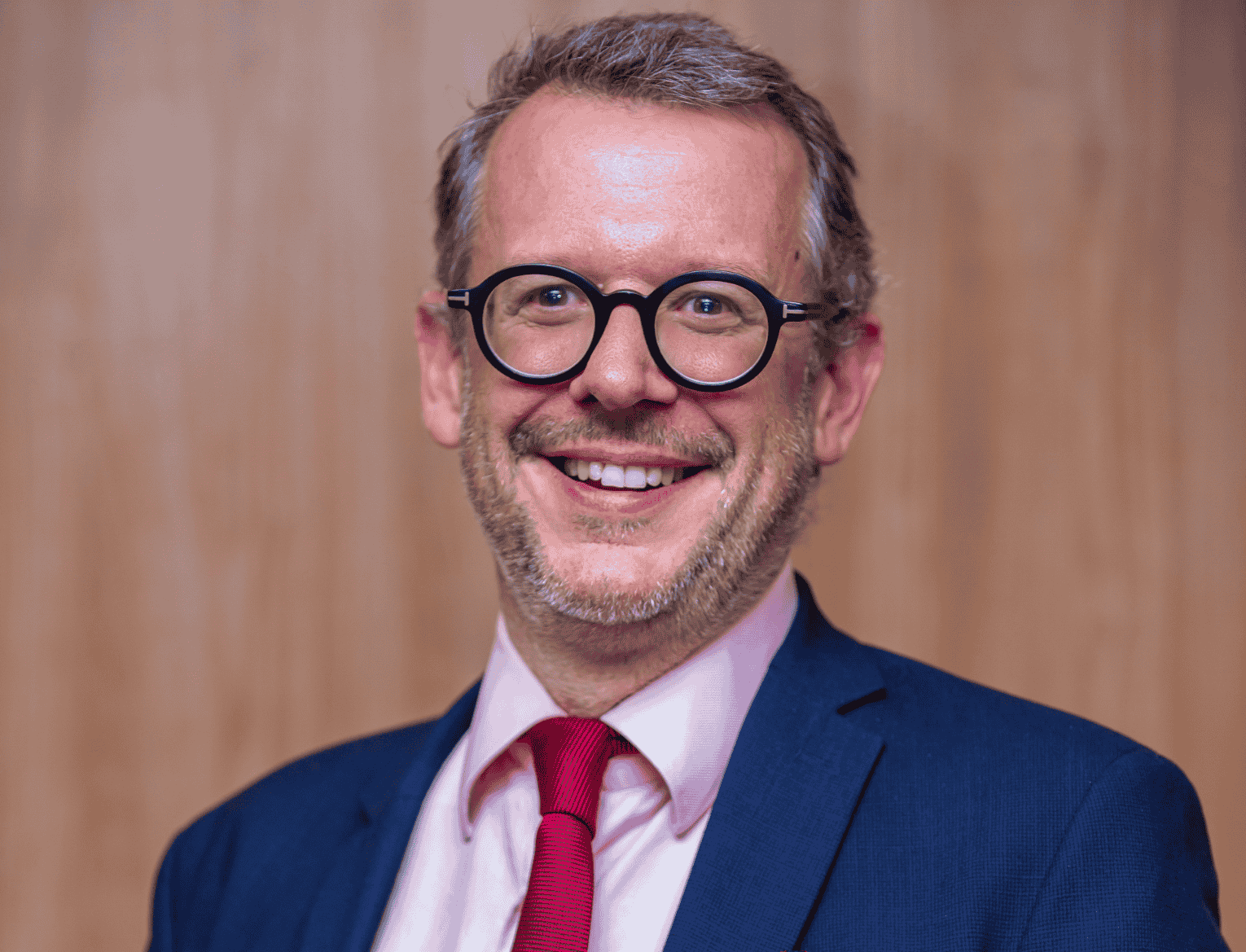
Benoît Chervalier, Investment banker, ESSEC lecturer, specialist in financing African economies

“The world must become more African and Africa must become more international”

As a member of President Emmanuel Macron’s official business delegation to Mauritius this week, Benoît Chervalier sees the visit as more than a diplomatic gesture. It comes at a time when global relations are being reshaped by power politics, fiscal pressure and increasing geopolitical fragmentation. With the Africa–France Summit in Kenya scheduled for May, he believes the next six months will be decisive for redefining partnerships, mobilising domestic resources and positioning African economies – including Mauritius – within a shifting international landscape. In this interview with Bizweek, he discusses sovereign debt, fiscal models, technology, youth, and what African policymakers must now prioritise.

In the context of President Macron’s visit, what signals do you expect for Mauritius – and for Africa more broadly?

France and Mauritius share long-standing ties, reinforced by history and proximity to Réunion Island. But this visit takes place in a particular context where African and European nations must confront the return of power politics in international relations. This requires a re-examination of partnerships — not only their intent, but also their capacity and depth.

The Africa–France Summit in Kenya on 11–12 May offers a clear timeline. In practice, there are six months to give real substance to this renewed momentum. It will be both an opportunity and a test of implementation.

Debt pressures are rising across African economies. How can development be financed while maintaining fiscal sustainability?

This pressure is not new. It began almost a decade ago, notably with the 2014 oil shock when prices fell from USD 120 to USD 60 a barrel — and then to USD 28 in early 2016. The deterioration of sovereign debt was then accelerated by the pandemic and the war in Ukraine.

At the same time, development needs have never been higher — and everything is now a priority: climate change, technological transition, demographic pressure as young Africans enter the labour market, and ongoing security challenges. This calls for a change of model, timeframe and scale. Governments must rethink domestic resources, particularly through better integration of the informal sector.

Two structural issues are widespread:

  • a narrow tax base;
  • high tax rates applied repeatedly to the same contributors.

This weakens credibility and constrains foreign investment. Practical measures include:

  • complete digital cadastral surveys for property taxation;
  • taxation of swimming pools and other high-value property features;
  • reduction of sectoral exemptions;
  • better regulation of tax incentive regimes;
  • mapping of formal and informal businesses.

Digital tools and artificial intelligence can accelerate these reforms. In parallel, national and regional savings — particularly institutional funds — must be mobilised, and in some cases directed, towards strategic sectors. It is time for African savings to stop financing foreign pension systems and U.S. bonds — and instead finance its own priorities.

France is advocating reforms to the international financial architecture. What role can it realistically play?

Several initiatives have already been launched. The Paris Summit in May 2021 focussed on post-pandemic financing for African economies. It was followed by the Summit for a New Global Financing Pact in June 2023, which aimed to demonstrate that prior commitments had been met — notably the mobilisation of USD 100 billion in Special Drawing Rights for vulnerable economies.

The inclusion of the African Union under Brazil’s G20 presidency marked a step forward, and expectations were high for South Africa’s 2025 presidency — the first time an African nation holds that role. However, the boycott by the U.S. delegation, and the absence of Xi Jinping and the Argentine President, significantly reduced both the scope and room for manoeuvre for meaningful change. It confirmed the return of realpolitik — and the need to explore alternatives.

The European Union remains Africa’s largest trading partner, with more than €400 billion in annual exchanges. China follows, with around USD 295 billion in 2024. The EU is also the leading investor in Africa, with France in second place. French companies tend to adopt long-term implantation strategies, which reflect a more deeply rooted economic relationship than other partners who focus primarily on trade.

Can Mauritius position itself as a financing hub for African projects?

There is no single Africa — but many. Fifty-four countries, fifty-four different realities. No institution or investor can operate everywhere with equal intensity. However, Mauritius has certain advantages, notably its proximity to Réunion and historical links with France. The partnership signed during this visit between private sector actors reflects this potential. The coming months will determine whether it becomes tangible.

What are the financing prospects for emerging markets over the next three to five years?

In the present environment, five years is a very long horizon. Between 2019 and 2022 alone, we have seen:

  • a global health crisis;
  • two regional conflicts with worldwide implications;
  • rapid increases in military expenditure;
  • accelerating climate pressures and technological change.

Under such conditions, forecasting financing trends becomes more speculative than predictable. Nonetheless, several drivers stand out:

  • Geopolitics — the evolution of the Russia–Ukraine conflict, the future of Taiwan and post-Trump scenarios will have significant influence on markets and financing conditions;
  • Technological and energy transitions — provided inflation remains contained and interest rates stay on a downward path.

But the terminology must evolve too. The term “emerging economies” is outdated. The more relevant concept is “frontier economies”. China is no longer an emerging economy — it has already emerged, albeit with pockets of vulnerability and poverty. Morocco and Mauritius are emerging. Burundi, Chad and Mali remain lower-income economies.

You have taught ‘Doing Business in Africa’ for 15 years. Do you observe growing interest amongst young people — or increasing caution?

Having worked with more than 1,000 students over 15 years, one thing is clear: there is no single profile. Bias is a risk, and it must be restated that there is not one Africa, but multiple Africas. However, I have observed a clear evolution in the narrative surrounding the continent and in the diversity of perspectives. I sought to capture this in my recent book Ce qu’attend l’Afrique – ressources locales, tensions mondiales, drawing from field observations to address major issues directly — with both lucidity and enthusiasm.

Likewise, there is not one youth — but many:

  • affluent and disadvantaged;
  • mobile and sedentary;
  • connected and isolated.

In short: the world must become more African, and Africa must become more international.

What essential message would you leave to Mauritian and African policymakers?

Have the courage to act and the will to innovate. That is why I will return to Mauritius very soon.

About Benoît Chervalier

Benoît Chervalier is an investment banker and lecturer at ESSEC Business School. A specialist in African economic financing, he serves as Executive Director of the Chair Business and Industry in Africa and presides over the Africa Business Europe Committee, contributing actively to stronger economic ties between Africa and Europe. He recently visited Mauritius as part of President Emmanuel Macron’s official business delegation.

Skip to content