Back to Bizweek
SEARCH AND PRESS ENTER
Latest News
“Mauritius has everything it needs to build a largely decarbonised and clean economy”

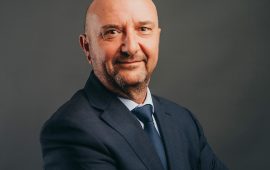
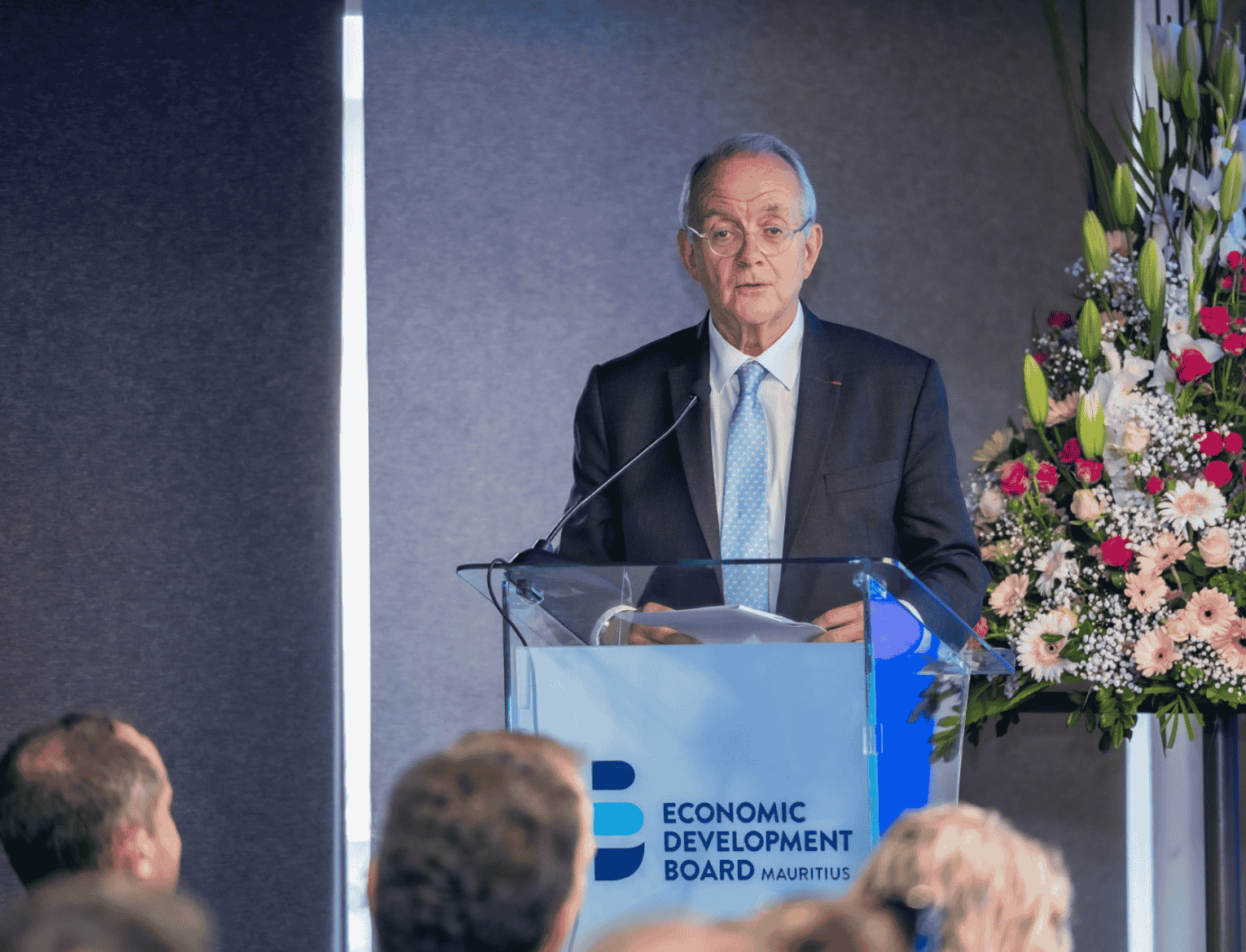
Gérard Wolf, President of the Sustainable Cities Task Force of MEDEF International and Coordinator for Sustainable Cities at Quai d’Orsay. 

“Why not move faster? Implementation cannot be imposed overnight.” 

  • “Time is needed for stakeholders to take ownership of change.” 
  • “The country possesses the intellectual capital to move forward” 

Mauritius is entering a phase where issues such as energy dependence, waste management and territorial resilience can no longer be approached in isolation. For Gérard Wolf — President of the Sustainable Cities Task Force of MEDEF International and coordinator for sustainable cities at the French Ministry of Foreign Affairs — the island already possesses the academic expertise, technological base and access to international finance required to structure a circular and low-carbon economy. What remains, he argues, is collective ownership and practical decision-making to turn that potential into operational projects.

How can Mauritius become a model sustainable island—particularly in the areas of water, waste management, energy and land use planning?

It is, of course, a broad question. But first, Mauritius has many advantages. It is an economy open to the sea and, by definition, surrounded by water, even if it is saline. In addition, the country already benefits from a strong technological and academic foundation, complemented by businesses that are capable not only of conceptualising solutions but implementing genuine elements of a circular economy. The term that truly matters here is circular economy.

Let us take it sector by sector. For water, we now know perfectly well how to extract seawater, treat it, and make it potable, by using clean technologies, notably solar energy, and potentially others as well. Water treatment is not difficult.

Waste-to-energy, however, is more complex technologically. Around the world, many facilities process waste into energy, but it is undeniably a more sophisticated undertaking. That said, in a country like Mauritius, where water is available for processing, costs would be lower than in many other places.

Waste-to-energy is undoubtedly feasible here. Then comes the question of residual waste. The temptation may exist to dispose of it offshore. Technically, this is possible, but only if the waste is treated to become chemically inert, so it produces no further pollutants in the water. These are known technologies, already partially deployed in Mauritius. They can certainly be scaled up.

Mauritius is fortunate to have a strong university. Between academic collaboration with institutions in Réunion and the local research community, many of whom work globally, the country possesses the intellectual capital to move forward. I speak as a businessman and engineer, not a politician. I do not make political statements. There is no doubt that Mauritius has everything it needs to build a largely decarbonised and clean economy.


“Mauritius is no longer merely an agricultural island. It now has industrial ambition and a strategic vision.”


In your view, what could be the first concrete projects for France–Mauritius cooperation in essential services and territorial resilience?

Mauritius still relies heavily on polluting energy sources. As you travel across the island, you still see generators, understandably, as there is not yet a full electricity grid. But today, even with decentralised systems, we know how to generate power using solar and other technologies.

The first priority, unquestionably, is to move towards the least polluting energy possible. I say this not from a place of moralising, we in France are far from perfect, but because this is my work: as adviser to the Minister on sustainable issues and as president of the MEDEF sustainable cities task force, my role is to promote technologies that move us in this direction.

Mauritius is no longer merely an agricultural island. It now has industrial ambition and a strategic vision. For that, energy is essential. Given the resources available here – water, wind and sun – the country could approach 100% clean energy. That is precisely where we intend to focus our efforts, if our Mauritian partners wish to do so, and I know they do, as they have been discussing this with me for some time.

Which lessons from the French experience could be adapted to accelerate Mauritius’s transition to a circular and low-carbon economy?

Three pillars are essential: knowledge, engineering, and finance.

The knowledge is already shared. Whether one is Mauritian, from Réunion, or from Paris, engineers have often studied the same courses, sometimes in the same schools, whether in England, France, or the region. So, the expertise exists. The technical means also exist.

The question, often, is finance. Mauritius is eligible for several international programmes and financial institutions, many increasingly oriented toward green economy priorities. So, I have no doubt that the ingredients for rapid progress — human capital, technology and finance —are already present.

So why not move faster? Because implementation cannot be imposed overnight. Decisions must be taken by authorities—but not only public ones. Many initiatives concern the private sector: a major sugar cane operation, for instance, cannot be compelled to change instantly. Time is needed for stakeholders to take ownership of change.

This is exactly the phase Mauritius is in, and it is also where France can help. We have gone through the same process. We too had to convince farmers, and even local authorities, that the transition was necessary. The work is far from finished in France, but we are slightly ahead. That experience can be shared.

Skip to content