Back to Bizweek
SEARCH AND PRESS ENTER
Latest News
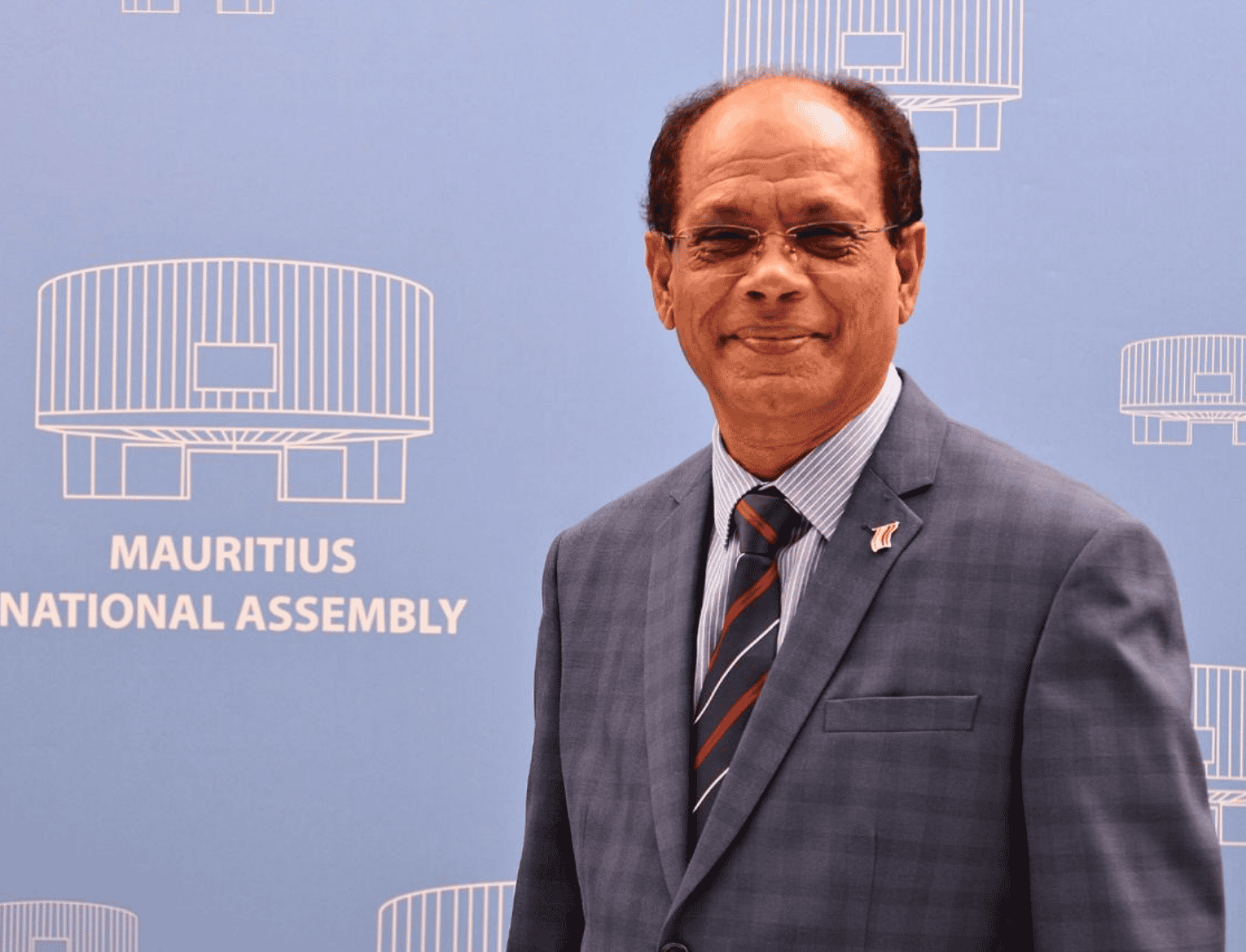
By accelerating strategic projects like the M4 Motorway, we are revitalising the construction sector

Ajay Gunness, Minister of National Infrastructure

Public infrastructure projects have often sparked controversy and criticism, but time has proven that they benefit the Mauritian economy. For Ajay Gunness, the M4 Motorway is “one of the most economically attractive road infrastructure investments ever evaluated in Mauritius.” Along with other projects, he believes it will revive an ailing construction industry, create jobs, and contribute to the economic growth of the country

Could you talk to us about the major infrastructure projects launched or scheduled to be launched by the Government this year?

This financial year represents a defining moment in the Government’s commitment to transforming Mauritius’ infrastructure landscape. A total of 22 major infrastructure projects, with a combined investment of approximately Rs 22.7 billion, are scheduled to be launched. These projects will modernise our road network, improve connectivity, enhance road safety and strengthen the country’s long-term economic competitiveness.

The flagship project is undoubtedly the M4 Motorway, a strategic investment of Rs 10.3 billion. Once fully completed, the motorway will extend from Forbach on the M2 to Plaine Magnien on the M1, passing through Poudre d’Or Hamlet, Plaines des Roches, Laventure, Pont Blanc, Bonne Mère, Queen Victoria, Clémencia, Bel Air and Olivia. The first phase will involve the construction of the 30-kilometre section between Forbach and Bel Air.


“A total of 22 major infrastructure projects, with a combined investment of approximately Rs 22.7 billion, are scheduled to be launched.”


On Wednesday 22 July 2026, I visited the future alignment of the M4 Motorway together with the High Commissioner of India to Mauritius, H.E. Mr Anurag Srivastava, and representatives of the Export-Import Bank of India (EXIM Bank). The visit provided an opportunity to review the final preparations before construction begins and to reaffirm our shared commitment to delivering this landmark project.

On behalf of the Government of Mauritius, I would like to express our sincere gratitude to the Government of India for its continued friendship and invaluable support, particularly through the Line of Credit extended for the implementation of the M4 Motorway. This generous financial assistance reflects the excellent strategic partnership between our two countries and demonstrates India’s continued confidence in Mauritius’ development.

Besides the M4, the Government will also launch several transformative projects, including Ring Road Phase II, the Dubreuil–Melrose Link Road, the dual carriageway linking the M3 at Trianon to the M1 at Hillcrest, new flyovers at key junctions, bridge reconstruction projects and extensive road upgrading works across the country.

Together, these projects reflect the Government’s vision of building a modern, resilient and efficient transport network capable of supporting sustainable economic growth and improving the quality of life of every Mauritian.

As of today, how many projects have already been launched or completed by the Government?

As of today, 14 major infrastructure projects have either been completed or are currently under implementation, demonstrating the Government’s determination to translate its commitments into tangible results.

Completed projects include the Pellegrin-Trianon Link Road, the John Kennedy Bridge at Vacoas, the Flic-en-Flac Bypass, the La Vigie-La Brasserie-Beaux Songes Link Road (Phase II), the La Vigie Flyover, the Wooton Grade Separated Junction, the Midlands Drain Network (Phase I), as well as several bridge rehabilitation and drainage improvement projects across the island.

Meanwhile, major projects such as the B1-M1 Link Road, the Beau Champs Bridge, the upgrading of roadside drains at Plaine Magnien, and road improvement works along the A7 at Camp de Masque are progressing steadily.

The Drain Infrastructure Construction Ltd (DICL) has awarded contracts for four drainage projects in L’Unité, Camp de Masque, Débarcadère at Poste de Flacq, Morcellement Domah, and Commerson in Curepipe.

In parallel, projects implemented by the Road Development Authority (RDA) and the National Development Unit (NDU) are also progressing steadily across the country.

These achievements demonstrate that this Government is not merely announcing projects – it is delivering modern infrastructure that will benefit Mauritians for generations to come.

In addition to the Rs 10.3 billion invested in the M4 Motorway, could you tell us more about other investments in public infrastructure? 

The M4 Motorway, valued at Rs 10.3 billion, is the largest single investment. It is followed by the Ring Road Phase II, estimated at Rs 5.2 billion, together with substantial investments in flyovers, bridge reconstruction, strategic link roads and road upgrading projects across Mauritius, and also the drain network and amenities in different regions of the country.


“Modern transport infrastructure is not a luxury; it is an essential prerequisite for economic competitiveness.”


However, infrastructure should never be judged solely by its construction cost. The real measure lies in the long-term economic value it generates.

The updated economic appraisal completed in July 2026 confirms that the M4 Motorway remains one of the most economically attractive road infrastructure investments ever evaluated in Mauritius. The project’s Economic Internal Rate of Return (EIRR) has increased from 36.2% in the 2012 feasibility study to 47%, while the projected economic benefits have risen to approximately Rs 51.1 billion.

These investments will significantly reduce travel times, lower vehicle operating costs, improve road safety, facilitate trade and tourism, and strengthen Mauritius’ long-term economic competitiveness.

The construction sector has been experiencing a decline for some time. How does the Government view this situation?

The Government fully recognises the challenges that have affected the construction sector in recent years, particularly following lower levels of private investment and a challenging global economic environment.

Our response has been both proactive and ambitious. Through an unprecedented programme of public infrastructure investment, we are creating opportunities for contractors, engineers, consultants, suppliers and thousands of skilled workers across the country.

Infrastructure investment has always been one of the most effective economic stimuli. By accelerating the implementation of strategic projects such as the M4 Motorway and numerous other road developments, such as drains projects, we are not only revitalising the construction sector but also stimulating wider economic activity and creating sustainable employment opportunities.

What is the scale of this decline?

While the construction sector has experienced slower growth in recent years, the demand for modern infrastructure has continued to increase significantly.

The studies undertaken for the M4 Motorway clearly demonstrate this reality. The original feasibility study projected that traffic demand would quadruple between 2012 and 2034, driven by sustained economic growth, rising vehicle ownership and increasing transport demand. Current traffic conditions have largely confirmed those projections.

The updated study also highlights the significant residential, commercial, industrial and tourism development that has taken place in the northern and eastern regions over the past decade. This reinforces the need for continued investment in strategic transport infrastructure.

Rather than postponing investment, this is precisely the right time to accelerate it in order to support economic growth and prepare Mauritius for future development.

What measures are being taken to revive the sector?

The Government has adopted a comprehensive strategy centered on increased public investment in roads, bridges, drainage systems and strategic transport infrastructure.

Projects such as the M4 Motorway will provide an alternative route to the existing M1 and M2 corridors, improve network resilience during emergencies and extreme weather events, strengthen connectivity between eastern communities and major employment centres, and significantly improve regional accessibility.

The updated feasibility study also indicates that the motorway will bypass several villages, reducing conflicts between through traffic and local traffic while contributing to an estimated 20% reduction in road accidents along the corridor.

Beyond improving mobility, these projects will generate employment, encourage private sector investment and stimulate economic activity across multiple sectors, thereby supporting the recovery of the construction industry and the wider economy.

Do you believe that large-scale projects such as shopping malls, and more recently Smart Cities, are necessary?

Absolutely. No country has ever achieved sustainable economic growth without investing in modern infrastructure. Around the world, major infrastructure projects have consistently served as catalysts for economic transformation by improving productivity, facilitating trade, attracting investment and creating employment opportunities.

Modern transport infrastructure is not a luxury; it is an essential prerequisite for economic competitiveness. Efficient road networks reduce travel times, lower transport and logistics costs, improve access to markets and public services, and make a country more attractive to both domestic and foreign investors.

It is also worth remembering that many of the projects which are today regarded as essential national assets were initially met with scepticism and opposition. The construction of the M1 Motorway, the development and expansion of Sir Seewoosagur Ramgoolam International Airport, and several other landmark infrastructure projects all faced criticism when they were first proposed. Yet, history has demonstrated the decisive role these investments have played in transforming Mauritius’ economy, supporting tourism, facilitating trade and improving the daily lives of our citizens.

The M4 Motorway follows that same vision. It is far more than a road project; it is a strategic national development corridor. It will improve connectivity between the North, the East, Port Louis and the airport, encourage the decentralisation of economic activity, reduce congestion, enhance road safety and generate substantial long-term economic benefits.

The updated economic appraisal confirms that the project remains exceptionally sound, with an Economic Internal Rate of Return of 47% and projected economic benefits exceeding Rs 51 billion. These figures clearly demonstrate that the M4 Motorway is not merely an expenditure but a strategic investment in the future prosperity of Mauritius.

As a Government, our responsibility is not only to address today’s challenges but also to anticipate tomorrow’s opportunities. We must have the vision and the courage to invest in infrastructure that will strengthen our economy, improve the quality of life of our people and create lasting prosperity for future generations.

Skip to content