Back to Bizweek
SEARCH AND PRESS ENTER
Latest News
Medine and MCCI drive blueprint for an intergenerational vision for the West

Panel Discussion on Smart City living

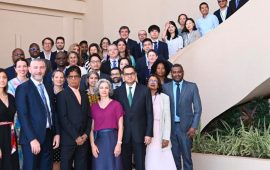
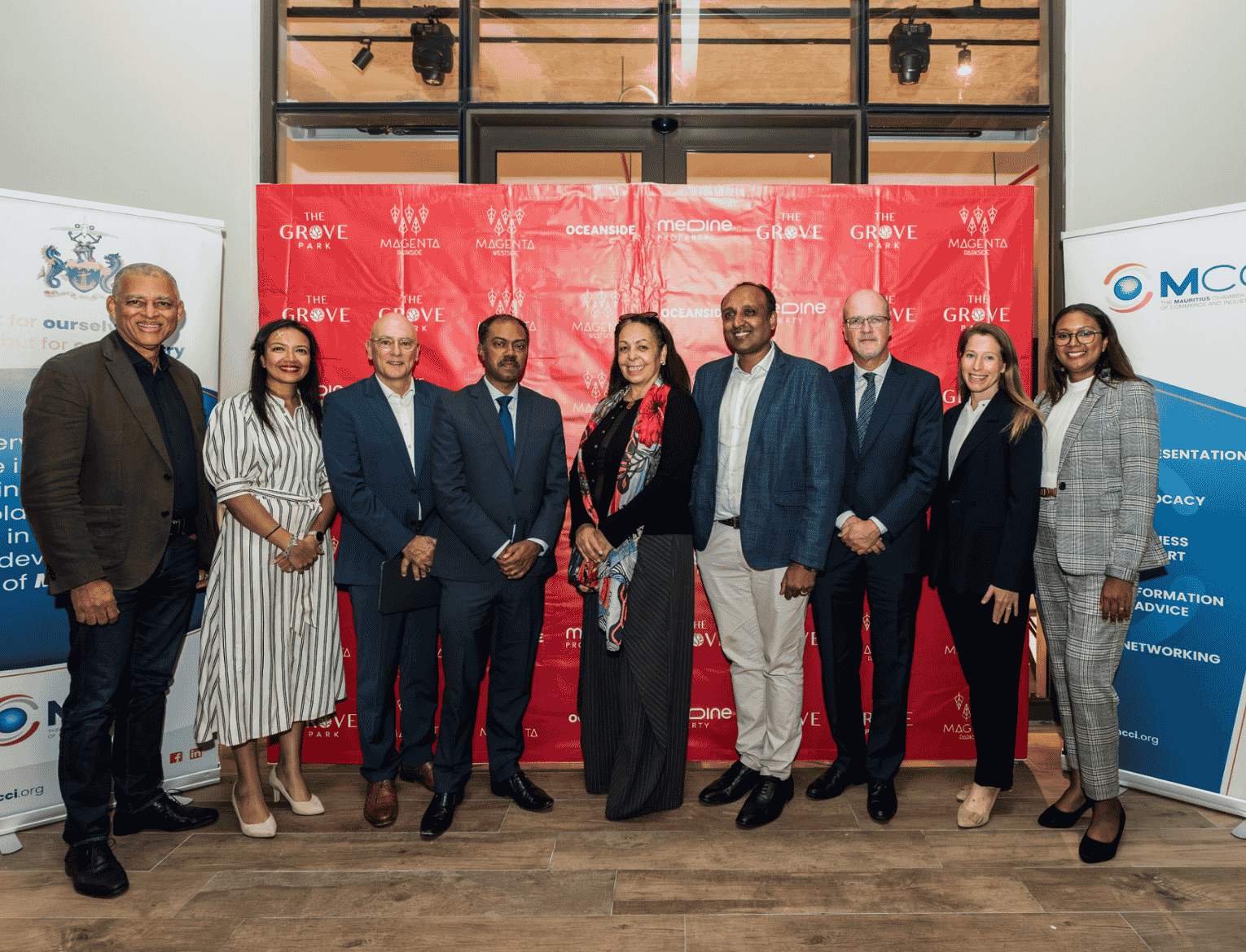
Creating thriving communities is no longer simply about constructing buildings. It is about designing places where people of all ages can live, work, learn and thrive together. That was the central message that emerged from a high-level panel discussion organised by Medine Property in partnership with the Mauritius Chamber of Commerce and Industry (MCCI) at Cascavelle Mall on 9 July. Held under the theme “Smart City Living: Building an Intergenerational Ecosystem in the West,” the event brought together business leaders, policymakers and legal experts to examine how smart cities can contribute to Mauritius’ economic competitiveness, sustainability and quality of life.

Far from focusing solely on buildings or digital technology, the panel discussion on Smart City Living: Building an Intergenerational Ecosystem in the West highlighted a broader vision: creating integrated communities that combine education, healthcare, employment, leisure, sustainability and investment opportunities within a single ecosystem.

Opening the event organised by Medine Property and the MCCI on 9 July at Cascavelle Mall, Heba Capdevila Jangeerkhan, Group CEO of Medine Group, stressed that creating an intergenerational ecosystem extends well beyond urban planning. 

The topic is relevant not only for cities and neighbourhoods but also for businesses,” she said, noting that one of today’s greatest challenges is enabling different generations to work together effectively in the workplace while creating communities that cater to their diverse needs.


“Today’s Smart City Scheme promotes greater inclusivity as the smart city model creates an environment where both Mauritians and foreign investors participate in the same development.”


The CEO further explained that the Group’s ambition is to transform the West into a destination where people can live, work and play throughout every stage of life. 

Our vision goes far beyond real estate. Living in an area is not just about the building in which we live. It is about how people experience their environment, their sense of safety and security, the proximity of schools, healthcare, leisure facilities and employment opportunities. Creating that complete ecosystem is what we are committed to in the West,” she explained. 

Smart cities as economic enablers

Moderated by Johanne Hague, Director at PRISM Chambers, who invited panellists to consider how smart cities could address broader societal challenges including ageing populations, traffic congestion, environmental degradation and changing demographic trends, the discussion shifted to the national perspective with the intervention of Sachin Mohabeer, Deputy Chief Executive Officer of the Economic Development Board (EDB). 

The latter traced the origins of the Smart City Scheme, explaining that Medine had already developed a master plan for the western region as early as 2005, well before the necessary legislative framework existed.

The Smart City Scheme was introduced to facilitate developments based on coherent master plans. It provides the framework needed to implement projects of this scale,” Sachin Mohabeer explained. 

According to him, smart cities contribute to three major national objectives. The first is improving Mauritius’ competitiveness and productivity by supporting both traditional and emerging sectors of the economy. He explained that traditional industries such as agriculture, tourism and financial services can modernise through smart infrastructure and technology-driven solutions. At the same time, smart cities create fertile ground for emerging sectors such as education, healthcare, research, financial technology and knowledge-based industries.

The second objective is sustainability. Sachin Mohabeer noted that Smart City Scheme regulations require projects to integrate sustainable practices, including responsible water management, renewable energy generation, wastewater treatment and circular economy principles.

The third objective is focused on improving the quality of life. By combining residential developments with modern infrastructure, educational institutions, healthcare facilities, commercial centres and recreational spaces, smart cities create attractive environments capable of retaining local talent while attracting foreign professionals and investors.

We have always seen real estate as an enabler. If Mauritius wants to develop sectors such as financial services, ICT, research and innovation, it needs quality infrastructure capable of attracting businesses and highly skilled professionals”, noted Sachin Mohabeer, who added that integrated developments ultimately generate greater private investment and foreign direct investment (FDI), supporting national economic growth.

Retaining talent through better communities

The third person to intervene was Dr Drishtysingh Ramdenee, Secretary General of the MCCI, who identified two major priorities for Mauritius: attracting investment and retaining talent.

From an economic perspective, investment remains essential. From a social perspective, we need to retain our people, especially our young people, by creating an environment where they want to live”, Dr Ramdenee noted. 

He argued that integrated ecosystems such as smart cities help build optimism by combining opportunities for employment, business, education and quality living.

Our country is small. There needs to be one guiding thread that brings together all these different strategies,” stated Dr Ramdenee, who went on to describe Medine’s development in the West as a practical example of how economic growth, social cohesion and urban planning can converge around a shared vision.

The ecosystem gives people confidence that tomorrow will be better, that there is space for business, space for families and space for young people to work, live and play,” he concluded.

Building investor confidence

Intervening on the legal framework and governance perspective of smart cities, Gregory Hart De Keating, of Novo Notarius, explained that “while infrastructure attracts investors, confidence sustains investment. Not so long ago, investment decisions were driven mainly by location and emotion. Today, buyers ask about contracts, governance, warranties and legal protections.

He believes that smart cities provide reassuring answers to these concerns as most smart city promoters are backed by publicly listed companies, offering transparency, governance and long-term credibility that strengthen investor confidence.

He also highlighted legislative safeguards that protect property buyers, including VIFA contracts, which guarantee project completion even if a developer encounters financial difficulties, as well as compulsory insurance covering latent construction defects.

Beyond legal certainty, Gregory Hart De Keating argued that smart cities offer something equally valuable in immediate access to an established ecosystem. “When people invest in a smart city such as Medine, they are investing in a future that already exists,” he said.

He also reflected on the evolution of Mauritius’ real estate market, stating that Integrated Resort Scheme (IRS) developments were often perceived as exclusive destinations reserved primarily for foreign buyers.

By contrast, today’s Smart City Scheme promotes greater inclusivity as the smart city model creates an environment where both Mauritians and foreign investors participate in the same development,” he argued. 

Asked by the moderator about whether demand for smart city developments remains strong among both local and international buyers, Gregory Hart De Keating expressed confidence in the long-term outlook. “I have no doubt that demand is there,” he said, noting that international investors increasingly view Mauritius as a politically stable jurisdiction offering security, quality of life and attractive long-term investment opportunities.

A new capital of the West

The fifth panellist to intervene was Joel Bruneau, Managing Director of Medine Property, who outlined the company’s ambitious roadmap for the western region and highlighted its role in easing the concentration of economic activity around Ebene.

With Medine’s projects in the West, we will not only provide people with more opportunities to live, work and play, but in ten years’ time, Cascavelle will become the future capital of the West,” he said.

He explained that the development strategy is designed to create balanced economic growth by bringing employment, education, services and residential opportunities closer together, thereby reducing commuting times and relieving traffic congestion.

People at the heart of smart cities

Throughout the discussion, one message resonated aloud: Smart cities are no longer simply urban development projects. They have become strategic platforms for economic transformation.

Speakers consistently emphasised that the success of smart cities should not be measured solely by modern infrastructure or technological innovation. Rather, their real value lies in creating integrated communities that combine housing, employment, education, healthcare, sustainability and recreation within a coherent long-term vision.

For Medine and its partners, the future of the West is therefore not simply about developing new neighbourhoods. It is about building a place where every generation can belong, contribute and prosper, making the smart city a model for Mauritius’ future development.

Skip to content