Back to Bizweek
SEARCH AND PRESS ENTER
Latest News

Empathy has become a strategic skill

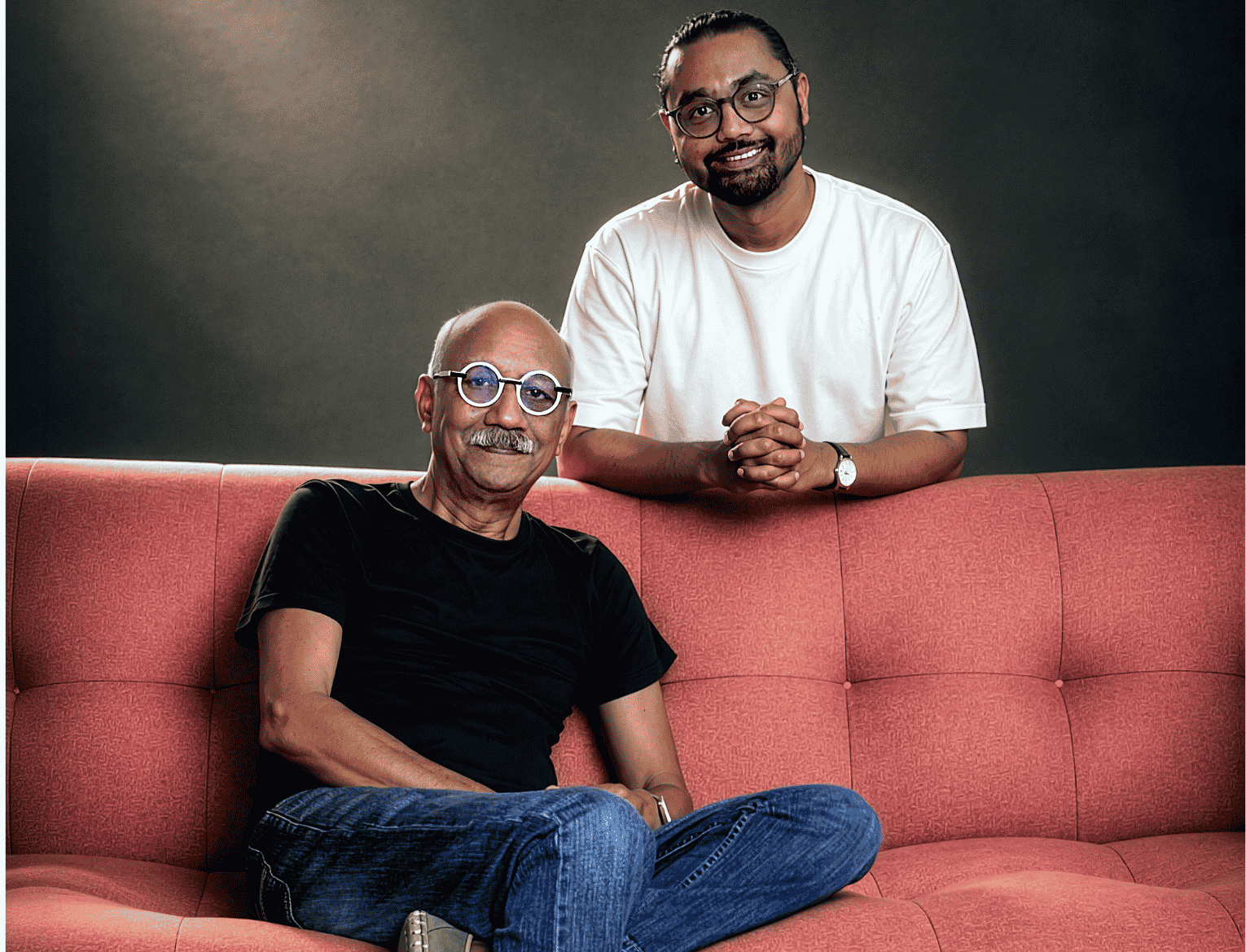
Vino Sookloll, Chairman, and Yanis Sookloll, CEO & Chief Creative Officer – FCB Cread

“Empathy has become a strategic skill”

  • “Brands are often managed as secondary assets. That is a mistake.”


  • “The real danger is not technology. It is uniformity.”

After more than four decades at the head of FCB Cread, Vino Sookloll hands over the operational leadership of the agency to his son Yanis. Far from a retirement, this transition marks the beginning of a new chapter for the agency and for its founder, who now intends to dedicate his energy to an ambitious project: supporting companies in the health, governance, and sustainability of their brands in a world undergoing profound change.

S.K.

What was the motivation behind your decision to hand over the reins to your son?

Vino Sookloll: I would first like to clarify one thing: this is not a retirement.

After more than forty years in this profession, I remain just as passionate about brands, innovation, and creativity. What changes today is my role.

We are living through a period of deep transformation. Companies must evolve faster than ever, and agencies too. To stay relevant, sometimes you have to be willing to change your position on the chessboard.

Yanis belongs to a generation that grew up with digital, social media, collaborative platforms, and now artificial intelligence. He has a natural understanding of these new environments. 

As for me, I want to devote more time to a reflection that has fascinated me for years: how to preserve the health of brands in a world where everything becomes instant, transactional, and sometimes superficial. By wanting to remain visible at all times, many brands lose their soul, their coherence, and their bearings.

I am convinced that the next great challenge will no longer be just to communicate for brands, but to help them remain strong, relevant, and coherent over decades. FCB Cread is therefore entering a new phase of its history, while I dedicate myself more to this long-term mission.

Yanis Sookloll: For me, this transition is not a traditional passing of the torch. It is more of a natural evolution. I grew up in this environment. I saw my father build the agency, navigate technological changes, economic crises, and market transformations. But what struck me most was not only his entrepreneurial journey; it was his ability to constantly question established models.

Today, we share the same conviction: the agency business must evolve. The goal is not to preserve the past. The goal is to build the future.

Yanis, you are from a generation that has lived through the digital revolution. How did you experience this transformation?

Yanis Sookloll: I entered the industry at a pivotal moment. I witnessed the end of one model and the beginning of another. Social media completely redefined the rules of the game. Companies began to internalize certain skills. Content creators, influencers, freelancers, and new platforms disrupted the traditional ecosystem.

Then the pandemic arrived and accelerated this mutation by several years. Today, artificial intelligence opens a new chapter.

For many, these changes are worrying. For me, they represent above all a tremendous opportunity. Tools change. Technology changes. But one thing remains constant: companies will always need to understand human beings.

That is where the true value lies.

Faced with the growing industrialization of communication and the rise of artificial intelligence, how can brands preserve their authenticity?

Vino Sookloll: Every generation has lived through its revolution. I experienced the arrival of offset printing, the computer, the Internet, the mobile, and now artificial intelligence.

At each stage, some announced the end of our profession. Yet we are still here. The real danger is not technology. The real danger is uniformity. Today, we are surrounded by content that looks alike. Brands use the same recipes, the same formats, the same trends. As a result, they become interchangeable. 

At FCB Cread, we want to remain artisans. We will use artificial intelligence, of course, but like a chef uses his utensils. The tool will never replace vision. The tool will never replace intuition. The tool will never replace a deep understanding of human behaviour.

Yanis, how does this human dimension integrate into your role as CEO?

Yanis Sookloll: I deeply believe that empathy has become a strategic skill. We work in an environment where technologies constantly evolve, but where human beings remain at the centre of all decisions. 

Behind every brief hides a more complex reality, an organizational challenge, commercial pressure, internal transformation, a personal ambition… My role is to understand what lies behind the brief. We do not want to simply produce campaigns. We want to help our clients make better decisions.

This approach will guide our development in the years to come.

In your view, how can branding become a strategic lever for the Mauritian economy?

Vino Sookloll: I believe branding is one of the most underestimated economic assets in Mauritius. We invest in infrastructure, equipment, technologies, or buildings. But brands are often managed as secondary assets. That is a mistake. A strong brand creates trust. It attracts talent. It attracts investors. It creates lasting value.

Tomorrow, Mauritius’s competitiveness will depend less on its ability to produce and more on its ability to create strong brands capable of shining internationally. That is precisely the project I am working on today. I am convinced that companies will soon have to measure the health of their brand with as much rigour as they measure their financial health.

How can “Made in Mauritius” be transformed into a true engine of innovation?

Vino Sookloll: I think we must completely rethink our vision of “Made in Mauritius.” Our country is small. Our market is limited. Labour is becoming increasingly scarce and costly. We will never be able to compete with industrial powers on production volumes. That is not our vocation.

Our future lies in creating high value-added products, where intelligence, creativity, know-how, and authenticity matter more than quantity.

We must move from an industrial logic to a modern artisanal logic. More products designed with passion, more human-scale production, more products that tell a story and carry a strong identity.

We also have the advantage of being at the heart of a region extraordinarily rich in natural resources. Madagascar, in particular, represents an exceptional reservoir of natural raw materials still largely underexploited. Rather than working in isolation, Mauritius must open itself more to regional collaborations and build new value chains based on complementarities in the region.

I strongly believe in the potential of natural, sustainable, and environmentally respectful products, conceived here, inspired by our region, and destined for the most demanding international markets. European, Asian, and North American consumers increasingly seek authentic, ethical, and meaningful products.

But this also requires a change in mindset. We must move away from a culture of ease and accept greater risk-taking. Innovation rarely arises in comfort zones.

The future of “Made in Mauritius” will not be built by trying to produce more than others. It will be built by creating products that others cannot create; unique, desirable products deeply rooted in our identity and our region.

What future do you imagine for the Mauritian tourism sector?

Vino Sookloll: The sun, the sand, the sea, the coconut trees… all of this is already there, naturally and freely. They are gifts of nature. But they are no longer enough to create true differentiation. The real challenge is to constantly reinvent the customer experience.

Today, many hotels look alike. Take breakfast, for example, which is an important moment in every visitor’s day. From one hotel to another, you often find the same buffets, the same products, the same presentations, and sometimes even the same customer journey. Apart from service quality, few elements truly distinguish one experience from another.

That is precisely where the opportunity lies. We must move from a product logic to an experience logic. This means segmenting our offers more and rethinking every touchpoint of the customer journey – arrival at the airport, transfer, welcome, dining, activities, cultural discoveries – up to departure.

Each customer segment should live a different experience, specifically designed for their expectations and aspirations. Tomorrow’s tourism will not be a competition between hotels, but a competition between experiences.

If we succeed in this transformation, Mauritius can claim a much stronger positioning: “Mauritius: a destination to visit at least once in a lifetime.”

To achieve this, we must stop selling only a place and start creating unique memories that visitors cannot experience anywhere else.

Beyond tourism, what is missing today in the relationship between brands and their clients?

Yanis Sookloll: Most relationships have become transactional. Brands seek clicks. Consumers seek promotions. Platforms seek engagement. But in the middle of all this, we sometimes forget the relationship. The strongest brands of tomorrow will be those that succeed in recreating connection, trust, and closeness.

That is exactly the mission we set ourselves at FCB Cread.

What is your shared vision for the next twenty years?

Vino Sookloll: For forty years, we helped brands communicate. For the next forty years, we want to help them endure.

Yanis Sookloll: And to endure, they will have to be more human, more innovative, and more coherent than ever. The future will not belong to the brands that shout the loudest. It will belong to the brands that have the most meaning. 

Skip to content