Back to Bizweek
SEARCH AND PRESS ENTER
Latest News

If you do not build infrastructure, you do not grow

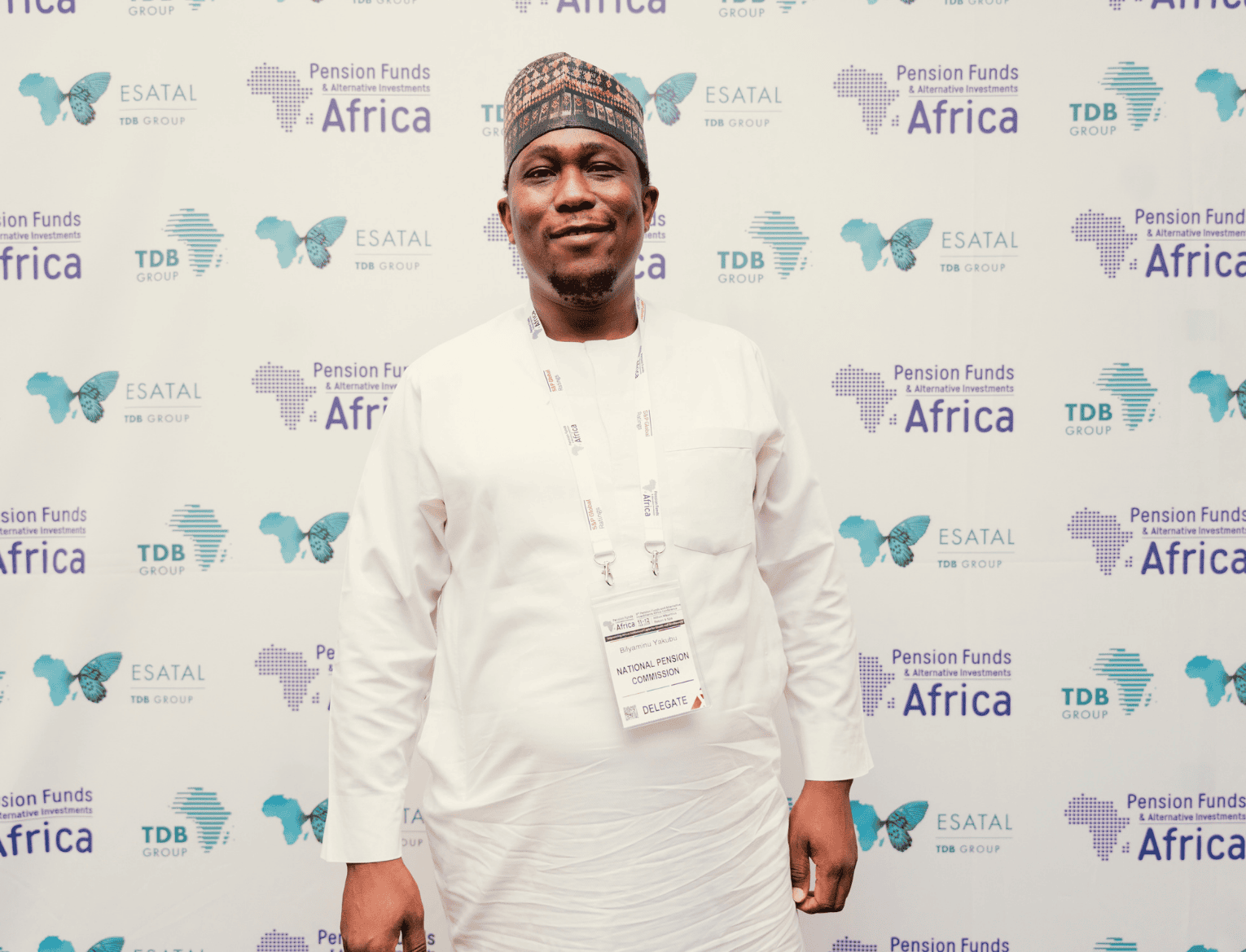
Bilyaminu Yakubu, Regulator at the National Pension Commission of Nigeria

Nigeria has transformed its pension system from a limited public sector arrangement into one of Africa’s largest and most resilient industries. In this interview, Bilyaminu Yakubu provides us with insights into how, under the oversight of the National Pension Commission (PENCOM), pension funds are being managed by private administrators, diversifying investments across traditional and alternative assets, and increasingly channelling capital into infrastructure and regional projects. He emphasizes that pension capital is not just about retirement, and can be a catalyst for national and continental progress.

Nigeria has built one of Africa’s largest pension industries. How is PENCOM positioning the sector to navigate heightened global volatility and market uncertainty? 

Before I start answering your question directly, I need to give you a bit of background of why and how PENCOM came into existence. Prior to 2004, the Nigerian pension industry was purely a defined benefit scheme, basically for the people in the public sector who work for the government. However, for people working in the private sector, just a few of them were entitled to pension, while most worked for a long time without having any pension. And it became challenging. 

When we first moved in along with a democratically elected president, the concept of privatisation came into being. Some of the government agencies that were meant to be privatised, when the government looked at the value of those assets, it said that, to an extent, these assets were worthless. Not because it had no true value, but the pension liability attached to it was a problem. Globally, people have been moving away from the defined benefits mode of pension to a defined contribution, where both the employer and the employee contribute. The meaning of that is that you hold your future in your hands as an employee while you are working. 

Nigeria then decided to study a model from Mexico and Chile. The pension industry in Nigeria that is in existence today is actually a combination of models copied from Chile and Mexico. What we did, in a nutshell, was to solve the problem of seeing people retiring and finding out that the government does not have enough money to pay them because of an epileptic budgetary allocation to pensions. Having said that, the government has the mandate of saying, “we want to pay existing employees, we want to build infrastructure, or we want to do this or that with the resources.” At any point in time, the needs for those resources are competing. 

Coming back to budgetary allocation, the government decided to say, “Okay, we need to take a bit of that burden off our shoulders. We can contribute at the beginning, but you must also contribute.” Then, in 2014, the Pension Reform Act was enacted, which provided some background on the guiding principle of how pensions in Nigeria should be administered. That gave birth to the National Pension Commission, which would be the top regulator of the pension industry. 

On the issue of implementation, people who would retire within three years from when the act was enacted were exempted. This meant that those people who would retire on or before 30 June 2017 were exempted from the new contributory pension scheme and would still fall under the old contributory pension scheme. 

In a nutshell, that is how it started. PENCOM thus started to actually resolve the first question you raised on how to build resilience despite the volatility of the global economy. When we did that, we began to receive contributions as people were deploying assets. We rolled out of a lot of regulations, of which one of the most important was the regulation on Investment of Pension Fund Assets, which guides the pension fund administrators in how to invest them. 

The rule states that management of pension under the Pension Reform Act will be done by private sector companies that have been licensed by the National Pension Commission to carry out the business of pensions. A lot of companies were licensed to begin that. When they obtained the licence, people began to contribute. 

However, there were existing pension arrangements made by some employers prior to the enactment of the act. These arrangements were allowed to continue, but the difference, now, is that we need to be sure that you are transferring this arrangement to a particular licenced pension operator, which is called a Pension Fund Custodian, who would exercise custody over the assets. 

In Nigeria, the way we work on pensions, we have the administrator, who administers the assets differently from the custodian, who holds the assets. However, the custodian is not the government, but from the private sector, and is basically owned by the major banks in Nigeria. In fact, the government only promulgated this act, and then the private sector led the way under the guidance of PENCOM as a government agency.

Now, they are moving the asset to the custodians to establish the principle of check and balances. While it is the custodian that holds the assets, the Pension Fund Administrators only administers them. This was done to minimise the issue of corruption and mismanagement of resources.

That was how it started. The government does not interfere at all in the management, distribution and holding of pensions. The only government agency that is in between is the National Pension Commission. The Commission was given the regulatory mandate over the industry.  As you know, in every jurisdiction, when you try to get things in the hands of the private sector, you need a regulator that reports to the government on what is happening, and that is how it is done in Nigeria.

Coming back to your question about resilience, recently, there were reforms that were carried out in the Nigerian pension system due to that. One of the economic issues that we have had in Nigeria for some two to three years is that we almost have a hyperinflationary environment. We have to look for a way to solve that problem because we cannot solve inflation. But we can solve what is called the issue of return in order to preserve the capital of pension contributors. How do you do that? You can only preserve the capital of pension contributors when you make what is called a positive return, which is above the inflation rate for the contributors. That is how you maintain the purchasing power of the contributors


“What we did was to solve the problem of seeing people retiring and finding out that the government does not have enough money to pay them…”


We have observed that predominantly (more than 62 percent), the pension funds were invested in government papers, government bonds and treasury bills. These are instruments that are exposed to inflation issues. We looked at the adjustment which we brought in 2025 to help make pension funds earn returns above that inflation. The only thing that gives you returns higher than the traditional asset classes are alternative investments. And aside from higher returns, alternative investments will help build economies. This is one of the reasons why we are here at this conference in Mauritius today (Editor’s Note: the PI Africa conference held on 11-12 February 2026), looking at how to deploy more pension assets into alternative investments. 

Alternative investments are when you deploy assets into building infrastructure and reviving companies through private markets. That is what we encourage. Pension Funds and, traditionally, alternative investments, have given far better returns than the traditional asset classes. This is because of its longevity, the time you have to hold them, and a bit of risk.

So, we increased the allowable limit for alternative investments by reducing the allowable limit for the normal government papers, so that people can move to that alternative to make sure you create value for the other shareholders. 

We also did other things that will have enhanced returns for the fund. We introduced what is called securities lending because pension funds sit on a lot of assets. We now allow them to lend those assets for a fee. When I lend to you, you pay me a fee. At any point, if I want the asset back, I can call it back, and you must return it to me.

We do securities lending, and we also allow what are called reverse repos. Reverse repos are simply collateralised lending. If you need money from me and you hold an asset, you give me that asset as collateral, and I give you the money. When you repay the money with interest, you take your asset back. It is somewhat like a mortgage — though not exactly. Usually, this is done between dealers in the market, such as banks. Banks that need liquidity go to other banks. For this arrangement, there is a guarantee and it is secured. It is somewhat like placing a fixed deposit with a bank. You go to a bank and say, “I have this amount of money that I want to place with you.

These are some measures that we introduced to help alleviate the uncertainty arising from global headwinds.

Another initiative we are working on within the pension industry, led by the Commission, is the establishment of a Pension Infrastructure Consortium. Under this arrangement, pension funds will pool their resources, identify impactful infrastructure projects, and deploy capital into those projects to support national development.

When you build infrastructure, there are a lot of multiplier effects. One of the key multiplier effects is that it generates employment opportunities. Indeed, it is often said that an economy can only grow to the level supported by its available infrastructure.

So, in your assessment, there is a clear need to rethink diversification strategies, particularly in infrastructure and alternative assets.

Like I said earlier, there are no two ways about it. People are looking toward diversification. You need to diversify. Knowing that pension funds are a long-term asset, you definitely need to diversify into building infrastructure and other alternatives. That helps in building the economy, and beyond all, those instruments give higher returns to the contributors than the traditional asset classes. These, especially for the bills and bonds, are still subject to inflationary issues.

When you issue an instrument or when you invest in an instrument and there is an increase in the Consumer Price Index (CPI), that is the inflation rate rises, your returns may fall below inflation. In that case, you are effectively eroding value for contributors.

That is why we need to diversify into infrastructure and other alternative asset classes, because they are subjected to some issue of cash flow and pricing. If inflation builds up in the economy, there is also an opening for holders of those assets to increase their pricing and to make it hedge against the inflation activity. There are no two ways about it.

But diversification is the way to go, especially in Africa. We need serious infrastructure. We have to think Africa. We also need African capital to build this infrastructure as no one will do it for us if we do not do it ourselves.

Government alone cannot do it. Governments do not have unlimited resources; they have many competing responsibilities. In economics, we talk about scarce resources and unlimited wants. Resources must be allocated judiciously.

No one will come and pay your workers for you — only you can do that. But investors can come in with their capital and build infrastructure. Then you repay them over time. That way, you solve multiple challenges at once.

Pension capital is often seen as a catalyst for national development. How can regulators ensure that developmental investments remain consistent with fiduciary responsibility and risk prudence?

This is a very interesting question. As regulators, it is not advisable to remain stagnant. When you make rules, you must ensure compliance. But it is not only about compliance. You also have to review the performance of those rules – whether they are actually delivering the intended results. If they are not producing what is expected, you must reassess and make the necessary adjustments.

It is also important to continuously monitor the rules you have set, to ensure they are achieving the desired outcomes. As a regulator driving national development, you must strike a balance between supporting development and upholding your fiduciary responsibility, thus ensuring that contributors ultimately receive adequate benefits at retirement. The essence of pension contributions is to secure the future of Retirement Savings Account (RSA) holders and retirees, so they can live comfortably on a sustainable pension.


“If we do not develop Africa, nobody will do it for us.” 


National development is impactful, especially when pension assets are deployed into meaningful investments such as roads and other infrastructure. The multiplier effects are significant as it actually helps create employment, provide security, and also reduce inflation in a way. 

As I said earlier, no economy grows beyond the level of infrastructure available within its jurisdiction. Infrastructure is key to every economy. If you do not build infrastructure, you do not grow. The difference between a hamlet and a village is the level of infrastructure, and the difference between a village and a city is the level of infrastructure. The more infrastructure you build, the more advanced you become, the more people accommodate you, the more your economy flourish, the more your economy grows. Infrastructure is something you cannot take away. No country can outgrow its infrastructure base. If an economy is to continue growing, it must continue building impactful infrastructure. This is where long-term funds like pension assets become critical, because infrastructure projects require patient, long-term capital.

To avoid mismatch, we need to use pension funds judiciously to build our environment, to build the economy in Africa, as well as make sure we reduce the dependency ratio by ensuring that retirees have adequate pensions at retirement.

What regulatory reforms or supervisory enhancements are currently under consideration to strengthen governance and protect contributors in an evolving investment landscape?

In the case of governance, the Financial Reporting Council of Nigeria issued the Corporate Governance Code, and each and every sector of the economy was advised to domesticate it. In the pension industry, we have domesticated ours and introduced several regulatory enhancements requiring people with adequate experience to sit on the board of the Pension Fund Entities (PFEs) to make investment decisions. 

They also require a minimum level of understanding of finance and investment so that board members can make informed decisions. Without this knowledge, boards may make wrong decisions, which could negatively affect the value or operation of the pension fund.

Mind you, the Contributory Pension Scheme in Nigeria is still new, because it is barely 20 years old. We are still building confidence. We have to be a bit careful to ensure we actually get everybody to buy-in. 

It is important to mention that in Nigeria, pensions fall under what we call the concurrent list. In the Nigerian structure, some matters are exclusive to the government, while others, on the concurrent list, allow both the federal and state governments to make rules within their respective jurisdictions. As we speak, many states have not yet fully complied or adopted the new pension arrangement. It is therefore important to continue building confidence and ensuring that all states, and even municipal governments, buy into this system. 

As we speak, the Nigerian population is estimated at about 230 million, which makes Nigeria the largest country in terms of population in Africa, with a working population of about 180 million. We only have about 11 million registered in the Contributory Pension Scheme. It is because the economy is largely driven by the non-formal sector. That is where the bulk of employment is. 

A new approach has been introduced to capture the informal sector into the pension system. Recently, we launched the Personal Pension Plan, which allows individuals to contribute on their own, as the old arrangement made it a bit difficult for a self-employed person to join. 

How can greater regional cooperation among African pension regulators and funds enhance scale, risk-sharing, and cross-border investment opportunities?

Like we said, in everything you do in the economy, there is what we call the Law of Comparative Cost Advantage. This can only happen when there is coordination and regional alliances. By deploying resources, you can build together — for example, developing regional corridors and roads that move people efficiently across the African continent.

For instance, I am an African from Nigeria. When traveling to Mauritius, I had to fly through Asia first because there is no direct flight, and it is very expensive. In fact, from Mauritius, traveling to Africa is more costly than traveling to Europe. Similarly, if I want to go to Kenya today, there are very few options besides Kenya Airways. Often, I must travel via France before reaching Kenya. Meanwhile, in the UK, you can take a train from London to France quickly and efficiently. 

These are the kinds of issues we need to address within the region. Collaboration between regulators and policymakers is critical. If we do not do this, inefficiencies will persist. Regional integration is therefore key. Regulators must work together to ensure capital is allocated where it is most needed while diversifying risk across the region.

For instance, in Nigeria, we recently revised our regulations on pension fund investments in private equity. Previously, any private equity fund wanting pension fund investments had to invest at least 60% within Nigeria. This made regional diversification impossible.

With the new review of the regulation, we have reduced it from 60 percent to 30 percent, just to promote regional integration. We said that we can take 70% to be deployed in Africa while keeping 30% in Nigeria so that other people that have other funds could also bring funds into Nigeria for regional development.

Until and unless we do that, we may not be able to get it right. So, it is important for us to do that. 

Over the next decade, what structural shifts are necessary for African pension funds to play a more decisive role in shaping economic transformation both domestically and continentally?

This is a very important question, and I have kept hammering it throughout the conference. The key words are: “If we do not develop Africa, nobody will do it for us.” 

There are some structural shifts that we need to do in terms of regulatory adjustments. For instance, today, when you ask pension funds to invest in infrastructure and other alternatives, it becomes a bit cumbersome. They will tell you that these are things that are a bit confusing. What leads to this is that we have people who are less qualified. Therefore, we need to focus on capacity building to ensure each and every person that is saddled with the responsibility of managing pension fund assets understands the importance of diversification and the building of infrastructure, which will create more employment and enlarge the coverage of pension assets.

Education is key. We have to educate our people. Moreover, we need to keep a database to understand the way things are being done, and then where we are going. Without this clarity, planning becomes problematic.

The African Finance Corporation has done pretty well in Africa in terms of building impactful infrastructure. They have built railways that promote regional integration, like the Lobito Corridor linking Zimbabwe, Zambia, and the Democratic Republic of Congo (DRC). This corridor, which has allowed the transportation of goods and services between those three landlocked countries, serves as a model of regional integration.

How should African pension regulators respond to global shifts in monetary policy, currency volatility, and cross-border capital flow pressures?

Pension funds, like I said, face challenges from foreign regulators, shifting monetary policy and currency volatility. What can we do? Diversify across Africa. When you diversify, you get a bit of inflation hedge around this. Investing in alternative instruments such as infrastructure and private equity help you deal with the issue of volatility. Monetary policies are usually affected by either increase or decrease of inflation. Pension funds can better control volatility and achieve more stable returns by allocating funds to instruments that hedge against inflation. 

When you rely solely on traditional asset classes, it exposes funds to risks linked to interest rate movements, inflationary pressures, and other passive risks in the region. Thus, developing infrastructure within the continent will help us mitigate those risks.

In a world where sustainability and climate risk are becoming embedded in global investment standards, how is PENCOM integrating these considerations into Nigeria’s pension regulatory framework?

PENCOM is actually working on what we call the Nigerian Sustainable Pension Principle; a set of rules that will guide pension fund administrators in doing ESG (Environmental, Social, and Governance) screening when it comes to investment of pension fund assets. These will look at environmental impact assessment, governance instruments and social responsibility when you want to invest. 

We have also begun to implement negative screening in investment. When they see instruments come in that are not ESG compliant, Pension Fund Entities keep it aside, because eventually, it is going to become a problem. Sustainability is key to everything. If the funds are not sustainable, the contributors or the RAC (Retirement Annuity Contracts) holders face problems at retirement.

Skip to content