Back to Bizweek
SEARCH AND PRESS ENTER
Latest News

We have four African sovereigns at investment grade

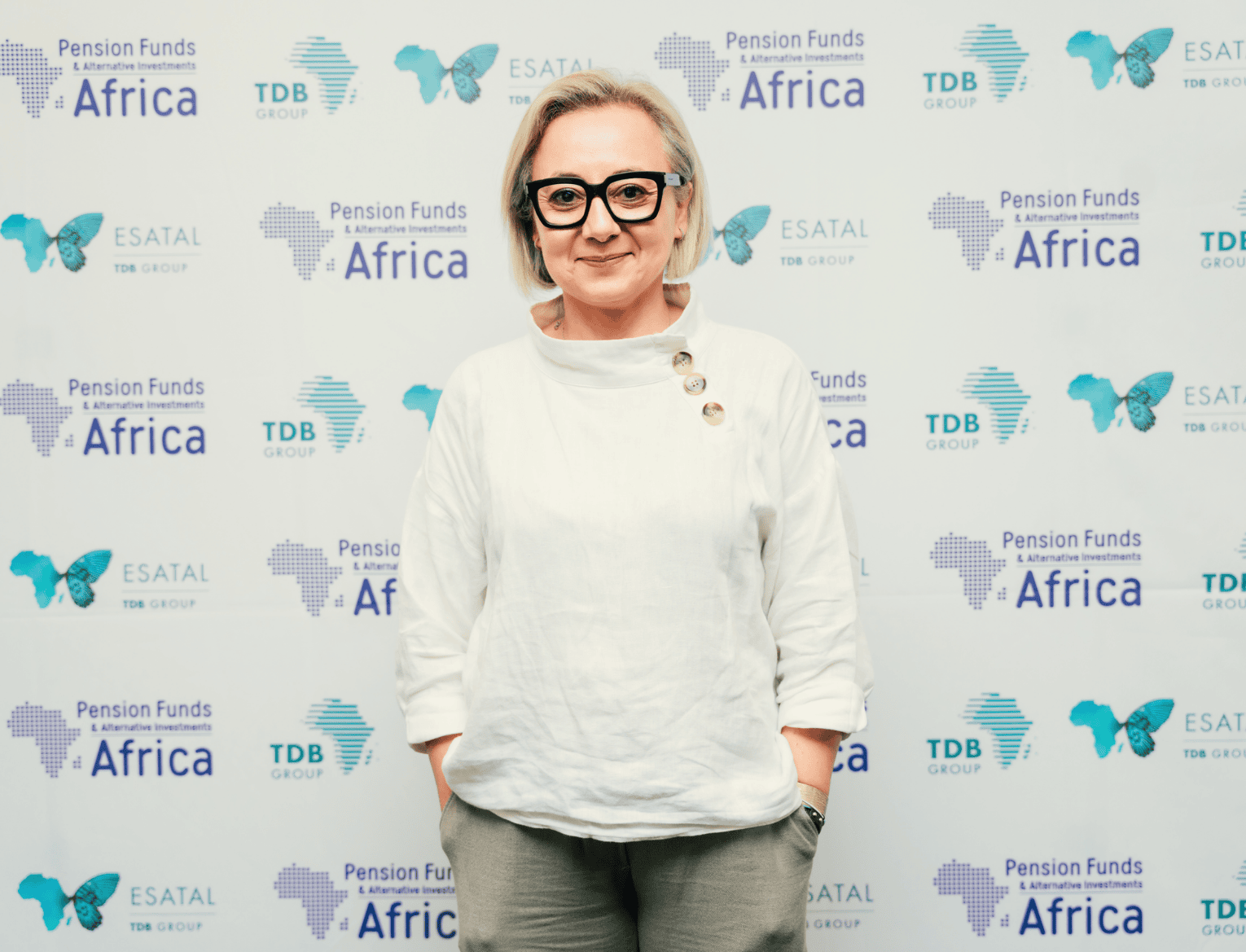
Samira Mensah, Managing Director of Africa Research & Analytics at S&P Global Ratings

Only four African sovereigns currently hold an investment-grade rating from S&P Global Ratings. Responding to questions from Bizweek Africa, Samira Mensah, Managing Director of Africa Research & Analytics at S&P Global Ratings, reflects on the structural strengths and vulnerabilities shaping sovereign creditworthiness across the continent, the persistent gap between perception and fundamentals, and the reforms required to lower borrowing costs. From data transparency and fiscal consolidation to climate resilience mechanisms and innovative debt management strategies, she outlines what African sovereigns must prioritise to enhance credibility and compete for long-term institutional capital. As she puts it, “better data tells a better story,” and in today’s environment, that story can materially influence access to financing.

As a rating agency, is S&P Global Ratings considering establishing an office in Mauritius to expand its presence?

I would like to start by saying thank you for the opportunity. Currently, S&P Global Ratings is the only global credit rating agency based on the continent. We are based in Johannesburg, with offices in Cape Town as well. 

It is clear that the continent is big. At the same time, regulation is fragmented. You have a whole set of regulations everywhere across the 54 sovereigns. As a regulated business, it is not easy nor practical to necessarily open an office in each jurisdiction where we would like to expand our rating coverage. 

At the moment, we cover almost half of the sovereigns on the continent. We have 27 sovereigns out of 54 countries. So, it is quite a lot! We also have private sector ratings that we assign to corporates, financial and non-financial, and also insurance companies and banks. These are typically located in the two largest markets that we have identified, that is South Africa and Nigeria. That explains essentially why we are where we are, knowing full well that the capital markets in South Africa are certainly the most developed with a full-fledged ecosystem and a liquidity pool with a lot of insured capacity. That makes our work as a provider of credit ratings very relevant, especially as we anticipate that South African banks and South African Asset Managers could essentially deploy capital onto the rest of the continent from where they are.


Data transparency is becoming a decisive factor in sovereign ratings.


As you know, we are a provider of global credit ratings, and we rate Mauritius, which actually stands at BBB minus with a stable outlook. But we also provide national ratings, and these are essentially credit ratings that are most relevant in the various economies and in the various domestic capital markets. One national rating, let us say in Mauritius, would not be comparable to national ratings provided in Nigeria. Why? It is because these are two different domestic capital markets and jurisdictions. As such, it is important for us to identify institutional investors in each market, see what their appetite for national ratings is in this instance, before deciding upon opening an office. These decisions are generally taken at global corporate level.

As you know, S&P Global is a big company, it is a global one, and ratings is one division among others, headed by its President, Yann Le Pallec. Last year, President Le Pallec said that he heard the message loud and clear about expanding our coverage and our presence on the continent. And I can tell you that he is certainly someone who loves Africa and has a sensitivity towards emerging and frontier markets. 

Can you tell us more about S&P’s assessment of Mauritius?  

The assessment is our credit rating, which is an investment grade. We have four African sovereigns at investment grade, and Mauritius is one of them. The others are Botswana, Morocco, and St. Helena, which is a British overseas territory, but is also part of the African portfolio. 

Generally speaking, Mauritius has been investment grade since we started rating it on a stable outlook. When we look at the creditworthiness of sovereigns, we look at a number of factors. Some of them are more quantitative than others, meaning that others are more qualitative.

Part of the qualitative assessments is certainly the institutional framework – the rule of law, the stability of the institutions, their effectiveness in carrying economic policies and structural reforms that feed into inclusive growth. You also have the structure of the economy, which is an economic assessment with some quantitative factors. 

On these two fronts, actually, along with the institutional and economic factors, the assessment is rather positive under our framework, whereas we perhaps have a weaker view of the external sector, if I may say so!

What do you mean by a weaker view? 

The monetary factor is assessed as weaker than the others because there is this large sector of global business companies which are essentially domiciled offshore operators. They have been stable through the economic cycles, to be honest, because they are underpinned by these large tax treaties. However, they represent a very large share of the GDP, about 36 times the GDP of Mauritius.

So, it is massive, and some of the data, when we look at the Balance of Payment (BOP), is not necessarily granular enough for us to think that it could not cause some instability. That being said, we have seen that FX deposits at banks have been stable through the cycles, but I think that in the external sector and the GBC in particular, there could be a contagion risk. That risk is actually factored into the way we look at monetary assessment, although the monetary settings and the central bank role is certainly credible. 

The central bank has actually raised rates by 50 basis points recently. This is a sign that they are being proactive in managing monetary risk as an effect into the broader economic structure. And of course, what the pandemic has done as well is that it has created a large budget deficit. So, we are still seeing the knock-on effect of the pandemic.  

I remember there was a number around 8.4 percent as budget deficit when it came to 2024. We are looking at 5.4 percent of GDP when it comes to fiscal consolidation. So, on the back of it, the debt stock has risen. That is why I am saying that the fiscal assessment, and that of debt, is weaker compared to the other factors because of that fiscal outlook, even though it is consolidating at a slow pace for Mauritius. 


Fiscal consolidation remains central to restoring investor confidence.


We are also seeing slower GDP growth because the government has to deal with the level of indebtedness. If you look at the debt stock, I think it is close to Rs 600 million. As a share of GDP, it is around 70 to 72 percent.  If there is no fiscal space, that brings some constraint into public investments. And these public investments, they generate and lead to growth. It is not that there is no growth, because the private sector is willing to underpin the growth in Mauritius. However, we are looking at 3.8 percent of growth for this year (2026). It is still there, muddling through. Hence a stable outlook on our BBB minus, which is investment grade level. And that is important for investors because they tend to like predictability and stability. 

From a research and ratings perspective, how is the current global climate of geopolitical fragmentation and tighter financial conditions influencing investor appetite for African markets?

From a research and ratings perspective, we have identified some high risk, namely geopolitical shifts and political fragmentation as well. The other risk has to do with trade policies and uncertainty. And like I said, investors do not like uncertainty. But these are cyclical, because they could change for the better. 

On the other hand, we have lived through 2025 with this risk. It is true that we have started the year with some additional risk around, like what happened in Venezuela and what could happen with Iran. Risk seems to have receded slightly for these two countries. But, at the same time, long-term geopolitical shifts remain.

Now, in terms of structural risk, you still have climate adaptation, which is a key topic for African countries and African islands. Mauritius is an example of that. And then the other one is technology, which could be actually an opportunity for the African continent because it has a demographic advantage.

I think it is a question of looking at technology integration. If the continent manages to address this, then it could provide some room for productivity gain. It is a risk if it is not done, but it is certainly a clear opportunity for African countries.

Do you observe a disconnect between Africa’s macroeconomic fundamentals and global investor perception? If so, how can that gap be narrowed?

We produce true credit ratings. This is why we are here, essentially, to be on ground and know the continent. I travelled across 20 countries. You do not have many African-based investors who do that. We go see clients, prospects, people, stakeholders, policy makers, amongst others, in order to discuss with them and understand the risks. And that is why we also provide ratings, as ratings are a way to access the debt market by reducing friction and improving pricing transparency. There is a perception of the creditworthiness and the ability of a borrower to repay its debt in time and in full, and that perception can only be addressed and tackled through transparent and credible credit ratings.


Climate-resilient debt clauses are reshaping how default risk is assessed.


We are 160 years old.  So, we have been doing this for a very long time. We have data that underpins credible default risk statistics and we are a regulated business. So, we do not do things on a whim. With analysts who are credit fundamentalists, essentially, we know credit markets and we know what credit risk is. This is what we assess by not only looking at individual credits but also at the long-term risk and trends that could affect the behaviour of credit markets. So, a lot goes into it. And you cannot go about it recklessly.

We work on data as well as with people because we like to understand the context of the data. The data alone is not enough.

In periods of uncertainty, data quality and transparency become critical. Where do African sovereigns and corporates still face weaknesses in credit reporting and risk disclosure?

Not all of them, to be honest, face weaknesses in disclosure.  If you look at South African banks and corporates, they have a good system of reporting. There is great data there, while some other countries lack data. But it is up to them, indeed, to improve their data quality and own the data. In other words, be sovereign on their data and communicate a message thanks to that data.

But it’s not just Africa, to be honest. It’s a question of emerging markets and frontier markets. They tend to have data gaps. The frequency and quality of the data is lacking. So, it is for the governments to invest in that area.

Better data tells a better credit story. This is something that has been identified as part of the B20 workstream. There was a workstream on infrastructure that was done in anticipation of the G20 summit, and this is something that has been talked about. 

How can improved analytics, scenario modelling, and forward-looking risk assessment strengthen the resilience of African institutional portfolios?

These are investors’ institutional portfolios, and I cannot really answer that question fully. But forward-looking analysis is something that we are focussing on particularly from an economic standpoint as we do macroeconomic simulation. That then feeds into the credit ratings that we provide. So, for us, it is extremely important. We have the capabilities to do that and I suppose that for portfolio managers, it is equally important to do risk analysis, especially in these times where you have a lot of shifts in geopolitics, regulation and also trade uncertainty. All of that demands robust scenario analysis for portfolio managers.

Capital costs remain high for many African issuers. What structural reforms would most effectively improve creditworthiness and reduce financing costs?

This is something that we have tackled as a rating agency in the S&P Global Africa Summit that we launched last year during the G20 Summit in Johannesburg. We have seen countries such as Benin and Ivory Coast that have issued debt to tap the euro bond market and hedge part of the amount that has been raised. They raised dollars and swapped them into euros. That move has helped them essentially gain 150 basis points or more on their capital raising. They have been successful at doing that. They have also done some credit enhancement, providing guarantees. So, a guarantor has guaranteed part of the debt, which has lowered the cost of funding. I am talking about Benin, which is BB minus, and the Ivory Coast, which is BB, with both of them on a stable outlook. These are sub-investment grade ratings. But at the same time, the cost of funding for these two issuers was around 6.5-6.7 percent, which is not too bad for a BB category rating.


Innovative debt management strategies are helping lower borrowing costs, even below investment grade.


Just to give you a sense of perspective, Morocco, which issued 2 billion last year in euros, is rated BBB minus. That is investment grade, like Mauritius. They issued for 3 or 4 percent, that is 250 basis points less than Benin or the Ivory Coast.

So, the rating plays a role. But at the same time, the currency does as well, as does the level of liquidity in the market and how the issuance has been done, if it has been credit enhanced, and if it has been swapped or hedged against currency risk. Work is being done at the debt management offices of the sovereigns to actually manage the cost of risk that I mentioned.

It is the role of each Global Asset Manager (GMO) to essentially take ownership and proactively seek opportunities to lower the cost of funding based on what they have. 

Looking ahead, do you see African institutional capital gaining greater credibility and influence in global capital markets, and what will determine that trajectory?

I understand that pension fund money has grown in 2025. While I do not actually have the numbers, it has grown in Africa and worldwide also. The money needs to be deployed into long term investments across the continent. I think that the first phase of how to use the insurance and mobilised private savings is through these various initiatives in private credit markets, but also in domestic long-term investment. 

You have plenty of sovereign wealth funds who invest part of their asset allocation outside their domestic country and outside Africa. If you take the Pula Fund, for instance, part of the asset allocation is managed by external asset managers. This was discussed yesterday at the PFAI from the pension fund of Botswana. They have asset managers that they hire to manage part of the portfolio externally.

African capital has credibility. Money is money. Part of the sovereign wealth fund is definitely exposed to markets outside Africa and influences global capital markets. Although I think that the money actually needs to be reinvested here, across the continent, into long term projects, structural projects, infrastructure… 

How are global rating methodologies evolving to reflect climate risk, energy transition exposure, and geopolitical realignment, and what implications does this have for African issuers?

Let me respond to that by saying that we are always looking at our methodologies. Every year, we look at the methodology and ask ourselves if we need to amend part of it based on market trends. This is because methodologies are as good as they are relevant to the credit markets. If the credit market evolves, you have to amend the methodology.

Just to give you an example of what we do, in December 2024, we changed the definition of our credit ratings following the emergence of the Climate Resilient Debt Clause (CRDC). CRDCs have been incorporated into our rating, whereby we essentially say that if a country – and usually it is an Emerging Market and Developing Economy (EMDE) – is hit by a natural disaster event, and they trigger the CRDC that could be in their bond documentation or in their loan, we would not call that a default. 

It would not be a default because essentially, it is a special clause that allows countries to suspend the payment on a financial obligation because of a natural disaster. Instead of using the money to pay the bond or the loan, typically, a sovereign that is hit by a natural catastrophe will use it as a fiscal buffer to repair damages in infrastructure or alleviate the social impact of such disasters. CRDCs are very important and, as soon as they emerged, we changed the definition to say that if a country does trigger that clause, we are not going to call that a default. And that helps, as their credit rating stays the same as long as they are not using that opportunity to not pay one bond versus another.

The way that we rate Multilateral Development Banks (MDB’s) or Multilateral Lending Institutions (MLI’s) is by using data to compute their capital ratios. As you know, this is an important part of their way of deploying capital. The Global Emerging Markets Database (GEMs) that essentially gathers data from MDBs themselves in terms of the performance of their credit portfolio has shown that the credit losses associated to these underlying assets have been lower than what it has been historically thought to be. By just updating our model based on the GEMS database, we have actually lowered the risk charges that we use to compute capital for the Development Finance Institutions (DFIs). That has improved the DFI capital ratios, which means that they will have more capacity to lend. For the global portfolio of DFIs that we rate, we estimate that this will free up about USD 600 to USD 800 billion of additional lending. And, for Africa, just by simple arithmetic, lending could actually rise between USD 90 billion and USD 120 billion, just because of the updated risk model that we use to rate DFIs. 

With global capital increasingly concentrated in large institutional pools, what must African markets do to remain competitive and attract long-term international investors?

The way we look at it, regulation needs to be in line with global standards. It is important for global insurer money to come into Africa. Investors like stability and stable credit ratings. They can price the risk but they like the stability. So that makes a difference between investing into a country versus not investing into a country.

So, insurer stability and having a good credit story to tell comes from infrastructure development, inclusive economic growth, poverty alleviation and climate adaptation. All of that counts towards proactiveness, and I think this is what Mauritius is certainly attempting to do. 

Returning to the first question, it is obvious that S&P Global Ratings has no immediate plan to open an office in Mauritius for the time being…

President Yann Le Pallec said last year that he heard the message loud and clear, and that we will increase capacity on the continent. But let us not forget that we are already present on the continent, and that we cannot open offices in 54 countries! Nobody does that. You can ask other insurance investors; they will not do that.

But at the same time, we come here very often. We are launching the annual S&P Global Conference Mauritius on 9 June 2026, in collaboration with the Mauritius Stock Exchange, to essentially tell the world and Mauritian investors what we do, what we are about, and our engagement to contribute to the development of the domestic capital markets by providing credit benchmarks. 

Skip to content