Back to Bizweek
SEARCH AND PRESS ENTER
Latest News

Humanity cannot afford not to invest in space exploration

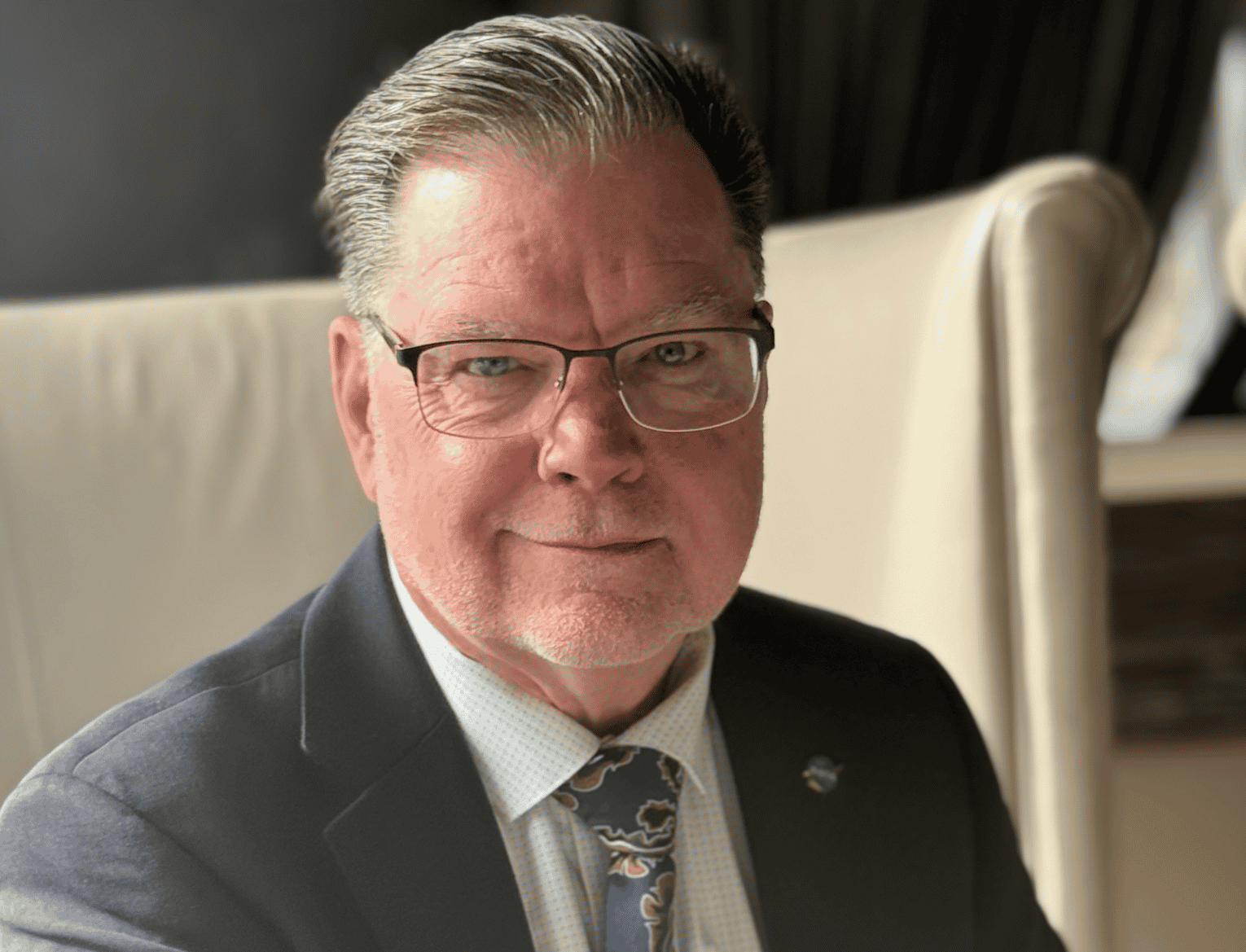
Jim Adams, Former NASA Deputy Chief Technologist

During his visit to Mauritius as a guest of the United States Embassy, former NASA Deputy Chief Technologist Jim Adams spoke to Bizweek about the future of space exploration, artificial intelligence, quantum science and the growing role smaller nations can play within the global innovation ecosystem. From climate resilience and satellite technologies to commercial space travel and Mars exploration, he argued that Mauritius has the human capital, strategic location and ambition to position itself within the emerging space economy.

Klyven Veeramundar

Your visit to Mauritius comes at a time when the country is increasingly positioning itself around innovation, research and strategic technology partnerships. What were the main objectives behind this visit, and what conversations have stood out most for you so far?

I am here in Mauritius as a guest of the United States Embassy, and I am also a former civil servant and former NASA employee. I feel very strongly about promoting space exploration around the world for peaceful purposes.

One of the initiatives currently taking shape in the United States is something called Freedom 250. It marks the 250th anniversary of the founding of the United States of America. It is a very good moment to speak to people about space exploration, American leadership in space, and leadership in technology more broadly.


“The real objective has to do with building a pipeline of talent.”


So, the primary purpose of my visit is to promote the United States, its technological capabilities, and to help Mauritius begin to understand that it can also become part of that broader space ecosystem.

As part of your engagements in Mauritius, you are participating in discussions aimed at inspiring future innovators and strengthening collaboration in science and technology. What message are you hoping students, researchers and policymakers here will take away from your visit?

That is a great question. One of the things I hope people take away from my visit is that the end goal is not simply to build a satellite or send an astronaut to the Moon. The real objective has to do with building a pipeline of talent.

Every country has talent. It is embedded in young children from an early age. What I view as crucial, especially for Mauritius because it is such a small nation, is to begin instilling in younger generations the belief that they can achieve big things. That includes space exploration.

That process starts in primary school and continues through secondary education, university, PhD research, entrepreneurship and government.

Thanks to the US Embassy, I have had the privilege of speaking with people across all those sectors here in Mauritius.

Mauritius is a small island economy with limited natural resources. From your experience at NASA, do you believe smaller nations can carve out meaningful roles within the global space and innovation economy?

Absolutely. I think it is a matter of identifying the resources you do have and capitalising on them.

What are some of the resources Mauritius possesses? We have already spoken about human capital. People can use their intelligence and creativity to solve problems here on the island.


“Technology itself does not innovate; human creativity remains the driving force.”


One of Mauritius’ biggest challenges is managing and monitoring an ocean territory that is more than half the size of the United States, while operating from an island with a population smaller than many American cities.

That requires strategic thinking. It requires people to think outside the box and to refuse to back down when challenges emerge. Very often, the best solutions are created precisely when difficult problems arise.

Space agencies, today, are no longer working in isolation. How important are international partnerships in advancing scientific progress, and could smaller countries like Mauritius eventually contribute to global space initiatives in specialised areas?

Absolutely.

The original space race was essentially a geopolitical competition between two superpowers; the United States and the Soviet Union. Those days are gone.

Space remains difficult, but it is now of interest to everybody, and there is room at the table for everyone. In fact, the Artemis Accords were recently signed by Paraguay, which does not have an astronaut or a spacecraft. In some respects, Mauritius is arguably already ahead.

When smaller countries, even those without formal space agencies, engage with the global space community, they gain the power of collaboration. There are benefits in networking, in knowledge-sharing and in collective problem-solving.

I think that will ultimately be very positive for Mauritius.

One of the themes of your visit is future innovation. Looking ahead, which technologies do you believe will fundamentally reshape economies and societies over the next 10 to 20 years?

I would name two immediately.

The first is artificial intelligence. The key question is how we implement practical and ethical AI. You do not need to be a rocket scientist to contribute to that. Countries need data scientists, cybersecurity engineers and computer scientists. Those are fields where people from any nation can excel.

The second is quantum science. We are going to witness major advances in electronics and computing as our understanding of quantum physics deepens. It will change computers, algorithms, communications systems and the way we store data.

The next 20 years are going to be extraordinarily exciting.

Climate change is becoming an existential challenge for island nations. How critical are satellite technologies and Earth observation systems in helping countries like Mauritius manage environmental risks and strengthen resilience?

Climate change is measurable. Countries can literally put a measuring stick in the water and determine whether sea levels are rising.

For small island nations, the issue is especially serious, because they continue to lose landmass over time. At the same time, Mauritius controls an enormous maritime area, as I mentioned earlier, an area more than half the size of the United States. Monitoring such a large territory requires a perspective from above.

Right now, the best way we know to achieve that is through space-based technologies. Space data and space-data analysis are therefore going to be critical for Mauritius’ future.

You spent decades at NASA during periods of major technological transformation. Looking back, what do you consider the most important shift in the space industry over the course of your career?

Miniaturisation. When I first entered the field, satellites were enormous. They were roughly the size of office desks. Today, satellites can be smaller than a loaf of bread and built for less than a month’s salary.

As a result, high school and university students can now propose theories, design systems, build satellites and test their ideas in space.

Thanks in part to companies such as SpaceX, launch costs have fallen dramatically. Students can launch satellites, retrieve data and evaluate whether their theories are valid, all at relatively low cost.

The space sector has become increasingly driven by private companies such as SpaceX and Blue Origin. How has the rise of commercial space players changed the traditional role of agencies like NASA?

First of all, I want to go on record as saying that I am a strong advocate of commercial space. My belief is that governments should focus on what the private sector cannot or will not do. Today, there is very little that commercial enterprise is unwilling to attempt in space.

NASA’s role – and the role of other major space agencies – is increasingly to define the vision, chart the direction and push beyond the frontier currently occupied by private enterprise.

Commercial companies can then move in behind those efforts and develop industries around them, whether that involves commercial space stations, launches or even space tourism.

Space tourism is one example that is already beginning to emerge. As NASA moves beyond the International Space Station and further towards the Moon, it will leave a gap in low-Earth orbit that private companies will fill.

Eventually, as humanity establishes a foothold on the Moon and turns its attention towards Mars, additional commercial opportunities will emerge there as well.

Elon Musk has repeatedly argued that humanity must become a multi-planetary species. From your perspective, how realistic is that vision within this century?

I think it is a grand vision. But having served as Deputy Director of Planetary Science, I also understand how hostile Mars truly is.

Learning how to live and work in space aboard the International Space Station was an important first step over the past 25 years.

The next step will be learning how to live and work on the Moon. The Moon is hostile too, but it is much closer to Earth, meaning astronauts, or even private citizens, could potentially be brought home if necessary.

Mars would come afterwards.

Is becoming a multi-planetary species necessary for humanity’s survival? I do not necessarily think so. But I do believe exploration is deeply embedded in humanity’s psyche and DNA. Human beings naturally want to push outward, explore and use the resources available to them.

Space tourism is no longer science fiction. Companies are already sending private civilians into space, albeit at very high costs. Do you believe space tourism could eventually become a mainstream industry, or will it remain accessible only to the ultra-wealthy?

I believe prices will eventually come down. More companies will enter the market, and competition will create downward pressure on costs.

When luxury liners first began crossing oceans, that experience was reserved for the wealthy. The same was true when air travel first emerged. Over time, however, the cost of tickets fell dramatically.

I think the same thing will happen with space tourism and commercial space travel.

Critics sometimes argue that the billions spent on space exploration should instead be directed toward poverty, healthcare or climate issues on Earth. How do you respond to that debate?

Humanity cannot afford not to invest in space exploration.

The value does not simply come from sending astronauts to the Moon. It comes from the solutions generated when we attempt to solve difficult problems in space. Those solutions are often picked up by entrepreneurs and adapted for uses that governments and NASA never originally imagined.

I will actually discuss several examples during my lecture later today. One particularly interesting case involved long-duration space missions in the 1980s. NASA was trying to determine the best way to feed astronauts in space. Researchers isolated amino acids and nutrients derived from algae for astronaut nutrition.

A private company later realised those same nutrients could be used in products on Earth. For a period during the 1990s and 2000s, around 50 per cent of baby formula sold globally used nutrients derived from that same NASA research process.

I do not see space exploration and solving Earth’s problems as mutually exclusive. We have already spoken about monitoring sea-level rise. We could also talk about tracking illegal fishing activity or even piracy in places such as Somalia.

Space technology has become an essential component of humanity’s broader capabilities. Failing to use it would effectively mean abandoning important opportunities.

Artificial intelligence is increasingly being integrated into aerospace, robotics and mission planning. How transformative do you think AI will be for the future of space exploration?

I am extremely excited about AI and its role in space exploration.

For many years, NASA resisted placing autonomous systems or machine-learning technologies onboard spacecraft because engineers could not fully predict how those systems would respond in every situation.

But society is gradually becoming more comfortable with AI systems that may not always produce perfectly predictable responses, yet are still capable of guiding us in remarkable ways.

We are already beginning to integrate AI into missions. Recently, an AI system was uploaded to one of the Mars rovers. The reason is straightforward: Mars rovers currently travel very slowly because operators on Earth must constantly assess terrain and avoid hazards remotely. You do not want to accidentally drive a rover off a cliff while waiting for instructions from Earth.

If that decision-making capability exists onboard the rover itself, the vehicle can move much more efficiently and cover more ground.

Steve Squyres, the principal investigator behind the Mars Exploration Rovers Spirit and Opportunity, once remarked that if humans could physically travel to Mars, they could accomplish in a month what those rovers achieved over a decade.

He may have been exaggerating slightly, but the broader point remains true: robotic systems are limited by both environment and distance.

When robotics become powered by artificial intelligence and advanced dexterity, they begin approximating some of the advantages of human presence, without actually needing to send humans there.

Will we actually be sending humans to Mars? I certainly hope so. But the reality is that we may eventually discover we do not need to.

Young people, today, often associate innovation with Silicon Valley entrepreneurs rather than scientists or researchers. Has the culture of innovation changed, and what concerns you most about how younger generations perceive science today?

Humanity’s innovative capacity has not changed. What has changed is our technological capability.

Today, technologies such as AI, 3D printing, miniaturisation, electronics and advanced computing allow people to transform ideas into reality more rapidly than ever before.

But technology itself does not innovate. Human creativity remains the driving force. Innovation happens when creative people connect different ideas and technologies together to produce something entirely new.

My concern – and this may sound like an older person speaking – is that younger generations risk becoming distracted by endless digital entertainment and online activities.

That does not mean activities such as gaming or web development are inherently bad. Many of them are actually valuable. But when taken to extremes, they can become distractions from the broader technological advancement of humanity.

Mauritius has ambitions to become a regional knowledge and innovation hub. From what you have seen, what are the country’s biggest strengths, and where does it still need to accelerate progress?

Mauritius’ greatest strength is its location. The country sits at both an economic and geographic crossroads in the Indian Ocean. Undersea communication cables pass through the region. There is strong potential for solar and wind energy. There is physical space available, including outer islands that could potentially support future projects.

I was speaking with a high-school student yesterday who asked about the possibility of building a rocket-launch range. I told him that if Mauritius ever wanted to pursue something like that, it could potentially use one of its outer islands to avoid endangering populated areas.

The country’s limitations are primarily economic. But economic limitations can be overcome through partnerships, innovation and advanced financial technologies.

Overall, I believe Mauritius is well-positioned to pursue the ambitions it has set for itself.

Finally, after a career spent pushing the boundaries of exploration and technology, what still excites you most about humanity’s future in space?

What excites me most is humanity’s continuing willingness to explore its own potential. People dream. Those dreams become reality, and those realities inspire even greater dreams.

As humanity works together to solve difficult problems, whether through governments, entrepreneurs, private companies or international partnerships, we create greater understanding. And for me, understanding ultimately leads to peace.

That is what excites me most about the future.

Skip to content