Back to Bizweek
SEARCH AND PRESS ENTER
Latest News

Apple Pay’s Arrival in Mauritius Sends a Strong International Signal

Stéphanie Ng Tseung, Head of Payments – MCB Group

  • “I am also doubly happy that MCB became the first bank in Mauritius to introduce Apple Pay to the local market and in Eastern Africa.”

Less than 24 hours after the launch of Apple Pay in Mauritius, customer adoption had already exceeded expectations, according to Stéphanie Ng Tseung, Head of Payments of MCB Group. In this interview with Bizweek, she discusses the strategic importance of the rollout, the evolution towards mobile-first payment experiences, the growing role of tokenisation and embedded payments, and what the arrival of Apple Pay means for Mauritius’ broader digital financial ecosystem.

Klyven Veeramundar

Apple Pay has arrived in Mauritius at a time when digital payments are already progressing rapidly. Why was it important for MCB to take this step now?

I would say that it is mainly because the market was waiting for Apple Pay. At MCB, we are extremely focused on the needs and expectations of our customers, so for us, it became imperative to introduce Apple Pay. Additionally, in line with our vision, MCB aims at being at the forefront of innovation by pioneering solutions and by keeping our solutions ahead of the curve. 


“Through tokenisation, the entire payment ecosystem becomes more secure.”


However, as I explained earlier, Apple Pay is not something that banks decide to launch on their own. It is Apple that decides when it wants to enter a particular market. So, we were extremely pleased when Apple Pay was enabled in Mauritius.

I am also doubly happy that MCB became the first bank in Mauritius to introduce Apple Pay to the local market and also in Eastern Africa. We are not even 24 hours after launch yet, but customer adoption has already been beyond our expectations.

How long has MCB been waiting for Apple Pay to enter the Mauritian market?

We had already started our Tap to Pay journey through Android solutions in partnership with Visa, which we launched in December 2024, and our Mastercard portfolio was also ready for tokenisation in September 2025

From the beginning of our tokenisation journey, we wanted to introduce Apple Pay, and when they informed us that Mauritius had been included in their roadmap, we were naturally very pleased.


“A project such as Apple Pay represents six to seven months of very intensive work.”


Beyond the launch of a new payment option, does this reflect a deeper transformation in consumer habits and expectations?

I do not think this is simply another trend or passing fad. As I said, based on customer feedback and our own observations, consumers increasingly want a mobile-first experience. People want to manage their daily lives directly through their phones. For us, Apple Pay allows customers to use their devices in a way that is not only practical, but also highly secure.

Apple Pay is not limited to the phone itself; it can be enabled across all your devices within the Apple ecosystem. When you activate Apple Pay, Apple detects whether you have an iPhone, an Apple Watch or an iPad linked under the same Apple ID, and it asks whether you would like to add your cards across those devices as well.

So, for us, this really reflects a broader market trend towards mobile-first experiences. And when we talk about payment digitalisation, it is extremely important that everything remains secure. Apple Pay supports exactly that.

To what extent have speed and instantaneity become defining factors in the evolution of payments?

Today, consumers want everything to be simpler and faster. We live in a world of instant access. For example, when I was younger, if you wanted to listen to a new song, you had to wait for it to be released physically. Today, you simply open any music platform and access it instantly.

Payments must evolve in the same direction, because payments are truly part of everyday life. Being able to make payments that are simple, secure and fast has become part of customer expectations and needs.

As a bank, MCB has a responsibility to support and respond to these changing behaviours. Apple Pay is therefore a very strong response to this growing demand for speed, instantaneity and security.

Apple Pay is based on a largely dematerialised experience integrated directly into smartphones and connected devices. How does this evolution redefine the traditional role of the physical bank card?

In Mauritius, we are still at the early stages of digital cards, and I believe that customers still appreciate having a physical card in addition to a digital card. As the adoption of digital cards progresses, it is my hope that we can gradually phase out the physical card as this will help reduce our impact on the environment.  

From a back-end perspective, however, we are using the same card rails: physical or digital are just different form factors of the same card. 

However, the digital card uses a token and the actual card details are not shared, making the transaction even more secure. 

In many international markets, digital wallets have accelerated the adoption of contactless payments. Do you believe Mauritius is entering a similar phase of transition?

Yes, I do believe so.

In Mauritius, digital wallets, whether Juice, Apple Pay or others, are still at a very early stage of development. With Apple Pay specifically, the fact that Apple already has a loyal customer base and strong brand advocacy, we are anticipating an accelerated adoption.

But overall, we are still only at the beginning of this journey. At MCB, we are here to support our customers and help them discover the practical and secure aspects of this type of payment experience.

Security often remains central in discussions around digital payments. Do technologies such as tokenisation, biometric authentication and dynamic security codes fundamentally change consumers’ perception of risk?

Yes, I believe security is fundamental. It is the underlying foundation of the entire payment ecosystem, even if people do not always explicitly talk about it. It is similar to boarding an aircraft. Security is non-negotiable. The same applies to payments.

As Visa and Mastercard explained earlier, what is powerful about digital cards is that the actual card number is replaced by an encrypted alias known as a token. That token can only function if it remains linked to the original card. Through tokenisation, the entire payment ecosystem becomes more secure.

With Apple Pay, even online payments via an Apple device no longer require customers to communicate or manually enter their card details. Everything operates through the tokenisation system.

The launch of Apple Pay requires collaboration between banks, card networks and technology companies. How does this reshape the payments ecosystem?

Apple Pay requires many different partnerships. As the saying goes, it takes a village to raise a child, and it takes many partnerships to launch Apple Pay successfully!

We worked with Mastercard through its MDES tokenisation system. We worked with Visa through VTS. We also worked closely with Apple and, of course, with MCB’s own internal teams.

Believe me, a project such as Apple Pay represents six to seven months of very intensive work. It is only through these partnerships that we are able to deliver this type of innovation.

Do you see growing demand emerging for more integrated and almost invisible payment experiences in everyday life?

Yes, especially among younger generations who increasingly want everything to be faster, simpler and more secure. Apple Pay fits perfectly into this movement and into customer expectations. With agentic commerce and embedded payments, the customer experience will become even more fluid. 

That said, I do not believe that all Mauritians will immediately adopt digital payment methods. That is why I never use the term “cashless.” I prefer the term “cash lite.

There is still a proportion  of the population that is not yet comfortable with digital payments, and we need to acknowledge that fact. 

Beyond customer convenience, what impact could this type of solution have on merchants, particularly in terms of customer experience and customer behaviour?

For merchants, digital payments mean faster transactions, improvement in  queue management and a more fluid customer experience.

In Mauritius, all  physical stores accepting contactless card payments are already fully ready to accept Apple Pay. For online merchants, Apple Pay offers a seamless check out process. Customers simply click, because the token is already stored securely in the phone and is automatically recognised.

For merchants, this creates what we call a more seamless checkout experience and should help optimise conversion rates.

To what extent does the arrival of Apple Pay represent an important milestone in the evolution of the country’s financial ecosystem?

I believe Mauritius can say today that the country possesses an innovative and credible financial system.

I am not speaking only about MCB here, even though MCB was the first bank to introduce Apple Pay. I am speaking about Mauritius as a country. The fact that Apple Pay is now live in Mauritius sends a very strong signal internationally. I believe this innovation will positively strengthen the image of the country in terms of innovation and digitalisation.

At MCB, we are extremely proud and happy to have introduced this innovation to the market. And not only in Mauritius, but also in Eastern Africa, since we became the first bank in this  region to launch Apple Pay.

You present MCB’s annual Payments Review, which tracks major trends within the sector. With the arrival of Apple Pay in Mauritius, do you anticipate a measurable impact on the growth of mobile payments, and potentially on future projections?

At this stage, I do not have sufficient data. As you know, every year, we present a fresh review of the market. Apple Pay was launched only yesterday, so we are still extremely early in the process. 

However, customer take-up has already been beyond our expectations. I believe the fact that people are constantly using their phones will naturally encourage the adoption of digital payments, because the payment experience becomes so simple. As you saw earlier, I simply double-clicked and the payment was completed immediately. It is extremely easy to use.

So yes, I do believe Apple Pay will contribute to the broader adoption of digital payments in Mauritius. And hopefully, by next year, when the time comes to present the Payments Review again, we will have sufficient statistics to quantify this evolution.

But for now, even though we are still less than 24 hours after launch, the market has already responded very favourably. So, I do believe that this will contribute to a wider adoption of digital payments.


MCB bets on wider digital payments ecosystem with Apple Pay

MCB Group launched Apple Pay in Mauritius on 20 May as part of a broader strategy to deepen the country’s transition towards digital payments. The service, available to MCB Visa and Mastercard cardholders, extends the bank’s payments ecosystem spanning mobile banking, QR-code transactions, contactless payments and e-commerce solutions, while reinforcing efforts to reduce reliance on cash and offer consumers and businesses greater flexibility, security and convenience in their daily transactions.

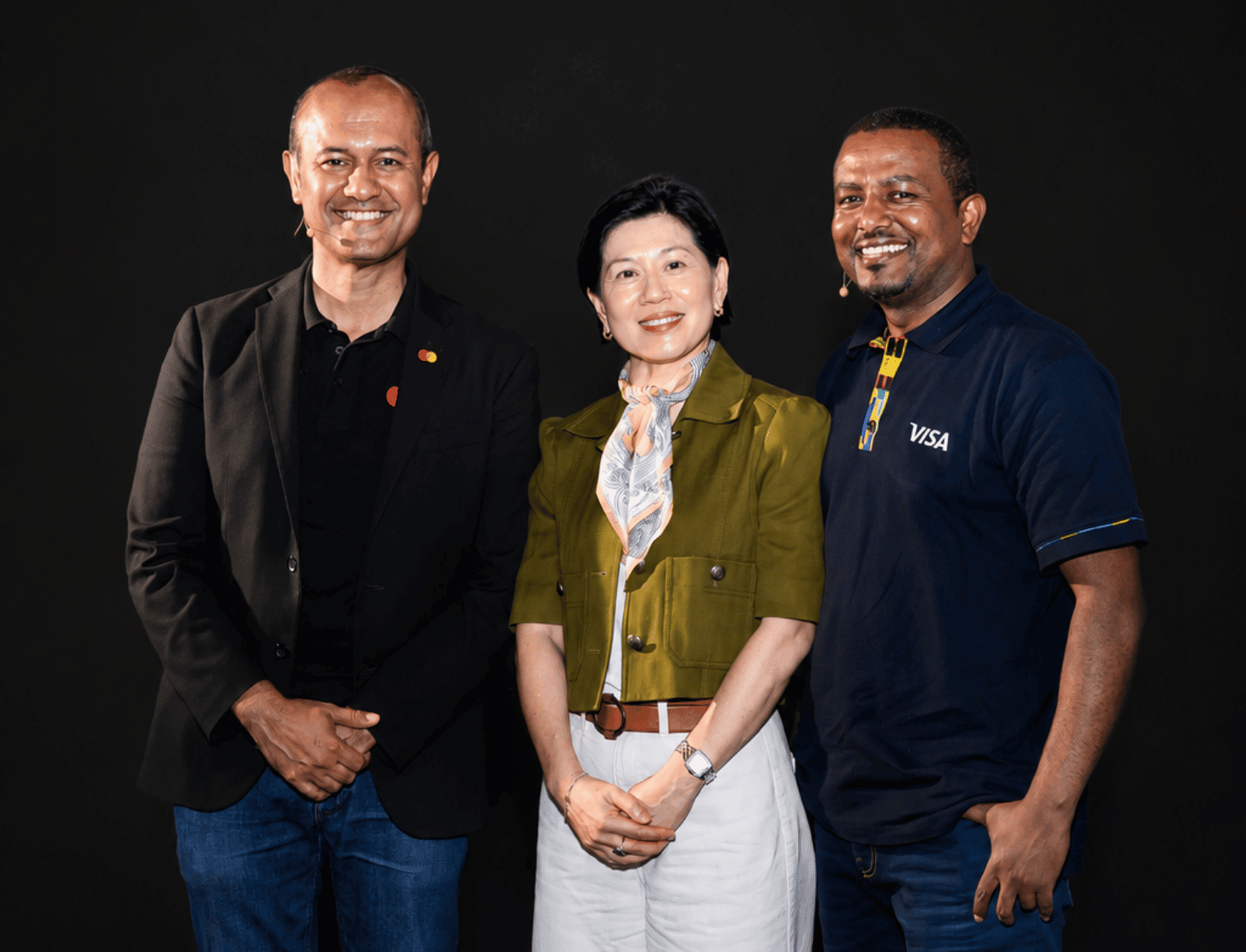
During a press conference held in Port-Louis on 20 May, MCB Group officially introduced Apple Pay to the Mauritian market, adding another layer to a digital payments infrastructure that the bank has been developing for more than a decade. Representatives from Mastercard and Visa joined the announcement, underlining the growing role of partnerships between local financial institutions and global payment networks in accelerating the adoption of digital payments across the island.

For MCB, the launch is less about a standalone payment product than the continued expansion of what it describes as a unified payments ecosystem connecting customers, merchants and technology partners. From mobile banking to interoperable QR-code payments and contactless transactions, the bank is seeking to create an integrated environment allowing customers to pay seamlessly in-store, online or while travelling.

The strategy also reflects a broader ambition to support what the bank calls a “fluid, secure and inclusive economy” that is progressively becoming less dependent on cash transactions. According to figures released by MCB, the share of cash usage among its retail customers fell from 46 per cent in 2021 to 25 per cent in April 2026, suggesting that digital payment methods are steadily becoming more deeply embedded in everyday consumer habits in Mauritius.

Much of that transition has been driven by the growth of MCB Juice, launched in 2013 and now presented by the bank as the most widely used daily banking application in Mauritius. Over the years, the ecosystem has expanded through the facilitation of e-commerce transactions, the deployment of the interoperable MAUCAS QR code introduced by the Bank of Mauritius, as well as the adoption of contactless cards and mobile “Tap to Pay” solutions.

Apple Pay now becomes part of that infrastructure. Customers holding MCB-issued Visa or Mastercard cards can make secure contactless payments using their iPhone, Apple Watch, iPad or Mac, both in physical stores and online. The solution removes the need for physical cards or cash while relying on authentication systems such as Face ID, Touch ID or device passcodes.

For merchants, the integration is designed to operate within existing payment systems. According to the bank, businesses already equipped with contactless terminals will be able to accept Apple Pay without additional technological upgrades.

The expansion also targets the e-commerce segment. MCB said that online merchants connected to its ecosystem will now be able to offer Apple Pay at checkout, enabling customers to complete purchases without manually entering card details. The bank expects the simplified authentication process to improve convenience while helping merchants increase conversion rates for online transactions.

“Today, payments are no longer limited to one single method. It is about offering customers the freedom to choose what suits them best in each situation. Our role is to ensure that whatever their choice, the experience remains seamless, secure and convenient,” said Stéphanie Ng Tseung, Head of Payments of MCB Group.

She added that Apple Pay complemented the bank’s existing capabilities while reinforcing MCB’s ambition to remain “at the forefront of innovation in payments”.

The launch also highlights the strategic importance of international payment operators in shaping the evolution of Mauritius’ financial infrastructure. For Shehryar Ali, Country Manager East Africa at Mastercard, “this collaboration combines Mastercard’s globally recognised innovation with the strength of MCB’s local ecosystem by expanding acceptance, accelerating digital adoption and offering customers greater confidence, choice and control over their payments.”

Meanwhile, Yared Endale, Head of Eastern Africa & Country Manager, Ethiopia at Visa, said that the introduction of Apple Pay demonstrated what could be achieved when global technology companies, financial institutions and payment ecosystem partners worked around a common customer-centred objective.

“By enabling Apple Pay in Mauritius, we are expanding secure and tokenised digital payments that integrate naturally into everyday life, while supporting the island’s ongoing transition towards a more inclusive, resilient and future-oriented payments ecosystem,” he explained.

Skip to content