Back to Bizweek
SEARCH AND PRESS ENTER
Latest News

Visa has issued around 13 billion tokens globally; almost twice the world’s population

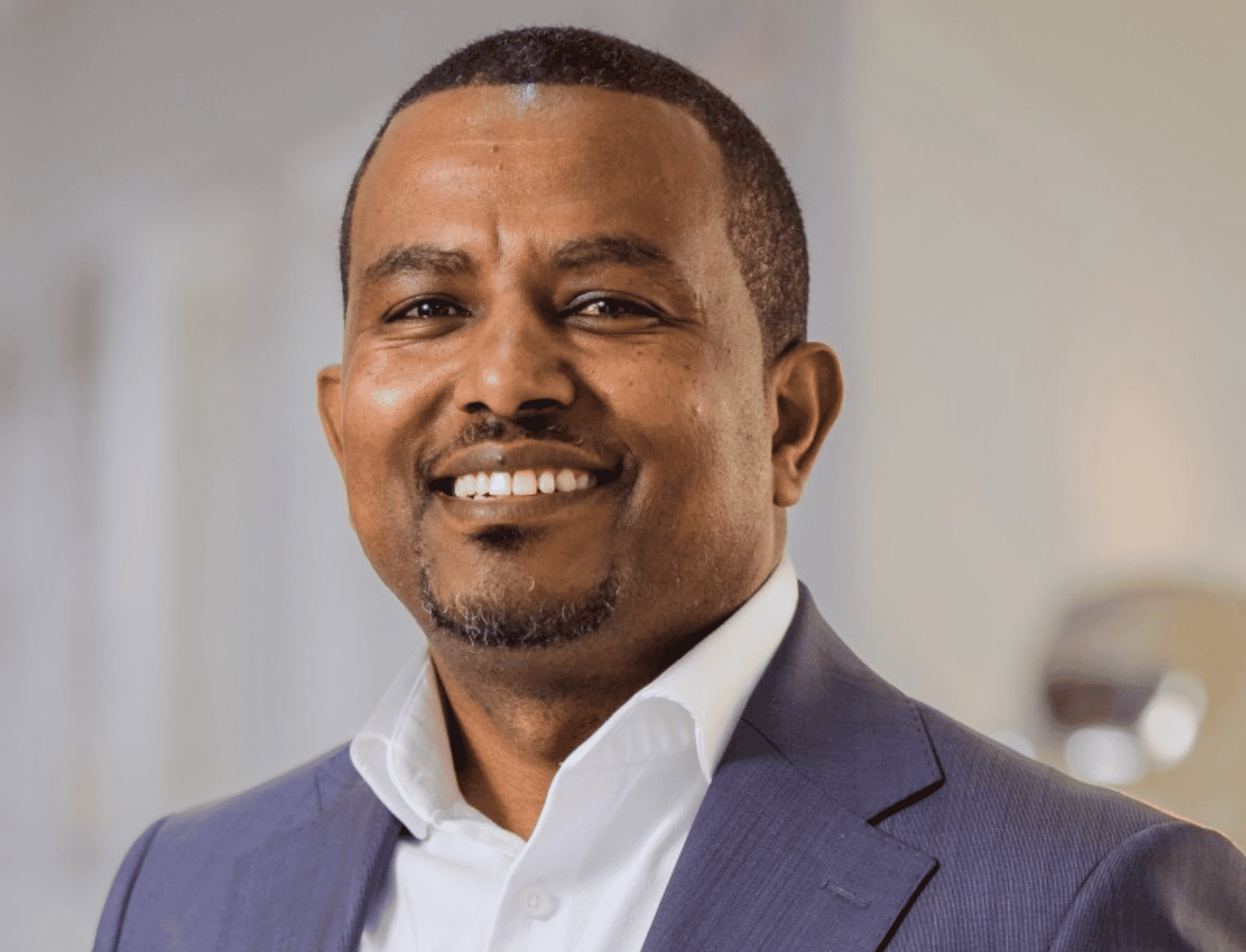
Yared Endale, Head of Eastern Africa & Country Manager, Ethiopia – Visa

  • “Over the past five years, we have invested around US$12 billion into strengthening our security and risk management capabilities”


  • “Tokenisation is becoming such an important foundation for the future of commerce and payments”

As digital payments evolve far beyond traditional card transactions, Yared Endale believes the next phase of commerce will be shaped by tokenisation, artificial intelligence and increasingly seamless mobile payment ecosystems. In this interview with Bizweek, he discusses the uneven pace of digital transformation across Eastern Africa and the Indian Ocean region, the future of smartphones as payment interfaces, the growing importance of cybersecurity and financial inclusion, and how partnerships between banks, fintechs and global payment networks are redefining the future of commerce.

Klyven Veeramundar

Mauritius is often viewed as a relatively advanced digital payments market within the region. From Visa’s perspective, what made Mauritius strategically important for the rollout of Apple Pay?

We see Mauritius as a digitally advanced market with a strong banking infrastructure. There is also high smartphone penetration and clear readiness for mobile-first payments, with multiple other products already available in the market, including with MCB.

We also have a long-standing partnership with leading banks such as MCB. Mauritius positions itself as a regional innovation hub and that is what, I believe, makes the market strategically important for us.


“We are entering a very exciting period where science-fiction-like payment experiences are a reality.”


Across Eastern Africa and the Indian Ocean region, how uneven is the transition towards digital payments, and where do you see Mauritius within that broader transformation?

The region is highly varied. Different markets are at different stages of maturity. From our perspective, Mauritius sits at the more advanced end of the spectrum. Other markets are progressing quickly and driving greater mobile adoption. But overall, the trajectory is clear: there is a strong shift towards digital payments across the region.

Visa has been investing heavily in contactless and mobile payments globally. Are we reaching a point where the smartphone is gradually replacing the physical wallet altogether?

I think smartphones are increasingly becoming central to how people pay and manage their money. It is not yet a full replacement of the physical wallet, but digital payments are becoming the primary payment interface.

This shift is being driven by convenience, ubiquity and integration into daily life. It also depends on consumer behaviour and the maturity of each market in which transactions take place.


“Success depends on collaboration rather than one player moving independently from the others.”


The more convenience we create by integrating payment instruments into smartphones, the more payment behaviour evolves. That is what I believe will happen. Eventually, it will become the dominant means of payment, although we are not fully there yet.

People are constantly connected to their phones. As payment experiences become more seamless through mobile devices, the transition towards digital payments will continue accelerating.

One of the key arguments in favour of digital wallets is convenience, but consumer trust remains equally important. How is Visa addressing concerns about cybersecurity, fraud and data privacy as payments become increasingly digitised?

What makes tokenisation, including solutions such as Apple Pay, so important is security. In many cases, security breaches occur when consumers share their card details with merchants or e-commerce platforms.

At the same time, consumer awareness also matters because many security issues arise from social engineering and similar forms of fraud.

What makes tokenisation more secure is that once your card is tokenised, your actual card number is no longer shared. Instead, a token is used. That is why Visa has now issued around 13 billion tokens globally, almost twice the world’s population. Consumers tokenise their cards multiple times across different websites and platforms. This means the real card details are not exposed, which significantly improves security.

At Visa, we have also invested heavily in security infrastructure. Over the past five years, we have invested around US$12 billion into strengthening our security and risk management capabilities. That creates an additional layer of confidence for consumers.

Artificial intelligence is also becoming increasingly important in payments security. AI-enabled tools can understand payment behaviour patterns. For example, if a consumer normally uses their card in Mauritius and suddenly, a transaction appears somewhere very far away, the system can detect that anomaly and request additional verification before the payment is completed.

A number of AI-enabled security tools are already implemented with banks and partner institutions. At the same time, tokenisation itself adds another layer of security infrastructure.

Agentic commerce is another development we see emerging in the future. Instead of consumers manually booking flights, purchasing goods online or managing every payment themselves, AI agents will increasingly understand individual consumer behaviour, preferences and purchasing patterns.

A consumer may simply provide an instruction, and the AI system, using authorised tokenised payment credentials, could arrange purchases or bookings automatically. The consumer would still need to approve the payment, but much of the process would already be handled by the AI agent.

That is why tokenisation is becoming such an important foundation for the future of commerce and payments.

You mentioned that Visa has issued 13 billion tokens globally. How many times can a single card be tokenised?

I do not think there is a strict limit, and that is really the beauty of tokenisation.

A consumer may tokenise the same card across multiple websites or e-commerce platforms. Today, consumers use many different online services, whether it is Temu, Alipay or other e-commerce platforms, and they will tokenise their cards on the platforms they trust.

As a result, a single card may be tokenised multiple times across different ecosystems.

In many emerging markets, cash still dominates everyday transactions despite the rise of fintech solutions. What usually determines whether consumers genuinely shift from cash to digital payments or not?

Convenience is the main factor, to be honest. Ease of use, trust in the system and perceived security also play a major role.

And when we speak about customers, that also includes merchants. If merchants encourage digital payments because they are safer and more efficient than handling physical cash, adoption naturally increases.

Cash is physical, which creates additional security risks and costs for the broader economy. Digital payments are becoming increasingly frictionless and convenient. Imagine simply tapping and completing a transaction instantly. That convenience is what makes digital payments attractive.

Security also matters because consumers no longer need to carry cash everywhere.

Apple Pay is often associated with premium consumers and advanced digital ecosystems. Do you expect adoption in markets like Mauritius to remain niche initially, or could it scale more rapidly than expected?

It will likely begin with early adopters and premium consumer segments. However, there is strong potential for it to scale rapidly as awareness and acceptance grow.

Adoption usually accelerates once consumer habits begin to form. We saw an example of that with MCB just yesterday afternoon. In less than 24 hours, around 13,000 users had already tokenised their cards on Apple Pay.

So yes, it may initially start with premium users and early adopters, but there is clear potential for broader adoption over time.

The payments industry is evolving far beyond traditional card usage, with payments now embedded into transport, e-commerce, subscriptions and everyday digital services. How is Visa adapting to this broader redefinition of commerce?

Visa is evolving beyond traditional card-based payments towards enabling broader digital commerce. That includes supporting payments across e-commerce, transport, subscriptions and many other digital services. We are also investing in platforms and partnerships that embed payments directly into consumer experiences.

Earlier, I spoke about how commerce itself is changing and how agentic commerce is emerging through artificial intelligence. We have already announced a number of initiatives linked to enabling agentic commerce, and that reflects the direction in which we are moving.

Financial inclusion remains a major issue across several African markets. To what extent can mobile and contactless payment ecosystems help bridge gaps in access to formal financial services?

Digitisation plays a major role in financial inclusion because it helps bring unbanked populations into the formal financial ecosystem. You can already see this in Eastern African countries such as Kenya and Ethiopia, where mobile money has significantly expanded access to financial services.

The KYC requirements for mobile money are generally lighter than those required in traditional banking systems. As a result, previously unbanked consumers can begin participating in formal financial ecosystems more easily.

Once consumers start using mobile money and digital payment systems, it becomes easier to gradually transition them into broader banking ecosystems where more advanced financial services may require additional KYC information.

On top of that, digital payments create more convenience through tokenised cards and simplified payment experiences.

Partnerships between banks, global card networks and technology companies are becoming increasingly central to the payments ecosystem. How do you see the balance of power evolving between these different players over the next decade?

Banks, payment networks and technology companies each bring distinct strengths to the ecosystem. Success depends on collaboration rather than one player moving independently from the others. We are all contributing towards the growth of digital payments.

The capabilities of payment networks such as Visa are very different from those of banks or fintech companies. Visa, for example, has spent more than 60 years building payment infrastructure and enabling credential-based payments globally.

That infrastructure and expertise are not easily replicated. Other institutions do not need to reinvent the wheel. Instead, collaboration and partnerships allow all players to move faster and deliver better payment experiences.

The key is understanding where each participant’s strengths complement one another rather than competing unnecessarily.

Looking ahead, what do you see as the next major shift in payments across Africa and the Indian Ocean region: biometric payments, digital identities, central bank digital currencies, AI-driven finance, or something else entirely?

As we discussed earlier, the foundations are already being laid through tokenisation and the evolution of payment infrastructure. At the same time, companies such as Visa and financial institutions are continuing to invest heavily in security infrastructure. We are also seeing the rapid emergence of artificial intelligence, generative AI and conversational AI tools.

As a result, commerce itself is beginning to evolve. Today, consumers can already interact with AI systems and simply say something like: “I am travelling to Mauritius next week.” Because AI systems increasingly understand user behaviour, preferences, purchasing patterns and conversations, provided consumers authorise the use of that data, these systems will eventually be able to act on behalf of consumers.

In the future, consumers will have AI agents capable of supporting them with highly personalised commerce experiences. Those systems could automatically book flights, reserve hotels, arrange restaurant bookings and manage transactions based on user preferences.

Consumers would still authorise the final payment, but many of the transactional steps would already be automated.

That is what the future of commerce is likely to look like. We are entering a very exciting period where many payment experiences that once seemed almost science-fiction-like are becoming increasingly realistic.

Is there one last thing you wish to add?

Most importantly, Mauritius is already emerging as a leader in digital payments within Eastern Africa and the Indian Ocean region. The country has strong financial infrastructure and digital payments continue to grow rapidly. We see significant potential in this market and Visa is committed to being part of that broader transition towards a more digital and increasingly sophisticated payment ecosystem.

Skip to content