Back to Bizweek
SEARCH AND PRESS ENTER
Latest News

Accountants who do not adapt to AI may be replaced by those who do

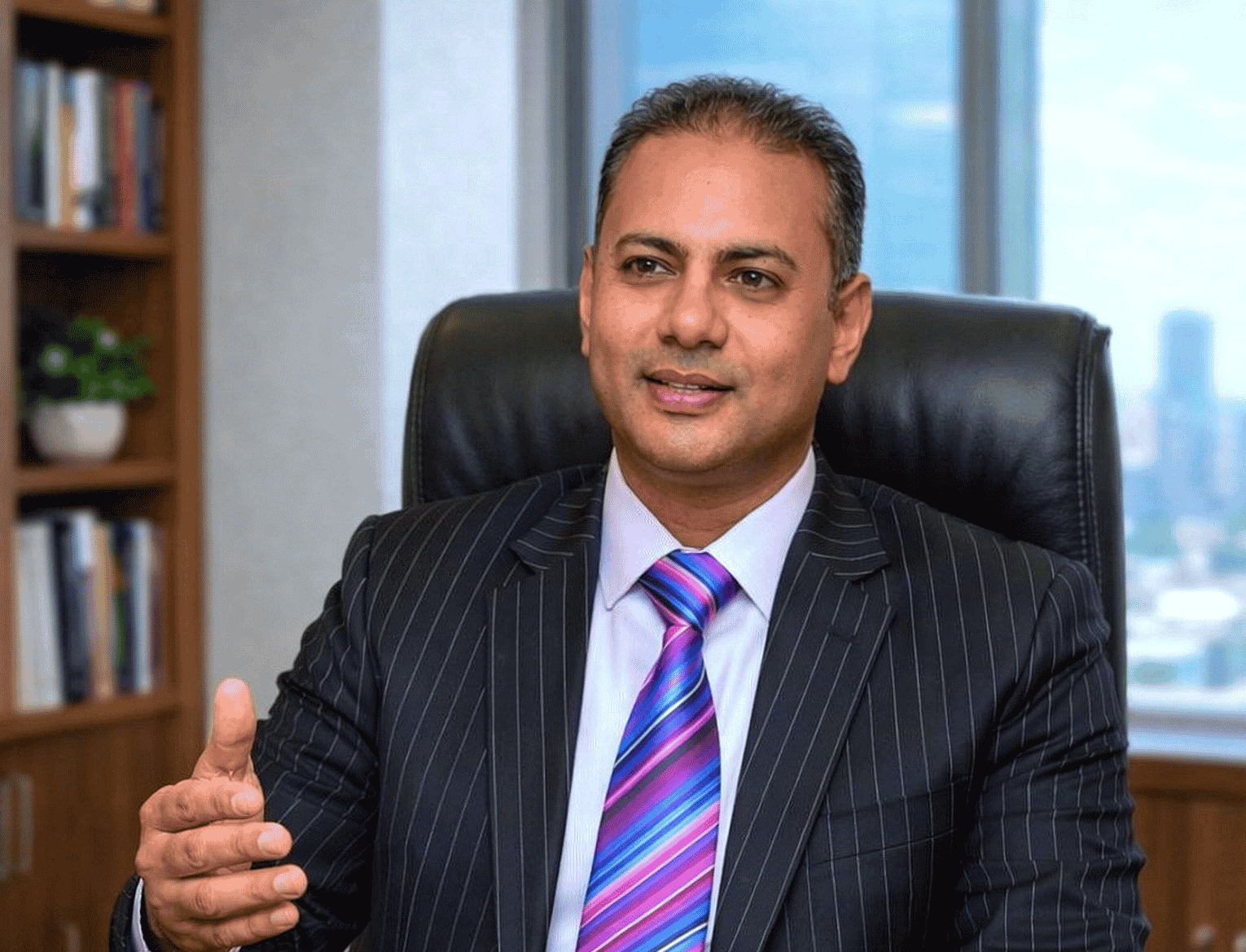
Dr Bhavish Jugurnath, Chief Executive Officer of MIPA

Artificial intelligence (AI) is reshaping the accounting profession. This, says Dr Bhavish Jugurnath, CEO of the Mauritius Institute of Professional Accountants (MIPA), should be viewed as an opportunity rather than a threat. As AI automates routine accounting functions, he believes professionals must move towards strategic advisory, risk management, governance and business decision-making. Speaking ahead of the Forum of Accountants themed “Accountancy at the Crossroads: Technology, Regulation and Global Change,” Dr Jugurnath stressed that “technological transformation must go hand in hand with ethics, professional judgement and accountability” if AI is to fulfil its promise of elevating the profession.

This year’s Forum of Accountants focuses on technology, regulation and global change. What are the biggest challenges currently confronting accountants in Mauritius, and how is MIPA responding to them?

The theme of this year’s forum – Accountancy at the Crossroads: Technology, Regulation and Global Change – reflects the reality that the profession is undergoing one of the most significant transformations in its history. 

Today, accountants in Mauritius are facing several major challenges beginning with the rapid pace of technological change. AI, automation, data analytics and digital platforms are transforming how financial information is generated, analysed and reported. These technologies create opportunities for efficiency and value creation, but they also require accountants to continuously upgrade their skills.

At the same time, we are operating in an increasingly complex regulatory environment covering AML/CFT, taxation, corporate governance, sustainability reporting, data protection and international financial reporting standards. Accountants must not only understand these requirements, but also help organisations navigate them effectively.


“The accountant of tomorrow will be data-driven, technology-enabled, strategically focused and human-centred.”


Global economic uncertainty, geopolitical developments, cybersecurity threats and changing investor expectations are also requiring accountants to play a more strategic role in risk management and decision-making. 

There is, moreover, a talent challenge. Mauritius must attract and retain the next generation of accounting professionals who are looking for careers offering purpose, flexibility, innovation and continuous growth.

In response to these challenges, MIPA has adopted a proactive approach. We are investing heavily in continuous professional development to ensure that our members remain future-ready. Our training programmes increasingly focus on digital skills, Artificial Intelligence, data analytics, cybersecurity awareness, sustainability reporting and emerging regulatory requirements.

We are also strengthening engagement with regulators, government institutions, employers and international professional bodies to ensure that our members remain informed and prepared for regulatory developments and global best practices.

MIPA is actively promoting innovation and digital transformation within the profession. We encourage accountants to view technology not as a threat, but as an enabler that allows them to move beyond routine tasks.

At the same time, we remain committed to safeguarding the core values of the profession’s ethics, integrity, professional scepticism and public trust. While technology will continue to evolve, these fundamental principles will remain at the heart of the accountant’s role. Ultimately, the accountant of tomorrow will be data-driven, technology-enabled, strategically focused, and human-centred.

AI is rapidly transforming the accounting profession. Do you see AI primarily as a threat to traditional accounting jobs, or as an opportunity to redefine the role of accountants?

I see AI primarily as an opportunity rather than a threat. AI will undoubtedly automate many routine and repetitive tasks such as data entry, reconciliations, invoice processing, compliance checks and basic reporting. However, these are not the activities that define the true value of the accounting profession.


“Technology may transform how accountants work, but ethics will continue to define the profession”


The role of accountants is evolving from preparing information to interpreting information. As AI takes over transactional work, accountants will spend more time on strategic analysis, business advisory, risk management, sustainability reporting, governance and decision-making.

What AI cannot replace is professional judgement, ethical reasoning, scepticism, leadership and accountability. Businesses and investors will continue to rely on trusted professionals to validate information, challenge assumptions and make informed decisions. The real risk is not that AI will replace accountants. The real risk is that accountants who do not adapt to AI may be replaced by those who do.

At MIPA, we encourage our members to embrace AI as a tool that enhances productivity and creates new opportunities. The accountant of the future will combine technical expertise with digital skills, strategic thinking and strong ethical values.

In short, AI will not eliminate the accounting profession—it will elevate it.

The forum included a discussion on The Ethics of AI in Finance. What ethical risks concern MIPA most when AI is increasingly being used for financial reporting, decision-making and compliance?

The greatest concern for MIPA is not the technology itself, but how it is governed and used. 

There are four key ethical risks that we believe require particular attention. The first is the lack of transparency and explainability. Many AI systems operate as “black boxes,” producing recommendations or decisions without clearly explaining how they arrived at them. In finance and accounting, professionals must be able to justify and defend decisions to regulators, investors and stakeholders.

The second is bias and unfair outcomes. AI systems are only as good as the data on which they are trained. Poor or biased data can produce misleading analyses or inappropriate risk assessments.

The third are data privacy and cybersecurity risks. Financial information is highly sensitive. As organisations increasingly use AI tools, they must ensure that confidential client and business data is protected and used responsibly.

The fourth is over-reliance on automation. There is a danger that professionals may accept AI-generated outputs without applying sufficient professional scepticism and judgement. AI can assist in decision-making, but it cannot replace accountability. Ultimately, responsibility for financial reporting, compliance and business decisions remains with human professionals.

For MIPA, the fundamental principle is clear: AI must augment human judgement, not replace it. The future of the profession depends on combining technological innovation with strong ethical standards, robust governance and professional accountability.

This is precisely why the Forum of Accountants has dedicated a session to the ethics of AI. As adoption accelerates, the profession must ensure that innovation is accompanied by trust, transparency and responsibility.

Technology may transform how accountants work, but ethics will continue to define the profession.

With Mauritius strengthening its regulatory and compliance framework, how can accountants keep pace with increasingly complex regulatory requirements without becoming overwhelmed by compliance?

The key is to move from a reactive compliance mindset to a proactive, risk-based approach. Today’s accountants are dealing with a growing range of requirements, including financial reporting standards, taxation, AML/CFT obligations, data protection, corporate governance and sustainability reporting. The challenge is not simply the volume of regulation, but the speed at which it evolves.

To keep pace without becoming overwhelmed, accountants must focus on three priorities. The first is continuous professional development. Regulatory knowledge can no longer be updated once a year. Professionals must engage in ongoing learning and stay informed of emerging regulatory developments.

The second is technology and automation. Digital compliance tools, AI-powered monitoring and integrated reporting platforms can reduce manual work, improve accuracy and provide real-time monitoring. Technology should be viewed as an enabler of compliance, not an additional burden.

The third is adopting a risk-based approach. Organisations should prioritise resources towards areas presenting the greatest regulatory, financial and reputational risks.

At MIPA, we support our members through regular training programmes, technical updates, guidance, and engagement with regulators.

Ultimately, compliance should not be viewed as a box-ticking exercise. Strong compliance frameworks enhance governance, build stakeholder confidence, reduce risks and contribute to long-term success. 

Sustainability and green financing are becoming increasingly important for businesses. Is the accounting profession in Mauritius sufficiently prepared to deal with ESG (Environmental, Social, and Governance) reporting and sustainability-related disclosures?

I would say that the profession is progressing, but we are not yet where we need to be. 

ESG reporting is moving from being a voluntary or largely narrative exercise towards becoming an increasingly structured and regulated area of corporate reporting. Accountants therefore have an important role to play in ensuring that sustainability information is reliable, measurable, comparable, and properly governed.

The biggest challenge is that ESG reporting requires skills beyond traditional accounting, such as understanding climate risks, sustainability metrics, carbon data, social indicators, and ESG-related financial impacts.

MIPA therefore sees a clear need for continuous professional development. Accountants must become comfortable working with both financial and non-financial information, and understand emerging international sustainability reporting standards.

There must also be stronger collaboration between accountants, businesses, regulators, sustainability specialists and financial institutions.

ESG reporting is not simply about producing another report. It is about helping organisations understand their environmental and social risks, improve governance and make better long-term decisions.

The accountant of the future will need to report not only on how an organisation performed financially, but also on how sustainably it creates value.

One of the programmes of the forum addressed e-invoicing, VAT, revenue authority integration and other forms of digitalization. How prepared are Mauritian businesses and accounting professionals for this transition?

Mauritius is making good progress, but the level of preparedness is not uniform across businesses. Larger organisations and professional firms are generally better equipped because they already have integrated accounting and ERP systems, while smaller businesses may face challenges relating to technology, cost, digital skills and adapting existing processes.

The introduction of e-invoicing and greater integration with the Mauritius Revenue Authority (MRA) represents a significant shift from traditional, paper-based processes towards real-time digital tax compliance. It will improve accuracy, reduce manual errors, strengthen audit trails and potentially reduce tax leakage and fraud.

For accountants, this transition is an opportunity rather than simply another compliance requirement. Accountants will increasingly need to understand how digital transactions flow from the point of sale or invoicing through accounting systems, and ultimately into tax reporting.

The priority, now, is education, preparation and practical support. Businesses need to assess their systems, train their staff, and ensure that their accounting and invoicing processes are compatible with the new requirements.

MIPA, therefore, has an important role to play through training, technical guidance and engagement with authorities. We should not simply digitise existing processes; we should use digitalisation to make compliance more efficient, transparent and business-friendly. 

For accountants, this is another example of how the profession is evolving – from processing transactions to becoming strategic partners in digital transformation and compliance.

With the introduction of IFRS 18 (International Financial Reporting Standards) and other international accounting developments, what skills and training will Mauritian accountants need to remain competitive in the years ahead?

IFRS 18 is a good example of why accountants must move from periodic training to continuous professional development. I believe that Mauritian accountants will need three categories of skills:

First, a strong technical competence. They must keep up with IFRS developments, including IFRS 18, financial reporting requirements, taxation, audit, valuation and emerging regulatory standards.

Second, digital and analytical skills. Accountants need to be comfortable with AI, data analytics, automation, digital reporting and emerging technologies. They should understand not only how to use these tools, but also how to critically evaluate the information they produce.

Third, strategic and interpersonal skills. The future accountant must be able to interpret information, communicate insights, manage risk, advise management and contribute to strategic decision-making. Ethics, professional scepticism and sound judgement will remain fundamental.

At MIPA, our focus is therefore on future-ready professional development whilst ensuring that training responds not only to today’s requirements, but also to where the profession is heading. 

Therefore, we need stronger collaboration between MIPA, universities, employers, regulators and international professional bodies so that our education and training ecosystem keeps pace with global developments. 

What is MIPA’s vision for the accounting profession in Mauritius, and what changes would you like to see in the profession over the next five years? 

MIPA’s vision is to build a future-ready, trusted and globally competitive accounting profession that contributes strategically to the economic development of Mauritius.

Over the next five years, I would like to see five important changes: 

First, a digitally empowered profession with accountants confidently using AI, data analytics, automation and digital reporting.

Second, a stronger culture of continuous learning. With regulations, technology and global standards changing rapidly, professional development must become a continuous journey rather than an annual requirement.

Third, greater emphasis on ethics and public trust. Technology can transform processes, but integrity, professional judgement and accountability must remain at the heart of the profession.

Fourth, accountants taking a more strategic role, moving beyond compliance and reporting to become trusted advisers in risk management, business strategy, sustainability, digital transformation and governance.

And finally, greater international competitiveness. Mauritius has the potential to position itself as a regional hub for high-quality accounting and financial services. Our professionals must therefore be equipped to operate confidently across borders and meet international standards.

At MIPA, our role is to create the environment, professional standards, training opportunities and partnerships that will support this transformation. The accountant of 2031 should be defined not by transactions processed, but by the value, insight, trust and leadership they bring. That is the direction in which MIPA intends to lead the profession.

Skip to content