Back to Bizweek
SEARCH AND PRESS ENTER
Latest News

Arpita Banerjee brings Kathak’s cinematic journey to Mauritius

In Kathak Ki Kahaani, Bollywood Ki Zubaani, acclaimed dancer and choreographer Arpita Banerjee traces the relationship between one of India’s great classical traditions and the silver screen. Ahead of two performances at the Caudan Arts Centre, she spoke to Bizweek about returning to a country she considers home, preserving Kathak’s authenticity and keeping human creativity alive in the age of artificial intelligence.

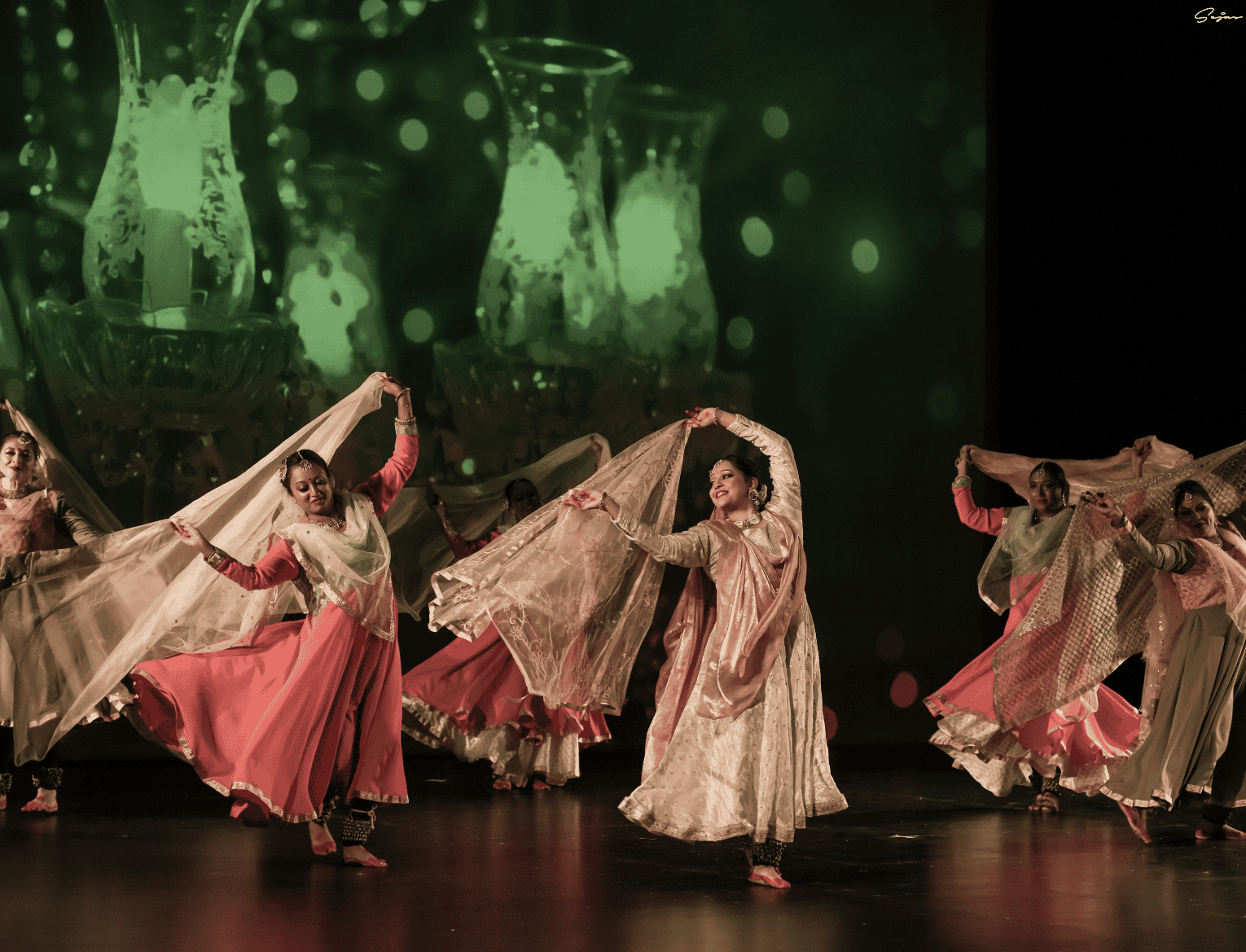
For Arpita Banerjee, returning to Mauritius is more than another engagement on an international itinerary. It is a homecoming. The Indian Kathak exponent taught on the island and retains close ties with her former students and fellow artists. Those relationships are now central to Kathak Ki Kahaani, Bollywood Ki Zubaani, the 90-minute dance-theatre production she has curated and directed for the Mauritian stage.


“When Indian cinema began in the early 1930s, it was already taking a great deal from Kathak and classical music.”


I truly felt as though I was coming back home,” she tells Bizweek. “My students, my colleague and her students have all been extremely supportive. There is a connection that allows us to work together very easily. It is the coordination, the mutual understanding and respect, and the love of Kathak that we all share. The production is emerging from all those feelings.

That sense of continuity matters to Arpita Banerjee. The show is built around a meeting of two powerful strands of Indian cultural memory: the centuries-old storytelling tradition of Kathak and the popular reach of Indian cinema. On stage, familiar songs become a way of retracing the dance form’s evolution from its narrative origins and classical vocabulary to its enduring presence on screen.

The production was scheduled to be performed yesterday, Saturday 29 August, at 7.30 p.m. at the Caudan Arts Centre, and again today, Sunday 30 August, at 6 p.m. Arpita Banerjee appears alongside her students and those of Mauritian Kathak teacher Trishtee Toory.

Cinema as a doorway into Kathak

Although the association with Bollywood may suggest a lighter or more commercial interpretation of classical dance, Arpita Banerjee’s intention is precisely the opposite. She spent considerable time researching a cinematic repertoire through which the history and language of Kathak could be presented without compromising its integrity.


“Contemporary influences may come like a breeze, but if the foundation is strong, they will not dilute it.


This is a very special production that I conceptualised, and it took time,” she says. “I am a Kathak dancer, and I did not want to dilute its authenticity or traditionalism. At the same time, I wanted to create something carrying the nostalgia of Bollywood.”

The songs were not selected merely for their popularity. Each has a connection to Kathak, through its composition, choreography, the gurus involved in its creation, or its relationship to folk and courtly traditions that helped shape the classical form.

The performance reaches back to the earliest decades of Indian cinema and moves through later films and contemporary productions. In doing so, it shows how cinema has drawn upon Kathak’s rhythms, gestures, musical structures and expressive language across generations.

When Indian cinema began in the early 1930s, it was already taking a great deal from Kathak and classical music,” she explains. “Through cinema, and across different periods, we can see how Kathak evolved. We see the classical tradition, the influence of the Mughal and Islamic courts, contemporary interpretations, and moments when people feared that traditionalism was losing its place. Then it returned again through new films and series.

For Arpita Banerjee, this revival demonstrates that popular culture does not necessarily erase classical heritage. When approached with knowledge and discipline, it can introduce that heritage to audiences who may never have entered a traditional recital hall.

The production incorporates demanding footwork and chakkars – Kathak’s characteristic turns – but also gives considerable space to bhaav, the expressive dimension of the form. Banerjee refers to pieces including “In Aankhon Ki Masti” and the more recent “Hat Jao Saiyaan” from Heeramandi to illustrate how a dancer can use familiar music to create a distinct visual narrative.

Kathak is a storytelling tradition, and this time we are telling the story of Kathak through Bollywood music,” she says. “There is intricate footwork and there are strong chakkars, but I have also placed great emphasis on expression. Kathak is a form that can speak simply through the eyes.

Root, trunk and branches

Arpita Banerjee’s work frequently moves across artistic boundaries. Her earlier Mauritius production, Hansini, brought Kathak into conversation with ballet and reimagined Tchaikovsky’s Swan Lake through Indian classical instruments. Yet, she rejects the notion that innovation must come at the expense of tradition.

Her philosophy rests on a simple image: before an artist can extend the branches, the root and trunk must be secure.

It is very important to know your roots. It is important to hold on to the trunk and then spread out the branches,” she says. “What I received from my gurus, I want to preserve and pass on to the next generation. I do not like to dilute the essence of Kathak, because that is what will carry it into the future.

The depth of the form itself, she argues, leaves ample room for creativity. Its compositions, ragas, taals, narrative possibilities and technical intricacies constitute a field too vast to exhaust in one lifetime.

There is so much to explore. That depth will never let me go,” she says.

Her convictions are rooted in childhood experience. As a young student, she made long train journeys with her mother to study under her guru. Fatigue would disappear as soon as she heard the tabla, harmonium and ghungroos near the dance school. That memory remains part of her artistic foundation.

It is where I come from,” she reflects. “My parents and my gurus made the base so strong that I hope I can remain stable upon it. Contemporary influences may come like a breeze, but if the foundation is strong, they will not dilute it.

A language beyond words

Although Kathak Ki Kahaani, Bollywood Ki Zubaani draws on Hindi cinema, Arpita Banerjee insists that neither knowledge of the language nor previous exposure to classical dance is necessary to appreciate it.

Kathak communicates through rhythm, percussion, melody, movement and facial expression. This has allowed her to perform before audiences in countries like the United States and Canada without translating every lyric.

“You do not have to be a Kathak student or professional to enjoy Kathak,” she says. “There is rhythm and there is expression, where you do not have to speak. There is the sound of percussion and the pakhawaj, and there are musical phrases. We do not need a common language to connect.

That ability to communicate across cultures also gives Kathak a place in India’s soft power. Through performances, teaching and the international work of cultural institutions, the dance form creates relationships that are not confined to official diplomacy.

Mauritius provides Arpita Banerjee with a personal illustration of that influence. The connection has endured beyond her formal posting: her students remain here, and the artistic branches she helped nurture continue to grow.

Tradition in the age of AI

Her defence of the human element extends beyond dance. Asked what younger generations should retain in an age increasingly shaped by artificial intelligence, she raises both environmental and creative concerns.

She worries about the resources consumed by rapidly expanding AI infrastructure, particularly water, and about what may happen if people surrender too much intellectual and creative effort to machines. AI, in her view, can be useful in science and other highly technical fields, but it should remain a tool rather than become a substitute for human thought.

Human intelligence is God-given,” she says. “If we give all control to artificial intelligence in our day-to-day lives, the brain will try to sleep for longer.

For an art form built upon emotion, discipline and direct transmission from guru to student, this distinction is fundamental. A machine may reproduce patterns; it cannot live the years of practice, memory and feeling that give a gesture its meaning.

Yet, Arpita Banerjee is not pessimistic about the next generation. Through two festivals she organises annually in India – one for senior artists and another for younger performers – she sees children as young as five approaching classical dance with striking discipline and enthusiasm.

When I watch children between five and ten perform, I am amazed by their sincerity,” she says. “That does not come from one day of practice. It is a continuous process, and they are not doing it by force. You can see the happiness on their faces.

Young dancers are also more willing to experiment and present their own ideas to their teachers, she observes. Provided that parents and gurus continue to support them, she believes classical traditions can remain secure while benefiting from a new generation’s confidence and imagination.

Leaving with a new memory

Arpita Banerjee hopes the production will speak differently to different generations. Older spectators may recognise songs associated with films from their youth and encounter them anew through Kathak. Younger audiences may discover both the music and the classical tradition for the first time.

One generation will carry the nostalgia of the older films,” she explains. “For younger people who may not have heard those songs, I hope the production will create a bright new memory. They will see how Kathak can tell a story through music that may otherwise have produced a completely different picture in their minds.

The initial presentation on 19 August drew an audience that included the President of the Republic, members of the diplomatic corps and government representatives. Their response, says Arpita Banerjee, reinforced her belief that a rigorously classical production can remain accessible, emotionally direct and theatrically compelling.

Her invitation to Mauritian audiences is straightforward: come without apprehension, and allow the rhythm and expressions to do their work.

Come, sit, relax and listen to the story,” she says. “Watch the performances, and take away the memories.


Performance details

Production Kathak Ki Kahaani, Bollywood Ki Zubaani
Venue Caudan Arts Centre
Saturday 29 August 2026 7.30 p.m.
Sunday 30 August 2026 6 p.m.
Duration 90 minutes
Language Hindi and English
Skip to content