Back to Bizweek
SEARCH AND PRESS ENTER
Latest News

“We would like to see certain decisions validated for more effective plastic waste management in Mauritius”

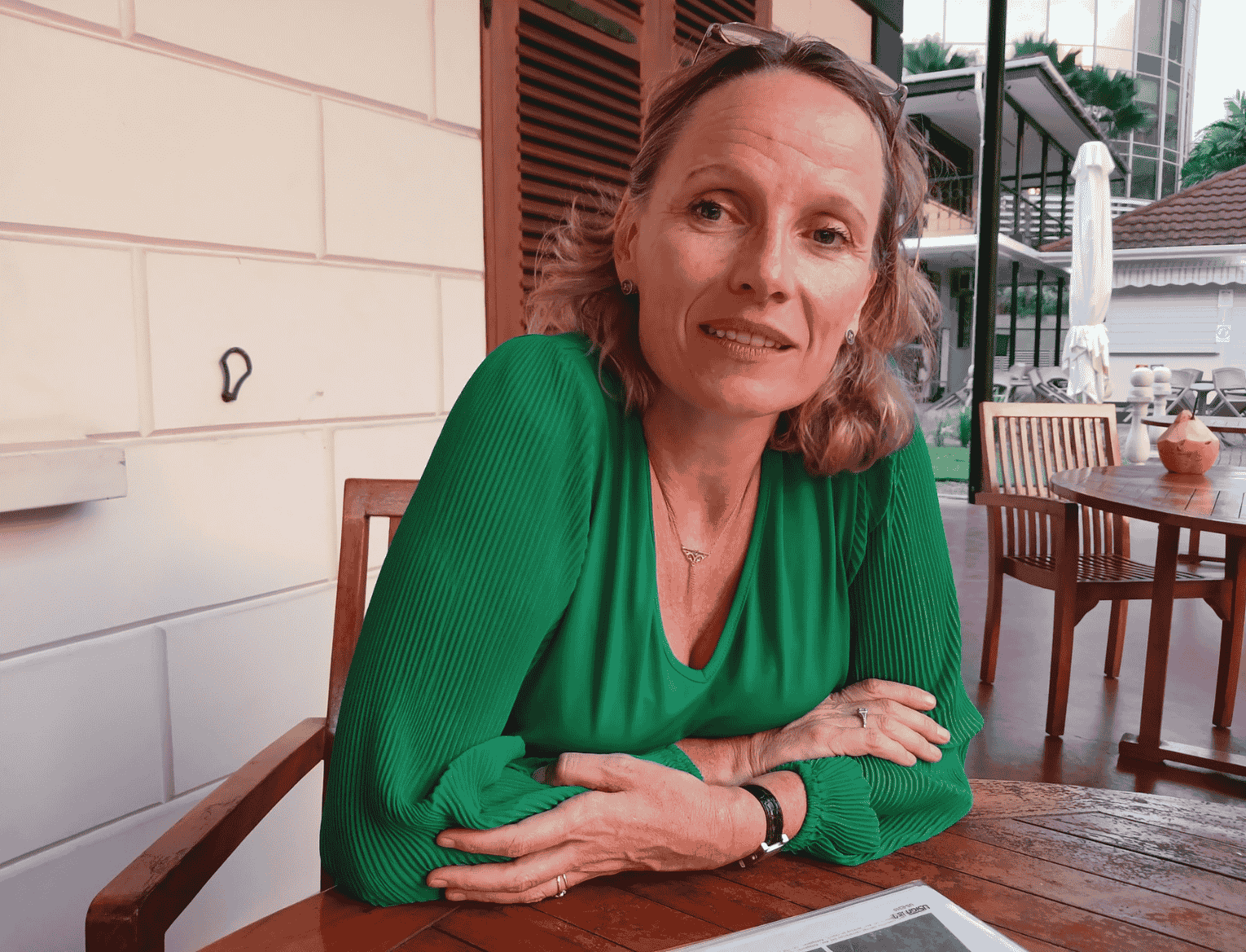
Laëtitia Habchi, Director of the Agence Française de Développement

A regional workshop was hosted in Mauritius from 16 to 18 December with a focus on the development of a future regional strategy to combat plastic pollution and associated chemical substances in the Indian Ocean, under the Nairobi Convention. Laëtitia Habchi, Director of the Agence Française de Développement (AFD), attended the opening session and spoke to Bizweek about the objectives of the initiative, the challenges of plastic waste management, and the need for stronger regulatory action. The workshop was organised by the Indian Ocean Commission and the Nairobi Convention, with support from the AFD, the French Global Environment Facility (FFEM) through the ExPLOI project, the BRS Convention, and the GEF ISLANDS Indian Ocean Project implemented by the UNDP.

Rudy Veeramundar 

What was the objective of the Nairobi Convention workshop held last Tuesday at Voilà Bagatelle?

The aim is to bring all countries together around a common regional strategy that will be presented at COP12, under the Rotterdam Convention, scheduled for 2026. This workshop is about working collectively on shared priorities. It is carried forward by UNEP and the Nairobi Convention, which makes it a strategic and essential process.

We are at the core of multilateral action here – implementing collective solutions that can only be achieved through multilateral cooperation. This kind of concertation is indispensable, and that was the key message that emerged from the discussions during the opening session.

Multilateralism is often questioned today, particularly in terms of effectiveness. Is there really an alternative to dialogue?

Waste circulates across borders. For example, in Saint Brandon, much of the waste originates from India, carried by ocean currents. The vessel Plastique Odyssée, which recently returned from an ocean expedition and was showcased during President Emmanuel Macron’s visit to Mauritius, collected 5.3 tonnes of waste. These wastes come from everywhere.

Plastic waste has no borders. In the Indian Ocean region, 140,000 tonnes of plastic waste are generated. The key question is: what do we do with it? One of my colleagues highlighted the need for coordination, because it is unrealistic to have a waste treatment plant on every island. We need to understand how waste circulates and how we can organise ourselves collectively to manage and treat it more efficiently.

You also mentioned that Mauritius is being “challenged” on plastics, particularly plastic bottles.

Yes, it is a very sensitive and often controversial issue. Decisions are sometimes postponed or reconsidered on a yearly basis.


“Mauritius has the capacity to succeed but there is a need for stronger regulatory mobilisation”


Recently, the Mauritian press reported on the issues in implementing certain governmental decisions, particularly those related to the collection of plastic bottles. Collection points exist, but what happens next?

That is precisely the issue. We see organised collection spaces for plastic waste, but the question remains: what do we do with the collected bottles? How do we improve the entire value chain?

We know that Mauritius has the capacity to succeed but there is a need for stronger regulatory mobilisation. Saying that it is possible does not mean it is easy. Nothing is easy. It requires extensive national-level consultation and coordination.

As a funding partner, we want to encourage this process because regulatory and behavioural change is one of our key impact indicators. If a project ends without leading to concrete transformation in practices or behaviour, then its impact is limited.

We have supported the development of a roadmap with the Ministry of Environment through a €500,000 fund. We would now like to see certain decisions and regulations formally adopted at national level, to ensure more effective plastic waste management, particularly with regard to plastic bottles.

It was highlighted during the opening session that much of the waste reaching Mauritius comes through ocean currents, meaning the problem often originates elsewhere. Is there a more global approach to addressing this?

That is exactly the purpose of this workshop. This is why the opening statements were particularly strong, stressing the importance of coordination and shared decision-making. There is no alternative to collective action.

While Mauritius is a recipient of marine waste, it also generates waste and is part of a chain that is not yet sustainable. This chain needs to be transformed into a virtuous one.

At the same time, Mauritius is accustomed to being at the crossroads of regional decision-making and major environmental challenges. That is where Mauritius plays an important role. We trust Mauritius to provide direction at regional level, but it is essential to follow through and go all the way in implementing the necessary decisions.


Nairobi Convention: Indian Ocean States move toward a regional strategy on plastic pollution

The Indian Ocean is now regarded as the world’s second most polluted ocean after the Pacific, with plastic debris, microplastics and chemical additives placing growing pressure on marine ecosystems, biodiversity and public health. Against this backdrop, countries in the region are stepping up collective action through the Nairobi Convention.

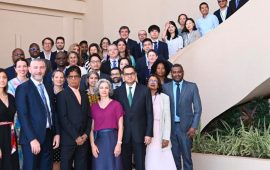
A three-day workshop held this week brought together representatives from all ten Member States of the Nairobi Convention, with around 60 experts drawn from public institutions, international organisations, the private sector and non-governmental organisations. Participants worked jointly to identify regional priorities that will inform the future strategy.

Key areas identified include the phasing out of problematic and unnecessary plastics, the scaling up of sustainable alternatives and reuse systems, the strengthening of marine pollution prevention, and improvements in data generation and pollution monitoring. Discussions also focused on expanding collection and recycling capacity, promoting effective financing mechanisms such as Extended Producer Responsibility (EPR) and Deposit-Refund Systems (DRS), and integrating social dimensions, including fair transition and gender equality.

This workshop is a significant achievement in itself. It reflects a shared understanding of the plastic pollution crisis and a collective willingness to protect our marine environment and the health of communities across the Indian Ocean,” said Gina Bonne, Director of the Indian Ocean Commission (IOC) .

For his part, Jean Lindsay Azie, Team Leader Environment at UNDP Mauritius, noted that the inputs gathered during the workshop lay the foundations for a Regional Strategy that could be presented at the 12th Conference of the Parties (COP12) .

For Nairobi Convention partners, the meeting also highlighted the region’s growing capacity for coordinated action. “This meeting shows our countries’ ability to work together, across borders, to build a structured response to plastic pollution – a challenge we all share. The work initiated in Mauritius marks a turning point toward a shared vision and coordinated action,” said Edgard Razafindravahy, Secretary-General of the IOC .

About the Nairobi Convention

The Nairobi Convention is a regional treaty that brings together governments, civil society and the private sector across the Western Indian Ocean around a shared objective: protecting rivers, coastlines and marine ecosystems while promoting a healthy Indian Ocean region. It provides a framework for regional cooperation, mobilises expertise and financing, and supports countries in addressing shared environmental challenges. Member States of the Convention are Comoros, France, Kenya, Madagascar, Mauritius, Mozambique, Seychelles, Somalia, Tanzania and South Africa .

Skip to content