Back to Bizweek
SEARCH AND PRESS ENTER
Latest News
The pen that endures

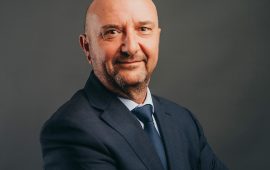
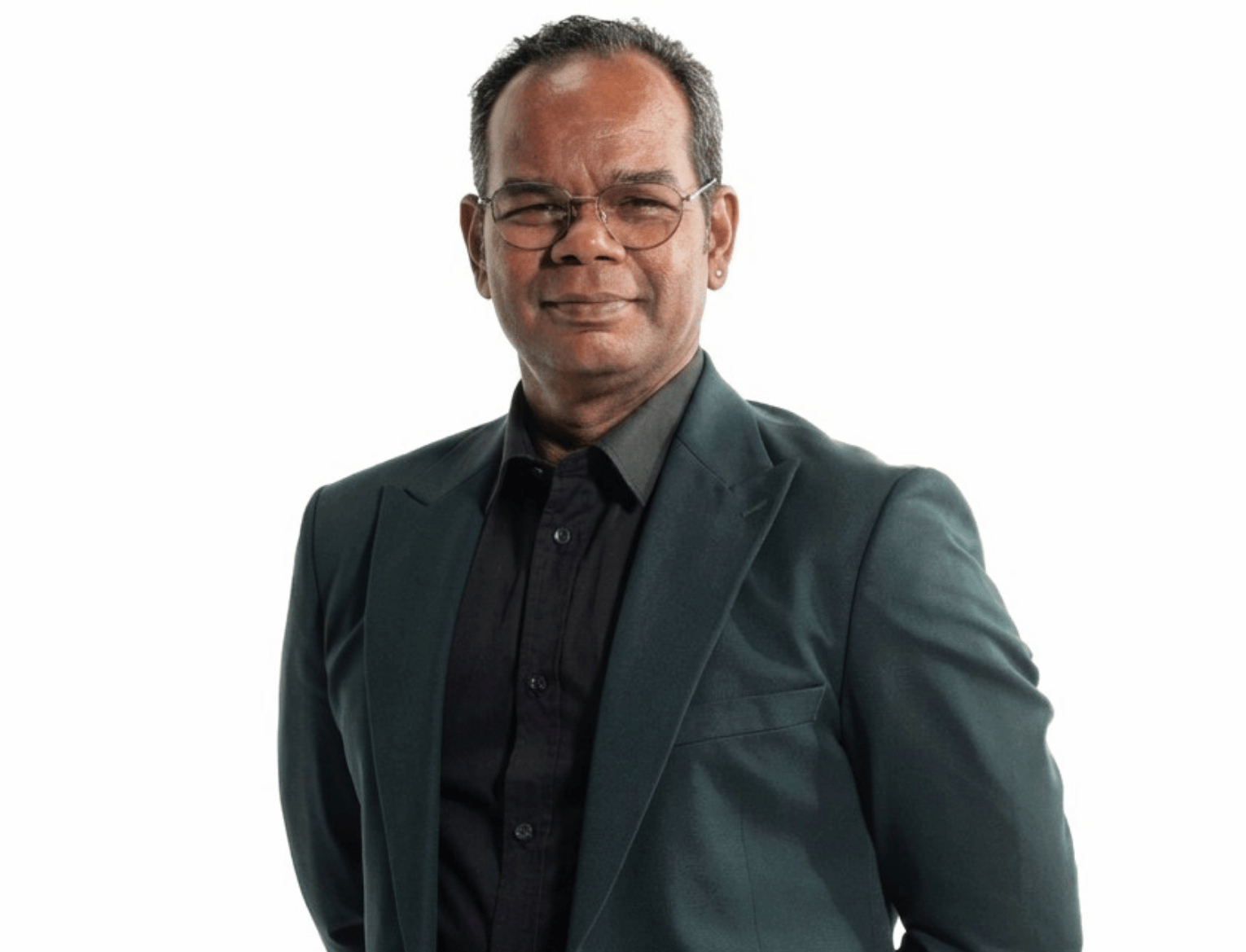
Gilles Martial, Manager, Media & Public Relations – Mauritius Commercial Bank

Journalism is to seek the truth. It is also storytelling. So too, argues Gilles Martial, is Public Relations. Far from the spin doctors of dark movies, he is straightforward in his views of his job: it is to serve the narrative of our country and of the organization that I represent.” It helps when that organization is a 188-year-old pillar of Mauritius, its banking system and its influence on the regional and continental stage. In this interview, the newly-minted Manager, Media & Public Relations of the Mauritius Commercial Bank talks about his journey from journalism to PR, how the two converge, how he sees his role, and the need to continue thinking beyond Mauritius.

Shareenah Kalla

Rare are those who, having reached a certain level in their professional life, keep their humility. Gilles Martial, Manager, Media & Public Relations at the Mauritius Commercial Bank (MCB), is one of those who do not forget their past. Indeed, when asked to retrace his professional career, he first insists on thanking his parents for their immense sacrifice and support. “My sister and I owe them everything that we have become,” he confides with emotion.

Before the public relations guy, there was the journalist. The profession, he says, requires a deep passion, but also a rigour that is forged through the pen, the words, and the need to tell stories and transmit information. As he had both ingredients, he would rise through the ranks over the years. Yet, he reflects, “I have always felt that my career resembled less a ladder than a love story of thirty years with words.” 


“In a world where transparency is demanded, and where audiences can verify information in a few seconds, manipulating a story is a short-term game.


Gilles Martial joined l’express as a trainee journalist as a 19-year-old, first at the news desk, then with the young team of express-economy. He then went abroad to hone his skills in the field. “I was trained in Paris, at the Centre de Formation et de Perfectionnement des Journalistes (CFPJ), at Les Echos and Libération, then I obtained my diploma with distinction from the London School of Journalism.” 

Back in Mauritius, he worked briefly for the late Le Quotidien before spending nearly fifteen years at Le Mauricien/Week-End as senior journalist specializing in investigations, crime and the judiciary.

Then, in 2012, Gilles Martial’s career took a corner when he joined MCB as Content Manager, with a mission to instil new energy in its Media section. “What attracted me, and even now keeps me engaged, is the breadth of the impact that an institution like MCB can have in Mauritius and in the region,” he explains. 


“I have long made this a personal challenge: to question, and help to end, the tired stereotypes on Africa.” 


With it came the opportunity to go beyond the traditional message and to tell stories which reflect true economic empowerment. “In a certain way, I did not ‘leave’ journalism; I found another way to serve the narrative of our country and of the organization that I represent.” 

Their stories, he says, are intertwined, as MCB, throughout its almost 188-year history, has been a partner of the growth of the country, which is why he feels the responsibility to properly tell the institution’s story in all its richness. 

If beginnings can sometimes be rough, Gilles Martial’s were the exact opposite. “Working with late Ryan Coopamah and under the direction of late Pierre Guy Noël was a true masterclass which continues to shape my style of leadership,” he explains. 

That ability to learn from others led to him being promoted in 2017 to Internal Communication & PR Manager, a function he occupied until January of this year, when he was tasked with communication and institutional storytelling as MCB’s Manager, Media & Public Relations. 

Is there a real line of demarcation between journalism, communication and PR? Gilles Martial, to whom we asked the question, believes that there is a subtle but distinct difference between them. “I see them like three instruments playing the same melody: journalism is the drumbeat of responsibility. Public relations are the harmony of trust. Communication is the baton of the conductor who gives life to the strategy,” he argues.

And the common denominator? For him, it is that they have at their heart the quest for truth. That is why he has never been at ease with the idea that PR equals spin. “The era of the ‘spin doctor’ is fading quickly. In a world where transparency is demanded, and where audiences can verify information in a few seconds, manipulating a story is a short-term game,” he explains. 

Far from changing the facts to suit a narrative, he sees his role as being a strategic storyteller of the truth. As he says, “a spin doctor tries to change the weather for one day, but a professional of PR helps an organization build a better ship to cross the seas for decades.” 

And very much like a true shipwright, he needs to master all aspects of his craft. This is where Gilles Martial’s training and experience in journalism, and his mastery of English, French and Mauritian Creole are valuable assets. They help him grasp nuances that others could miss, so that the narrative he builds is solid enough to resist examination. 

In his job, Gilles Martial favours a “staff first” approach, because employees are often the most credible ambassadors of a brand. Telling their story is therefore also important. “I am proud of my three years as editor-in-chief of our former internal magazine, and of having contributed to the launch, in 2017, of an internal platform facilitating the sharing of news, the celebration of successes and the connection between teams and geographies,” he says. 

Indeed, that platform proved particularly useful during the pandemic, allowing colleagues from Mauritius, Rodrigues, Seychelles, Madagascar and Maldives to stay informed and connected despite the absence of physical meetings.

Although it was a delicate period to navigate, their handling of the crisis, which required stakeholder management and communication with the authorities and the media, allowed them to both be proactive and respond to last-minute communication requests related, for example, to the opening of certain branches.

It was also crucial to support frontline agents and colleagues working in the background, both locally and abroad. “The challenge was formidable, but we crossed the Covid crisis with resilience and learned a lot from it. My warmest thanks go to my reporting lines and to my team members, past and present, for their trust and support. No result would have been achieved without them,” he says.

Indeed, Gilles Martial nurtures the vision of a team not only reactive, but strategic and resolutely turned towards the future. He wants them to be the standard-bearers of modern PR in the region: curious, disciplined, engaged in continuous learning… “We are the eyes and ears of the organization. And our impact becomes visible when trust is put to the test,” he argues.

He also considers it essential to continue to think beyond Mauritius. “With operations in Madagascar, Seychelles and Maldives, and representation offices in Nairobi, Johannesburg, Dubai, Lagos and Paris, we operate as a single regional power,” he adds.

His ambition is that beyond supporting communication, his team can help the Group read signals early, anticipate reputational risks and respond to global uncertainty with a unified and empathetic voice; a side of PR that he believes is too often neglected. 

And as a member of the Chartered Institute of Public Relations (CIPR) and senior member of the African Public Relations Association (APRA), he firmly believes in the momentum aiming to professionalize the field across the continent, so that professionals can be recognized, in Mauritius and in the region, as specialists who bring rigour and value to decision-making. 

This year, Gilles Martial has seen his own work recognized when he featured among the Top 100 in Africa and the Top 10 men of PR in Mauritius Africa PR Week. Plaudits he received with humility and a clear understanding that “I reach no milestone alone. My team, my wife, my parents and my sister have been constant pillars.” 

For him, in a certain way, this recognition validates the work accomplished to elevate the narrative of Mauritius in the region. As for his place in the African Top 100, “this recognition has a particular flavour for me, because I have long made this a personal challenge: to question, and help to end, the tired stereotypes on Africa.” 

It must be said that since childhood, the man has always been fascinated by the stories of Africa. He grew up reading Things Fall Apart by Chinua Achebe, admiring the life and struggles of Nelson Mandela, and being intrigued by figures such as Haile Selassie and Patrice Lumumba. With time, a conviction became clear: Africa is not a future power, it already is, and Mauritius is part of this engine. 

Even popular culture and social media now make it more difficult to reduce the continent to poverty and to ‘doom and gloom’; audiences see its cities, its creativity and its ambition in real time,” he adds. 

Gilles Martial’s contribution to the change of narrative is through his writing. “I have never put down the pen, and I will not do it,” says the former journalist. The difference is that he now writes for different audiences: clients, colleagues, leaders, stakeholders… But the need to transmit, to debate, has not left his person. 


Manchester United, God of War and AI 

Gilles Martial is a supporter of Manchester United, which he admits is “sometimes painful but instructive in matters of leadership and crisis management.” An avid reader in English, French and Mauritian Creole, and a lover of music and photography, he is also, at 52 years old – which is less conventional – passionate about video games like God of War and Black Myth: Wukong for their storytelling. 

The self-described family man is also a firm believer in technology. AI, for example, “is transformative for our industry. Research, monitoring, refinement of content… It becomes an integral part of our way of working.” So much so that although he believes AI will not replace the PR professional, he is convinced that the professional who uses AI will replace the one who does not do it. 

The banking sector itself is evolving. “It is no longer only about transactions, but about a catalyst of cross-border investment, sustainable development and regional integration,” he explains. Communication and PR in the field have therefore evolved towards a human approach: build trust, explain the “why” behind the numbers, and make the ESG commitments credible.

Skip to content