Back to Bizweek
SEARCH AND PRESS ENTER
Latest News
The industry’s future depends on strengthening the local workforce

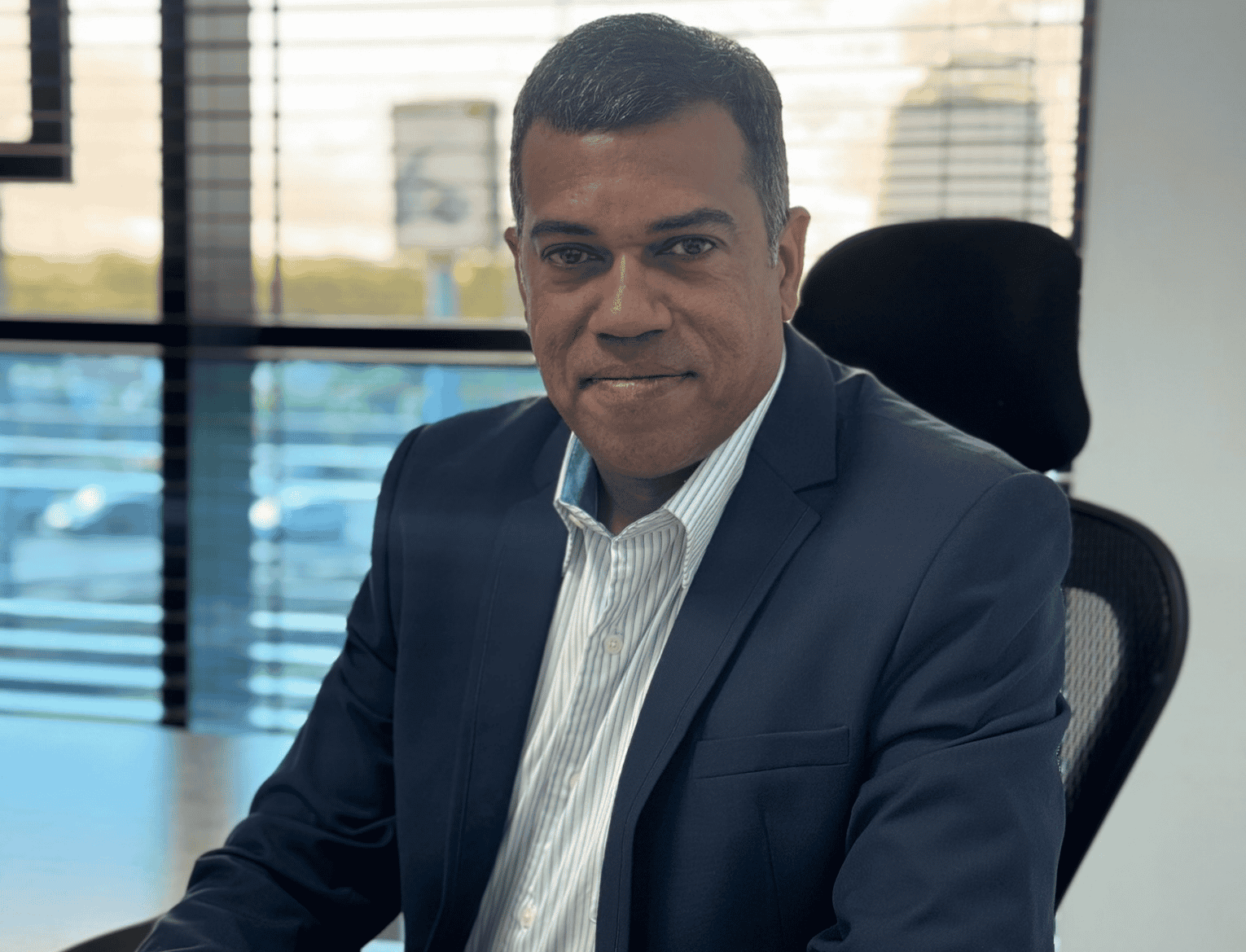
Ludovic Désiré, Chief Commercial Officer, Gamma Materials Ltd

The construction industry is not going through a difficult period. But it is definitely facing a combination of issues, among which are global supply chain disruptions, the rising cost of construction materials, and labour shortages. But all is not doom and gloom, says Ludovic Désiré, Chief Commercial Officer of Gamma Materials Ltd, one of the key operators in the construction sector. Public sector projects, a more selective and disciplined market, and the innovation and agility businesses usually develop in periods of uncertainty means he remains confident in the industry’s prospects provided projects are executed, the local workforce is strengthened through greater investment in technical education, vocational training and continuous upskilling, and the adoption of innovative construction technologies is encouraged.

The construction sector is going through a difficult period. How would you describe the current situation?

I would not necessarily describe the current situation as a difficult period, but rather a low amongst highs and lows. The sector remains active, supported by both public and private investment, although companies are operating in a far more demanding environment.

The industry continues to face sustained cost pressures resulting from geopolitical issues, higher prices for construction materials, labour shortages and tighter financing conditions, all of which affect project delivery, profitability and investment decisions. According to the latest Construction Price Index published by Statistics Mauritius, construction costs increased by 6.1% year-on-year in June 2026, with the index reaching 154.4. This increase was driven primarily by higher prices for premixed concrete, reinforcing steel, timber products and plant hire.


“We need to encourage more Mauritians to pursue careers in construction while equipping them with the skills required for modern building techniques.”


Despite these challenges, there are encouraging signals. The 2026-2027 Budget reaffirms the government’s commitment to infrastructure development through continued investment in roads, drainage systems, social housing and other public works, while introducing initiatives such as the Green Building Code. These measures will help sustain demand while encouraging the sector to become more resilient, sustainable and future-ready.

As an industry, our responsibility is to continue improving productivity, embracing innovation and sustainable construction practices, and delivering projects that remain affordable and manageable for our clients.

How long have you observed this fragility, and what do you believe are its main causes?

The current situation has not emerged overnight. The pressures have been building over several years as a result of a combination of structural and global factors rather than a single issue.

The sector has had to adapt to the after-effects of global supply chain disruptions, rising material costs, inflationary pressures, labour shortages, higher financing costs and evolving investment patterns. These challenges have naturally affected contractors’ margins, investment decisions and project delivery.

The latest Construction Price Index illustrates this reality, with continued increases in the cost of essential inputs such as premixed concrete, reinforcing steel, timber products and aggregates. These cost increases inevitably place additional pressure on project affordability.

However, beyond these short-term pressures, the construction industry is also undergoing a deeper structural transformation. Companies are expected to improve productivity, adopt digital technologies and integrate more sustainable building practices. In this respect, the 2026-2027 Budget sends an important signal by promoting green construction standards, innovation and the modernisation of the sector. Together with broader reforms aimed at improving the business environment, these measures should help restore confidence and support the industry’s long-term competitiveness.

Is there really a downturn?

I would say both yes and no. Some market segments, particularly residential construction, have become more cautious as households and investors carefully evaluate major investments in the current economic environment. This is reflected in the National Accounts estimates published by Statistics Mauritius, which forecast a 2.6% decline in residential building investment in 2026.

However, this does not mean that construction activity has come to a halt. Major public infrastructure projects continue to move forward, alongside significant private developments.

In fact, Statistics Mauritius forecasts that the construction sector will contract by 0.8% in 2026, compared with a decline of 2.1% in 2025. While still negative, this represents an improvement, largely supported by ongoing and upcoming public sector projects.

So, rather than describing the situation as a downturn, I would characterise it as a more selective and disciplined market. Investment decisions are being made more carefully, but opportunities remain for companies that are able to adapt, innovate and deliver value.

What are the major challenges facing the sector today, particularly regarding labour shortages and the recruitment of foreign workers?

Labour remains one of the construction industry’s most significant challenges. Like many countries, Mauritius is experiencing shortages of skilled workers, particularly in specialised technical trades. While the recruitment of foreign workers continues to play an essential role in addressing immediate workforce needs, administrative procedures and processing times can sometimes affect project planning and delivery schedules.

That said, foreign labour should not be viewed as the only long-term solution. The industry’s future depends on strengthening the local workforce through greater investment in technical education, vocational training and continuous upskilling. We need to encourage more Mauritians to pursue careers in construction while equipping them with the skills required for modern building techniques.


“Today, the market has become more mature, placing greater emphasis on long-term demand, financial sustainability and careful project selection.”


At the same time, companies must improve productivity by adopting digital technologies, modern construction methods and better workforce planning. Continued collaboration between the government, industry and training institutions will be essential to ensure the sector has access to the skilled workforce it needs while reducing its long-term dependence on imported labour.

With the continuous rise in the cost of living, what repercussions do you see on construction materials and overall activity?

The increase in the cost of living inevitably affects the construction sector in several ways. Inflation drives up the cost of raw materials, transport, logistics and labour, while also influencing the purchasing decisions of households and businesses.

The latest Construction Price Index confirms that construction input costs continue to rise, particularly for concrete, steel reinforcement, timber products and plant hire, with the overall index increasing by more than 6% year-on-year in June 2026.

For individuals and businesses, this often means postponing or reassessing investment decisions. Many clients prefer to secure their financial position before committing to major construction projects, which can temporarily slow demand in certain segments, particularly residential development. These choices make them invest only when long-term plans are secure.

For construction companies, these conditions require greater efficiency. Businesses must optimise procurement, improve productivity, embrace innovation and manage project costs more effectively to remain competitive.

At the same time, these challenges also present an opportunity to accelerate the adoption of more efficient construction methods, sustainable materials and smarter project management practices. In the longer term, these improvements will strengthen the resilience and competitiveness of the sector while helping it respond to changing market expectations.

In this context, what strategies are you implementing to make your products or services more attractive?

Our strategy has not fundamentally changed because our priority has always been to stay close to our clients and respond to their evolving needs.

In a more challenging market, competitiveness is no longer about price alone. Clients are looking for reliability, quality, efficiency and solutions that deliver long-term value. Our focus is therefore on understanding their requirements and providing products and services that are technically sound, financially appropriate and adapted to today’s market conditions. We continue to invest in more efficient construction methods and sustainable solutions that improve productivity while maintaining high-quality standards. We also work closely with our clients throughout the project lifecycle to ensure we are responding to their specific needs.

Periods of uncertainty encourage businesses to become more agile and innovative. Rather than simply reacting to short-term market conditions, we see this as an opportunity to strengthen our offering and reinforce the trust our clients place in us.

Mauritians, whether individuals or businesses, seem less inclined to embark on large projects. Do you confirm this trend?

Investment decisions have certainly become more measured in the current economic environment. Both households and businesses are taking more time to assess projects, prioritise their spending and ensure that investments are truly necessary before committing significant capital. However, this should not be interpreted as a complete slowdown in investment. We continue to see activity across several segments, particularly in public infrastructure, commercial developments, and developments that respond to genuine market demand. So, rather than saying that people have stopped investing, I would say they are investing more selectively. Projects with strong fundamentals, clear value and long-term benefits continue to move forward.

The recent fee increases announced by the FSC could discourage investors and slow down large-scale projects. What is your analysis?

Any measure that affects the cost of doing business naturally becomes part of an investor’s assessment. It is therefore understandable that increases in regulatory costs may influence certain investment decisions.

However, major investment decisions are rarely based on a single factor. Investors also look at macroeconomic stability, regulatory predictability, infrastructure quality, financing conditions, market demand and long-term growth prospects.

From the industry’s perspective, maintaining an open and constructive dialogue between regulators and the private sector remains essential. The objective should always be to preserve Mauritius’ attractiveness as an investment destination while ensuring that regulatory reforms achieve their intended objectives.

Do you feel that the construction sector was somewhat overlooked in the 2026-2027 budget?

The Budget contains several measures that are directly relevant to construction, including continued investment in public infrastructure, the introduction of a Green Building Code, support for sustainable development, and initiatives that encourage innovation and improve the overall business environment. These are important signals that support the sector’s medium- and long-term development. 

As with any Budget, there is always room to go further. The industry will particularly look forward to the timely implementation of the announced projects and reforms, because ultimately, it is their execution that will determine their real impact on economic activity and business confidence.

We are far from the boom years of the early 2010s. Yet, projects such as Ascencia’s mall in Flacq and Tribeca Central are underway. How do you interpret this?

The market, today, is very different from what it was then. At that time, growth was broad-based and investment was expanding across almost every segment. Today, the market has become more mature, placing greater emphasis on long-term demand, financial sustainability and careful project selection.

The fact that developments continue to move forward demonstrates that confidence still exists where projects are supported by strong fundamentals, sound planning and genuine market demand. Rather than signalling another construction boom, these projects reflect a more disciplined and sophisticated market in which investment is increasingly focused on developments that create lasting economic value.

Can we say that the state of the construction sector is a reliable indicator of the health of the national economy?

Construction has traditionally been regarded as one of the key indicators of economic health because it is closely linked to investment, employment, infrastructure development and overall business confidence.

However, Mauritius’ economy has become much more diversified over the past decade. Construction therefore remains a reliable indicator, but it should be considered alongside other economic indicators rather than in isolation.

Looking ahead, the industry’s success will increasingly be measured not only by the volume of construction activity, but also by its ability to deliver sustainable, resilient and environmentally responsible projects. Green construction is becoming an increasingly important indicator of the sector’s long-term competitiveness and contribution to the economy.

The government regularly announces major projects, but many are slow to materialize. Isn’t there a paradox here?

Large infrastructure projects are inherently complex. They require extensive planning, financing, regulatory approvals, land acquisition and coordination among multiple public and private stakeholders. Delays are therefore not unique to Mauritius, and should be viewed within that broader context.

What is most important is maintaining momentum and ensuring that projects move steadily from announcement to implementation. Ultimately, the success of these initiatives will depend on effective and timely implementation. Delivering projects efficiently is essential to sustaining confidence across the construction sector and the wider economy.

What measures did you expect in the budget that, in your view, were not delivered?

Overall, the Budget contains several positive measures for the construction sector, particularly its emphasis on infrastructure investment, sustainability, digital transformation and improving the investment climate. Rather than focusing on what was missing, I believe the priority now is ensuring that the announced measures are implemented efficiently and consistently.

That said, the sector would always welcome further initiatives to streamline procurement and permitting processes, facilitate access to skilled labour and encourage wider adoption of innovative construction technologies. These are practical measures that would further strengthen the industry’s resilience, competitiveness and ability to respond to future challenges. As an industry, we remain committed to working constructively with the government to support these objectives.

In past downturns, hotel renovations or expansions of malls and office spaces helped sustain activity. Are such initiatives still relevant today?

Absolutely. One of the strengths of the Mauritian construction sector has always been its ability to diversify the sources of activity.

While residential construction may experience slower growth during certain periods, other segments, including tourism, logistics, renewable energy, commercial developments and public infrastructure, continue to generate significant opportunities.

In fact, the latest National Accounts identify hotel renovations, land development and renewable energy projects among the key drivers supporting construction activity in 2026. Looking ahead, the sector’s growth will increasingly be driven by sustainable buildings, energy-efficient infrastructure, climate-resilient developments and projects that respond to changing economic and environmental needs.

The future of construction is therefore not simply about building more, it is about building smarter, greener and with a stronger focus on long-term value creation.

Skip to content