Back to Bizweek
SEARCH AND PRESS ENTER
Latest News

The African continent is growing, and often faster than we think

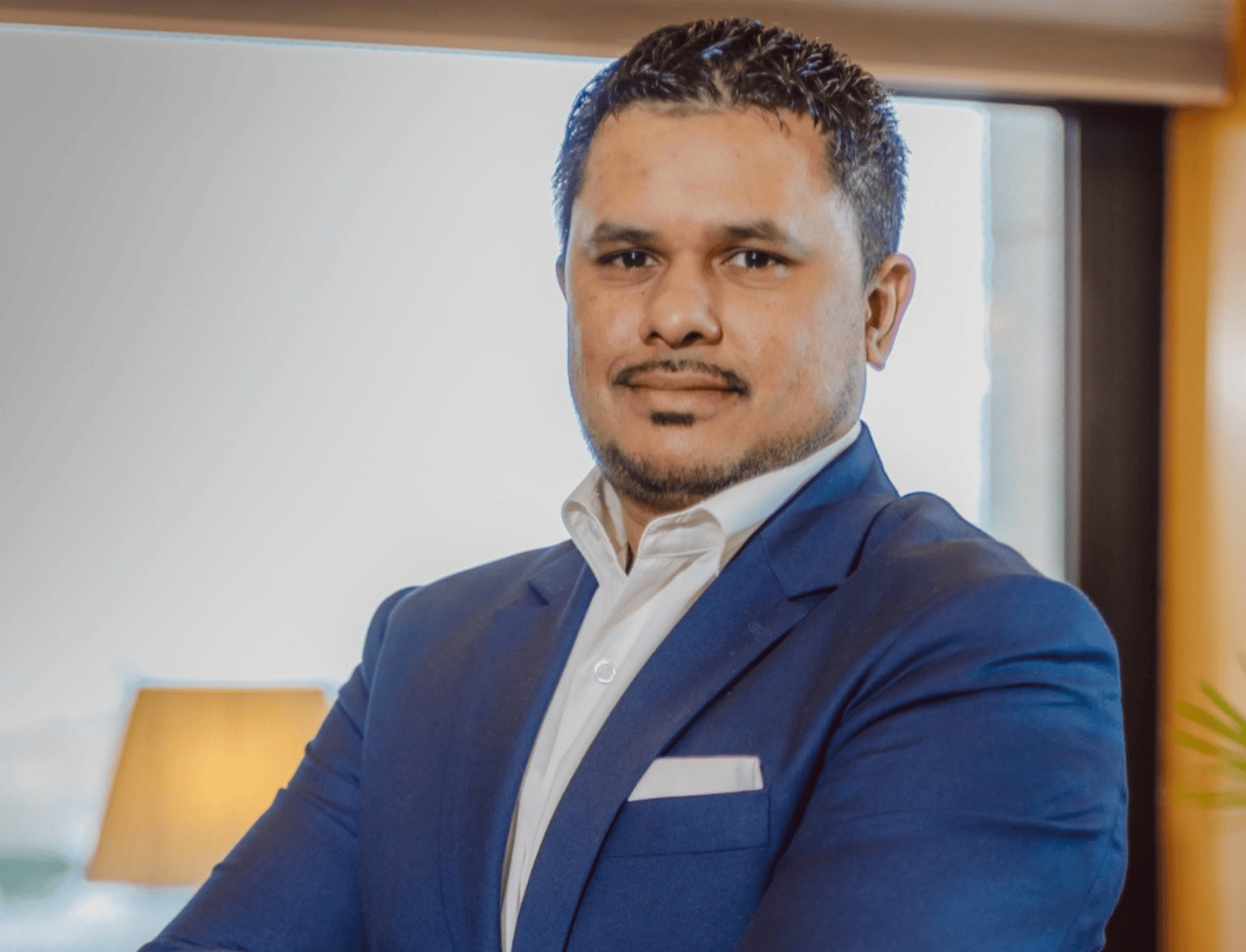
Arnaud Levasseur, Executive Vice President Global Trade Solutions and Trade Finance, MCB

  • MCB recognised as Best Cash, Liquidity and Risk Management Provider, Sub-Saharan Africa 2026 at TTP Awards ceremony in New Jersey. 
  • “The award is for Africa. It tells us: ‘Continue. Let’s work smarter. Together, we go further.’”

The Mauritius Commercial Bank (MCB) was the sole African bank on stage at the TTP Awards in New Jersey when it took home the ‘Best Cash, Liquidity and Risk Management Provider – Sub-Saharan Africa 2026 award. For Arnaud Levasseur, Executive Vice President Global Trade Solutions and Trade Finance of MCB, the distinction is less about prestige than about impact: structured trade finance, when guided by economic impact, is shifting the risk landscape and unleashing the opportunities within African trade.

When Arnaud Levasseur walked into the TTP Awards ceremony in New Jersey, he knew the symbolism mattered. MCB was the only African bank represented among global heavyweights. “We were there to say Africa matters,” he recalls. “It honours the collective heartbeat that drives our mission at MCB. We believe that Africa’s tomorrow is not a distant horizon; it is rising before our eyes. Together with our steadfast partners, dedicated teams and the unflinching support of their families, we are weaving a future that is more connected, more empowered, and undeniably African.

The award, determined by independent judges and grounded in measurable impact rather than promotional claims, recognised MCB as Best Cash, Liquidity and Risk Management Provider, Sub-Saharan Africa 2026. For the Executive Vice President Global Trade Solutions and Trade Finance of MCB, it is a collective endorsement. “It highlights the strength of our strategy, underscoring our team’s expertise and experience to align ambition with execution in a way that delivers tangible value to the communities we serve, and recognises and reinforces the belief that Africa has to be part of the global trade conversation.”

Structuring what others may find risky

The judges’ attention was drawn to a triangular supply chain finance transaction in Rwanda, a landlocked economy seeking to reduce reliance on imported primary school textbooks. A local intermediary approached MCB to finance printing equipment that would allow domestic production. The supplier demanded advance payment, and the client was not a large corporate with extensive security. Sovereign and counterparty risk would have discouraged many institutions.


“When an African company invests in its community through education and other social foundations, it reflects part of its DNA – it signals long-term thinking.”


The transaction was broken into phases – equipment purchase, installation, execution – each supported by trade instruments designed to mitigate specific risks. Cash flows were sequenced. Exposure was calibrated. What initially appeared non-bankable was rendered feasible in a structured manner.

Yet Arnaud Levasseur insists that the decisive element was not purely technical. “When we presented the case internally, we emphasised the broader economic and social benefits,” he explains. “This was about education, local production, and long-term capacity building. In Rwanda, this impact is significant.

Aligned with Sustainable Development Goal (SDG) 4, which aims to ensure inclusive and equitable quality education and promote life-long learning opportunities for all, the project reduced import dependence and strengthened local value chains. 

This is what supply chain finance can do,” Arnaud Levasseur says. “It can transform perceptions into possibilities, and possibilities into tangible impacts that strengthen communities and economies.” 

Liquidity or perception?

In a global environment marked by geopolitical tensions, tariff shifts and currency volatility, many executives speak of tightening liquidity. The Executive Vice President Global Trade Solutions and Trade Finance of MCB challenges that premise. “I do not believe Africa faces a pure liquidity problem. The real challenge is fragmented – an uneven market infrastructure which often creates the impression of a liquidity shortage. Once we move beyond these misconceptions, particularly the perceived risk narrative, we uncover significant opportunities via trade solutions. 

Capital exists, he argues. Dollar liquidity circulates. International investors continue to allocate to African banks, a confidence evidenced by MCB’s own recent oversubscribed funding exercise in the Middle East and India.

The constraint lies in perception. “A contract in Burundi triggers caution. A similar contract in France is treated differently. Yet risks must be analysed, structured and mitigated; not reduced to a headline, he explains. 

The African trade finance gap, estimated at around US$120bn, reflects this disconnect between capital availability and risk appetite. Addressing it requires collaboration between the entire trade finance ecosystem – African banks, development finance institutions, corporates and global partners working together to unlock opportunities.

Solutions will not come overnight,” Arnaud Levasseur says. “But there is a strong commitment across the ecosystem that needs to be reinforced.” 

Rethinking sustainable finance through an African lens

Sustainability frameworks designed in advanced economies do not always translate seamlessly to African contexts, Arnaud Levasseur argues. “The playing field is not the same. Africa contributes less than 4 per cent of global carbon emissions. Yet we are often assessed through identical metrics set by the North.


“We need more voices speaking about African potential, constructively, pragmatically. The narrative must evolve.”


MCB has supported work being done within the International Trade and Forfaiting Association (ITFA), and that of Rebecca Harding, a well-known economist, on Social Return on Investment (SROI), advocating evaluation models that factor in developmental externalities.

In remote African regions, trade finance, which measured against the ESG framework set by the North might not be considered sustainable, is in fact having significant societal benefits in employment, food security, healthcare, education and community infrastructure. 

Across the continent, says the Executive Vice President, companies build schools, clinics, housing and childcare facilities around industrial operations. “When an African company invests in its community through education and other social foundations, it reflects part of its DNA – it signals long-term thinking. This is how sustainability becomes truly sustainable for Africa.

Positioning the Mauritius International Financial Centre as a digital trade hub

If there is one lever capable of narrowing structural gaps, he believes it is digitalisation. Mobile technology has already transformed payment systems across Africa. Yet trade documentation – bills of lading, letters of credit, exchange documents – remains heavily paper-based. 

Arnaud Levasseur applauds the recent amendments to Mauritian legislation allowing electronic bills of exchange as representing progress. But he sees the need for the broader ambition of positioning Mauritius as a digital trade hub. “Even if goods do not transit physically, documentation can – and by moving to digital documentation, we can create even greater value,” he explains. 

Greater digital integration could also support increased use of African currencies in intra-continental trade, reducing overreliance on a single hard currency. For the Executive Vice President, Mauritius should consider implementing the UNCITRAL Model Law on Electronic Transferable Records; a legal framework enabling the use of electronic, paperless, and cross-border transferable documents like bills of lading and promissory notes. It provides legal equivalents, ensuring electronic records are as valid as paper. Key adopters are Singapore, UK and France.

The African narrative

Having lived in South Africa and visited many African countries in the past 15 years, Arnaud Levasseur speaks with conviction about shifting mindsets. “We have been exposed for years to a particular narrative about Africa. When you spend time on the ground, you see something different. We can feel the energy and growth potential,” he argues. Infrastructure corridors are expanding. Industrial capacity is rising. Urbanisation is accelerating. And demographics support consumption growth. “The continent is evolving, and often faster than we think,” he adds.

Awards are outcomes. They are not objectives,” argues Arnaud Levasseur. “For me, the award is for Africa. It tells us: ‘Continue. Let’s work smarter. Together, we go further.’”

And for MCB, the guiding principles remain consistent: deepen collaboration, refine structured trade finance capabilities, support SMEs engaged in cross-border trade, and continue shifting perceptions of African risk.

We need more voices speaking about African potential, constructively, pragmatically. The narrative must evolve,” concludes Arnaud Levasseur. 

As Bizweek Africa launches its first issue, the message of the Executive Vice President Global Trade Solutions and Trade Finance of MCB is one we hear and commit to.

Skip to content