Back to Bizweek
SEARCH AND PRESS ENTER
Latest News

Rolex watches are among the most laundered products in the world

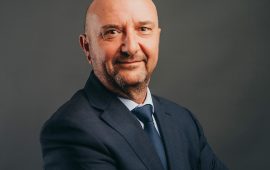
Andrew Tennant, Financial-crime and asset-recovery specialist

Andrew Tennant, Financial-crime and asset-recovery specialist

  • Significant value can be carried on a wrist or moved in a small package.”
  • “The previous AML\CFT assessment phase was largely concerned with what Mauritius intended to put in place to meet the recommendations. The central question now is different: what has been done?”

Luxury watches, cryptocurrency, art and even collectible toys can all be used to transfer value outside conventional banking channels, says Andrew Tennant, a financial-crime and asset-recovery specialist. In this interview with BIZWEEK, he explains why Rolex watches attract money launderers, how seized assets are managed and why Mauritius’s next anti-money-laundering assessment will turn on evidence of implementation rather than promises of future reform. Andrew Tennant is Director of Complyport and Gentium UK Ltd and Director and Money Laundering Reporting Officer of ComplyCrypto Depository Ltd. A former police officer, he has worked in financial investigation, asset recovery, cryptocurrency and specialist training. He was in Mauritius at the invitation of Abler for a training session for professionals in the financial services industry. 

Mauritius is preparing for another FATF assessment. How should the jurisdiction view the possibility of returning to the grey list?

No one can determine the outcome before the assessment is completed. A jurisdiction does not want to be grey-listed. It creates additional risk, affects confidence and can make it harder to attract new business. The economic cost is sometimes estimated at around 10 per cent of a country’s GDP. That risk matters particularly to a financial centre such as Mauritius.

But whatever the outcome, the response should be constructive. If Mauritius is placed on the grey list, it should use the process to identify weaknesses and improve them. If it is not, it should not conclude that the work is finished. Regulation, technology and criminal methods continue to evolve, so there is always room to strengthen the system.


“It is no longer enough to say what you will do; you must show what you have done.”


Mauritius came off the FATF grey list relatively quickly after its previous listing. What is different about the present scrutiny?

The previous phase was largely concerned with what Mauritius intended to put in place to meet the recommendations. The central question now is different: what has been done? Authorities must be able to produce evidence and statistics showing that reforms are being implemented and are effective in practice.

Coming off the grey list was an achievement, but it was not the end of the process. The real test is whether the jurisdiction continued to improve its understanding of risk, its internal controls, its regulations and its ability to demonstrate results. It is no longer enough to say what you will do; you must show what you have done.

The words ‘effectiveness’ and ‘implementation’ dominate the discussion. How do you assess Mauritius’s position?

Mauritius is a strong and established financial jurisdiction. It is attractive to international business, has a well-developed financial structure and able to work across both English-speaking and French-speaking markets. Other African jurisdictions look at what Mauritius has done well, where it has encountered difficulties and what lessons they can draw.

That position brings responsibility. Effectiveness means demonstrating measurable and continuing results. Firms must also choose advisers and service providers with the experience required for their sector, whether that is cryptocurrency, foreign exchange, investment business or another regulated activity. Knowledge gained over many years—including from mistakes—helps institutions turn written controls into working systems.


“The question is not only where the money went, but how value was transferred.”


What important mistakes have jurisdictions made in responding to new financial technologies?

One of the biggest has been failing to regulate new technologies early enough. Cryptocurrency emerged around 2008 and 2009, but a number of jurisdictions were slow to put legislation and controls in place. Some simply treated crypto as illegal and refused to engage with it.

That does not make the activity disappear. Cryptocurrency is another means of holding assets, transferring value and conducting financial business. It must be treated with the same seriousness as other financial products, with appropriate regulation, compliance and risk controls.

There is legitimate business in the sector, and Mauritius can be an attractive base for it. But opportunity depends on credible oversight. Public and private institutions need to work together on client identification, source-of-wealth checks, transaction analysis and access to specialist expertise.

How does the seizure and recovery of cryptocurrency work in practice?

The first stage is to help investigators identify transactions and assets that may be linked to crime. The legal basis must then be established: there must be a valid power, court order or regulatory order allowing the asset to be seized or recovered.

Once that authority exists, the asset can be moved from a wallet controlled by a suspect into a wallet controlled by a government body or by an appointed custodian acting for it. The cryptocurrency then must be held securely and managed under defined controls.

If an order later permits realisation, the asset can be converted into cash and returned to public funds. The next question is how the proceeds should be used. Where there are identifiable victims, compensation may be appropriate. In other cases, the proceeds may support law enforcement, public services or other purposes authorised by the jurisdiction.

This requires investigators, legal powers, secure custody and the ability to realise the asset. Those capabilities do not develop overnight. They depend on experience, training and cooperation between government and specialist private-sector partners.

How has financial crime changed during your career?

Our understanding of financial crime is better than it was 20 years ago, but many systems still rely on concepts developed decades ago, including typologies associated with traditional organised crime. Criminality has not stood still. The world is smaller, value can move faster and technology has created new methods of disguising ownership and transferring assets.

The focus should be on improving the knowledge of everyone involved—law enforcement, regulators, compliance professionals and government. If we understand how laundering actually works and how the methods are changing, we have a better point of attack. We cannot keep pursuing today’s criminality solely with concepts developed 40 years ago.

You challenge the traditional instruction to ‘follow the money’. Why?

‘Follow the money’ has been used in financial investigation for decades, but it is no longer sufficient. In informal value-transfer systems, the money itself may not move. It may remain in one place while an equivalent value is transferred elsewhere.

Investigators must therefore understand how value moves. That value may be represented by cryptocurrency, art, a yacht, shares, cash, jewellery or another asset. The question is not only where the money went, but how value was transferred from one person, asset or jurisdiction to another.

A better understanding of those methods gives law enforcement, regulators, compliance teams and governments a stronger point of attack. Criminal techniques have adapted rapidly; investigative concepts must do the same.

Why is asset recovery so important in the fight against organised crime?

Criminals understand risk. They know they may be caught and may spend time in prison. For some organised groups, imprisonment is not always an effective deterrent; it can even expand criminal networks.

What hurts criminality is removing the proceeds: the money, houses, cars, watches, boats, cryptocurrency and other assets. Asset recovery attacks the economic purpose of the offence. That is why asset identification, seizure, storage, management and realisation should be treated as core capabilities rather than as administrative work after an investigation.

Mauritius is considering stronger institutional capacity to deal with financial crime and asset recovery. Is creating a specialised agency enough?

Greater specialist capacity is a positive step, but an agency cannot work in isolation. There are not enough financial investigators, blockchain analysts, police officers or other specialists anywhere to meet the scale of financial crime solely through public recruitment.

The answer is a partnership model. Investigators should be able to work with regulators, compliance professionals, blockchain-analysis companies, custodians, tax authorities and other specialists. They are pursuing the same objective: identifying criminal assets and stopping their use.

Storage is a good example. A law-enforcement officer may know how to investigate and seize an asset, but not necessarily how to maintain a yacht, value a horse, authenticate a watch or secure cryptocurrency. Those are distinct professional functions. Using qualified partners allows investigators to focus on the investigation while ensuring that seized assets retain their value and are handled in line with legal and FATF requirements.

Why do public authorities need specialist partners to store and realise seized assets?

FATF’s asset-recovery expectations extend beyond identifying and seizing property. A jurisdiction also needs the capability to store, manage, value and ultimately realise an asset. That becomes difficult because the skills are highly specific. An investigator may know how to obtain a seizure order, but not how to maintain a boat, value a horse, authenticate and sell a luxury watch, or securely hold cryptocurrency.

Our role, working across Complyport, Gentium and the wider team, is to provide that asset-management solution. It can cover tangible assets such as vehicles, boats, watches and other valuables, as well as intangible assets such as crypto. The purpose is to preserve value, maintain an auditable process and allow investigators to concentrate on the criminal case.

Gibraltar provides one example. We worked with its authorities on training, guidance and support for government departments and regulators. Gibraltar then went through a public procurement process before awarding us a contract for storage and asset management. The model allows an authority to move an asset quickly into professional custody and manage it through valuation and sale.

The same principle applies to major crypto seizures. The UK has been responsible for a seizure of about 61,000 bitcoins, valued at approximately US$6bn at the time of our conversation. We have provided asset-partner capability connected with the secure management of cryptocurrency. The important point is that custody, control and realisation must be designed before an authority takes possession of an asset—not improvised afterwards.

You have cited a crypto recovery in Ghana as an example of this model. What happened?

We worked in Ghana to develop a cryptocurrency investigation team and mentored investigators through a case involving fraudulently obtained crypto assets valued at about US$20 million. The assets were identified, seized, secured and converted into cash for the government, including for victim compensation and wider public benefit.

The important point is not only the value recovered. It is that the result came from local investigators working with specialist support, training and an agreed process for custody and realisation. That is what an effective public-private partnership looks like.

You say Rolex watches are among the most laundered products in the world. How are they used?

Rolex watches are among the most laundered products in the world because they are a very effective store of value. A watch bought for £20,000 is likely still to be worth around £20,000 next week, next month or next year; depending on the model and market, it may appreciate. It is portable, globally recognisable, easy to move and can be resold through a deep international market.

The secondary market is particularly important. A buyer may have to wait six to nine months for a new sought-after model, while a second-hand watch is available immediately. That scarcity can mean a pre-owned Rolex sells for more than the new retail price. Provenance, model, condition and rarity all affect the value, but the central attraction for criminals is that significant value can be carried on a wrist or moved in a small package.

One method discussed in this context is the Daigou system. A person buys a high-value product in one market, claims an available tax refund and moves the item to another jurisdiction. The watch may then be sold slightly below its original retail price, but the tax recovery can still leave the person with a profit while value has been transferred across borders. The same mechanism can be exploited as part of a laundering process.

This is not limited to watches. High-value handbags, designer shoes, jewellery, gold, art and even collectible LEGO sets can retain value and be traded internationally. They are commodities and, in the context of financial crime, investigators must understand them as instruments for moving value. The money itself may remain in one location while the representative value moves through the object.

Rolex remains especially attractive because the brand is widely recognised and the resale market is liquid. Watches recovered from criminal cases therefore require proper authentication, valuation, storage and a controlled sale. We are currently involved in cases for different jurisdictions where seized Rolex watches are being stored, valued and prepared for disposal.

There is also a safety issue. A particular watch may be readily identifiable within the jurisdiction where it was seized. If it is sold locally, an innocent purchaser could later be recognised by the criminal who previously owned it. A professional disposal process can exclude that jurisdiction from the auction or sale and make the watch available only in other markets. That protects the buyer while still allowing the public authority to realise the asset’s value.

What is the next major frontier in financial-crime prevention?

Artificial intelligence will be central. It can improve analysis and support compliance, but it also gives criminals new ways to impersonate people, fabricate identities and manipulate information.

The answer is not to reject the technology. It is to establish appropriate controls over how it is used and managed. In regulation and compliance, AI can assist decision-making, but human judgement and accountability should remain part of the final sign-off.

How does your partnership with Shahanna Abdoolakhan, the founder of Abler, and the wider team strengthen the work?

We bring together different but complementary backgrounds. I come from law enforcement and financial investigation; Shahana brings regulatory and compliance experience. The wider team contributes regional knowledge, technical capabilities and different professional perspectives.

Combining those skills produces a stronger service than any one person or organisation could provide alone. It reflects the same partnership principle that applies to governments and industry: complex financial crime requires joined-up expertise.


About Andrew Tennant

Andrew Tennant is Managing Director for Global Financial Crime Investigations, Crypto-Financial Crime and Training at the Complyport Group. He is also Director and Money Laundering Reporting Officer of ComplyCrypto Depository Ltd, an FCA-regulated virtual-asset service provider, and Managing Director of Gentium UK Ltd, a role he has held since 2018.

A former law-enforcement officer, Tennant has more than 23 years’ experience of serious and organised crime, high-profile investigations, politically exposed persons, financial investigation and asset recovery and asset management. His specialist fields include money-laundering methodologies, informal value-transfer systems, trade-based money laundering, high-value dealers, cryptocurrency investigations, fraud, terrorist financing, disclosure and specialist interviewing.

He has designed and delivered training in the UK, Europe and other jurisdictions. His work has included developing a financial investigator training package, continuing professional development system and accreditation programme for the Eastern Caribbean, supporting the development of 41 financial investigators and confiscators, and reviewing a financial-investigation course launched in Jamaica in 2019.

Tennant has served on a UK Home Office advisory group on cryptocurrency and, in 2020, contributed to a recommended policy on virtual-currency regulation for the Central Bank of Kosovo through an EU project. He is a board member of AMLFC in Miami. Since 2019, he has also provided AML/CFT consultancy, training and written guidance and has worked as part of the Institute of Financial Accountants’ AML compliance and review team.


Abler Group puts AML decisions to the test

An interactive financial-crime exercise required compliance professionals to assess an evolving case, challenge assumptions and defend their decisions. Abler Group held its first AML/CFT/CPF Effectiveness Lab on 26 August at Les Suites by The Docks. The event formed part of a training week for financial institutions, management companies and regulatory organisations in Mauritius. Rather than attending a series of presentations, participants worked through a developing financial-crime case. As new information emerged, they had to reassess risks, decide whether to proceed or escalate, and explain their reasoning. The Lab was facilitated by Andrew Tennant. He encouraged participants to consider how their decisions and records might later be examined by investigators. According to Shahannah Abdoolakhan, founder and chief executive of Abler Group, the exercise was designed to test the practical application of regulatory knowledge. Abler Group plans to incorporate the same scenario-based approach into new e-learning programmes for directors, senior executives and wider teams.

Skip to content