Back to Bizweek
SEARCH AND PRESS ENTER
Latest News

Mauritius should not bear the cost of plastic pollution alone

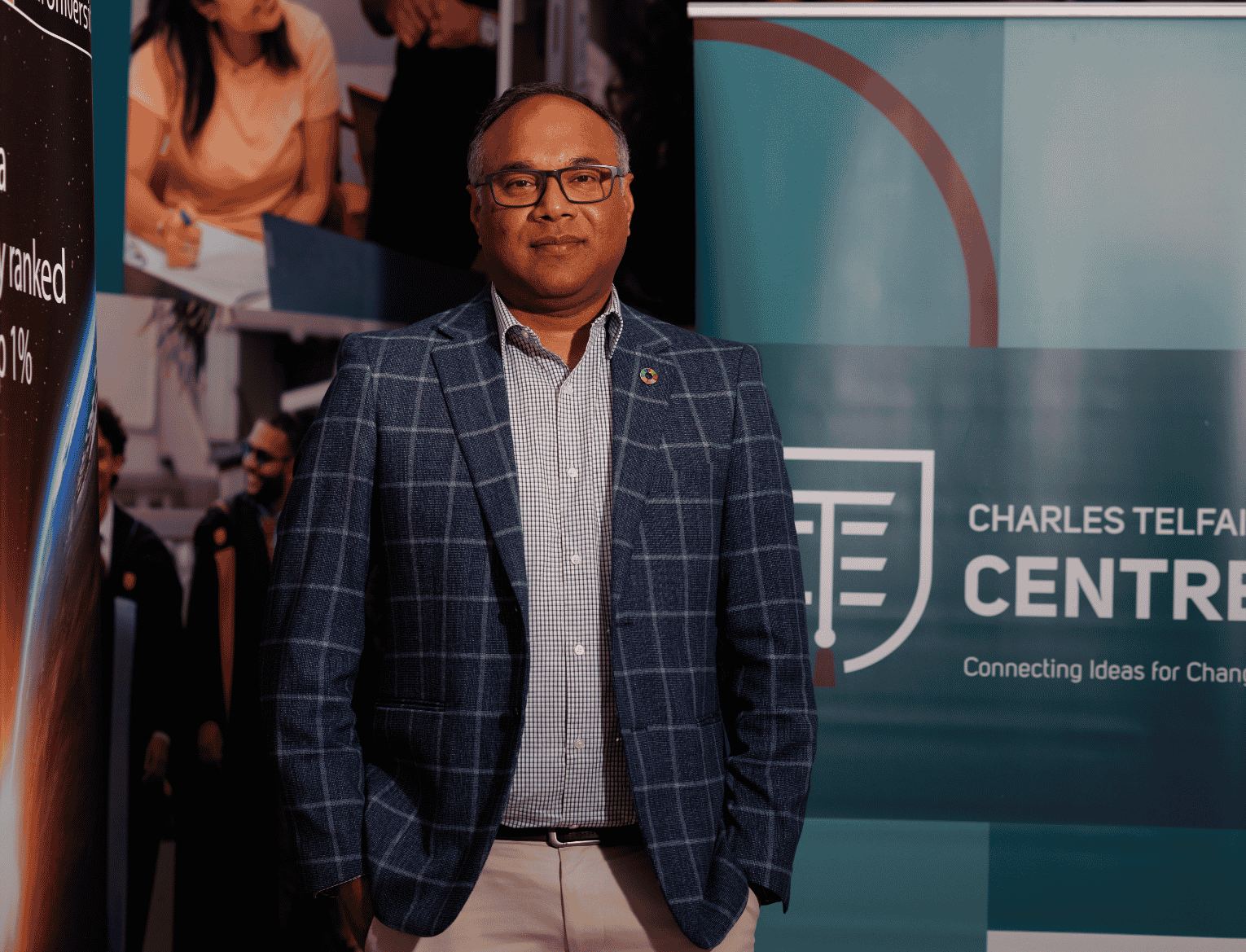
Professor Atiq Zaman of Curtin University

Professor Atiq Zaman of Curtin University

  • Island states face challenges they cannot solve alone, but we must first take care of our own backyard and then ask for help where the problem is beyond our capacity. 
  • “The absence of a system for separating waste at source is one of the biggest weaknesses of Mauritius.”

Mauritius needs source separation, a clearer recycling chain and stronger partnerships if it is to raise recovery rates and reduce plastic waste, says Professor Atiq Zaman of Curtin University, Australia. He argues that local investment must be supported by regional and international action, particularly for island states bearing the cost of marine pollution they did not create. Professor Atiq Zaman visited Mauritius for The Plastic Horizon: Ambitions, Gaps, and the Road Ahead in the Western Indian Ocean, organised by the Charles Telfair Centre with support from the Australian High Commission’s Direct Aid Program and in partnership with Curtin University. He spoke to BIZWEEK about the limits of Mauritius’s recycling system, the stalled negotiations on a global plastics treaty and the partnerships needed to turn policy into measurable action.

What brought you to Mauritius, and what did you hope to achieve through The Plastic Horizon initiative?

I was invited to share some of my experience in this field. I also wanted to understand what Mauritius is doing as a small island state and explore how we might collaborate and share knowledge. That was my main purpose in coming here.

Why is an initiative of this kind timely for Mauritius and the wider Western Indian Ocean region?

It is timely because the discussion connects three levels: the global challenge of plastic waste, the regional position of the Western Indian Ocean and the situation in Mauritius. I also met representatives of businesses, recycling companies, the food and beverage industry and the regulator. Those exchanges gave me a clearer picture of the local constraints.


“The pristine environment of Mauritius is one of its greatest assets.”


The wider context is the effort to negotiate a legally binding global plastics treaty. The INC-5.2 talks in Geneva did not produce an agreement. I attended the process through UN Trade and Development, and many of the same disagreements remain.

Mauritius has outer islands, including uninhabited ones, that can still be polluted by marine debris and larger items of plastic waste. Who pays to clean them? Marine ecosystems have already been damaged and species suffer from the pollution. It would be unreasonable to assume that the Mauritius alone should bear the cost when much of the waste may come from elsewhere.

Plastic moves with ocean currents and does not respect national borders. Countries that produce or consume relatively little plastic can still become its victims. That is why the issue requires regional and international co-operation. This year’s climate meetings, including discussions focused on island countries, also give states such as Mauritius an opportunity to take that message to national and global leaders.

How do you see the prospects for a global consensus on plastic pollution?

I have seen the difficulty of reaching consensus through my work with the Council of Engineers for the Energy Transition, an independent advisory body to the UN Secretary-General, and through participation in climate conferences. We often go into these meetings hoping for stronger policy or regulation and come away disappointed by the outcome.

The global plastics treaty began with a sound objective: to bring governments and other stakeholders together around a solution. The difficulty is that countries and industries have different interests. Those interests must be recognised, but they cannot be separated from the wider interest in sustainability. Companies make products for people; damaging the environment on which societies and markets depend cannot serve them in the long term.


“Plastic use per person in Mauritius is high compared with many African countries.”


There is also an economic argument. As electric vehicles begin to reduce petroleum demand in transport, some producers see plastics as a sector in which oil use could expand. Increasing production before dealing with the waste already in the system would, however, deepen the problem.

Product safety is another major concern. Around 13,000 chemicals are used in polymers and plastic production. The treatment of chemicals of concern was one of the main subjects in the treaty negotiations. Any discussion of higher production must therefore address toxicity, product design and the ability to manage materials at the end of their life.

Based on your discussions here, how would you assess Mauritius’s present approach to plastic pollution?

This is my first visit, so my assessment is necessarily preliminary. From my discussions with local specialists, practitioners and recyclers, one of the biggest weaknesses is the absence of a system for separating waste at source. Without that basic infrastructure, contamination remains high.

Contamination reduces the value of material that recyclers might otherwise recover. A high-value material can be downgraded into a low-value product, leaving little or no economic return. Collection and source separation are therefore among the first issues Mauritius needs to address.

The second constraint is scale. The country may not generate enough recoverable material to justify investment running into millions of dollars in a material recovery facility. Private operators cannot sustain the activity without an economic case.

At the same time, some existing capacity may be underused because the supply chain does not provide enough clean material. A local recycler told us that Mauritius generates about 70,000 tonnes of paper and cardboard and has capacity to recycle 20,000 tonnes, but currently recycles only about 7,000 tonnes. That example concerns paper and cardboard rather than plastic, but it shows how contamination and weaknesses in collection can leave capacity idle. Plastics require the same clarity over who collects the waste, who sorts it and who recycles it.

Would a public-private partnership help Mauritius overcome these constraints?

Yes. Each country has its own constraints. Australia has sufficient volume, but its size makes transport expensive. Mauritius faces the opposite problem: shorter distances, but volumes that may be too small to support investment.

A public-private partnership can share the cost, improve the supply of recyclable material and help secure a market for the recovered product. It can create local capacity and provide a test bed for solutions.

It will not solve every problem. Some waste streams may still be uneconomic. Regional and international partnerships are therefore needed to scale what works locally and deal with materials that remain beyond the country’s capacity.

What could international co-operation bring to Mauritius in practical terms?

Many developed countries already have a diplomatic, commercial or development presence in Mauritius. The country should use those relationships to its advantage. UN agencies, development programmes and climate funds may also provide expertise and finance.

Some of these channels are already being explored, but the links need to be strengthened and translated into local projects. Mauritius is also well placed geopolitically to build regional partnerships, demonstrate what works nationally and then take those models to a wider scale.

Mauritius reportedly generates around 116,000 tonnes of plastic waste a year. How can the country bring that figure down?

The total may not appear large by global standards, but plastic use per person is high compared with many African and other Global South countries. Mauritius must reduce the amount of waste it generates.

Individuals have a responsibility to consider what they buy and what happens to it at the end of its life. Consumer behaviour is only part of the answer, however. Unnecessary waste is also built into supply chains through poor product design, unsuitable packaging or packaging that serves no real purpose.

Reducing the volume therefore requires action from consumers, producers and service providers. Businesses must examine the waste footprint of the entire supply chain rather than leaving responsibility solely to households.

What concrete partnerships could follow between Curtin University, the Charles Telfair Centre, the Mauritian authorities and the private sector?

The stakeholder discussions identified several areas for collaboration. One concerns public policy: how policies operate, how departments work together and where overlapping responsibilities or siloed approaches create gaps. Curtin University’s sustainability policy expertise, covering local, national and international systems, could support that work.

There are also opportunities with local businesses. Australia faces comparable questions in sectors such as dairy, where companies are trying to build more circular production systems. Those lessons could be adapted to Mauritius.

We are conducting research on the traceability and quality of plastics, and have worked with UN Trade and Development on alternatives to plastic. Both areas are relevant here. With Curtin Mauritius established in the country, and with support from the Australian High Commission and the Australian government, the institutional basis for collaboration exists. We are ready to respond when local partners identify where that support would be most useful.

What final message would you leave with Mauritius?

Mauritius is a beautiful country, and I hope local initiatives will preserve that quality. Island states face challenges they cannot solve alone, but we must first take care of our own backyard and then ask for help where the problem is beyond our capacity. From an outsider’s perspective, the pristine environment of Mauritius is one of its greatest assets. Tourism is a major part of the economy, and the country’s appeal as an ecotourism destination is a strength. Preserving that environment is therefore both an ecological responsibility and an economic interest.


About Professor Dr Atiq Zaman 

Professor Dr Atiq Zaman is a circular economy and zero-waste researcher at Curtin University’s Sustainability Policy Institute and School of Design and the Built Environment in Western Australia.

Recognised among the world’s top 2 per cent of scientists by Stanford University and Elsevier, he is ranked first globally in zero-waste research and 38th in waste management by ScholarGPS. These rankings place him within the top 0.05 per cent of approximately 30 million scholars worldwide. His distinctions include the 2025 Western Australian Young Tall Poppy Science Award, the 2024 Curtin Global Positioning Award, and Curtin Humanities awards for research, industry partnership and engagement.

Dr Zaman is Circular Economy Research Theme Leader at the Sustainable Built Environment National Research Centre and Circular Economy Theme Leader at the Curtin Institute for Energy Transition. He is also Founding Co-Director of the Global South Nexus and a member of the UN Council of Engineers for the Energy Transition, an independent advisory council to the United Nations Secretary-General.

He previously led Curtin University’s involvement in the Australian government-funded National Environmental Science Program’s Sustainable Communities and Waste Hub. His international engagement includes contributions to COP27, COP28 and COP29.

Dr Zaman is the co-author of Zero-Waste: Reconsidering Waste Management for the Future. His research covers circular economy systems and business models, sustainable resource management, life-cycle assessment, decarbonisation, and sustainability in buildings and construction.


The Plastic Horizon and the regional roadmap

The Plastic Horizon: Ambitions, Gaps, and the Road Ahead in the Western Indian Ocean was recently held on at Royal Green in Moka. The Charles Telfair Centre, an initiative of Charles Telfair Education, developed the dialogue with support from the Australian High Commission’s Direct Aid Program and in partnership with Curtin University. Independent environmental policy specialist Olga Biegus designed and moderated the session. Professor Atiq Zaman and Gregory Martin, an ecological transition specialist and founder of Mautopia, were the principal contributors.

According to the organisers, around 11 million tonnes of plastic enter the ocean each year. Kate Chamley, Australia’s High Commissioner to Mauritius, said the pollution visible in oceans and along coastlines threatens biodiversity, marine life and communities that depend on the sea. She pointed to measures taken by Mauritius to curb certain single-use plastics and said Australia, a member of the High Ambition Coalition to End Plastic Pollution, was supporting the initiative to help share expertise and advance regional solutions.

The risks are particularly acute for small island developing states in the Western Indian Ocean. Recent studies cited by the organisers describe the Indian Ocean as a major sink for plastic waste. The damage extends beyond the environment: declining coral reefs and polluted coastlines threaten tourism and the blue economy, two important sources of income for island states.

Participants called for zero-waste and circular-economy strategies to be integrated into national climate policy. The discussions focused on reducing plastic flows at source, managing existing waste and ensuring that material entering the economy is handled properly at the end of its life. They identified weak cross-sector co-operation, high costs, limited finance and entrenched consumer habits as barriers.

Martin said the objective should be to reduce the flow of plastic at source, manage existing stocks and improve end-of-life treatment. Zaman argued that policy must go beyond waste management and recycling by encouraging products and systems designed for reuse. Dr Myriam, head of the Charles Telfair Centre, called for a circular and collaborative approach involving public institutions, businesses and citizens.

The Charles Telfair Centre said it would prepare a roadmap bringing together the recommendations from the event to inform decision-making. Established in 2020, the independent and non-partisan think tank promotes research, public dialogue and collective reflection on national and regional issues. The Australian government’s Direct Aid Program supports locally led development projects, including work on environmental protection and sustainable development.

Skip to content