Back to Bizweek
SEARCH AND PRESS ENTER
Latest News

Mauritius does not need to have minerals to be a major trading hub for India

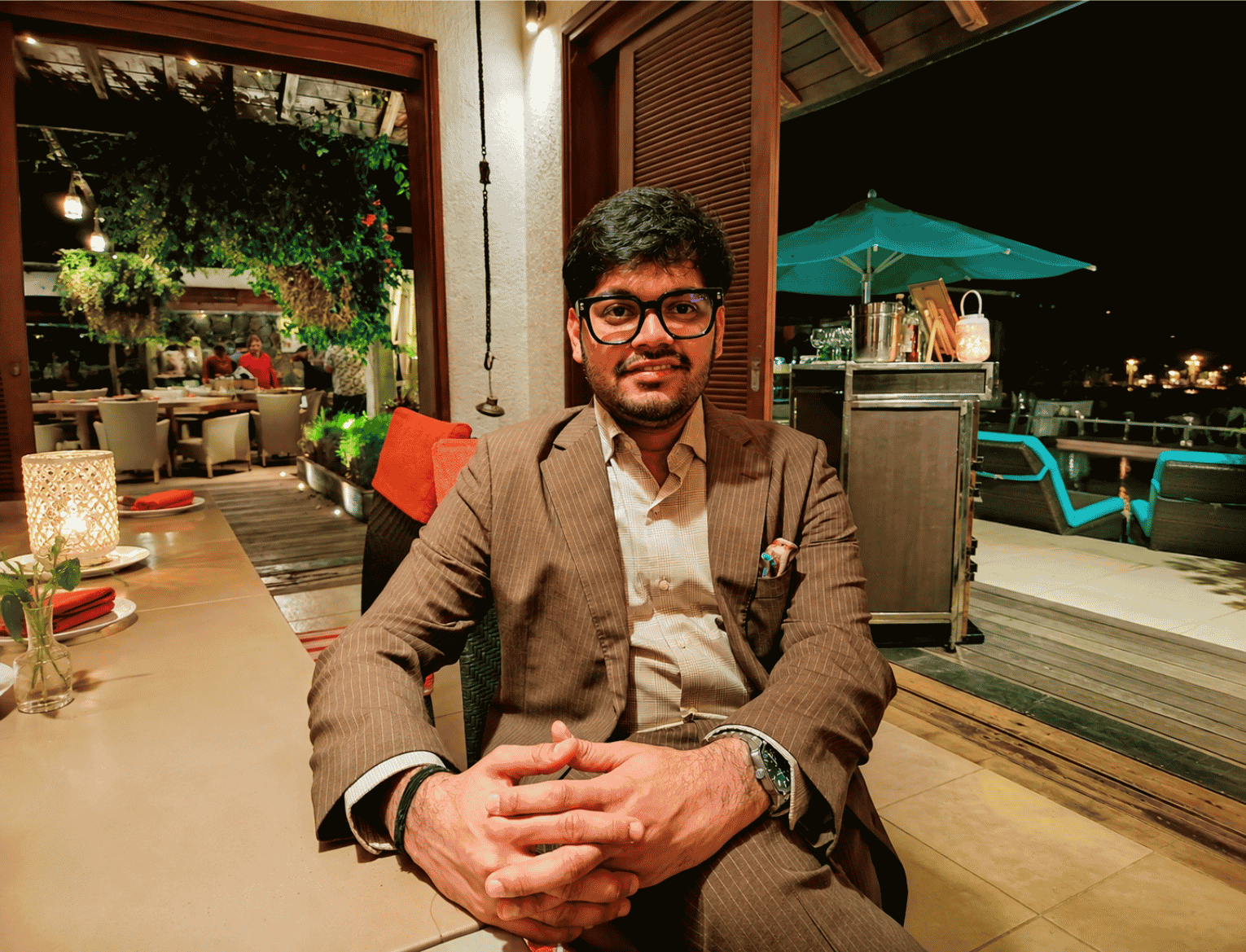
Ushmesh Rathi, Director of Icon Steel 

The future of the global steel industry will be shaped by scale, technology, greener production and increasingly interconnected supply chains. That is the opinion of Ushmesh Rathi, Director of Icon Steel, a company based in the state of Maharashtra, India. In Mauritius for the first time to receive the Lokmat Global Icons Award, Ushmesh Rathi talks about an industry where things are fast-moving and failure to adapt isn’t an option. About Mauritius, he says that the country can be a hub from where India accesses both the African and Australian markets to tap into new opportunities, notably in mineral resources and scrap metal.

What does receiving the Lokmat Global Icons Award in Mauritius represent for you personally, and for Icon Steel? 

Receiving the Lokmat Global Award in Mauritius is of great value to Icon Steel. As we are slowly becoming global, Mauritius is important because it is called “the door of Africa.

Lokmat is a strong and respected brand in Maharashtra and across the western part of India. Therefore, the award brings immense value and credibility to both the Icon Steel brand and to me personally, not only in Mauritius, but also back in India.


“Automation, technology, advanced manufacturing and AI are now becoming the new buzzwords of our industry.” 


How would you describe the current outlook for India’s steel industry, particularly in view of the country’s infrastructure and manufacturing ambitions? 

India being the fastest growing economy and a place where infrastructure spending is playing a major role in that growth, I feel there is immense demand and immense potential for the steel industry to grow there. India’s infrastructure and manufacturing ambitions will continue to create opportunities across the steel value chain.

How would you assess the current state of the international steel market?

Currently, the international steel market is largely dominated by China, while Australia is a major source of iron ore and other resources. 

Slowly, what I see is that India is emerging as both a major steel manufacturer and a mining hub. With the global China-plus-one strategy, I believe India is a perfectly natural fit for companies looking to diversify their supply chains.

In addition, what I feel is that Africa is opening up new opportunities as its mineral resources are increasingly being explored. For the steel industry, I therefore see India and Africa becoming important supply-chain partners.

What are the principal challenges and opportunities facing steel industry players?

The biggest challenges are scale and technology. If you do not grow, expand and continuously adopt new technologies, you risk becoming outdated. Steel is a very fast-moving industry, so companies have to adapt constantly.

As for opportunity, the world is growing at a pace which has never been seen before. India, if I may say so, is growing at the highest growth rate in the world. So, I see immense opportunity as well as challenges in the steel industry.

Currently, the steel industry is under pressure to reduce its carbon footprint. How is Icon Steel approaching the transition towards greener production? 

Traditionally, steel production can emit more than 2.7 tonnes of CO₂ per tonne of steel produced. At Icon Steel, we produce steel with emissions of less than 1.2 tonnes of CO₂ per tonne. We are therefore already significantly greener than traditional steelmaking routes and, this is largely because we use recycling as part of our production process.

Recycling is the way forward. In the past, there was a perception that steel produced through recycling or from scrap metal was less pure. But processing technologies have advanced significantly. Today, green steel and recycling are clearly part of the future of the industry.

Another thing that we have to focus on is the transition towards renewable energy to make steel production even greener.

How are automation, artificial intelligence and advanced manufacturing transforming your operations at Icon Steel?

It is often said that data is the new oil. Automation, technology, advanced manufacturing and AI are now becoming the new buzzwords of our industry. 

Until recently, many industries were focused on moving beyond Industry 4.0, with automation and the Internet of Things playing a central role. Now, companies have to take the next step and embrace AI.

I am of the strong opinion that industries that fail to adapt to these technologies will eventually become outdated. Technology adoption is no longer optional; it is becoming essential for competitiveness.

What opportunities do you see for Mauritian businesses to collaborate with Indian steel and manufacturing companies?

There are two or three major areas of opportunity. Firstly, Africa has significant unexplored mineral resources, while considerable quantities of scrap metal are also generated and, in some cases, dumped. From a supply-chain point of view, this creates immense opportunities in Mauritius. Mauritius is also culturally very close to India, and can serve as a gateway to Africa.

Secondly, several African markets are developing rapidly, and new industries are being established. This creates opportunities for Indian manufacturers to invest and build supply-chain synergies. For example, iron ore from a country such as Nigeria could potentially be supplied to India for steel production. These kinds of linkages can create value across both markets.

The third opportunity is definitely investment. Indian companies can look at Mauritius as a strategic base from which to explore wider African opportunities.

Could Mauritius serve as a financial, commercial or distribution platform for Icon Steel’s expansion into African markets? 

Icon Steel has been supplying the African market for some time. However, given the strong cultural and business links between Mauritius and India, I believe Mauritian businesses and traders have an immense opportunity to bring these markets closer together.

For Icon Steel, increasing our scale is essential to sustaining and expanding the business. To support sales as well as the wider supply chain, Mauritius can provide an important gateway into this part of the world. The island can potentially play a much bigger role as a commercial and distribution platform connecting Indian companies with African markets.

Looking ahead, what are your principal ambitions for Icon Steel in India and internationally?

Our first ambition is to gain greater control over the supply chain. 

Our second ambition is to increase our scale. In this industry, if you do not increase your scale, you risk becoming outdated!

And, thirdly, what I want is to build a global footprint. That also means becoming increasingly compliant with the requirements of European, African and American markets. Global expansion requires companies to meet different regulatory and market standards.

As far as Mauritius is concerned, one opportunity I see for Mauritian people to benefit from this globalisation is that Mauritius is a gateway for India to Africa, and also to Australia. Since there is a large Indian diaspora living in Mauritius, the trust factor is there with Indian businessmen trying to get into these parts of the world. 

Mauritius does not need to have minerals or a huge domestic market to play this role. Look at Singapore or Dubai; none of them has a huge domestic market, but both have leveraged their strategic locations to become major trading hubs.

So, this is what Mauritius can become for India. This is how Mauritius can grow. Mauritius and India can be strategic partners, holding hands together and getting into the African market to tap opportunities.

Skip to content