Back to Bizweek
SEARCH AND PRESS ENTER
Latest News

Mauritius cannot rely only on its historical track record

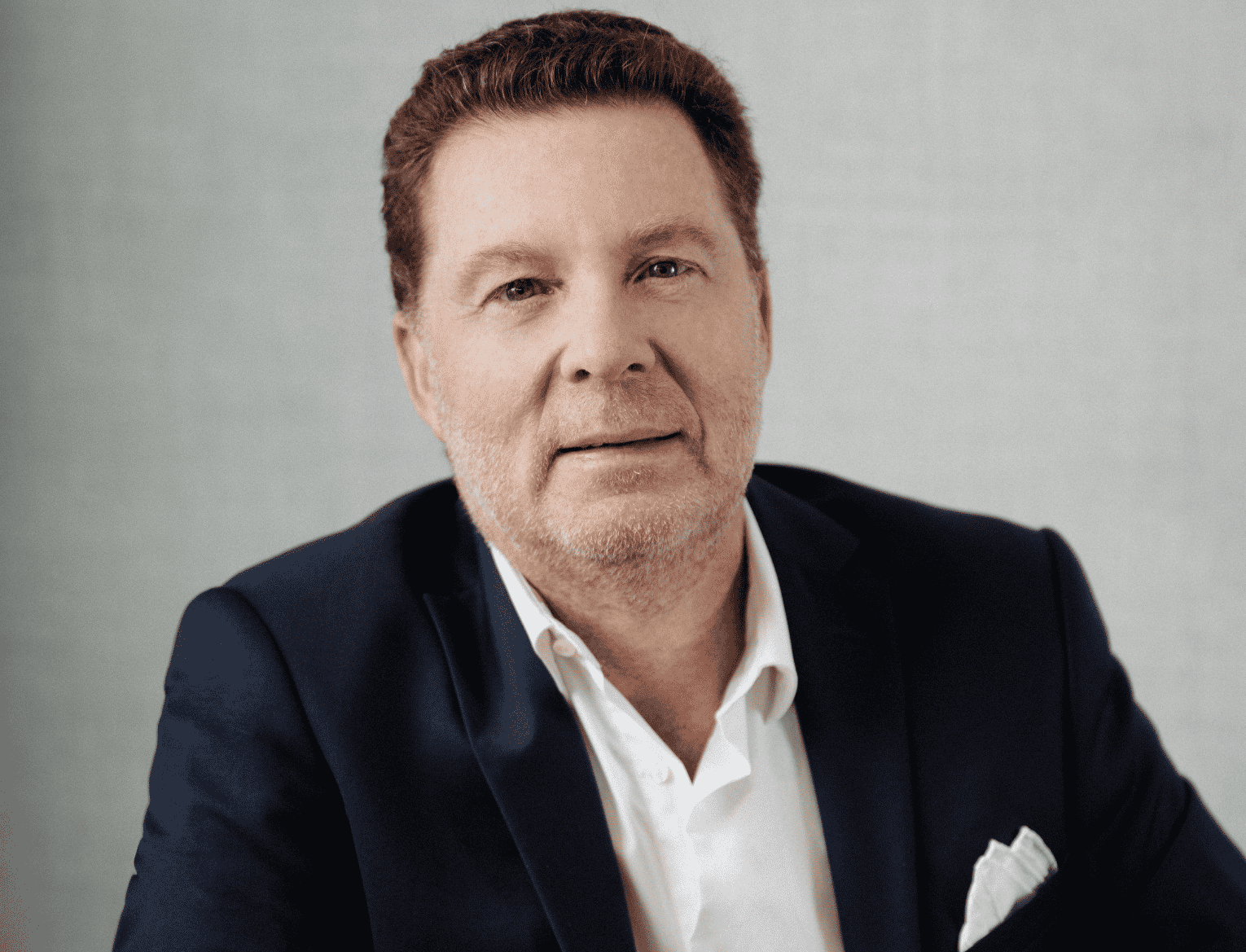
Didier Merle, Managing Partner – Strategia Wealth 

Since the outbreak of the conflict in the Middle East, the investment sector has been treading carefully. Yet, according to Didier Merle, Managing Partner at Strategia Wealth, the situation is more of a temporary shock than a lasting crisis, with effects likely to remain contained if the war does not drag on. For Mauritius, the real challenge lies in staying competitive and attractive as a financial hub in an era where artificial intelligence accelerates information flows and history alone is no longer enough to win over investors.

Shareenah Kalla

Could you introduce us to Strategia Wealth? 

Strategia Wealth Managers is an independent, licensed wealth and portfolio management firm based in Mauritius. We provide discretionary and non-discretionary investment management services to high-net-worth individuals, families and institutional clients, including pension funds. 

Our core activity is investment management, but our role goes beyond simply managing portfolios. We help clients preserve, structure and grow their wealth over time, with a strong focus on their specific objectives, risk profile, liquidity needs and long-term interests. 


“Reputation is central in investment.”


Strategia is a team of 17 professionals, bringing together expertise in portfolio management, investment advisory, client servicing, compliance, operations and wealth planning. We are specialists in our field, with a clear commitment to always acting in the best interests of our clients. 

Many firms offer investment management. What differentiates us is our independence and our tailored approach. We are not tied to one bank, one product provider or one investment house. This allows us to provide objective advice and build solutions that are truly adapted to each client. 

We also benefit from a strong partnership with Banque Syz, a Swiss private bank. This partnership gives us access to high-quality international research, sophisticated investment solutions and a broader global investment universe. It reinforces our ability to combine local proximity with international expertise. 

More recently, we have also been developing our wealth planning services. We believe that wealth management is not only about portfolio performance. It is also about having a clear view of one’s assets, liabilities, cash flows, family objectives, estate planning considerations and long-term financial priorities.

How are Strategia Wealth’s activities performing today? 

Strategia is performing well. Following the integration of Ekada Capital’s activities in 2024, the past two years were mainly a phase of consolidation. We focused on stabilising the platform, strengthening the team and ensuring continuity for our clients. 

We are now clearly seeing the benefits of that work. The transition is behind us, and we have a strong base for growth. We have a dynamic team, a more structured organisation and a clear investment process. 


“Mauritius has strong assets, but it must continue to modernise and communicate them clearly.”


In portfolio management, the market environment remains demanding, but this is precisely where discipline and adaptability are important. Our role is to help clients navigate changing conditions while remaining focused on their long-term objectives.

Investment is a sector which is often heavily dependent on a country’s reputation. What is your perspective on that? 

Reputation is central in investment. When investors look at a country like Mauritius, they consider the full environment: stability, regulation, transparency, governance, infrastructure, ease of doing business and the credibility of the financial sector. 

Those who already know Mauritius generally understand that the platform is well-established and that the country has a strong track record as a financial centre. Mauritius has demonstrated resilience over the years and continues to offer a credible environment for investment and wealth structuring. 

The challenge is perhaps more important when it comes to attracting new investors who are not yet familiar with Mauritius. Today, access to information is immediate. With a simple search, and increasingly with AI tools, investors can very quickly generate a shortlist of jurisdictions for investment, relocation or doing business. 

This means that Mauritius must ensure that all indicators are aligned. We want Mauritius to appear naturally on that shortlist, not only because of its tax framework, but also because of its reputation, regulatory credibility, quality of service, infrastructure and overall stability. 

For a small jurisdiction, perception matters enormously. Mauritius must therefore continue to protect its reputation, communicate its strengths clearly and remain competitive internationally.

The risk of inclusion on the FATF grey list is always a concern. How does this affect the investment sector, and what measures can be taken to mitigate the impact? 

Any risk around the FATF grey list must be taken seriously, because it can affect the perception of Mauritius as a financial centre. 

For the investment sector, the main impact is usually practical: more due diligence, longer onboarding processes, more questions from international banks and counterparties, and sometimes a more cautious approach from foreign investors. 

The best response is to maintain strong standards of compliance, transparency and governance. Mauritius must continue to show that it is aligned with international expectations. 

At the level of firms like ours, this means robust KYC procedures, strong internal controls and proper documentation. Reputation is a collective responsibility, shared by regulators, institutions and market participants.

Does Mauritius remain a preferred platform for investment? 

The country benefits from strong fundamentals: a stable legal and regulatory framework, a competitive tax environment, a sound and well-established banking and financial system, and a skilled bilingual workforce. 

Mauritius is also well positioned as a gateway to Africa and the wider region. Its time zone is a real advantage, allowing investors and service providers to interact with Asia, the Middle East, Europe and Africa within the same business day. 

As a financial platform, the country does not operate in isolation; it forms part of a dynamic international ecosystem. It attracts international talent and gives access to sophisticated professional services at competitive costs. 

There is, of course, always room for improvement, particularly in terms of administrative efficiency and speed of execution. But overall, the fundamentals remain strong, and Mauritius continues to offer a stable and credible environment for investors.

Do you see competitors in this space? 

Yes, absolutely. Mauritius operates in a highly competitive international environment. Investors, entrepreneurs and families compare jurisdictions before deciding where to invest, structure their wealth or establish a platform. 

Mauritius competes with established financial centres such as Singapore, Dubai, Luxembourg, Switzerland and the Channel Islands, but also with regional and emerging platforms that are trying to attract investment flows. 

This is why Mauritius cannot rely only on its historical track record. Today, with immediate access to information and AI tools, investors can very quickly compare jurisdictions and draw up a shortlist. 

Our objective should be for Mauritius to remain naturally on that shortlist, with all the right signals: strong regulation, tax competitiveness, quality service providers, political and economic stability, ease of doing business and international credibility. 

Mauritius has strong assets, but it must continue to modernise and communicate them clearly.

What types of investments are currently the most profitable? 

There is no single “most profitable” investment; it always depends on the investor’s risk profile, investment timeframe and ability to absorb volatility. 

That said, today, many investors are focused on the massive capital expenditure cycle linked to AI infrastructure: data centres, semiconductors, power grids, cooling systems and energy supply. The opportunity is not only in the AI software winners, but also in the companies building the physical infrastructure that makes AI possible. 

For investors, the key is to access this market without overpaying for hype, and to balance it with assets that provide income and downside protection.

Mauritius relies heavily on real estate. Has property become a safe investment value today? 

Real estate remains an important asset class in Mauritius. It is tangible, familiar and often seen as a store of value. However, it should not be considered automatically risk-free. Real estate also carries risks: valuation risk, liquidity risk, concentration risk, maintenance costs, financing costs and market cycles. 

Some segments of the Mauritian property market remain attractive, especially where there is a strong location, quality development and real demand. But investors should remain cautious. For many families in Mauritius, wealth is already heavily concentrated in land or property. Adding more real estate can sometimes increase concentration risk. 

Real estate can be a good investment, but it must be analysed as part of the overall wealth structure, not in isolation.

The sector is also influenced by international politics. Nowadays, even a single tweet from a global leader can trigger changes. What is your view on that? 

Markets are indeed increasingly sensitive to information, and information circulates instantly. A statement, a tweet or a policy announcement can create immediate volatility. 

This is why discipline is essential. Investors should not react emotionally to every headline. Short-term noise can move markets, but long-term performance is generally driven by fundamentals: earnings, cash flows, inflation, interest rates, valuations and economic growth. 

Of course, geopolitics must be monitored carefully. It can affect currencies, commodities, supply chains, inflation expectations and investor sentiment. 

But in a market environment sometimes subject to fast and excessive reactions, we believe that portfolio construction should remain focused on resilient structural trends. Our role is to assess risks, remain disciplined and keep portfolios aligned with long-term objectives.

To what extent do policies led by major U.S. and European leaders affect this sector? 

In both the U.S. and Europe, governments are increasingly supporting strategic sectors such as semiconductors, energy, infrastructure, AI and defence. 

The U.S. is focusing on strengthening domestic manufacturing and building a more independent energy system, while Europe is prioritizing industrial competitiveness, defence and reducing reliance on foreign suppliers. 

Overall, both regions want more control over critical industries that are essential for economic security and national resilience.

Has the investment sector been impacted by the Middle East crisis? 

Yes, mainly through uncertainty and investor sentiment. 

Geopolitical tensions can affect oil prices, inflation expectations, safe-haven assets, currencies and market volatility. The impact depends on whether the crisis remains contained or escalates. If tensions remain limited, markets may absorb the shock relatively quickly. If the crisis spreads or affects major energy routes, the consequences could be more significant. 

For investment managers, the priority is to assess portfolio exposures carefully and avoid overreaction. Even in uncertain periods, some structural trends remain resilient. Our approach is therefore to remain vigilant, maintain diversification and avoid emotional decisions.

Following the pandemic, there was a sense of panic in investments. Do you see a similar sentiment now with the Middle East conflict? 

The sentiment is different. During the pandemic, the shock was global, immediate and very personal. Economies were shut down, and there was real uncertainty about the functioning of the global economy. 

The Middle East conflict is very serious, but so far, the market reaction has been more measured. Investors are concerned, but we are not seeing the same level of panic as during the pandemic. 

That said, the situation must be monitored closely. If the conflict escalates, the impact on oil prices, inflation and investor confidence could become more significant.

Our approach remains the same: avoid emotional decisions, maintain diversification, and stay focused on long-term objectives.

Could the Middle East crisis actually be an opportunity for Mauritius to position itself as an alternative to major hubs like Dubai? 

It could create some opportunities, but we should be careful in how we frame it. Mauritius should not present itself as benefiting from instability elsewhere. However, in a world where investors and families are reassessing geopolitical risks, Mauritius can position itself as a stable, credible and well-regulated jurisdiction. Some investors may want to diversify their structures, assets or residency options across different locations. In that context, Mauritius can be part of the discussion. 

To benefit from this, Mauritius must remain competitive, efficient and internationally visible.

Charles-Henry Monchau, Chief Investment Officer at Bank Syz – which is one of your partners – has offered a rather optimistic scenario regarding this conflict. Do you share his view? 

Yes, broadly speaking, I share his view. 

At this stage, the most likely scenario appears to be a temporary shock, with effects that could remain contained if the situation does not escalate or last too long. Of course, we must remain cautious. Geopolitical events are difficult to predict, and the analysis will need to be revised if the conflict spreads. 

But at this stage, we do not believe investors should react with panic. Even in uncertain periods, certain structural investment trends remain resilient, and portfolio construction should continue to focus on long-term fundamentals.

What are your expectations for the investment sector in the upcoming Budget? 

For the investment sector, we would welcome measures that make Mauritius more competitive, more efficient and more attractive to investors. 

Mauritius operates in a competitive environment. Other jurisdictions are also introducing incentives to attract investors, entrepreneurs, families and financial institutions. We would like to see fewer barriers to entry, more efficiency in administrative processes, and measures that support long-term investment, savings, wealth structuring and the development of the local asset management industry. 

At the same time, competitiveness must not come at the expense of compliance or reputation. Mauritius’ strength is to remain attractive while preserving credibility and strong regulatory

Skip to content