Back to Bizweek
SEARCH AND PRESS ENTER
Latest News

“Providing recognition to informants is a common practice, says FBI agent in Mauritius”

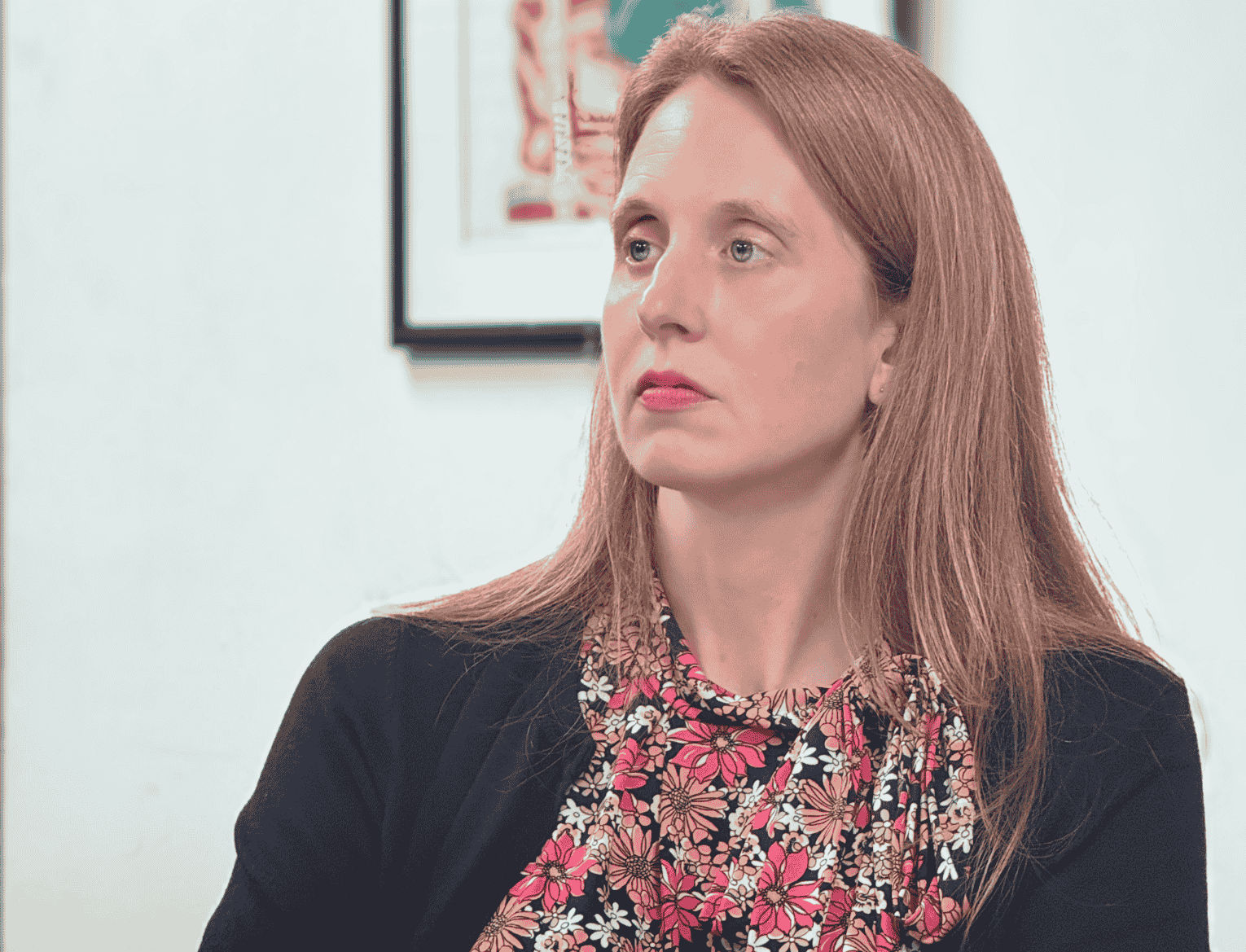
“It is important for it to be regulated so we know where the funds are going,” said Leah Tanner, FBI Supervisory Special

Agent, who has served in Mauritius for the past year and a half.

● U.S. recommends whistleblowing and freedom of information systems to boost government transparency.

● “We’ve had the DEA here several times to explore how we can assist with the transition to a new Drug Enforcement Agency,

which the government (of Mauritius) is intent on establishing.”

Le Mauricien – Could the Ambassador tell us more on the cooperation between the U.S. and Mauritius on combatting drug trafficking?

Ambassador Henry Jardine – I know that the issue of narcotics is a concern here in Mauritius. It certainly comes up quite a lot in our conversation with counterparts on the government side or law enforcement, but also in the private sector as well. We often see many Mauritians saying that this is one of the more significant issues they see. So, one of the resources we have is our Drug Enforcement Agency, and as I mentioned, next week, there’s going to be a program that the Drug Enforcement Agency is doing through the International Drug Enforcement Conference. Two individuals from Mauritius will be going to Nashville, Tennessee, for this conference. The opportunity is to understand what the global trends are, to learn about techniques and procedures to deal with some of these broader global issues, but also build relationships with counterparts in other countries that are dealing with this. This is a global problem, and it requires global cooperation.

In addition, we’ve had the DEA come here on a number of occasions to look at where they can be supportive of ADSU (Anti-Drug and Smuggling Unit), but also see how we can help in this transition that’s happening to a new drug enforcement agency that I know the government’s intent on doing.

The other thing we try to do is see how we can be supportive of the forensics efforts that are ongoing through the forensics lab. In the past, the DEA has helped in providing equipment to the local forensics lab here and training on forensics to the officials. The other thing that we try to do is provide intelligence. So, if we have information about potential drugs or nexus that would have relevance to Mauritius, we try to provide that information. We also try to work very closely with regional bodies that are working on this issue. The Regional Coordination Operations Centre has been heavily involved in helping to support interdictions at sea. I think you may have seen reports of instances where they’ve been able, through coordination of maritime assets in this region, to stop Iranian dhows that were transporting heroin into the region, not just to Mauritius, but also to Seychelles and elsewhere. So that intelligence sharing, not only with Mauritius, but through regional bodies, is happening as well.

The Office of Security Cooperation works to develop that maritime domain awareness. Since a large portion of narcotics and drugs that are coming to Mauritius and into the region are coming over the water, the work that our security cooperation does tangentially, in a related way, impacts or helps in addressing that drug issue because they’re providing or supporting training related to domain awareness, which helps in that regard. Our Cutlass Express exercises help in discrete skills, collaboration and regional cooperation on interdictions of illegal activity. Every year, there’s exercises in the boarding of vessels and searching of vessels, etc.

If you recall previous years, there were two series of ministerial meetings looking at maritime security and regional cooperation on narcotics. At that point, Mauritius signed on to a global initiative looking at stopping or countering synthetic drugs. We’ve been also trying to see how we can be supportive of Mauritius’s commitment to addressing synthetic drugs, what we can do in training, providing guidance and advice on identifying some of the samples that are being found. I know that one of the challenges with some of the synthetics is that they’re seeing new synthetics coming into Mauritius, and so identifying those and sharing information, again through DEA and other offices, help in that regard.

As you can see, there’s a host of different areas where we are trying to provide support and assistance across a spectrum of approaches when it comes to addressing the issue of illegal drugs and narcotics here.

Bizweek – We have two questions. What are the main challenges in Mauritius with regard to combating drug trafficking? And without referring to any specific cases, we would like to have your views on the issue of reward money. What is the FBI’s position on offering reward money to informants?

In terms of narcotics trafficking, the challenges here, I think, as the ambassador talked about, is that there are so many ways for narcotics to get to Mauritius, whether it’s by plane or by boat, and you have a very wide area to handle because of that. Part of the challenge is that it’s usually not just one or two small things coming in. This is part of a very large criminal organization, typically, and those run internationally. This is why we do a lot of focus, with the MPF, on transnational organized crime, because it is not one person, one Mauritian citizen. We are talking about people from countries on the other side of the world, the US, the UK, Asia. etc. When you have that many countries and money going through even more countries, you need a lot of help to do that. So, that is a big challenge for a small country to be able to have access and contacts in all those different places to get all the information you need to really work on those cases.

That is where we try to come in as the US Government, whether it’s the FBI, DEA, Department of Defence. We have more of those resources and people in all those places. That is where we try to identify where we can work on this together, and whether there are U.S. citizens involved or not.

This is something we care about. Drugs are moving through the U.S., money is moving through the U.S., and I think a challenge here is it’s a small island without necessarily the access to all these places. That’s where we can come in and provide a lot of that assistance for some of those cases, even if it’s just a matter of me having a contact in the Philippines, where some of the money went. I can make a call and say, ‘what do you know about this? Can we share some information with the MPF?’ It allows for that free flow of information.

We found a way to really work together and start building a good network so we can help you with that. The officers over at the MPF and the Commissioner of Police have been fantastic at really opening doors and finding ways we can keep doing that.

BizweekAnd the second question regarding reward money…

I will just speak in general, not about anything specific to Mauritius. In general, it is not an uncommon practice for law enforcement to provide some sort of recognition to informants or individuals who provide assistance. It is something that helps us in our investigations. You sometimes need to provide incentive for people, especially when it’s maybe not in their best interest to provide that information. So, it is something that is definitely a tactic we use in the United States.

It is important for it to be regulated so that you can ensure you know where the funds are going. It’s also something that we want to make sure the money is going to the right places. From an overall standpoint, it is something that most countries do. It’s just a matter of how it’s done and making sure it’s being done properly, with the right protocols in place.

Bizweek – From your time here, how do you assess our whistleblowing system? Do you see areas where it could be improved?

I would let the ambassador speak to this as well. I know he’s had discussions at a much higher level than me. I know there is a significant desire here in Mauritius to focus on more formal development of a Whistleblower Protection Act. We have that in the United States. It is very important to protect those who are coming forward to provide information in sensitive cases, whether it’s corruption or some type of victim-centred crime, which can be very difficult for someone. Having a very established law and protections for people is very important because the people who are really going to help you make your case, if you have protections for them and they feel supported, they will provide you information. They are so crucial for us to identify cases and move those cases forward for prosecution. I think it is incredibly important, and I know from my discussions with agencies and from different meetings that there is a very big need, and a push, here in Mauritius, to do just that.

Ambassador Henry Jardine – From the U.S. perspective, a whistleblower is one approach to providing transparency and accountability, and I think you need to have a multi-layered approach. What we’d recommend, generally, as a best practice, is having different systems in place, such as whistleblowers and a Freedom of Information Act, which allows more opportunities for citizens to understand the decision-making processes of a government and why decisions were made.

The other approach we have in the United States is an Inspector General. Every agency typically has an Inspector General office. There are typically hotlines where people, anonymously, can report to inspector generals and provide information which will then be investigated. A Whistleblower Act or a system in place provides one method. Usually, you like to have multiple methods of ensuring transparency and accountability that provide good governance in general.

It’s obviously a challenge at times for governments to have those in place, and governments can be sensitive about that. But, in the long run, it benefits all governments to be able to have some mechanism for allowing for that kind of transparency and accountability as part of a series of different tools and approaches.


“We’ve had the support of the FBI in enhancing our capacity”


Bizweek – Have there been any discussions between the Government of Mauritius and the United States regarding the establishment of a Whistleblower Act?

Ambassador Henry Jardine – What I’m responding to is just some general observations from the US Government on how we typically try to implement these kinds of activities, and the general understanding of the best practices is to have multiple mechanisms for bringing accountability and transparency. We all struggle with it. It’s always a challenge to have these systems in place, but again, they help in ensuring government services and government functioning.

Radio One – You mentioned the Freedom of Information Act. Have you had any discussions with the Government of Mauritius on this?

Ambassador Henry Jardine – I have not raised it with the government recently. I know it’s been an issue of discussion, but in general, these kinds of mechanisms help in providing more accountability, more visibility. It depends. Each country has to decide what’s the best approach for implementing something like that and what that might look like. But these kinds of mechanisms help to bring a bit of transparency to government privacy procedures and processes. I’d like to give Nandita an opportunity to jump in.

Nandita Suneechur (FCC) Under the Financial Crimes Commission Act, we have reinforced provisions regarding protection of informers and protection of witnesses. The Financial Crimes Commission Act is a new legislation, and the actual enhanced provision is regarding a witness protection scheme which is being developed at the moment in collaboration with the UNODC.

We had a working session, two weeks ago, with representatives of the UNODC, the Solicitor General’s Office, the Mauritius Revenue Authority and the Mauritius Police Force. This initial discussion was on the development of a witness protection scheme.

Top FM – We know that financial crimes tend to be very complex, and they differ from case to case. How has the FBI helped in providing the right guidance to tackle those complex financial crimes? Especially since the FCC is the main entity which addresses financial data.

Nandita Suneechur (FCC) We have had guidance from the FBI in terms of case mentoring, in terms of putting us in relation to specific experts and relevant authorities to discuss issues and challenges, highlighting best practices and providing support in the development of special investigative techniques. In so many ways, we’ve had the support of the FBI in enhancing our capacity.

Skip to content