Back to Bizweek
SEARCH AND PRESS ENTER
Latest News

“I don’t think we’ll meet the 60% renewable energy target by 2030”

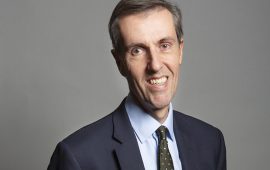
Patrick Assirvaden, Minister of Energy and Public Utilities

● “We’re not sure yet if we’ll go ahead with the power barge.”

● U.S. Ambassador Henry Jardine: “Mauritius has a stable infrastructure, good connectivity, and an educated workforce. These are strong enablers for doing business.”

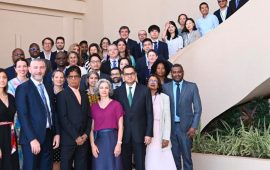
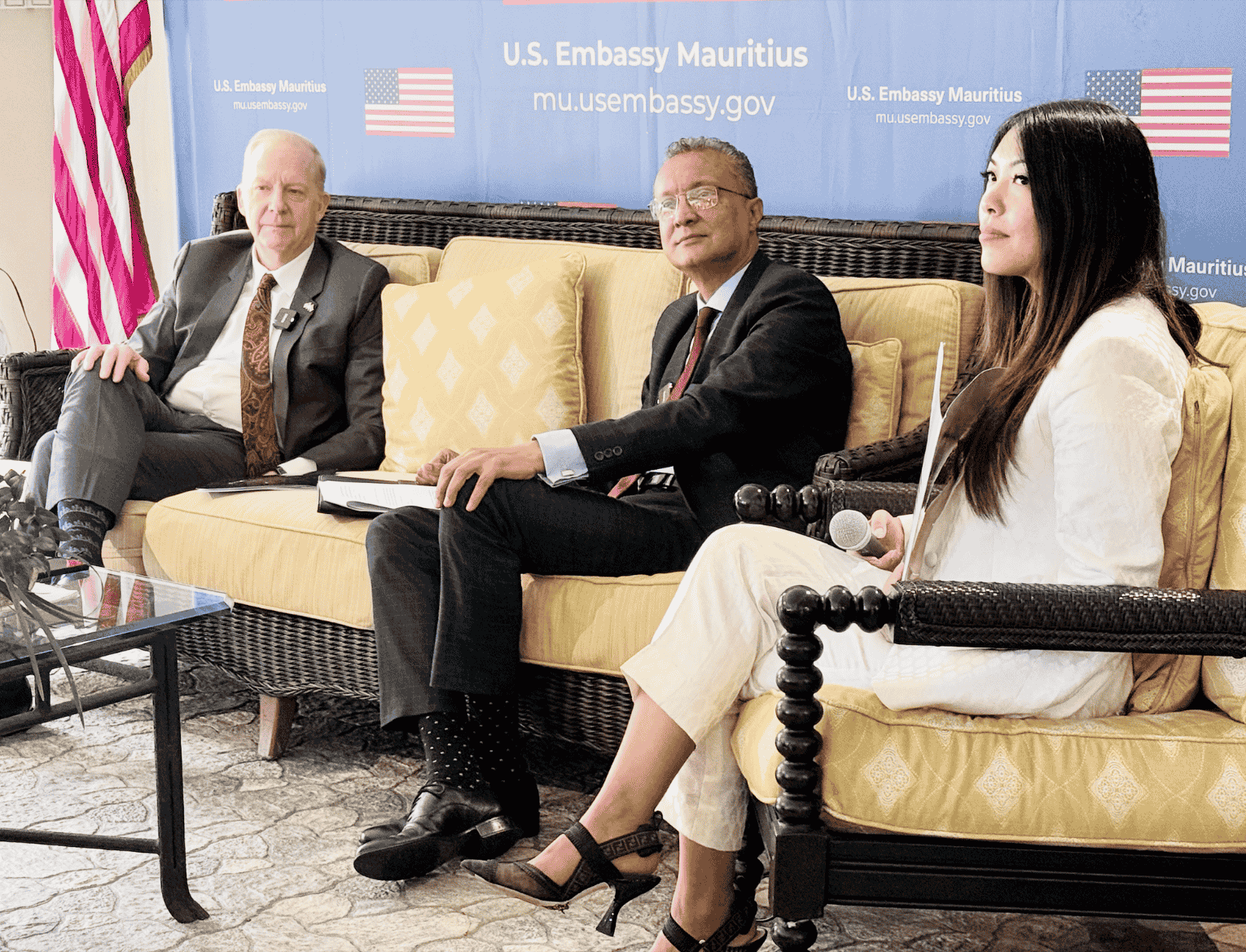
At a high-level Fireside Chat hosted by the U.S. Embassy in collaboration with the American Chamber of Commerce (AmCham) last Wednesday, U.S. Ambassador Henry Jardine and the Minister of Energy and Public Utilities Patrick Assirvaden engaged in an open dialogue on the future of the Mauritian energy sector. The conversation highlighted the challenges of energy security, the country’s renewable energy ambitions, and the potential for U.S.-Mauritius cooperation.

Rudy Veeramundar

Moderator (Joanna Chen, Economic Officer, U.S. Embassy):  Welcome to our second AmCham Mauritius and U.S. Embassy Fireside Chat. We started this initiative to facilitate candid dialogue with the business community in Mauritius. Since our first Fireside Chat in February, the Embassy has worked with the U.S. Department of Agriculture to organize delegations to Dubai and America’s Food and Beverage Show in Miami. We also worked with the U.S. Department of Commerce to organize a delegation to Enlit Africa in Cape Town. These efforts have led to tangible business deals between U.S. and Mauritian companies. As part of our economic and commercial strategy, we are targeting key sectors, including energy. Today, we will hear from Ambassador Henry Jardine and Minister of Energy and Public Utilities Patrick Assirvaden.

Ambassador Henry Jardine: Thank you, and I’m very happy to be here, joining with AmCham. It’s great to see Jessica Naga, our President, and other members of AmCham here today. The AmCham has been a very important partner for the Embassy. Since my arrival, it’s been a pleasure to work closely with them. It’s been valuable to build our relationship and to have these kinds of programs where we can understand what would help in building business opportunities in Mauritius.

We really appreciate the Minister’s willingness to come. The premise behind this Fireside Chat is to foster and facilitate dialogue between the business community and government. Since the new government took office in November, they’ve been very open and receptive to our engagement.

We wanted to speak about energy because it is almost an existential issue. It is the ultimate facilitator for all businesses. Without energy, we’re literally dead in the water. So, we thought it would be useful to have a breakout session focused on energy.

The Minister, in taking on this portfolio, is dealing with a wide range of challenges, on how to build and enhance energy capacity, deal with aging infrastructure, and expand the infrastructure to support the government’s vision to broaden the economic base and enhance Mauritius’s regional commercial profile. Another key challenge is transitioning to green energy. But where there are challenges, there are also opportunities.

Moderator: Minister Assirvaden, would you like to share some opening remarks?

Minister Patrick Assirvaden: Thank you for inviting me. It’s an important topic. I’ve been in charge of the ministry for eight months now, and it’s certainly a challenging one. Energy security is at the top of my priorities. We’ve recorded some alarming figures this year, which is why I always say we must improve our network. I welcome this type of conversation and dialogue. I’m here to offer clarification, and I also seek your support.

Moderator: Ambassador, how has the U.S. Embassy and other U.S. government agencies worked with the Government of Mauritius in the energy sector?

Ambassador Jardine: The energy sector is so critical. I’ve had the opportunity to meet the Minister and discuss his vision. We’ve tried to link U.S. corporate expertise with local needs. For example, during last year’s Business Summit and the visit of our Director for Prosper Africa in October, we included energy as a key component. Agencies like Power Africa explored how to facilitate business opportunities in Africa, including Mauritius.

We’ve sponsored delegations to events like Enlit Africa, which included U.S. government representatives and leading energy companies. When the Ministry issues tenders or RFPs, we can direct those through the U.S. Foreign Commercial Service, which has offices across the United States. That’s one way we help U.S. businesses connect with opportunities in Mauritius.

Moderator: Minister, what are your top priorities for the energy sector, and how do you plan to address energy security?

Minister Assirvaden: We are committed to achieving the 60% renewable energy target. I firmly believe in renewable energy, but energy security remains the top priority. Earlier this year, in February and April, we experienced partial load shedding. During my ten years in the opposition, I warned this would happen. Of the 634 MW of installed capacity, 230 MW comes from infrastructure that is 15 to 37 years old. In the last eight months, I’ve been focusing on short-term measures. Once those are implemented, we’ll move to medium and long-term plans. Among emergency measures, we identified the possibility of a power barge. We’re not sure yet if we’ll go ahead, but it’s our duty to secure energy supply. We also plan to deploy two 30 MW mobile trailer units in the short term.

Moderator: Ambassador, what’s the value of attending Enlit Africa as part of the U.S. delegation?

Ambassador Jardine: If companies are interested, we’ll try to organize it again next year. We also plan other delegations in the region and to the U.S. Enlit offers a unique chance to engage with U.S. policymakers and regional businesses. South Africa is just a four-hour flight from here, and many companies already active in the region can easily consider Mauritius. The country has a stable infrastructure, good connectivity, and an educated workforce. These are strong enablers for doing business.

Moderator Joanna Chen: I led this year’s delegation to Enlit. Mauritius had the largest delegation among all countries represented at the U.S. Pavilion. Having both public and private sector voices at the event was powerful. We’ve already seen potential opportunities come from it. Minister, how can U.S. companies work with Mauritius to address the energy crisis?

Minister Assirvaden: U.S. companies are welcome to bid. We issued an RFP in July for the power ship and gas turbines, which are technologies that are new to Mauritius. We’re also working on a floating PV project at Tamarind Falls and plan to expand our wind farms. U.S. companies have know-how in smart grids, multi-source energy, and storage solutions. That expertise can help us accelerate implementation. We’re also moving toward phasing out coal. We’ll need alternatives like biomass to replace baseload power.


“Over 100,000 air conditioners are in use each night during summer. That alone shows how demand is increasing.”


Moderator: What’s your projection for future energy demand?

Minister Assirvaden: The challenge is real. We forecasted peak demand at 544 MW this year but recorded 567.9 MW in February. CEB is currently unable to supply about 90 MW for developments, including smart cities and new hotels. That’s in the pipeline. We have to act.

Over 100,000 air conditioners are in use each night during summer. That alone shows how demand is increasing. Our short, medium, and long-term strategies must work together. If we don’t add clean energy and battery storage soon, we’ll remain dependent on coal, heavy fuel, and power barges. My goal is to add 100 MW to the grid by December or January.

Moderator: Why are so many U.S. energy companies interested in Mauritius?

Ambassador Jardine: The Minister’s presence here reflects the government’s openness. Mauritius ranks high for ease of doing business. The infrastructure, location, and workforce are strong assets. With its status rising to high-income in the near future, Mauritius offers an attractive consumer base and serves as a platform for expansion into Africa.

Moderator: Minister, will Mauritius meet the 60% renewables target by 2030?

Minister Assirvaden: The target is realistic, but I don’t think we’ll meet it by 2030. We are committed to sticking to the 60% objective, but we will meet the target in some more years.

A new renewable energy strategy will be unveiled by MARENA within a month. We are looking at floating PV, agrivoltaics, and battery storage. We bought a 20 MW battery and plan to buy more. From now on, every project must include three-hour battery storage.

Moderator: Ambassador, how can U.S. businesses partner more effectively with the Ministry?

Ambassador Jardine: Present your products, services, and solutions. Engage with the Ministry. These discussions help identify needs and facilitate collaboration. Patience is also key. The Ministry is dealing with many priorities at once. It’s like building an airplane mid-flight. Keeping communication open and responding to tenders is the best path.

Moderator: Minister, your final message to American businesses?

Minister Assirvaden: Mauritius is open for business. We are a young nation in terms of these technologies, but we’re eager to learn and adopt new solutions. We launched the first wind farm at Plaine des Roches in 2008 when I was the DG of CEB and it is the only one we have so far. We need more. I believe in PV, wind, agrivoltaics, batteries… There’s so much potential for collaboration. We are ready to move forward.

Skip to content