Back to Bizweek
SEARCH AND PRESS ENTER
Latest News

How Mauritius can stay ahead in fierce global competition

The Banking Imperative

  • “What matters is not so much what the sector thinks, but what our clients think.”

The financial and banking sector, both in Mauritius and internationally, is an environment where competition is extremely fierce. It is imperative that Mauritius continues to position itself as one of the most sought-after international financial centers in Africa and globally. To achieve this, the sector must enhance its competitiveness, embrace innovation, accelerate digitalization, and address ecological challenges to remain attractive while creating a long-term positive impact. All these topics were addressed during the flagship conference of the Mauritius Bankers Association held on Wednesday, January 28, at the Caudan Arts Centre.

Shareenah Kalla 

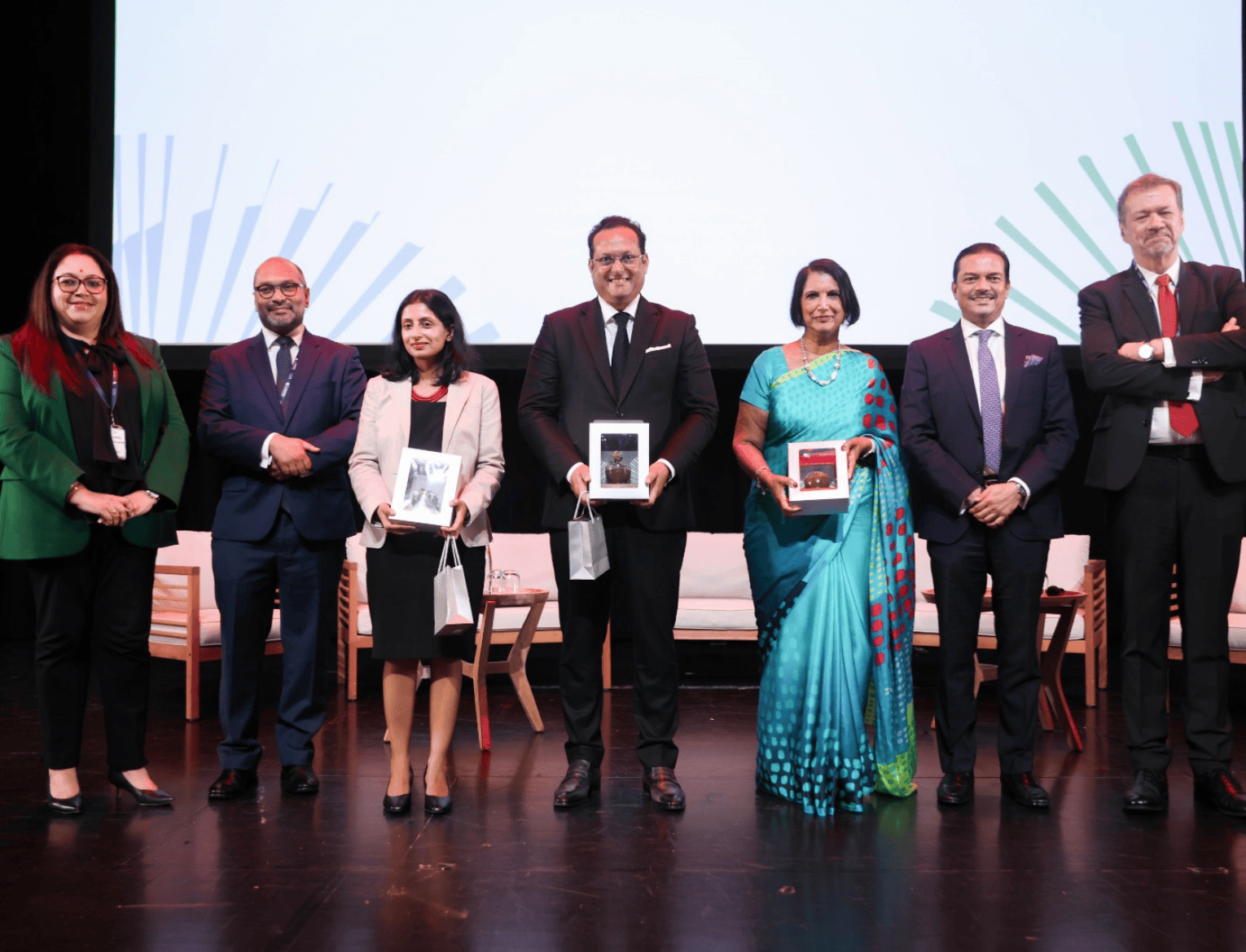
Entitled From Competitiveness to Sustainability: The Banking Imperative, the conference organised by the Mauritius Bankers Association at the Caudan Arts Centre brought together stakeholders for an open dialogue on the role of banks in Mauritius’ socio-economic development and on how to tackle the key challenges facing the sector. 

For Abrar Anwar, President of the Mauritius Bankers Association, “as a key player in the Mauritius International Financial Centre (MIFC), the banking sector sought to bring all stakeholders together to collectively discuss growth challenges, technological innovation, and sustainable finance. The objective of the event was to foster a shared awareness of these issues and to identify concrete pathways for collective development in this strategic sector of our economy.

35 years of strengthening

The first part of the conference focused on Mauritius as an international financial centre. To address the questions raised in this session, Daniel Essoo, CEO of the Mauritius Bankers Association and moderator of the event, welcomed a distinguished and diverse panel comprising Sangeeta Ramkelawon, CEO of BCP Bank (Mauritius) Limited; François Gamet, Chief Executive of Standard Bank (Mauritius) Limited; Ben Lim, CEO of International Trust Limited; and Thierry Hebraud, CEO of Mauritius Commercial Bank Limited.

Thierry Hebraud emphasized that, despite criticism from certain French quarters regarding Mauritius’ financial centre, the country possesses undeniable advantages and significant capabilities. According to him, these stem from Mauritius’ investment-grade credit rating, sound regulatory framework, legal stability, and reliance on international law for appeals. Together, these factors create a sense of security and confidence for operators choosing Mauritius.

He further noted that over the past three decades, Mauritius has successfully nurtured a pool of talent within the banking sector, with expertise extending across the broader financial ecosystem. He highlighted that Mauritius has signed 46 Double Taxation Avoidance Agreements (DTAs) and is a member of the African Union, COMESA, SADC, and the African Continental Free Trade Area. 

When you put all of this together, we have an incredible ecosystem that has enabled the country to become what it is today, and we are indeed ranked as Africa’s leading financial centre,” he explained. “This is what I wanted to emphasize first: we have strong capabilities, a robust jurisdiction, and a resilient environment, which are crucial for our clients and stakeholders coming to Mauritius.

Echoing this perspective, Sangeeta Ramkelawon, of BCP Bank (Mauritius) Limited, stressed that Mauritius’ success is the result of collaborative efforts among local stakeholders. “This is what has brought us to where we are today as a sophisticated international financial centre in the region. What has also contributed to Mauritius’ success is our ability to adapt. We have remained resilient in the face of various challenges encountered over the past 35 years since the inception of the IFC.

Mauritius: A Decision-Making Hub

Daniel Essoo highlighted the contribution of the financial sector with key figures: a 14% share of Mauritius’ GDP, which rises to 26% when real estate leasing and business services are included. This makes it a massive pillar of the Mauritian economy.

From an international perspective, François Gamet emphasized that what sets Mauritius apart is the depth of its expertise: “We are not merely talking about secretarial or basic administrative services. Here we have bankers, lawyers, and tax specialists who understand complex structures, particularly for investment flows into Africa.” He also stressed that Mauritius is not just a transit platform, but a true decision-making center.


“Today we have clients who are weighing their options: either to remain in Mauritius or to move to Dubai”


Ben Lim, operating in the international trust sector, said that Mauritius’ strength is in adaptability. “We have gone through difficult phases, such as being placed on certain watchlists, but the speed with which the public and private sectors collaborated to overcome these challenges demonstrates the maturity of our jurisdiction,” he explained. In his view, the regulatory framework is now more robust than ever, reassuring institutional investors.

Africa: The New Eldorado

The sector, however, must diversify and seek new avenues for growth. François Gamet argued that it is more important than ever to recognize that the fundamental pillars which once defined Mauritius’ success as an international financial center can no longer remain the same. “If we stick to the status quo, if we believe India is the future, I think we are mistaken,” he declared. He believes Mauritius must remain opportunistic and, by extension, more strategic.

To unlock new growth opportunities, Gamet stressed the importance of listening to clients. “You ask me where growth will come from. As Africa’s largest bank, my focus is naturally on Africa. But our clients are primarily multinationals or regional companies. What matters is not so much what the sector thinks, but what our clients think. What is their perception?”

While Mauritius must continue nurturing its special relationship with India, Gamet insisted that the future lies in Africa. He pointed to the consensus among peers in Mauritius and the fact that annual reports from banks and management companies increasingly highlight Africa. “If Mauritius, resolutely and with the support of all stakeholders, decides to focus on Africa, we can build an ecosystem as effective for the continent as the one we opportunistically developed for India 20 to 30 years ago. Growth will come from avoiding complacency, aligning the banking sector’s objectives with those of our stakeholders—the Central Bank, FSC, EDB—and ensuring we collectively build stronger Africa-focused capabilities. Mauritius is already ahead as an international financial center. Now, we must extend that lead,” he explained. 

Ben Lim supported this view, noting that African business truly began to take off around 2008, coinciding with the global financial crisis. Before that, African-related structures were rare in international financial centers. “It was only from 2008 that Africa emerged. The banking sector had the advantage of serving India. All bankers were highly efficient in handling fund flows to and from India. They simply had to replicate this expertise for Africa. It will take several years before any new financial center can compete with us,” he stated. 

The Dubai Threat

The financial and banking sector is facing strong competitors, and this competition is becoming increasingly fierce. According to Sangeeta Ramkelawon, CEO of BCP Bank, it is necessary to stop comparing Mauritius to Singapore and instead focus on what is closer to home. She emphasized that the main competitor for the Mauritius International Financial Centre (MIFC) remains Dubai, where financial services are rapidly expanding. “Today, we have clients who are weighing their options: either to remain in Mauritius or to move to Dubai, whether they are institutional or private clients. In my view, Dubai is moving fast,” she explained.

She noted that the challenge for Mauritius is that while these developments are visible, the country is slow to react. “François Gamet mentioned earlier that yes, we have a few years’ lead, but I believe time will catch up with us very quickly. Therefore, we must act,” she added. 

Maintaining Indian business while leveraging Africa as a competitive advantage is, according to Thierry Hebraud, the way Mauritius can rival Dubai. “The reality is that Middle Eastern banks have little appetite for sub-Saharan corporate business. Competing with Dubai is therefore part of what we must do, particularly when it comes to risk and counterparty risk,” he stressed. He added that Mauritius is a country of credit banks for Africa, which is not the case for Dubai. “This is where I believe we can sustain, develop, and continue to grow Mauritius’ IFC.

However, the CEO of MCB cautioned that Dubai is moving forward while Mauritius is not. He shared an anecdote to illustrate Dubai’s progress and its emergence as a formidable competitor: “Four and a half years ago, when we were renewing our license in Dubai, we had a meeting with the DFSA. At the time, the DFSA told me: ‘Well, you know, we receive a few applications from African banks but we are not very keen on having African banks in Dubai.’ Today, the DFSA is actively approaching African banks, and a large number of them are obtaining licenses. This is where competition is intensifying from Dubai.”

For Sangeeta Ramkelawon, it is therefore crucial to prepare the sector in terms of skills in order to remain competitive and raise the bar higher than it stands today. 

Skip to content