Back to Bizweek
SEARCH AND PRESS ENTER
Latest News

“From cane to special sugars and rum: Challenges, prospects and opportunities of an integrated industry.”

  • “The journey from cane to special sugars and rum is not only about economic survival. It’s about creating a new identity for Mauritius,” Devesh Dukhira, Chief Executive Officer of the Mauritius Sugar Syndicate, said.
  • “Rum is the story of our land, our cane, and our people. Our communication must go beyond the product,Florence de Coriolis, Assistant Rum Manager at Grays Limited, added.
  • “We make an excellent product, but visibility remains our biggest challenge,”  Yannick Noël, Business Unit Manager – Rum & Export at Grays, said.

The cane industry is evolving toward a more integrated model, linking sugar, energy, and rum production in a single, diversified value chain. A roundtable organised by Bizweek, Talent Factory, and Regus, examined the challenges, prospects, and opportunities of this transformation. Industry experts shared their views on sustainability, diversification, export markets, and visibility strategies, outlining how the sector is adapting to global pressures while building a new identity rooted in quality and innovation.

For around four centuries, sugarcane has defined Mauritius, shaping its economy, its landscape, and its collective identity. What began as a monoculture sustained by preferential markets has evolved into a complex, diversified, and increasingly integrated industry that unites agriculture, energy, and high-end manufacturing. Today, the conversation is no longer about how much sugar Mauritius produces, but how much value it can extract from every stalk of cane.

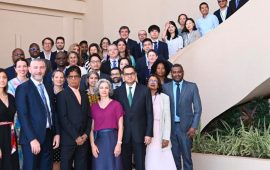
The question of how to sustain and expand a sector in transition was at the centre of a roundtable jointly organised by BizweekThe Talent Factory, and Regus under the theme “From Cane to Special Sugars and Rum: Challenges, Prospects and Opportunities of an Integrated Industry.

The session was moderated by Rudy Veeramundar, Editor-in-Chief of Bizweek, and brought together a distinguished panel: Devesh Dukhira, Chief Executive Officer of the Mauritius Sugar SyndicateFlorence de Coriolis, Assistant Rum Manager at Grays Limited; and Yannick Noël, Business Unit Manager – Rum & Export, also at Grays. Although Ambassador Oskar Benedikt, representing the European Union, was unable to attend in person, he shared a written message reaffirming the EU’s continued commitment to the Mauritian sugar and rum industries.

What emerged was a portrait of an industry that has outgrown its historical boundaries. No longer confined to the economics of sugar alone, it now represents an integrated system, where every part of the cane contributes to a larger, more sustainable whole.

Redefining the cane industry

The discussion began with a simple but relevant question: How should we describe the Mauritian cane-sugar-rum sector today? Is it in mutation, consolidation, or redefinition?

Devesh Dukhira responded: “Cane and sugar have always been the backbone of the Mauritian economy for four centuries. But over time, as guaranteed prices disappeared, we had to redefine our approach. Sugar alone is no longer sufficient.

He explained that the industry had undergone its most significant transformation after 2009, when the end of the EU’s preferential sugar regime exposed Mauritius to global price volatility. “We realised that the economic component of cane could not depend solely on sugar,” he said. “We are now talking about the cane industry as a whole sugar, molasses, and bagasse each with its own value and potential. Bagasse is used massively for electricity, molasses for rum, and even ethanol can be produced and exported.

For Devesh Dukhira, the fundamental shift lies in recognising cane as an energy plant. “Cane is perhaps the most appropriate crop to convert solar energy into usable energy,” he said. “Its calorific potential makes it a renewable resource, sugar for human consumption, bagasse for energy, rum for export. The future lies in exploiting all these opportunities together.

This redefinition reflects a deeper economic logic: cane is no longer seen as a single-commodity crop but as a platform for multi-sectoral integration, linking agriculture, industry, and sustainability.

Decline in production: A structural challenge


Despite the sector’s steady diversification, one concern continues to weigh heavily on the industry: the sustained fall in sugarcane and sugar production. Devesh Dukhira observed that national output, which once averaged around 600,000 tonnes of sugar per year, has fallen to nearly half that level, fluctuating between 300,000 and 350,000 tonnes in recent seasons. The area under cane cultivation has also contracted – from roughly 72,000 hectares a decade ago to about 45,000 hectares today – a consequence of rising costs, limited profitability for small planters, and the conversion of agricultural land for other uses.


Devesh Dukhira warned that this contraction has ripple effects across the entire integrated chain, reducing the supply of molasses for rum and of bagasse for renewable energy. “The challenge is structural,” he said. “We are producing less cane overall, and this affects every segment of the value chain.”

Yet he remains cautiously optimistic, citing replantation initiatives, modern irrigation systems, and renewed investment in field operations as signs of resilience. “The key,” he stressed, “is to restore confidence among those who cultivate the cane. Without them, there is no industry to sustain.

The fall in production has coincided with tougher competition on the international stage. Devesh Dukhira pointed out that countries such as Eswatini – with lower production costs, larger land availability, and strong logistical links to regional and European markets – have increased their export presence, often selling at prices that Mauritian producers cannot match.


“We are producing less cane overall, and this affects every segment of the value chain.”


Unfair competition and market distortions

Beyond price pressures, the panellists also drew attention to what they described as unfair competition in certain export markets. They noted that some producers, including a few regional competitors, have resorted to artificially colouring refined sugar to sell it as special sugar, blurring the distinction between authentic unrefined products and imitation varieties. “This practice creates confusion among buyers and undermines the credibility of genuine producers,” they said.

The Mauritian special sugars, they explained, derive their colour and texture naturally from traditional processes and specific cane varieties, not from additives. Yet, these subtleties are often overlooked in bulk trading environments where appearance and pricing dominate. They called for greater vigilance and transparency in international trade to ensure that quality and authenticity – not artificial enhancement – determine market value. “If imitation becomes the norm,” they warned, “we risk devaluing the very standards that took decades to build.

Sustainability and Climate Resilience

Another challenge is climate change, which is not a future threat but a current reality. “We are already seeing the impact,” the panellists said. “Unpredictable rainfall, drought, and temperature shifts are affecting yields. Our focus must be on resilience through drought-resistant cane varieties, efficient irrigation, and modern technology.

The industry’s progress toward sustainability is tangible. Bagasse now fuels a significant share of the island’s electricity supply, reducing reliance on imported fossil fuels. Cane fields are managed with increasing attention to soil conservation, water efficiency, and biodiversity. “The cane industry is one of the few that truly embody the principles of the circular economy,” Devesh Dukhira said. “Every output becomes an input for another process.

Industrial synergy and collaboration

The response to these challenges lies in the diversification of the industry. Yannick Noël, representing Grays Limited, noted that the industry’s transformation could only succeed through collaboration. “We’re part of a sector that’s in full development and consolidation,” he said. “What makes it work today is cooperation at every level. From the fields to the distilleries, from the mills to the exporters. That integration allows us to remain competitive internationally.

He described how this collaboration extends beyond production to shared logistics, research, and marketing. “It’s no longer each actor working in isolation,” he said. “We are all interdependent. Sugar producers, rum distillers, energy generators… When one link in the chain strengthens, the whole sector benefits.

This spirit of partnership has created a uniquely Mauritian ecosystem, where traditional know-how meets modern innovation, and where the success of one industry feeds directly into another.

From commodity to identity

The shift from bulk sugar exports to special sugars and premium rums illustrates the country’s evolution from commodity dependence to identity-driven value creation. Florence de Coriolis, Assistant Rum Manager at Grays, summarised it elegantly: “Rum is no longer a by-product of molasses. It is a story. The story of our land, our cane, and our people.” Mauritian rum has indeed built its reputation on authenticity and craftsmanship. Florence de Coriolis explained that every bottle embodies the island’s heritage. “We combine traditional methods with modern technology, but what truly distinguishes us is our sense of place,” she said. “Consumers today don’t just buy rum; they buy authenticity and the story behind it.”

This storytelling extends naturally into tourism. Distilleries have become cultural destinations, offering guided tours, tastings, and sensory experiences that connect visitors to the island’s heritage. “Visitors want to see where the rum is made, meet the people, and understand the process,” she said. “That human connection is what gives our product its soul.

Yannick Noël added that the image of Mauritian rum depends on collective excellence: “When someone picks up a Mauritian rum in Paris, London, or Tokyo, that bottle represents not just one brand. It represents Mauritius. We compete abroad, but we share one national identity.

Branding Mauritius: Communication, visibility and global recognition

The roundtable also turned to the crucial issue of visibility and how Mauritian rum can compete for attention in crowded international markets dominated by Caribbean and Latin American brands.

Yannick Noël explained that, despite its growing quality and recognition, Mauritian rum faces an uphill battle in terms of global visibility. “We make an excellent product, but visibility remains our biggest challenge,” he said. “The world knows about Cuban, Jamaican, or Martinique rum but not enough people know that Mauritius produces rums of equal or even higher quality.

He pointed to the restrictions on alcohol advertising as a key obstacle. “We cannot advertise locally or in certain markets the way other industries can,” Yannick Noël said. “That limits how we can communicate with consumers.” As a result, Grays and other producers have had to innovate.

Florence de Coriolis agreed, noting that the brand image of Mauritian rum depends on the collective narrative of the island. “Our communication must go beyond the product. It’s about projecting Mauritius, its nature, its people, its values, through every bottle. When you buy Mauritian rum, you’re buying a piece of the island.

Both speakers stressed that collaboration among producers and support from public institutions are vital for global brand building. “We need a unified identity. We need ‘Mauritian Rum’ as a collective label recognised for quality and ethics,” Yannick Noël said. “If we speak with one voice internationally, we can achieve much greater visibility.”

He added that while the local advertising constraints remain, international fairs, competitions, and partnerships have become essential channels. “Winning medals, telling our story abroad, that’s what builds recognition. Consumers today are connected. They discover brands through experiences and authenticity, not through traditional ads.”

The roundtable participants agreed that strategic storytelling – aligning rum with the island’s image of hospitality, craftsmanship, and environmental responsibility – offers Mauritius a unique marketing edge. “Our visibility will grow as our story becomes clearer,” said Florence de Coriolis. “We must be seen not as imitators of Caribbean rum, but as the authentic voice of the Indian Ocean.”

The bigger picture

Devesh Dukhira placed the rum renaissance within the broader evolution of the cane economy. “Rum, electricity, ethanol. These are all extensions of the same resource,” he explained. “The cane sits at the centre of an ecosystem that connects agriculture to manufacturing and renewable energy.

He emphasised the need for policy coherence to ensure this ecosystem thrives. “Mauritius is one of the most open economies in the world,” he said. “We can’t compete on volume with Brazil or India. What we can do is compete on quality, differentiation, and sustainability.

Maintaining that quality, however, comes at a cost. Compliance with international certifications such as Fairtrade and Bonsucro helps Mauritian sugar and rum maintain credibility but adds administrative and financial burdens. “It’s a paradox,” he observed. “The more you comply, the higher your costs. But without compliance, you lose your place in premium markets.

The solution, he argued, lies in predictable regulation and long-term planning. “Investors and producers need confidence in the policy framework,” he said. “Every shock climatic, economic, or geopolitical has an amplified effect on a small island economy like ours.

Integration: The road ahead

By the end of the discussion, the panellists converged on a clear conclusion: the future of the cane sector rests on integration between sugar and rum, energy and agriculture, production and communication.

Integration is the only path to long-term sustainability,” Devesh Dukhira stated. “It means that every part of the chain supports the others. The farmer, the miller, the distiller, the marketer. When we work as one ecosystem, we become stronger.

Yannick Noël added that integration is not only economic but narrative. “Our products sugar, rum, electricity must all tell the same story: of quality, authenticity, and Mauritian innovation.

For Florence de Coriolis, the message was cultural as much as commercial. “Cane is part of our identity,” she said. “It connects our past to our future. If we continue to innovate together, this industry will remain one of Mauritius’s greatest strengths.

Honouring heritage, embracing the future

As the panel discussion drew to a close, what emerged was neither nostalgia nor complacency, but a collective sense of purpose. The Mauritian cane industry has evolved from survival to strategy. From dependency to differentiation. Its story, today, is one of reinvention.

From the sunlight captured in cane fields to the refined complexity of aged rum, Mauritius has built an industry that fuses tradition with innovation. Sugar, once the symbol of colonial dependency, has become the foundation for a diversified ecosystem that exports expertise, energy, and elegance.

In Devesh Dukhira’s words, “the journey from cane to special sugars and rum is not only about economic survival. It’s about creating a new identity for Mauritius. One that honours our history while embracing our future.

A future where every drop of rum, every grain of sugar, and every watt of renewable energy tells the story of an island that transformed its heritage into a living engine of growth.

Skip to content