Back to Bizweek
SEARCH AND PRESS ENTER
Latest News

“For the markets, the conflict in the Middle East may turn out to be a non-event

Charles-Henry Monchau, Chief Investment Officer – Bank Syz

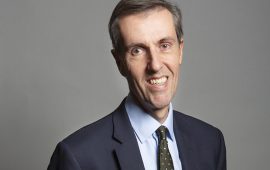
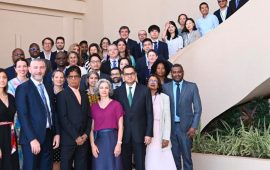
The second edition of the Strategia Wealth Forum organized at the Caudan Art Centre on Tuesday 21 April saw the participation of the event’s partners, among which was Bank Syz. Charles-Henry Monchau, the Chief Investment Officer of the Swiss private bank specialized in wealth management, led the first part of the forum, which tackled geo-economics. For him, the China-United States superpower arm-wrestling is playing out in the Middle East, with real consequences, but limited macroeconomic fallout.  

S.K.

We are in a new world order. Everyone talks about Trump, but this new world order has already existed for quite a few years,” said Charles-Henry Monchau. Speaking at the Strategia Wealth Forum held at the Caudan Art Centre on Tuesday 21 April, the Chief Investment Officer of Bank Syz focused his intervention on geo-economics, which has gained significant importance with recent events unfolding on the world stage. 

In that new world order, he added, “there is truly a match between the United States and China that is having very significant consequences at all levels.” Some are positive. Competition, for instance, pushes both countries to explore different domains. But the negative ones – the tension, the conflicts indirectly pitting one against the other – often grab the headlines.  


“We are no longer in this ultra-globalized world.”


These two superpowers have three strategic objectives,” explained Charles-Henry Monchau. The first one is AI, robotics, and technology. Then, there is defense, which is now incorporating AI in many of its aspects. “We see the war in Ukraine; it is a war where AI is very present,” added the Chief Investment Officer. Finally, there is energy, which is the most important one, and drives the other two.

Protecting territory and interests

The need to reach these three strategic objectives generates a lot of consequences, argued Charles-Henry Monchau. “The first is that while we were in a globalized world, these superpowers decided to bring as many things as possible closer to them, because to protect themselves, they needed to have better control. This is what is called economic nationalism,” he explained.

The fact that China heavily subsidizes its companies is well known, but the U.S., through firms like Intel, is also starting to take stakes – even equity stakes – in companies that it feels are essential for its supremacy.

We are no longer in this ultra-globalized world. The priority is to be able to defend your territories, defend your interests,” Charles-Henry Monchau said. One of the ways to do that is to create geostrategic alliances. For example, he believes that without China, Iran would have already fallen. 

The Middle East crisis: a short event

Turning his sights to the ongoing conflict in the Middle East, Charles-Henry Monchau said that the consequences at the macroeconomic level can be analysed through two dimensions. The first is the oil price, which is high. The higher it is, the more problematic it becomes for oil importers, but also for countries like the United States. 

The other dimension is duration, “because the longer the oil price remains high, the more the economy will be affected. So, our main scenario, our base hypothesis, is that all this will not last too long. It may be a little violent to call it a non-event because in the end, there are deaths and all that, but for the markets, it may turn out to be a non-event.”

On the other hand, if the conflict lasts a long time, the spectre of an inflationary risk looms large. “And if it really lasts very long, there is a risk of recession,” added the Chief Investment Officer.

Although many people have risked the comparison with the oil shock of the seventies, Charles-Henry Monchau said that the situation is very different. “In the 70s, it took one barrel of oil to produce a thousand euros of GDP. Today, it only takes a quarter of a barrel. Why? Because the economy is much more service-oriented,” he explained. Oil, he added, now represents only 30% of energy demand, whereas it was nearly half back then.

For Charles-Henry Monchau, the Strait of Hormuz issue allows the Americans to do two things. The first is to cut off Iran’s access to foreign currency, because they can no longer pass through and therefore no longer receive dollars. Secondly, 11% of China’s oil imports come from Iran, and more than half of China’s oil imports pass through the strait, so the longer the conflict lasts, the more problematic it becomes for the Chinese. 

However, the American consumer is also penalized by rising oil prices. That is why, according to him, the most probable scenario is some form of deal within a few weeks. “This does not mean that the strait will be completely open or that the war will be over, but for the markets, we should reach a deal in the coming weeks. And that is why we think that for now, it is a geopolitical shock, but there will not be great macroeconomic consequences.”

Indeed, according to him, the field of investment is in a cycle of nominal growth. For instance, the nominal GDP of the United States since COVID has increased by 60%, which means that there has been an acceleration in the increase of nominal GDP, which is not favourable for Treasury bonds. But this also means that there is a kind of inflation, and therefore, “when you have strong nominal GDP growth, it is much more favourable to equity markets.” 

Skip to content