Back to Bizweek
SEARCH AND PRESS ENTER
Latest News

Boeing is bringing a competitive offer to the table for Air Mauritius

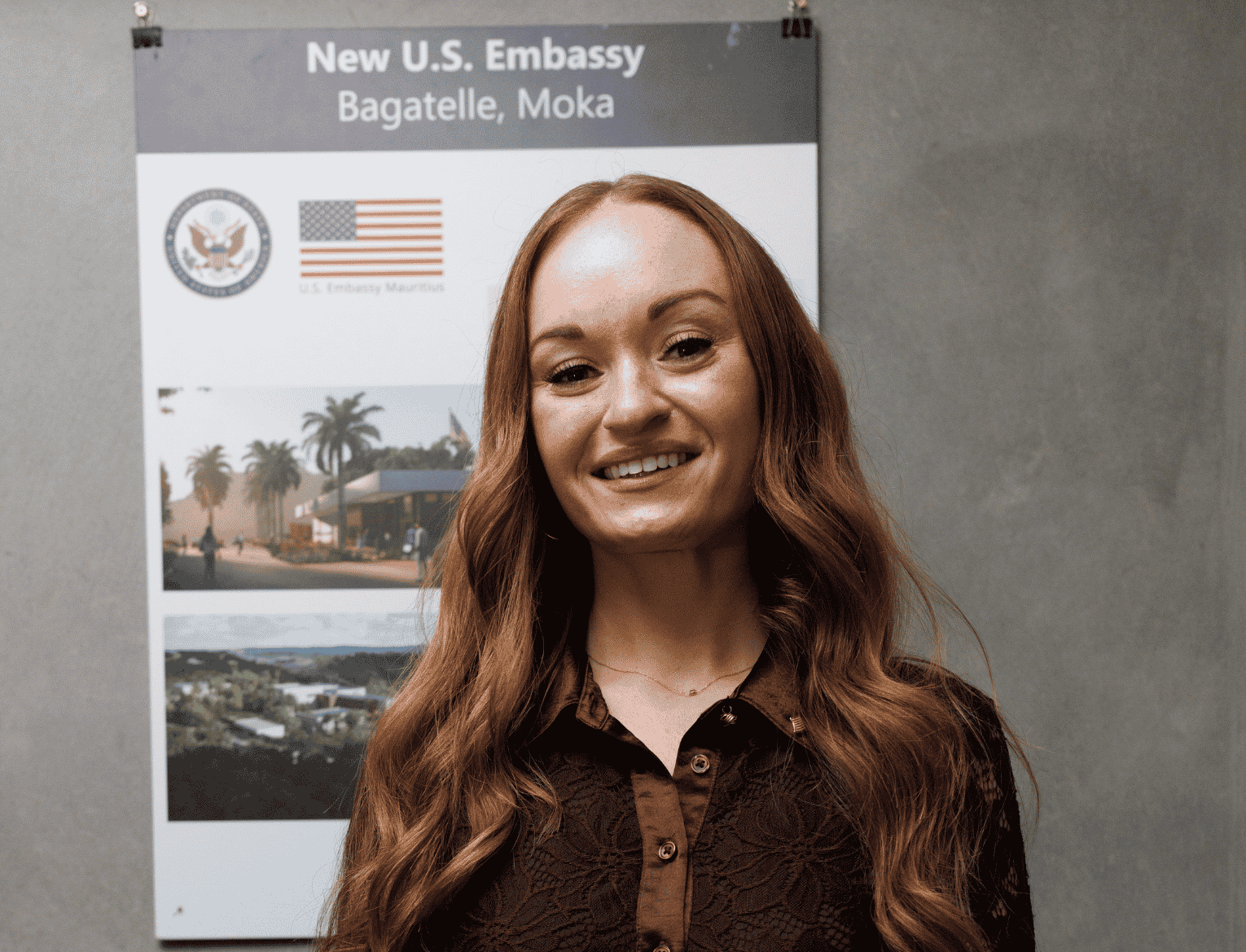
Sarah Troutman, U.S. Deputy Assistant Secretary of State for African Affairs


  • “This is a key period of change and growth for the company (Air Mauritius), and we are encouraging them to diversify their fleet of airplanes in the process.”
  • “We always say that U.S. companies operate at the highest standards and bring the highest grade products at very competitive price points.”
  • “It’s obviously up to our colleagues in Congress to pass the legislation (on AGOA), but we want to make sure that it aligns with President Trump’s America First trade agenda.”
  • “We hope to be able to partner on LNG as Mauritius discusses how to upgrade its energy grid.”
  • “The United States is very optimistic about the commercial and economic partnerships we can pursue with Mauritius.”

Mauritius has become one of Washington’s commercial priority countries in Africa, according to Sarah Troutman, United States Deputy Assistant Secretary of State for African Affairs, who paid her first official visit to the island this week. In an exclusive interview with Bizweek, she explains that the United States views Mauritius as a stable, business-friendly economy with a strong investment climate and significant potential for deeper economic partnerships. Beyond the domestic market, she describes the country as a strategic gateway to the African continent, capable of serving as a platform for regional expansion by U.S. companies. The interview explores Washington’s commercial agenda across aviation, trade, energy and technology, including Boeing’s proposal to Air Mauritius, the future of AGOA, opportunities in liquefied natural gas (LNG), growing interest from American technology firms, and preparations for the U.S.-Africa Business Summit in December, where the objective is to translate renewed engagement into concrete business deals.

Rudy Veeramundar 

This is your first official visit to Mauritius as U.S. Deputy Assistant Secretary of State for African Affairs. First visits often reveal priorities. Why was it important for you to come to Mauritius, and what message are you bringing about the future of the U.S.-Mauritius partnership?


That’s a great question. I’m here on a commercial diplomacy trip. I work on the commercial and economic affairs portfolio for the Africa Bureau at the State Department. I chose to come to Mauritius because it is one of our commercial priority countries.


It’s somewhere where we see an especially great number of opportunities for U.S. businesses and for U.S. partnerships. We see such a strong business enabling environment here. We see the government enacting policies that make it easy for businesses to get established and to thrive.


We want to encourage that, and it’s my job to be here and gather information for U.S. companies. When I go back to Washington, I can really help increase confidence in the opportunities here in Mauritius and spread the word that Mauritius is open for business.


“There’s a lot of excitement from U.S. tech companies in partnering with Mauritius and pursuing projects here.”


This is a great place to partner, not only for opportunities in Mauritius itself, but also as a kind of  gateway or platform to the African continent. 


Over the past three days, you have met leaders from the government and several key sectors of the Mauritian economy. What do these engagements tell you about the opportunities for stronger collaboration between our two countries?


They gave me a lot of confidence. I really enjoyed my engagements with the Prime Minister and the President, here, at the New Embassy Site, and other ministers in the government. It was fantastic to speak with the ICT minister about opportunities in the technology space.


There’s a lot of excitement from U.S. tech companies in partnering with Mauritius and pursuing projects here. I got to meet some of them who were here for this week’s summit. It’s really impressive how Mauritius has been able to take the lead in several sectors, not only technology.


I think there are a lot of plans to modernize the energy sector and create a lot of opportunities also in transportation. We were able to speak with Air Mauritius a bit about the potential for partnering with Boeing, and we’re just really enthusiastic about the environment that the government is creating for businesses to thrive.


It’s not just what they tell us, it’s what the companies themselves are telling us. That’s really what we listen to and what we make sure to take into account when looking for feedback. So, it’s been a good news story being here.


Speaking of Boeing, one of your meetings was with the Prime Minister on Boeing, Air Mauritius and Airport Holdings. Why was it important to facilitate this discussion, and what opportunities do you see for a broader aviation partnership? 


I think it’s really encouraging how Air Mauritius is looking to modernize its fleet and really optimize its operations. This is a key period of change and growth for the company, and we are encouraging them to diversify their fleet of airplanes in the process.


We always say that U.S. companies operate at the highest standards and bring the highest grade products at very competitive price points. We, of course, encourage the Air Mauritius team to go with the best offer, but we do think that Boeing, as a U.S. company, is bringing a really competitive offer to the table, and we’re just encouraging that conversation and the openness to seeking new partnerships. I think this is a critical time to be having those conversations. 


We’re hoping to get momentum on many deals across sectors for the U.S.-Africa Business Summit in December.


You also met American and Mauritian technology and telecommunications executives attending the CCT Conference. How do you see U.S. companies contributing to Mauritius’ ambitions in high-speed connectivity, telecommunications and artificial intelligence?


It’s really encouraging to speak to U.S. companies working in that space. They all came away from the summit (AI Summit in Mauritius) very encouraged. Not only about the opportunities here in Mauritius, but about the opportunities to build platforms and systems that can serve as an entryway and a gateway to the African continent. We spoke to several companies who are ready to build the whole picture here in Mauritius: data centers, cloud computing and supporting the digital economy across the board.


“My goal is to tie up as many deals as possible for the U.S.-Africa Business Summit in December.”


We are really looking forward to seeing some of those partnerships become more concrete this year and we are also looking forward to partnering with Mauritian companies.


Do you have a time frame for these projects to start coming in or something like a solid perspective on implementation? 


Well, I can’t speak to concrete implementation. I don’t want to speak for the companies, but my goal is certainly to tie up as many deals as possible for the U.S.-Africa Business Summit in December.


As you know, it was postponed. It was supposed to be this month. Now, we’re very pleased that Mauritius is still planning to host in December. Our goal is for this conference to not only be about talking. Our goal is to close deals and have a lot of concrete action. That’s kind of our North Star for what we’re aiming for: closing some of these agreements. 


From the investment perspective, what role can Mauritius’ professional services industry play in strengthening U.S.-Africa business and investment? 


It’s been very encouraging to hear from representatives of the technology sector and the financial services sector here. Mauritius offers an opportunity. It’s a market with a lot of confidence. There are a lot of companies operating here already, a very strong banking system and a lot of opportunities to hopefully set up operations that can then service other projects on the African continent. We are really seeing Mauritius as a hub, a platform and a convener for these financial services operations that can hopefully bring more investment, not only to Mauritius, but also through Mauritius to Africa. 


Trade was another focus of your visit, including discussions with MEXA and businesses importing U.S. agricultural products. With AGOA under review and Mauritius pursuing an Agreement on Reciprocal Trade, how do you see bilateral trade evolving?


We are really thankful to Mauritius. It’s been fantastic to see Mauritius be willing to import cotton and other commodities from the U.S. to rebalance the trade relationship. We appreciate that.


We also appreciate Mauritius coming forward to start AGOA discussions very soon, and we do hope to see a bilateral deal signed as soon as possible. We, of course, are working to modernize AGOA, and we talk about what those discussions should include.


It’s obviously up to our colleagues in Congress to pass the legislation, but we want to make sure that it aligns with President Trump’s America First trade agenda in a way that also paves the way for countries to have bilateral agreements, which is a stepping stone to more long-term partnerships. So, we really see trade with Mauritius as a bright spot in the relationship, and we see things going very well. 


On the Artemis Accords, why is this an important milestone, and what practical opportunities will it create for Mauritius in science, tech, and commercial space activities? 


This is a fantastic step for Mauritius. We are really thrilled to see Mauritius sign the Artemis Accords today (Editor’s note: on Friday 17 July). I’m honoured to be here to witness that event. Our colleagues at NASA and across the interagency have been working very closely with Mauritius to get to this point, and we do hope that it will open a range of opportunities.


We appreciate Mauritius making a commitment to responsible space exploration and commercial space development with this step, and we think there are a lot of opportunities to partner with U.S. companies. This is really just the beginning, and we hope to use it as a launch point for future partnerships. 

You have expressed your commitment to supporting the U.S.-Africa Business Summit by encouraging a strong American delegation. Why do you believe Mauritius is an attractive destination for U.S. companies looking at Africa?

Mauritius is a fantastic context for U.S. companies to be looking at. There is a strong regulatory environment. Companies can have confidence that they will be treated fairly and will be protected in the legal system as well when they set up here. There are also so many opportunities. It’s a very welcoming environment.


There are many companies already thriving that they can learn from and build from. It’s certainly a place companies should look not only to invest in, but as an entry point to opportunities on the continent and possibly expanding operations in the future.


So, it’s a good news story that I’m taking back to Washington with me. I hope to spread the news that U.S. companies should be looking at Mauritius more closely, especially in the sectors that we spoke about. And I really do think it’s just the beginning.


I think the summit itself will offer the opportunity for a lot more people from the business community to travel here, as well as many African leaders. And I think it will just highlight Mauritius as a destination for investment. 


Following your meetings this week, which sector do you believe has the greatest potential for expanding cooperation between the U.S. and Mauritius? 


It’s hard to pick one. I would say ICT has huge opportunities. Speaking with the tech companies who are interested in expanding operations and really building that infrastructure here that will turn Mauritius into an AI and cloud computing hub, it’s very exciting and those opportunities are just getting started. 


I do think there are opportunities in energy too. We hope to see those partnerships take off and we hope to be able to partner on LNG and other things as Mauritius discusses how to upgrade its energy grid.


Then, obviously, there is transportation. There are opportunities to help Air Mauritius modernize and also increase logistics capabilities across the island. We certainly hope to see that. 


There is also financial services, as we spoke about. The environment is just fantastic for banking and other operations. We really hope to see an increased interest from U.S. companies in the future. 


What would you like Mauritians and particularly the business community to take away from your first official visit to Mauritius? 


Thank you for the question. I really want people to take away that the United States is very optimistic about the commercial and economic partnerships we can pursue with Mauritius.


We see this as an area of incredible promise and we really want to deepen those commercial partnerships moving forward. So, we will stay committed. This new embassy site proves that we are here for the long term and we look forward to deepening those partnerships, including through the summit in December.


I look forward to coming back for my second trip. 


And what are you taking back home?


I’m taking back home the news that Mauritius is open for business and is a very promising place for investment. It’s a bit far from the United States, but it’s not so hard to get here. I’ll be encouraging companies to look at investing here, at setting up operations here, and hopefully we’ll get an even bigger crowd for the summit. 

Skip to content