Back to Bizweek
SEARCH AND PRESS ENTER
Latest News

Communication has moved from a function of dissemination to a function of decision-making

Panel Discussion


  • “The challenge today is no longer to make your voice heard, but to be believed” – Rudy Veeramundar, Founder and Editor-in-Chief of Bizweek


For World PR Day, on 16 July, Mauritius joined the global celebration for the first time through an event held at the Gymkhana Club and jointly hosted by The Talent Factory and the Chartered Institute of Public Relations (CIPR). The discussion explored a profession undergoing profound change. Artificial intelligence is reshaping the way information is created, distributed and consumed, while misinformation and anonymous digital platforms are eroding public confidence. Yet, throughout the exchange, one message emerged above all others: in an increasingly automated world, trust remains communication’s most valuable currency. 

Every technological revolution promises to make communication faster. Few make it easier to believe. Indeed, while information now travels further and faster than at any other moment in history, with artificial intelligence now writing articles, generating images, imitating voices and producing videos that appear authentic, the boundaries between verified reporting, corporate communication and machine-generated content are becoming increasingly difficult to distinguish.

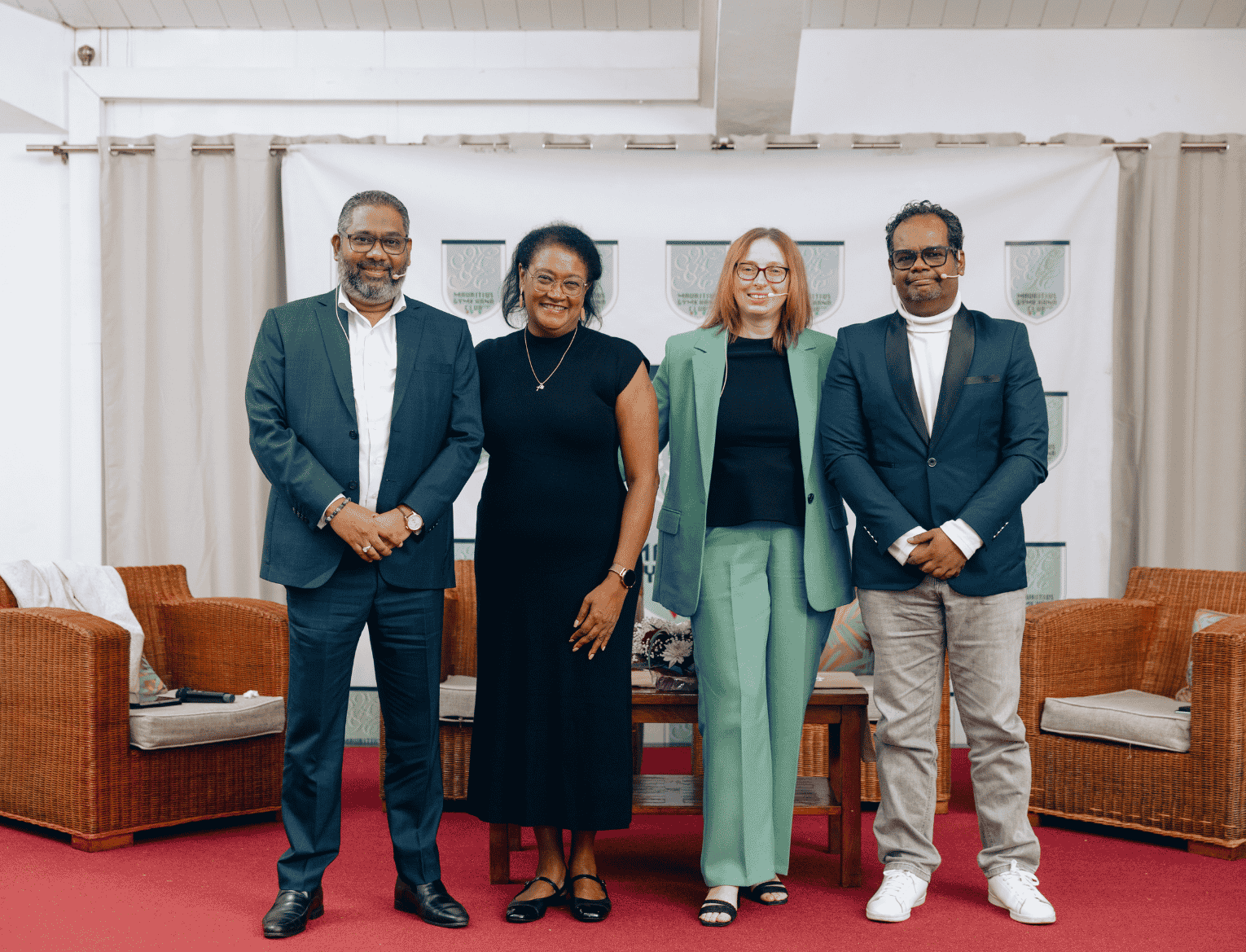
In that context, what does it take to earn and keep the public’s trust? That was the object of the panel discussion jointly organised at the Gymkhana Club by The Talent Factory and the Chartered Institute of Public Relations (CIPR) on the occasion of World PR Day, celebrated on 16 July. The event brought together Marie-Noëlle Elissac-Foy, Founder, Director and Public Relations Strategist at The Talent Factory, Gilles Martial, Media and Public Relations Manager at MCB Group, Samantha Seewoosurrun, Managing Director of Perpetual Motion and member of the CIPR Council, and Rudy Veeramundar, Founder and Editor-in-Chief of Bizweek. 


“Our intrinsic value lies in what we have experienced.”


The discussion quickly established that trust is not built through communication campaigns alone. It is cultivated long before the first press release is issued, the first interview is granted, or the first social media post is published.

For Gilles Martial, that process begins with the organisation itself. “One of the factors of trust is the history of an organisation: how long it has been on the market, how it has been built and the journey it has taken,” he explained.

An organisation’s reputation, he argued, is the product of years of decisions, behaviour and relationships. Communication can reinforce that reputation, but it cannot compensate for its absence.

That observation became the thread running through the entire panel. While artificial intelligence may have transformed the mechanics of communication, it has not altered the principles upon which credibility is built. If anything, it has made them more important. 

Artificial intelligence, Gilles Martial observed, has dramatically increased the volume of information competing for public attention and “has amplified the noise around the messages being disseminated. But trust remains fundamental.” The challenge, therefore, is no longer to compete with every voice online. It is to become one of the voices people continue to believe.

That idea resonated with Rudy Veeramundar, who reflected on how profoundly journalism has changed since he began his career. There was a time, he noted, when journalists actively searched for information, verified facts and determined what deserved publication. Today, the flow of information is continuous. News reaches audiences before they have chosen to look for it. Social media feeds, anonymous accounts and algorithm-driven platforms now compete alongside established media organisations, often without being subject to the same editorial standards or accountability.


“The bot will not manage the crisis for us.”


The consequence is not simply information overload. It is a crisis of credibility. “The challenge, today, is no longer to make your voice heard. The real challenge is to be believed,” argued the Founder and Editor-in-Chief of Bizweek.

Visibility, Rudy Veeramundar suggested, has become relatively easy to achieve. Credibility has not. Increasingly, audiences gravitate towards information that reinforces their existing beliefs, regardless of its source. At the same time, institutions that have spent decades building reputations for accuracy and accountability often find themselves competing with anonymous online platforms capable of producing limitless volumes of content within seconds.

Rather than seeing journalism and public relations as opposing professions, Rudy Veeramundar argued that both have a shared responsibility in protecting the integrity of public information.

Journalists and public relations professionals need to sit together more than ever because we are witnessing a growing loss of credibility in favour of information that often has no credibility at all,” he explained. 

Artificial intelligence is amplifying uncertainty

If trust is the foundation of communication, artificial intelligence might be its greatest contemporary test.

The panellists were careful not to portray AI, from the off, as an adversary. None questioned its capacity to improve productivity, accelerate research or assist communication professionals in their daily work. The concern, rather, lay in the unprecedented speed with which artificial intelligence is changing the information ecosystem and making it increasingly difficult for audiences to distinguish between what is authentic and what is not.

For Samantha Seewoosurrun, Managing Director of Perpetual Motion, Founder of the CIPR Network in Mauritius and member of the CIPR Council, the communications profession has entered a period where technological innovation is outpacing society’s ability to adapt.

Drawing on discussions taking place within the Chartered Institute of Public Relations internationally, she pointed to the rapid emergence of AI-generated news platforms capable of producing content with little or no human intervention.

There are around 3,000 news sites currently online that have been entirely generated by AI. The website exists because of AI. The content is generated by AI. There isn’t a single human involved,” she explained. 

It was a striking illustration of how dramatically the information landscape has evolved. Only a few years ago, credibility was often associated with the identity of a publisher, editor or journalist. Today, readers increasingly encounter articles whose authors do not exist, published by platforms with no identifiable newsroom, editor or editorial policy.

For communication professionals, the implications are significant. Organisations now face reputational risks that cannot always be addressed through traditional media relations. False information may circulate on websites with no accountable publisher, making it considerably more difficult to request corrections or seek clarification.

If something appears in a newspaper, I know exactly who to call. But when it appears on one of these AI-generated platforms, who do you contact?” asked Samantha Seewoosurrun.

The question hung in the room, reflecting a broader concern that artificial intelligence is changing not only how information is produced, but also the mechanisms through which accountability is exercised.

The discussion naturally extended to deepfakes, manipulated audio and synthetic video, technologies that have become increasingly sophisticated and accessible. For Samantha Seewoosurrun, the issue is no longer whether these tools exist, but how communicators, journalists and the public respond to them.

Rather than diminishing the importance of professional journalism, these developments, she argued, reinforce it. In an environment where fabricated content can appear remarkably convincing, established media organisations, recognised institutions and transparent communication practices become even more valuable precisely because they remain accountable for what they publish.

Communication can no longer be an afterthought

The conversation then shifted from technology to organisational culture. If trust is built over time and artificial intelligence is increasing uncertainty, where should communication fit within the modern organisation?

The answer is increasingly clear for Gilles Martial. Communication should not begin once a decision has already been made as it has moved from a function of dissemination to a function of decision-making.

The distinction is far from semantic. Traditionally, communication departments were often brought into the process once strategies had been approved and executives were ready to announce them publicly. Their role centred on explaining decisions rather than contributing to them.

That model, Gilles Martial suggested, is no longer sufficient. In an environment where reputational risks can emerge within minutes and stakeholder expectations evolve constantly, communication professionals possess insights that should inform decision-making from the outset.

If the decision has already been taken and you are simply asked to communicate it, it is already too late,” he argued.

Communication is gradually moving away from being viewed as a support function and towards becoming a strategic discipline that helps organisations anticipate public reaction, understand stakeholder expectations and identify reputational risks before they materialise.

Picking up on that point, Marie-Noëlle Elissac-Foy argued that another challenge facing the profession is securing a place at the decision-making table itself. Boards remain heavily dominated by financial and operational profiles, she observed, yet it is communication professionals who are often called upon when organisations face reputational crises.

Drawing on her own experience of joining the board of a company last year, she described it as an important step, not only personally, but for the profession.

For Marie-Noëlle Elissac-Foy, the issue extends beyond professional recognition. It is about ensuring that communication, reputation and stakeholder trust are considered while strategic decisions are being made, rather than only after they have been taken.

A shared interest in preserving credible journalism

Rudy Veeramundar returned to the discussion later with a warning about the consequences of a weakened established press, as the disappearance of recognised newspapers, whether from print or from the wider media landscape, would leave a vacuum that anonymous pages and unaccountable online posts could not adequately fill.

For the Editor-in-Chief of Bizweek, this made the relationship between journalism and public relations more consequential than ever. The two professions retain different responsibilities, but each depends on a functioning and credible information ecosystem as they “feed each other.

His intervention reframed the discussion. Supporting credible journalism was not simply a matter of maintaining good media relations. It was part of a wider responsibility to preserve institutions capable of verifying information, challenging decisions and holding power to account.

Technology may accelerate communication, but it cannot replace judgement

One of the more striking aspects of the discussion was that none of the panellists adopted either an optimistic or a pessimistic view of artificial intelligence. Instead, they approached it with a sense of realism.

AI was recognised as a powerful tool capable of transforming workflows, assisting research and increasing efficiency. Yet throughout the afternoon, the speakers repeatedly distinguished between generating content and exercising judgement.

That distinction became particularly evident when the conversation turned to crisis communication. Technology can analyse data, draft statements and monitor online conversations. It cannot assume responsibility for difficult decisions, understand human emotion or weigh the reputational consequences of a particular course of action.

As Samantha Seewoosurrun succinctly put it, “the bot will not manage the crisis for us. The remark prompted smiles across the room, but it also captured a serious reality. Moments of crisis demand empathy, discernment and accountability; qualities that remain fundamentally human. Artificial intelligence can support those responsible for communication. It cannot replace them.

The enduring value of human experience

If there was one conclusion upon which the panel appeared unanimous, it was that the future of communication will not be determined by technology alone. It will depend on the people who use it.

Throughout the discussion, the speakers acknowledged that artificial intelligence would continue to evolve and that communication professionals must adapt accordingly. New technologies will undoubtedly transform the way information is produced, distributed and consumed.

What they cannot automate, however, is judgement. Nor can they replicate experience, ethical reasoning or the ability to understand the nuances of human relationships. As Samantha Seewoosurrun put it, “our added value lies in our lived experience.

It was a reminder that communication is ultimately about far more than words or technology. It is about understanding people. Whether advising an organisation during a crisis, interviewing a public official, responding to stakeholders or navigating a complex public debate, the communicator’s greatest asset remains the ability to exercise informed judgement shaped by experience rather than algorithms.

Gilles Martial returned to that same idea as the discussion ended. Artificial intelligence, he observed, can process information at extraordinary speed. It can assist with research, generate content and automate routine tasks. But there are aspects of communication that remain uniquely human.

Can AI read the room? he asked, before quickly answering “No. For him, that simple question encapsulated the limits of the technology. Artificial intelligence cannot draw on a lifetime of professional experience, understand the subtleties of human interaction or recount the stories that shape a communicator’s judgement.

As he concluded, “our intrinsic value lies in what we have experienced,” which is something that no artificial intelligence can, as yet, replicate.

Skip to content