Back to Bizweek
SEARCH AND PRESS ENTER
Latest News

Australia is a middle power actively supporting multilateral institutions to promote global stability

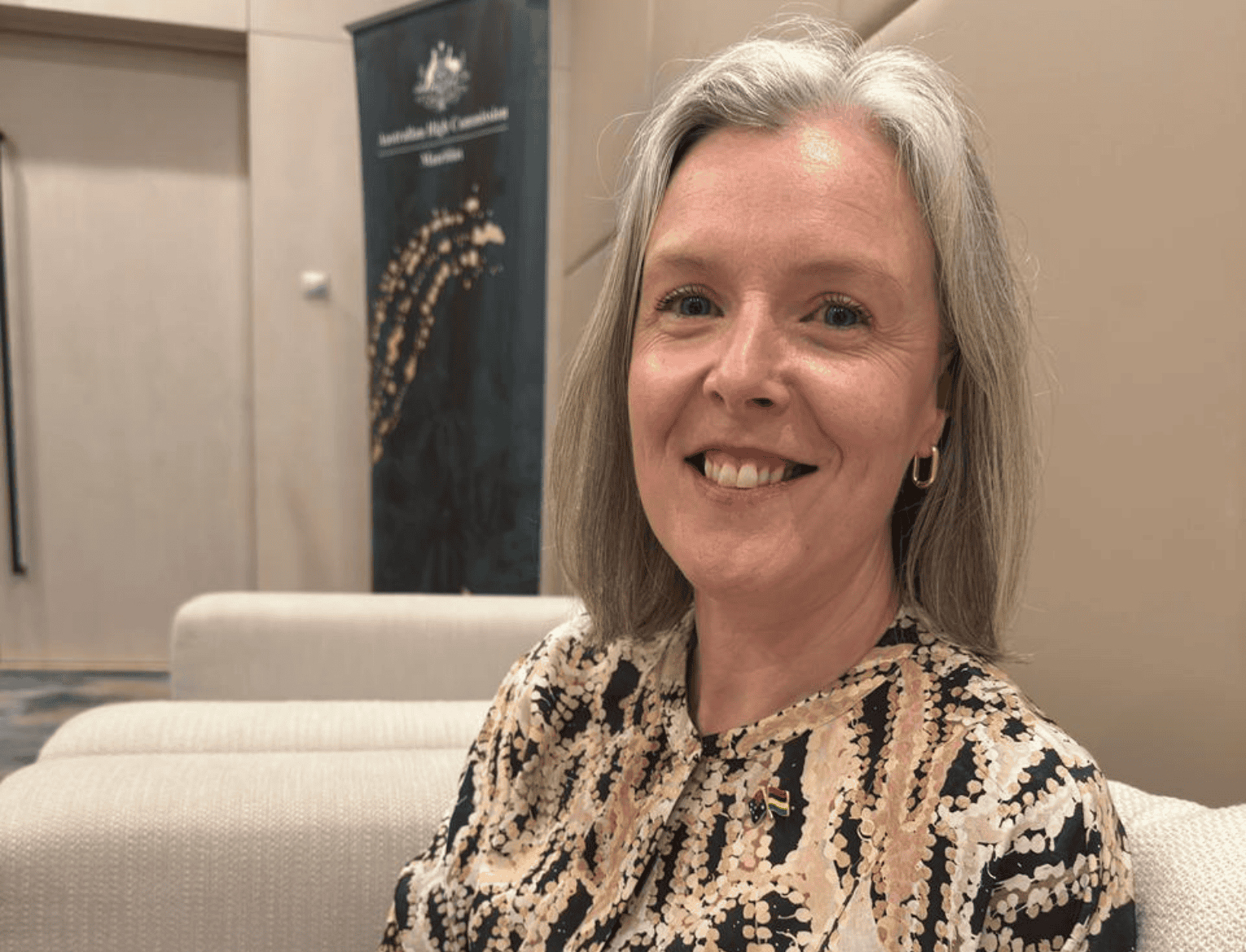
Kate Chamley, High Commissioner of Australia to Mauritius

  • “The Mauritian community occupies a particularly important place within Australia’s migration story”

With Australia marking its National Day in Mauritius, Kate Chamley speaks, in an interview with Bizweek, on Australia’s national identity, the strength of the Mauritian diaspora, and a bilateral partnership that is steadily expanding across education, climate action, the blue economy and regional stability.

Australia Day is often seen as both a celebration and a moment of reflection. What does it represent for Australia in 2026?

Australia Day reflects the complexity of Australia’s national story, which can be understood through three major chapters. The first is Australia’s very old and ancient Indigenous culture. Aboriginal and Torres Strait Islander peoples have lived on the Australian continent for more than 60,000 years, making this one of the oldest continuous cultures in the world. This history continues to shape Australia’s identity today and remains central to national reflection.

The second chapter is the establishment of Westminster-style institutions. These democratic foundations have played a key role in shaping Australia’s political system, prosperity and shared values, including respect for the rule of law and democratic governance.

The third chapter is migration. Over time, people from all around the world have moved to Australia and chosen to call it home. This migration story is ongoing and dynamic, and it includes a strong Mauritian presence, which has become an important part of Australia’s multicultural fabric .

What place does the Mauritian community hold within this migration story?

The Mauritian community occupies a particularly important place within Australia’s migration story. Today, there are around 32,000 Mauritian Australians living in Australia, making it the second-largest Mauritian diaspora globally.

Beyond the numbers, this community plays a vital role in strengthening people-to-people ties between Australia and Mauritius. Mauritian Australians contribute to Australian society while maintaining strong cultural and family links with Mauritius. In this way, they act as a natural bridge between the two countries, reinforcing mutual understanding, cooperation and long-standing friendship.

Australia Day is debated within Australia. How do you view this today?

Australia Day is not universally celebrated in the same way by all Australians. For Indigenous Australians in particular, as well as for others, the day raises difficult historical questions, and there is an ongoing national conversation about whether a different date should be chosen. This debate reflects Australia’s willingness to engage openly with its past and to reassess how national identity is expressed.

At the same time, Australia Day continues to serve as a moment of national coming together. Across the country, citizenship ceremonies are held for new Australians who have chosen to make Australia their home. Australians also recognise achievement through events such as the appointment of an Australian of the Year.


“Australia will play an active role in COP31”


It is also a public holiday that marks the end of the school holidays, and many Australians use the day to spend time with family and friends, often outdoors, sharing meals and enjoying the beach – a reflection of Australia’s lifestyle and sense of community .

What message do you hope Australia Day celebrations in Mauritius convey to Australia’s partners in the region?

Celebrating Australia Day in Mauritius is an opportunity to communicate a clear diplomatic message: Australia sees itself as a friend in this region. In a world that is increasingly disrupted by geopolitical tensions, economic uncertainty and climate challenges, the importance of trusted friendships has become even more pronounced.

Australia and Mauritius share a long-standing bilateral relationship grounded in common values, democratic traditions and people-to-people connections. The Mauritian diaspora in Australia further strengthens this relationship. Australia views Mauritius as a key partner with whom it can work towards shared objectives, particularly in ensuring that the Indian Ocean region remains stable, peaceful and prosperous for all who live in it .

Which areas of cooperation between Australia and Mauritius have become particularly strategic?

The Australia-Mauritius relationship has evolved to focus on areas of shared strategic interest, not only for the two countries but also for the wider region. Key areas include maritime security, given the importance of safe and stable sea lanes in the Indian Ocean.

Another growing area is the blue economy, where both countries recognise the economic and environmental potential of sustainable ocean-based industries. Climate change is also central to the partnership, as both nations face increasing climate-related risks. Together, these areas form the backbone of a relationship that is both strategic and forward-looking .

The blue economy featured prominently at the Australia Day reception. Why is collaboration in that sector important?

Blue economy collaboration is a tangible example of how Australia and Mauritius can work together on practical, science-based solutions. One highlighted project involves scientists from the University of the Sunshine Coast working closely with Mauritius’ Ministry of Blue Economy to restore sea cucumber populations.

These populations had been severely depleted due to overfishing and the impacts of climate change. With financial support from the Australian government, scientists have successfully developed new generations of sea cucumbers.


“Mauritian rum offers an impressive variety of flavours and captures the essence of the island itself”


Sea cucumbers play a crucial ecological role by cleaning and maintaining marine environments. Beyond environmental benefits, they also hold economic potential as a high-value agricultural product that could be developed for future markets. This dual environmental and economic impact makes the project particularly significant, and one that Australia is proud to support .

Education has long underpinned the Australia-Mauritius relationship. How central is it today?

Education remains one of the strongest pillars of the bilateral relationship and is central to trade and cooperation between Australia and Mauritius. At any given time, around 2,500 Mauritian students are studying in Australia.

These students consistently perform well academically and gain valuable professional and personal experience. Their presence strengthens long-term links between the two countries, as many return to Mauritius with Australian qualifications and global perspectives. At the same time, Australia’s education engagement in Mauritius continues to grow, reflecting strong demand for Australian curricula and qualifications .

How important is Curtin Mauritius in this education landscape?

Curtin Mauritius is a flagship example of Australia’s transnational education strategy. It is Australia’s only university campus in Africa and has become a key academic institution in Mauritius.

The campus offers a range of high-quality programmes and attracts around 400 international students from across Africa, as well as from the Middle East and Europe. It has developed a strong academic culture and continues to grow in reputation.

While there are currently no concrete plans for expansion, the success of Curtin Mauritius has drawn the attention of other Australian universities, which are closely studying the model as they consider similar initiatives elsewhere.

How is Australia positioning itself in an increasingly fragmented geopolitical environment?

Australia sees itself as a middle power with a responsibility to work constructively with others. This means actively supporting the rule of law and strengthening multilateral institutions, which are essential for global stability.

These systems are under increasing strain, but they are also more important than ever. Recent international discussions, including those at the World Economic Forum in Davos, have highlighted these challenges. Australia’s approach is to work with friends and partners to help preserve a fairer, rules-based international order that benefits all countries, large and small .

What are your priorities for deepening Australia-Mauritius relations in the coming years?

One major priority is strengthening parliamentary cooperation. A historic visit by Australia’s Speaker last year led to the creation of an Australia-Mauritius parliamentary friendship group. This initiative aims to deepen democratic engagement and institutional collaboration.

Australia also has two parliamentarians with Mauritian roots. Senator Babet, born in Rodrigues, and MP Jerome Laxale, whose father is Mauritian; further strengthening these ties.

Climate cooperation is another key priority. Although Turkey will host COP31, Australia will play an active role, particularly by ensuring Pacific Island perspectives are integrated. Australia is also planning a climate conference in the Pacific later this year and hopes Mauritius will take part. Supporting Small Island Developing States remains central, especially as Australia itself is experiencing severe climate impacts such as extreme heatwaves and bushfires .

You have now spent two years in Mauritius. What are your main takeaways?

This interview coincides with the anniversary of my arrival in Mauritius, making it a particularly meaningful moment of reflection. Over the past two years, Mauritius has revealed itself as a rich and complex society.

Beyond its appeal as a tourist destination, Mauritius offers deep cultural diversity, vibrant political life, rich cuisine and a strong sense of social harmony. It is a country where multiculturalism is lived daily and where different communities celebrate one another’s holidays.

Professionally and personally, it has been an extremely rewarding posting for both myself and my family, and we are very happy that there is still over a year remaining.

To end on a lighter note, are you more of a Mauritian rum or a Mauritian tea person?

(Laughs) The choice depends very much on the time of day. Earlier in the day, tea is the preference. Later in the afternoon, however, Mauritian rum becomes more appealing. Mauritian rum offers an impressive variety of flavours and, in many ways, captures the essence of the island itself: diverse, rich and distinctive .

Skip to content