Back to Bizweek
SEARCH AND PRESS ENTER
Latest News
AI will help the tuna sector generate three times more than the Chagos deal

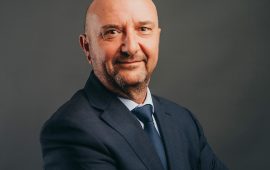
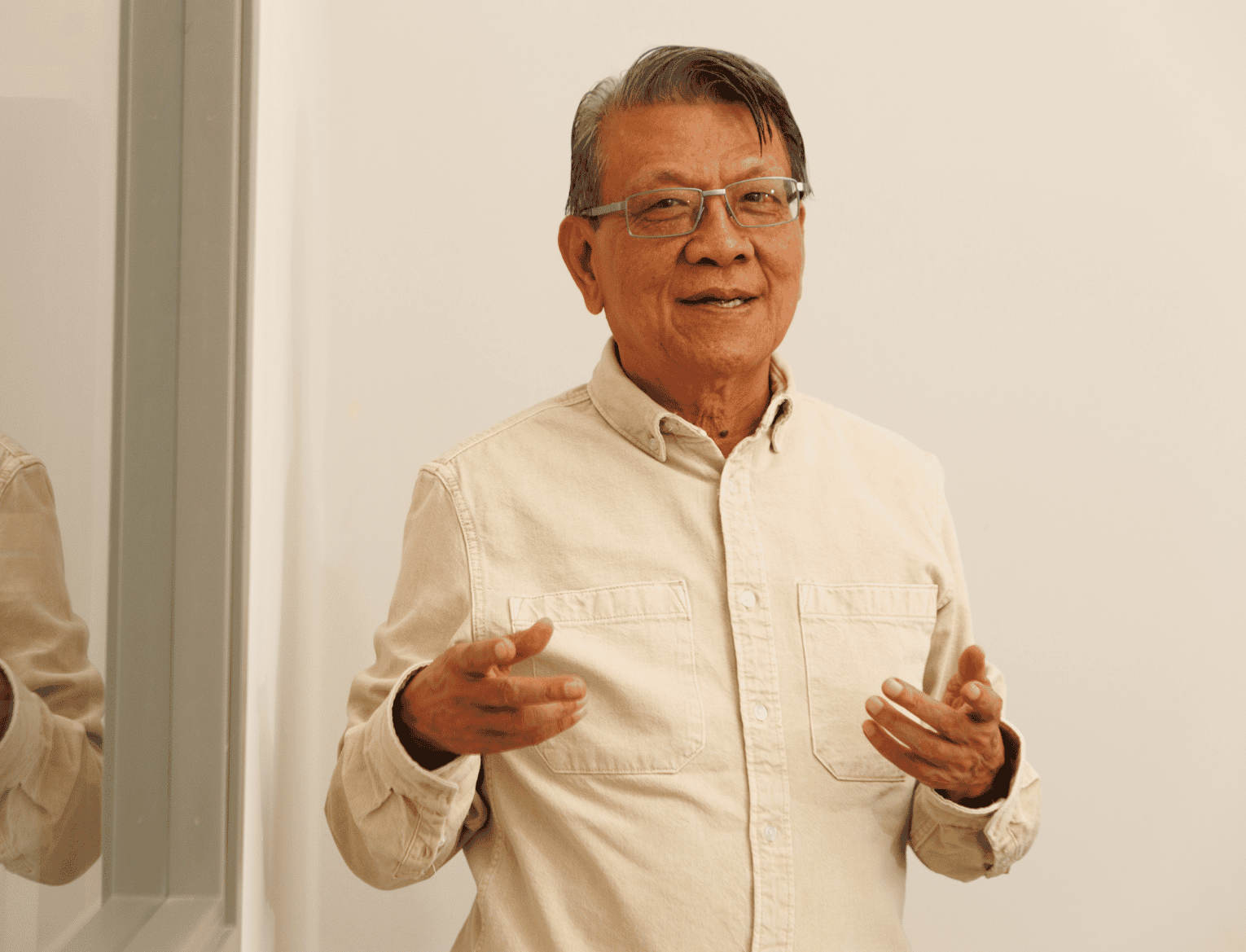
Georges Chung Tick Kan, Founder of Ocean Economy AI Lab

After having trained his innovative mind on the press, textile and offshore sectors, among others, seasoned industry pioneer Georges Chung Tick Kan now ambitions to bring traditional fishing into a new era through his startup, the Ocean Economy AI Lab. In this interview with Bizweek, the entrepreneur argues that Mauritius has reached a decisive moment if it is to convert its ocean territory into a new economic pillar. Backed by artificial intelligence, local fishermen’s data and a partnership with Japan’s Ocean Eyes, the Ocean Economy AI Lab wants to help fishing vessels identify potential fishing grounds, reduce uncertainty at sea and build a wider blue economy ecosystem. For Georges Chung Tick Kan, the objective goes beyond fish: it is about foreign currency, food security, exports, investment incentives and a new form of capitalism that benefits both business and the country. 

Rudy Veeramundar 

During your speech last Wednesday, at the launching of the Ocean Economy AI Lab, you described the seas of Mauritius as the next frontier and said that the country should build an economic pillar around the blue economy. What leads you to believe that the timing is right?

It is the advancement of this new technology, which we call artificial intelligence. It can capture all the data, if those who can give the data are willing to give it. We have the whole community of fishermen in a very positive mood, ready to give us the data every day. So, I think the situation looks ideal. If we can have the data, and if we have the power of the machine to learn from the data and roll out the patterns, those patterns will tell us where we can fish with a higher probability of finding where the fish really are, whether it is tuna or other species.

You have been one of the main actors and innovators in the Mauritian economy since the 1980s. You are now stepping into AI and the ocean economy. Are these new themes for you?

I know that, with my grey hair, I am not supposed to go into new technology, but the pull factor is so strong. It seems so obvious that these are low-hanging fruits for our country and for any businessman wishing to invest, for example, in vessels to go and fish.


“We will spend not less than Rs 10 million over the next 12 months of our project.”


The statistics are very loud in that respect. If you go to Google Gemini, you will find that the whole Indian Ocean is worth one million tons of tuna, which all the vessels come and fish every day, and have been fishing over the past few years. If you make a rough estimate of what one million tonnes is worth, it is around Rs 150 billion of tuna being fished.

Can you imagine if we capture 20% of this? That is Rs 30 billion. And if you want to have an idea of what Rs 30 billion represents, it is three times the Chagos agreement, which has been delayed. That would solve, to a large extent, the issue of the value of our currency. It would also help in terms of the availability of foreign currency for businessmen. And you know that we suffer from this now. It is a negative factor in the proper running of business.

If you cannot obtain foreign currencies when you have to, it is a big obstacle for the smooth running of business. On its own, I think the blue economy, provided that we can get it to take off, can help. We are trying everything, with the help of foreign expertise. We want this to take off, and we are putting all the means necessary for it to take off.

You have been involved in textile printing, in offshore business and global business. Do you see ocean intelligence as a similar turning point for the country?

It is going to be. I have no doubt about it. We have all the strength in terms of availability of fish in the ocean. We have a vast economic zone of 2.3 million square kilometres. And it is not only about fish. It is about the whole ecosystem of the ocean.

What we are doing is only the beginning. It is already immense, with Rs 150 billion worth of tuna. If you add all the other species, it could probably come to Rs 200 billion. It is already something tangible for us to reach out to. But we need to put in all the resources. This is where I think we have to focus: how to gather all those resources into one common economic policy.


“Fifty years ago, we did not know how to make a T-shirt. We then reached 50 million pieces in one year, just five years after the economic take-off of the textile industry.”


It is just like we did for textiles. Fifty years ago, we did not know how to make a T-shirt. We did not know how to make a pullover. Yet, you know that we became a record-holder in terms of the number of pullovers. We reached 50 million pieces in one year, just five years after the economic take-off of the textile industry.

I can give you a second example. Fifty years ago, we did not know how to domicile an offshore company in Mauritius. We did not even know what it was all about. In fact, it was not 50 years ago; it was 30 years ago. There were two phases. One phase was in the 1980s with MOBAA, if I remember correctly. But that model was already finished. No one wanted to have that sort of business model because it was based on the idea that you should never know who the ultimate beneficiaries were. You could have terrorists, drug dealers, illegal money – you could have everything. No matter who you were, you could come to offshore companies.

Then the whole thing changed after September 11. The European Economic Community and the United States really wanted to put pressure on all offshore centres to know who they were dealing with. Then came the second phase in the early 2000s. Without modesty, I can tell you that I was instrumental in helping to set it up.

I was a victim of waves of insults from the businessmen of the first stage. They did not understand what we were trying to do. You know the concepts of KYC and anti-money laundering. We were among the first offshore centres to structure our second phase on the basis of these two concepts.


“For the sophisticated Japanese algorithm to become meaningful in Mauritius, it needs local data.”


And then the second wave took off successfully. It really improved the standard of living of Mauritius in general terms. Now, I think it is a mature industry. But we have many competitors, so we need to reinvent ourselves. And the only avenue to reinvent ourselves is really to have this new economy take off.

Although Mauritius is surrounded by the ocean, we import around Rs 20 billion to Rs 30 billion worth of fish. What does this say about the gap between our maritime potential and our technical reality?

We need to bridge the gap between potential and reality. Yes, it is long overdue. But the main thing is that the stock we want to reach is already there. That means the gap is not as wide as one might think.

It is unlike offshore or textiles, where we did not know where the business would come from. We were lucky to have Hong Kong textile manufacturers come to Mauritius, following, of course, the incentives we put in place.

So, I would say the same thing here. What we need to do now to narrow the gap between potential and reality is to give incentives. We really need huge incentives to encourage potential investors, start-ups, entrepreneurs and companies. Even if they are not in the fish business, why not encourage them through incentives? Tell them: ‘Look, the stock is there, I need you. I will give you all the incentives to go, because I know the ocean can be a dangerous place to do business. But we can give you the incentives.’ I think incentives will do the trick.

We are in the pre-budget consultation period. The reality is that we are struggling. To put it very simply, we are an import-dependent country, and we are spending more than our revenues. Do you think the ocean economy can partly solve these issues?

It will largely solve our issues. Let us say we fix the objective of catching 10% of the one million tonnes of tuna I was referring to. The spillover, just like in the case of textiles and just like in the case of offshore, could be tremendous. The whole ecosystem is much larger than the fish component of the ecosystem.

We could set up a huge processing plant to clean the fish, put it in adequate shape and package it for consumption, not only for export but also for local consumption. The potential of rebranding tuna as a main component of our everyday or weekly food could be very interesting. Tuna has – well, I am not a biologist – components that could be good for health, and we need to promote it.

Tuna has not reached its potential in terms of taste for Mauritian consumers. But you know that tuna is a prime product in Southeast Asia. In Europe, if you go to a five-star hotel, it is likely that you will find tuna on the menu, and it can cost as much as a good steak.

So, it is about branding and rebranding. If you allow me, it is moving from the can to the menu of a five-star hotel…

That is right. One thing that is good about tuna is that, although I am not telling you meat or chicken is not good, tuna is very natural. There are no hormones. It grows naturally.

You see the ecosystem? It goes far beyond going out and fishing. We need to check the nutritional value and the proteins. From what I have heard, it is a high-protein product. You realise the opportunity of this whole new economy seen as an ecosystem? We have presented this AI to allow fishermen to go and fish with a high probability of finding the fish where they are. But our project goes much, much further.

You are basically preventing fishermen from going out and fishing blindly.

So to speak, yes. One point is very important, and we have not said it enough: how do we manage our stock so as to sustain it over the long term? We are discussing with our Japanese partner how to set up a management arm for the conservation of the ocean.

Ocean Economy AI Lab is working with Ocean Eyes, from Japan. Their technologies have been applied in Japan and Indonesia. What exactly does Mauritius gain from this collaboration, and what has been adapted to our own waters?

To make it significant and to make it perform, you need local data. The Japanese have a wonderful algorithm. But to export this algorithm to Indonesia, they needed data from the waters surrounding Indonesia to make the algorithm meaningful.

So, we are not reinventing the wheel. We are telling the Japanese: ‘You have a wonderful algorithm; we can provide you with the data. We can put our own layer of data on your algorithm. We can develop it together. We can put it in our learning machine.’ The tool we will roll out will be an intelligent combination of our own data with their algorithm. This is the basic idea of our collaboration with the Japanese.

They are keen. They say: ‘All right, we have something technologically feasible and interesting; you have your data, so let us do something together.’ That is the spirit of the partnership.

You said that your initiative should not only benefit your company, but the country. What would success look like in five years in terms of foreign exchange, food security, exports and Mauritius’s position?

We are probably inaugurating a new capitalism. This new capitalism is, first, about balance sheets and profit and loss accounts. You need money to make it sustainable. But it also has to benefit the country and the population at large.

Traditional capitalism is a little bit conservative and says: ‘Look, we have no accounts to be held apart from our shareholders or our companies.’ I think this is becoming outdated. We need to set up projects that benefit the country. Of course, you need your profit and loss statement and your balance sheet to survive. But you also need to look broader and wider than this, to go outside and ask: ‘Does this benefit our economy?’ If it does, then I think it is a new form of capitalism.

If we have entrepreneurs thinking both about innovation for the companies they are setting up and about the blue economy, if the stocks of fisheries are there, and if minerals, gas, or even oil and petroleum potentially lie beneath the sea, then this new form of capitalism becomes natural.

If we can have people investing in new vessels, I think we can easily set up 50 vessels. There is a place in this large ocean for 50 new vessels under the flag of Mauritius. Each could be worth Rs 20 million, Rs 30 million or Rs 40 million. That would largely help our existing economy.

I think it is damn serious what we are undergoing at the moment: oversized debts, loss of purchasing power, and perhaps most importantly, we are losing the value of the currency as weeks go by because of the scarcity of foreign currencies for businessmen when they want to import and pay for raw materials and machines. This is serious. We need foreign currencies.

Every problem we are currently facing has a common denominator: not enough foreign currencies to pay for consumption. Eighty per cent of our consumption comes from abroad. You need hard currency to pay for what we require every day for our survival. If we do not have it, then all the things I have mentioned – the weakness of the rupee, inflation, lack of economic growth, lack of purchasing power, and the government trying to have a budget that knocks off all additional expenses – all these come from one common denominator: not enough foreign currencies entering the country.

Georges, I would like to have a final word from you, knowing that you never have a final word

I think we need to have every stakeholder onboard, from fishermen to policymakers, through to people like us and banks, for example, for financing. We need to set up special plans to encourage people to invest with preferential interest rates. I am not asking for big things.

If we can have all these food chains, at every stage of the food chain, working as a team and looking at the need to make this industry the next pillar of growth and development for our country, I have no doubt that we are going to succeed, just like we succeeded in textile and clothing manufacturing when we did not know how to make clothing a few years before we launched it. Just like we did not know how to domicile offshore companies even two or three years before we started the business. Now we have every strength we require to turn this new economy into a solid economy. 

I want to say that the sky is our limit, but in reality, the ocean is our limit.

The ocean is the limit?

Yes, and we can even go to other oceans.

It is such a huge project. You and your people are venturing into something that feels like a lot, that will cost a lot of money…

We will spend not less than Rs 10 million over the next 12 months of our project, and probably in the second year as well. I do not know when we will start recouping part of the investment, but we are determined to make it happen.

At my age, even with my grey hair, it has not affected an iota of my ambition, my motivation and my innovative spirit.

We are redefining the concept of a start-up. 


Vishal Seeboruth, CEO of Ocean Economy AI Lab

“If you want to go far, do not swim alone”

Vishal Seeboruth, Managing Partner at Trescon Global and CEO of Ocean Economy AI Lab, was also present during the interview. While Georges Chung set out the wider economic argument for making the ocean economy a new pillar of growth, Vishal Seeboruth explained how the project is being built on the ground: through fishermen’s data, artificial intelligence, Japanese technology and a long-term approach to sustainability.

For him, the starting point is simple. “In AI, you need data. That is the first and foremost prerequisite,” he said. Ocean Economy AI Lab has therefore begun by meeting fishermen and engaging directly with the wider fishing community. According to Vishal Seeboruth, the response has been positive. Fishermen, he said, were “really receptive” to the approach and now see technology as an important tool that can bring innovation and help them survive in the coming years.


“We are trying to reduce uncertainty and help fishermen make better decisions before they even leave the shore.”


He placed this openness in the context of a sector under pressure. “Traditional fishing is very difficult now,” he said. “To quote their own words, our lagoons are quite depleted right now.” This, he argued, makes the need for a sustainable project more urgent. Ocean Economy AI Lab has worked with the fishermen’s community and Vishal Seeboruth believes that technology can take the fishing industry to another level.

The project was not necessarily something fishermen were expecting, he added, but they were “on the lookout” for a new way forward. They needed “some kind of breathing space” to move the fishing industry beyond its current constraints. Once the team explained how technology could help increase catches and reduce costs, the idea became more meaningful for them. Fuel is one of the major concerns. Vishal Seeboruth noted that the cost of fuel may represent up to 40% of the cost of a fishing trip.

At the centre of the tool being developed is the Potential Fishing Ground (PFG) map. “In simple terms, it means: tell me where the fish are,” he explained. The aim is to reduce uncertainty before fishermen even leave the shore. Much of fishing today, he said, is still based on experience. Fishermen go out to sea without always knowing where they will find fish. The result is often lost fuel, lost time and low catches.

The PFG map uses predictive analysis and can forecast two or three days ahead. In that sense, the tool is not only about improving productivity. It is also about making fishing more efficient, more sustainable and less costly.

The partnership with Japan’s Ocean Eyes is central to this ambition. Vishal Seeboruth said that the Japanese partner already has a proven track record in Japanese and Indonesian waters, where similar technologies have helped increase productivity by at least 20% in terms of catch. Sharing this evidence with fishermen, together with the data and the practical explanation of the tool, helped make the project more credible to the community.

But the collaboration is not limited to a single AI application. Vishal Seeboruth described it as a long-term partnership. “We are not only proposing an AI tool or a PFG map. We are going further,” he said. The broader objective includes sustainability, stock management and reef conservation, which he described as “something very important.” He also stressed that Mauritius still does not know the full potential of its maritime territory. “We never know what we may find in our two million square kilometres of sea. Maybe one day we could find petroleum or gas,” he said. 

For that reason, he insisted that Ocean Economy AI Lab should be seen not only as a technology project, but as a research lab for the ocean economy. Its purpose is to use artificial intelligence to better understand the country’s ocean resources, protect them and develop them sustainably. “Our mission is clear as an AI lab,” he said. “What we want to achieve for the ocean economy is to harness the power of artificial intelligence to better understand, protect and sustainably develop our ocean resources.”

Vishal Seeboruth also made clear that the project cannot be carried by one company alone. Ocean Economy AI Lab, he said, is open to collaboration with the authorities and the private sector. The project, in his view, must benefit the local community and contribute to the wider economy. His closing message was therefore a plea for collective action: “If you want to go far, do not swim alone. Schools of fish move as one.”

Skip to content