Back to Bizweek
SEARCH AND PRESS ENTER
Latest News

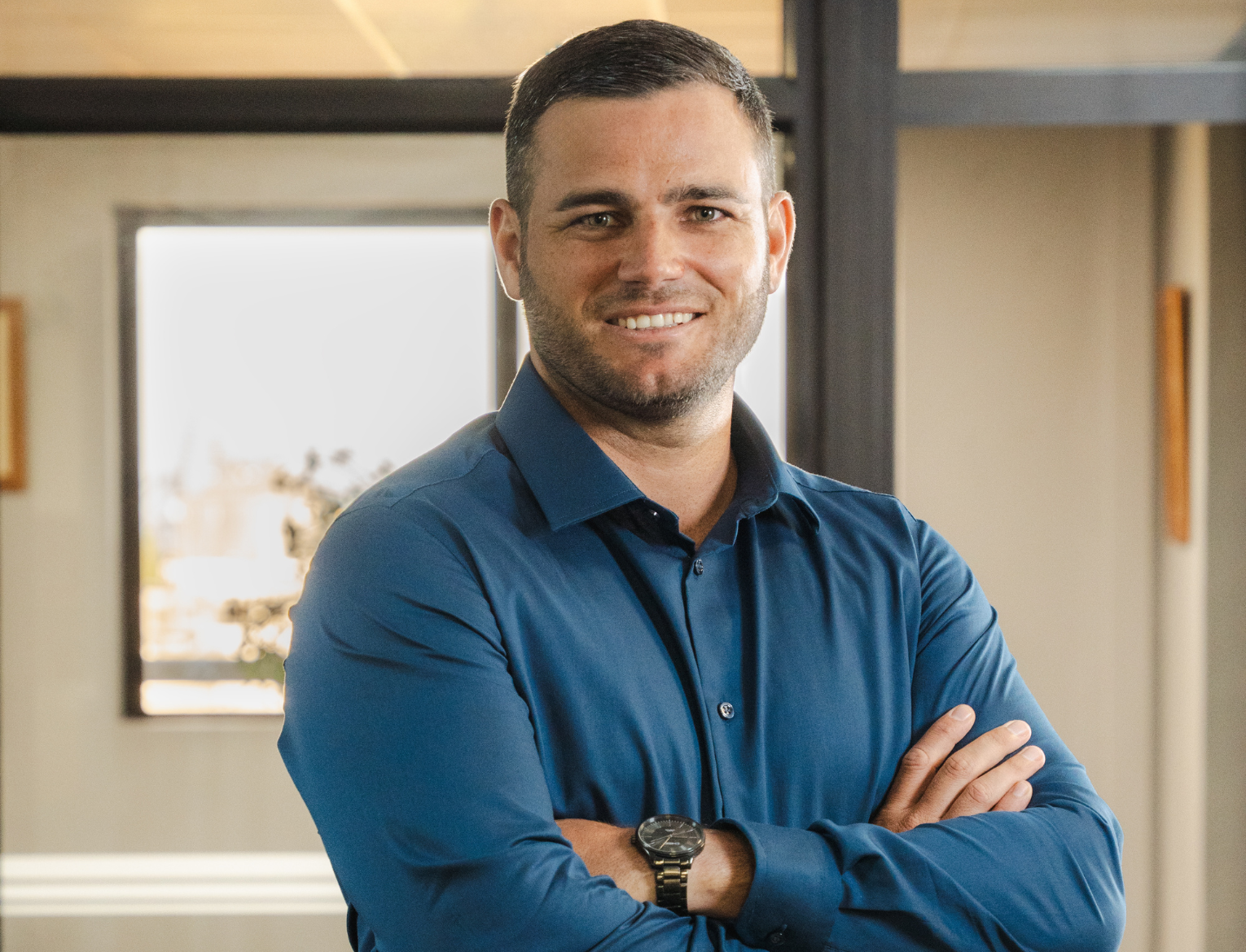
“You do not build a business with capital alone”

Oscar Mamet, Group Chief Executive, APTIS

Built step by step through new ventures and acquisitions, APTIS has grown from a Mauritian tobacco distributor into a group spanning five clusters and reporting annual turnover of about Rs8.5bn. At its first Leadership Meet & Greet, the family-led group set out a Rs1.5bn investment plan and a drive to expand regionally. Delivering that ambition will depend on strengthening its diverse businesses, finding the people to fuel their growth and preserving the entrepreneurial culture that brought them together.

APTIS is a Mauritian family group built across businesses that do not, at first glance, have much in common: tobacco distribution, fuel and gas, manufacturing, corporate services, luxury property and food. Its first Leadership Meet & Greet, held on 8 October, brought the group’s leaders together with the media to explain how those businesses fit under one roof, where APTIS began and what it hopes to become by 2030.

The leadership team combines family oversight with managers drawn from the operating companies. Jean-Pierre Mamet is Founder-President and Oscar Mamet Group Chief Executive. Sabbi Appanna is Group Chief Finance Officer; Régine de Ravel is Group HR Manager; Karen Sarah leads Marketing and Communications; and Vincent Frederic is Group IT and Innovation Manager. The operating businesses are led by Jean-Alain Mamet at RACSO, Fabien Harel at Resiglas, Daniela Quaranta at L’Artigiano, Julien Rey at Navitas, and François Colin at BARNES.


“You really have to accompany foreign nationals and families establishing themselves in Mauritius in all areas.” 


“This is not a press conference or a presentation-style town hall,” Oscar Mamet, the group’s chief executive, told the gathering. “Today is to show you who we are, where we come from and where we want to go.” APTIS was not announcing a single transaction or product; it was presenting itself as a group, and inviting the audience to look for a common logic in a portfolio accumulated over time.

That logic is organised into five clusters: Distribution; Commerce & Industry; Property; Services; and Investment, carried by eight companies – alongside strategic investments – and the group’s more than 300 employees. The cluster mode, argues its leadership, can help the businesses share capabilities and management support while retaining the expertise and market knowledge each company has built.

The group’s origins, as described by the family, are entrepreneurial rather than inherited. APTIS traces its start to 2009, when Jean-Pierre Mamet, its Founder-President, established a tobacco distribution business. His son Oscar says his father put the family home up as collateral to launch the venture. “APTIS is a 100 per cent Mauritian entrepreneurial story,” Oscar told the gathering. “We created it ourselves, through our entrepreneurial spirit, courage and agility.”

TNS Tobacco was the first platform. RACSO followed in 2015, taking the group into fuel monitoring and distribution, while Resiglas brought it into manufacturing. APTIS took shape as a group in 2019 and later added Navitas, BARNES, L’Artigiano and Ocealys, as well as strategic investments, including Domino’s Pizza and Bigarade sur Mer in Rodrigues. The sequence was not the execution of a long-held master plan. “We didn’t start with a grand plan, we built one step at a time,” Oscar Mamet said.


“Growth becomes difficult without the necessary people.”


The Group Chief Executive was careful to distinguish growth for its own sake from the group’s stated aim. APTIS wants businesses that can become stronger and more future-ready with the help of group-level resources. “We do not simply want a portfolio of companies,” he said. “We want companies that are strong, well-structured and ready for the future.” 

In this model, an acquisition is only attractive if the group can add value, improve the business and accelerate its development.

The Distribution cluster includes TNS Tobacco, which imports and distributes British American Tobacco brands in Mauritius, and RACSO, whose work grew out of the need to control fuel use; a problem companies are very familiar with. RACSO’s managing director, Jean-Alain Mamet, explained that the company, which began in 2015 with fuel monitoring and diesel delivery, estimates that fuel theft can account for 6 to 8 per cent of consumption. For a company using 150,000 litres a month, that would mean 9,000 to 12,000 litres unaccounted for.

RACSO has grown from six trucks and about 350 deliveries a day to 13 vehicles and more than 700 deliveries. Its annual volume is expected to reach 10m litres, compared with 4.6m litres at the start. The company’s platform turns delivery and fuel-use information into reports that clients can use to analyse consumption and make decisions about equipment and vehicles. Mamet said the team also advises customers on which vehicle best suits a particular type of load, connecting data with practical operational choices.

The cluster’s latest challenge is the distribution of TotalEnergies’ red cooking gas across northern, eastern, central and western Mauritius. RACSO took over the activity about four months before the October gathering and deployed 17 trucks. Jean-Alain Mamet said the transition had disrupted the delivery network, but that gas remained available. Labour, he added, was the pressing constraint. RACSO retained many local employees from the previous operator and has applied to recruit additional foreign workers, as delays in securing staff can affect its ability to meet demand.

At the Meet & Greet, a TNS representative also addressed the changing market for nicotine products. He acknowledged that tobacco is harmful to health and said the industry is discussing alternatives it considers less harmful, including vaping and nicotine pouches. The representative also called for dialogue with the government on a framework that would set standards for such products and regulate their availability.

Mauritius’s Public Health (Restrictions on Tobacco Products) Regulations 2022 prohibit the manufacture, import, distribution and sale of electronic nicotine and non-nicotine delivery systems, e-liquids and related devices and accessories. They also cover other nicotine products and devices intended to replace or imitate tobacco products, with an exception for prescribed nicotine-replacement therapy. The TNS representative argued that the current rules leave no route for these products to be legally sold and estimated that more than 13 per cent of the vaping market was illicit. 

The Commerce & Industry cluster features Resiglas, a Mauritian manufacturer with 68 years of history. The company, which joined APTIS in 2018, makes water tanks, swimming pools and boats from fibreglass and polyethylene, as well as acrylic products. Managing director Fabien Harel said the group’s backing gave the company “a new dynamic” and the resources to pursue its ambitions. In less than five years, he explained, Resiglas doubled its turnover and became more structured, with innovation now part of its growth agenda. A new boat model, for example, is planned for early November.

Fabien Harel also sees a regional opportunity for a company already well established at home. Resiglas is therefore exploring markets through a programme with the Association of Mauritian Manufacturers and EY, targeting Seychelles, Reunion Island and Mayotte, with East Africa as a further prospect. The group’s support, he said, has helped move the conversation from maintaining a long-standing local manufacturer towards preparing it for regional growth.

The Services cluster, for its part, includes Navitas, which joined APTIS in 2023. It provides accounting, taxation, legal and offshore services to Mauritian and international clients. Its Chief Executive, Julien Rey, said Navitas began with a strong domestic base, including work as company secretary for large listed companies, before expanding into offshore services. It now sees a further opportunity in helping foreign nationals and their families establish themselves in Mauritius.

Navitas Immigration, backed by immigration.mu, handles more than residence permits. As Julien Rey explained, a move to another country involves practical arrangements for families, including personal belongings and pets. “You really have to accompany them in all areas,” he said. To do just that, the service, he added, is promoted in coordination with other APTIS businesses that may encounter people considering a move to Mauritius.

Navitas employs about 65 people, but recruitment, said Julien Rey, is a constraint even in the professional service business. The firm struggles to find accountants and is considering acquisitions of management companies in Mauritius to expand. The goal is to grow, he said, but “growth becomes difficult without the necessary people.” 

The Property cluster centres on BARNES Mauritius, part of an international luxury property network spanning 23 countries and more than 180 agencies, and Ocealys, which manages seasonal rentals at Belle Mare. 

BARNES provides buying, selling, long-term rental and property management services through six locations, from Grand Baie to Pointe d’Esny. Its General manager, François Colin, has held three roles within APTIS, moving from marketing to the leadership of BARNES after its acquisition by the group.

His own experience reflects the appeal his clients describe. He arrived in Mauritius expecting to stay for two years. “Two became four, four became eight, and eight became twelve,” he said. Indeed, about a third of foreign buyers, he added, are already living in Mauritius when they purchase. Many first rent long-term, test life on the island, and then decide to buy.

The reasons are not only financial. Buyers consider healthcare, education, infrastructure, climate, tax and the time difference with Europe. They also value Mauritius’s bilingual character and social mix. For some clients, the country’s multiculturalism and the experience of living among communities that coexist peacefully are part of the attraction. 

BARNES Mauritius is preparing a study of the luxury segment, defined as sales above €2m and rents above €4,500 a month. The study combines market data with interviews on architecture, law and lifestyle, reflecting the company’s view that property decisions are shaped by more than price alone.

The business is also looking beyond the local market. Its renewed agreement with BARNES International includes territories around Cape Town and Franschhoek, Reunion Island and Australia’s Gold Coast. The company, François Colin explained, hopes to open agencies in these markets in the coming years, extending the brand’s presence in the southern hemisphere.

In the group’s wider portfolio, L’Artigiano, headed by Chief Executive Daniela Quaranta, has spent 13 years building a business around Italian gastronomy. Domino’s Pizza and Bigarade sur Mer, in Rodrigues, complete the portfolio as strategic investments. These businesses differ sharply in what they sell and how they operate; the strategic question for APTIS being how far the group can support their development without erasing the strengths that made each one distinctive.

For Group HR Manager Régine de Ravel, the next phase, for APTIS, is ultimately about people. The group, she explained, had grown from 15 employees to more than 300 across eight entities. About 90 per cent of staff are local, while women account for roughly 30 per cent of employees. 

APTIS is exploring how to attract members of the diaspora and make foreign recruitment and integration more workable. The group is also investing in leadership development. A leadership programme with New Beginning is intended to strengthen management capability through the organisation. A graduate programme also aims to give new entrants exposure to different subsidiaries before they choose a longer-term career path. 

Régine de Ravel described APTIS’ culture through three values: “attitude, people and trust.” She said the group wants to keep managers connected with employees as the organisation grows, and to give people opportunities to develop within the group. Her message to potential recruits was simple: “There are opportunities at home. There are opportunities to grow.” 

Indeed, a survey conducted with Willis Towers Watson recorded an engagement score of 88 per cent among employees, which Régine de Ravel said was three times the Mauritius average, and twice the benchmark for high-performing international companies.

APTIS’ people and culture goals sit alongside a five-year business plan. Roadmap 2030 sets out the ambition to reach Rs1.5bn in investment and to exceed Rs500m in profit after tax. The group plans to continue investing in Mauritius, consolidate some businesses and support regional expansion by those ready to take that step. Its stated priorities include financial growth, fairness in remuneration and development, a culture of connection, and stronger leadership and governance.

Some businesses, Oscar Mamet said, are already prepared to expand regionally, while others need further consolidation. The group will also pursue acquisitions where it believes it can improve structure, add value and accelerate growth. He also stressed that structure should not mean placing people in boxes or slowing entrepreneurship. Controls, he explained, are meant to help companies make better decisions and deliver value over time.

APTIS left the Leadership Meet & Greet with a two-part test: to turn a portfolio assembled through entrepreneurial instinct into a coherent, well-prepared group, while keeping the energy that made its businesses possible. The investment plan gives the ambition a measurable scale, and the cluster strategy offers an organising framework. The more difficult work will be execution: finding people, building systems and helping very different businesses compete beyond Mauritius.

“You do not build a business with capital alone,” Oscar Mamet said. For APTIS, the next chapter will depend on whether its clusters can make that principle practical, helping the people inside each company carry a Mauritian success story into the region.

Skip to content