Back to Bizweek
SEARCH AND PRESS ENTER
Latest News

“We need courts and judges who hear cases back-to-back and dispose of them within one month”

Rashid Ahmine, Director of Public Prosecutions

  • “Investigations alone mean nothing! What really counts is when you bring a case before court and secure a conviction”
  • “Why is it that at the Office of the DPP, we don’t have so many financial crimes cases to prosecute?”
  • “Institutions like the FCC, the Police Department and the MRA cannot be at the beck and call of government”
  • “Every morning, we see headlines with details of investigations that are not supposed to be public”

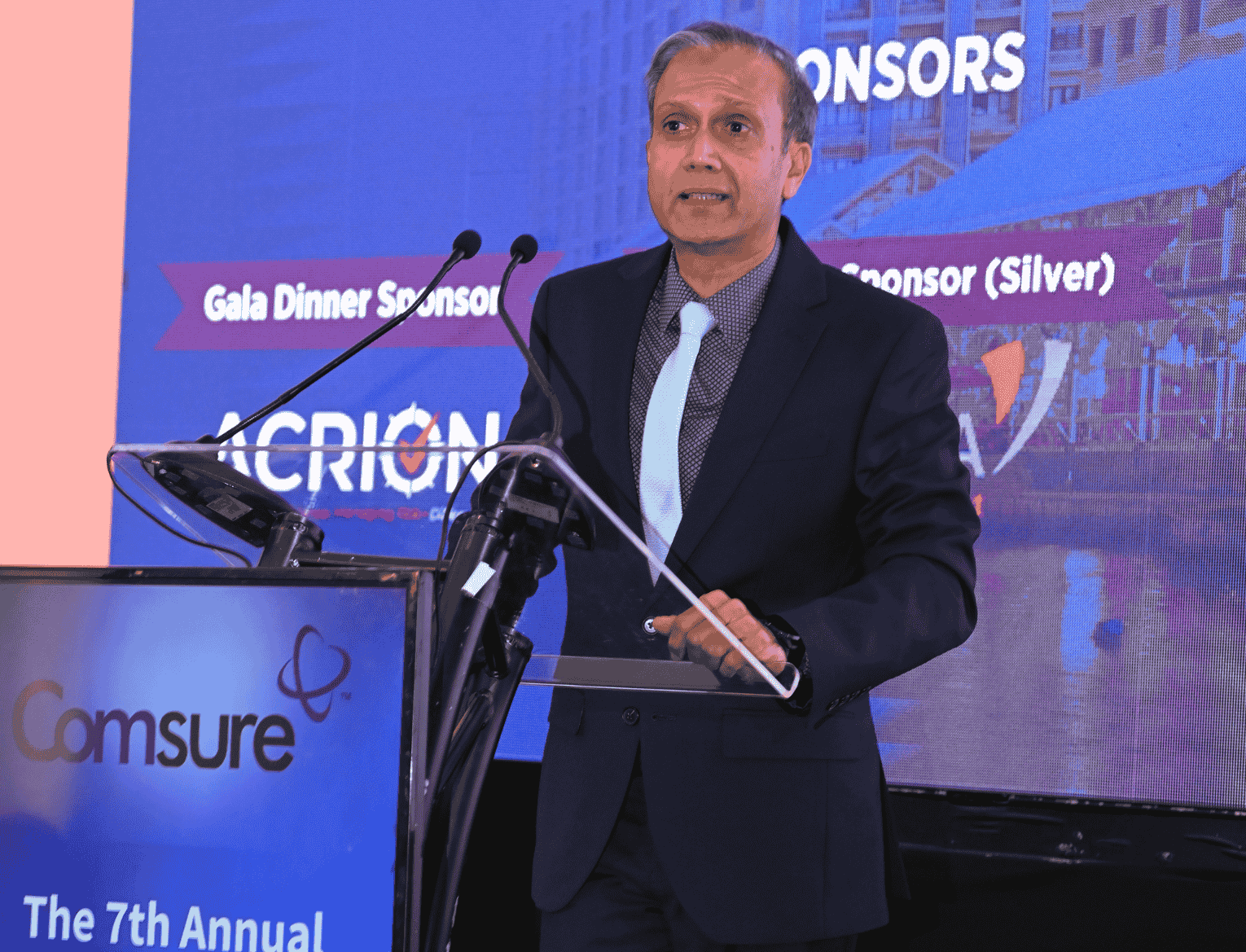
The Director of Public Prosecutions, Rashid Ahmine, offered an unflinching assessment of Mauritius’ fight against financial crime. Speaking before an audience of compliance professionals at the Financial Crime Conference 2025 – a two-day event organised by Comsure in collaboration with The Axis Academy – he questioned the country’s record of enforcement. His message was pointed: laws and frameworks are meaningless without conviction, ethics, and the courage to act.

Rudy Veeramundar 

We talk a lot about compliance and all those different types of legislation in Mauritius, but what is important is the end result.” At the Hilton Mauritius Resort & Spa, before an audience of compliance professionals and financial sector specialists gathered for the Comsure Financial Crime Conference 2025, the Director of Public Prosecutions, Rashid Ahmine, delivered an address that was as reflective as it was unsettling. His tone was neither accusatory nor complacent. Instead, it was that of a prosecutor accustomed to looking at facts and asking uncomfortable questions.

Rashid Ahmine, who has built a reputation for his interest in financial crime and asset recovery, admitted that in his experience, Mauritius has seen few major financial crime prosecutions. “We have had few big cases of financial crimes in Mauritius going to court. I always ask the question: why is it so? Is it because we have few criminals? Is compliance ineffective? Or are there challenges with investigatory authorities doing their job?

The DPP’s remarks framed a paradox: a jurisdiction with sophisticated laws, trained professionals, and international recognition, yet with a striking absence of major convictions. The question that hovered in the room was whether the machinery built to protect the integrity of Mauritius’s financial system is functioning as it should.

He reminded the audience that they were not mere bystanders in this process. Compliance officers, he argued, are “gatekeepers” whose role extends beyond fulfilling legal obligations. “You are part of the process. You are supposed, therefore, to help in crime prevention and crime detection to make the fight against financial crime more efficient in Mauritius. Do you do compliance because you have to do it under the law?” he asked, “or because you believe Mauritius should remain a clean jurisdiction, an international financial centre of repute? You are in a very good position to determine whether people try to use different kinds of structures to launder money. You are the gate keepers. You are supposed to close the door to money laundering. What you must understand is that you are part of the process of fighting financial crime.


For Rashid Ahmine, genuine compliance stems from conviction, not compulsion. “It’s not a victimless crime,” he said, urging professionals to see themselves as part of a broader effort to uphold the nation’s integrity rather than as participants in a regulatory checklist. “You need to do your job, not only because the law says that if you don’t do it, sanctions may be imposed, but because you are against financial crime, and you want to see Mauritius as a clean jurisdiction. You want to see Mauritius as an international financial centre of repute. This is the most important point!” he stressed.

Turning to the National Risk Assessment (NRA) report, the DPP drew attention to its stark conclusions. Mauritius, he said, “has a robust financial sector, but the external money laundering threat is high compared to the internal one.” He pointed to cases where in “suspected frauds, proceeds from overseas were received for local GBCs,” and to findings suggesting that the island “is considered a platform for laundering proceeds of corruption using corporate structures.” The remarks were pointed but factual. They reflected an unease familiar to many; an awareness that risk assessments and compliance rhetoric sometimes fail to translate into enforcement outcomes.

The DPP listed drug trafficking, illegal bookmaking, and tax crimes as enduring threats. The overlap between tax evasion and drug money, he said, is well established. Yet, despite the existence of extensive legislation and a range of supervisory bodies, “we have had few big cases of financial crimes going to court.” He asked whether the issue lay in compliance, supervision, or investigation. “Why is it that at the Office of the DPP, we don’t have so many financial crimes cases to prosecute?

His tone softened as he turned to ethics. “We need to talk about ethics much more than rules,” he said. A culture of integrity, in his view, is what separates formal compliance from meaningful enforcement. Only when people understand the moral dimension of financial integrity, he suggested, can prosecution and prevention work effectively.

But his address was not limited to moral appeals. Rashid Ahmine spoke with concern about the structural and institutional weaknesses that, in his view, continue to undermine enforcement. He cited the independence of investigative bodies as a central challenge. “Institutions like the FCC, the Police Department and the MRA cannot be at the beck and call of government. It’s not that if the government gives a license and says, ‘go investigate these cases,’ you start an investigation, and if the government says, ‘no, please don’t investigate these cases,’ then you don’t investigate. It doesn’t work like this! It’s only when we had a new government, about one year ago, that we started hearing about major cases being investigated. The independence of institutions is very important,” he said. “It’s not because of the FATF assessment coming in 2027 that we must act. We must do well, every year, to show that Mauritius is a serious jurisdiction.


“We need to get foreigners to assist locals in investigations”


Rashid Ahmine also criticised the tendency of ongoing investigations to find their way into newspapers. “Every morning, we see headlines with details of investigations that are not supposed to be public,” he said. “The public is supposed to know that an investigation is ongoing, but not its details before trial.” For him, such leaks are more than ethical breaches. They signal a system where independence is porous and discipline fragile.

On the subject of intelligence, he was equally frank. Financial institutions, he said, often claim to have filed numerous suspicious transaction reports (STRs), while the Financial Intelligence Unit (FIU) complains that “these reports are hopeless.” The deeper issue, he argued, lies in the failure to transform intelligence into evidence. “Until and unless we talk to each other, we won’t know what happened. The challenge is what use we make of that intelligence to convert it into evidence.

While he acknowledged that the Financial Crimes Commission (FCC) now seems more active, the DPP noted its limits in handling complex transnational cases. “When it comes to money moved to other jurisdictions, there is a big issue,” he said. “Even if we need to get foreigners to assist locals, we should have these people.” Too often, he added, by the time the DPP’s office is informed, “the money has already left Mauritius and landed in another jurisdiction.

The most pressing example, he said, remains drug trafficking. “We don’t arrest drug traffickers. We only arrest small fish; the foreigner paid to bring drugs, and the locals who collect them. What about those behind the trafficking? Unheard of!” He linked this failure to the broader question of financial flows. “Drug traffickers have bank accounts. Their proceeds are mingled with legitimate businesses. People need to be trained to detect suspicious transactions. It’s not just about ticking the box,” he argued.

Mauritius, he noted, has legislation enabling asset recovery and unexplained wealth orders, but “hardly any cases have led to confiscation.” The vehicles parked outside the FCC, seized under restraining orders, may make headlines, but mean little in legal terms. “Investigations alone mean nothing,” he said. “What really counts is when you bring a case before court and secure a conviction. We cannot win the fight against financial crime if we are not able to seize the proceeds of criminals. If we don’t confiscate the proceeds of crime, we fail in our duty.

Rashid Ahmine advocated for what he called a prosecution-led investigation, where prosecutors work with investigators from the outset. “We know what evidence we need to present in court. The burden is on us, and we need to be involved from day one,” he explained. Such collaboration, he argued, is not about overstepping roles but about ensuring that cases are built to withstand judicial scrutiny. Without this alignment, he warned, complex cases risk collapsing under procedural or evidentiary gaps.

The DPP’s message was clear. Legislation, compliance programs, and assessments mean little without institutional independence, ethical conviction, and practical coordination. The fight against financial crime, he suggested, is not a matter of rankings but of collective resolve. “We are all in this,” he said. “We have to sit down and work together.

Then came the sharpest of his critiques. “We have an archaic system of justice in Mauritius,” he said. “Can you believe that a high-profile case is called only three times a year? A single point in law is enough to postpone a case by six months, and cases go on for years.” His frustration was not theatrical; it reflected the view of a prosecutor bound by processes that slow justice to a crawl. “You need judges who hear cases every day, back-to-back. However complex cases are, you can dispose of them within a month if people work seriously.

In a room filled with compliance officers, the DPP’s words carried the weight of an insider’s challenge: that the reputation of Mauritius as a financial centre will not rest on how many laws it passes, but on how many truths it is willing to confront.

Skip to content